
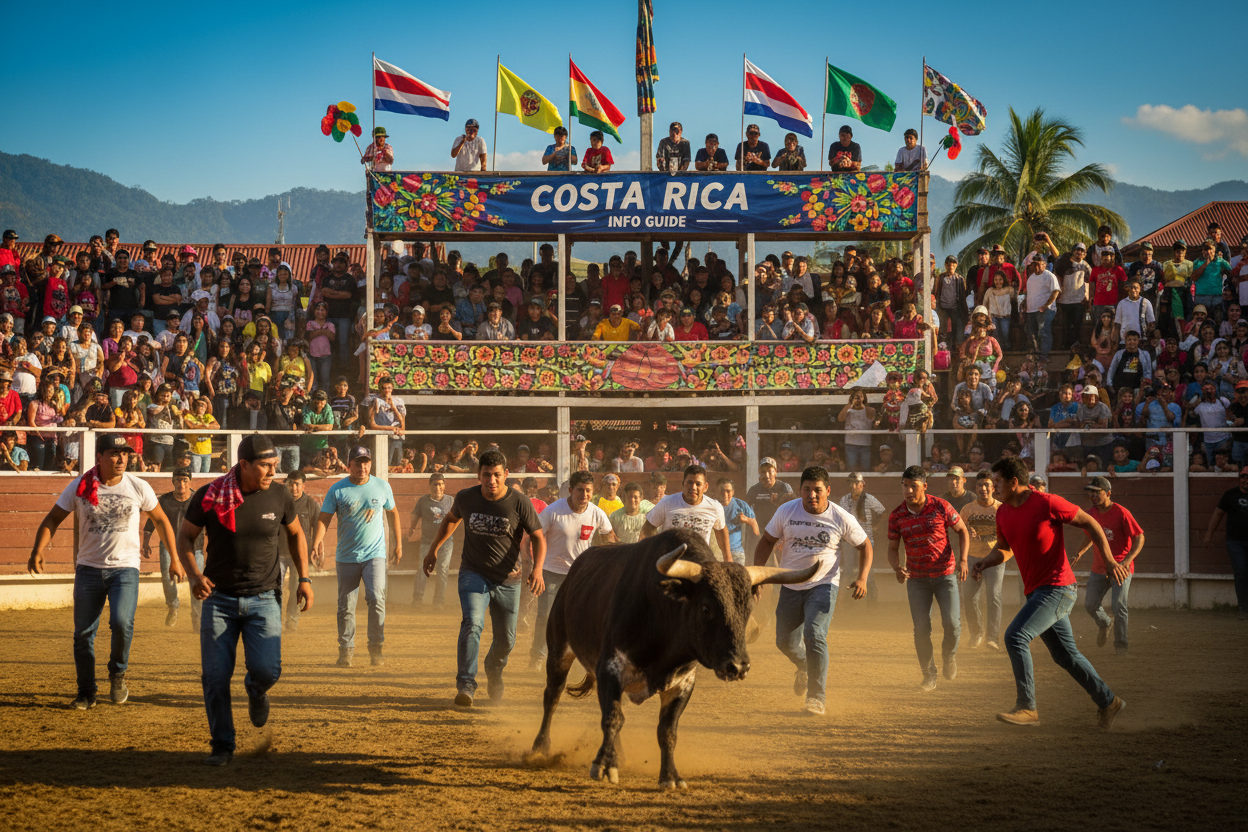
Imagine a bullfighting tradition where the bull is the star, never harmed, and celebrated for its power. This is “a la tica,” a unique spectacle central to Costa Rican culture. It is the complete opposite of the Spanish corrida.
This tradition dates back to colonial times. It is a beloved national festivity, especially during the Christmas season. A University of Costa Rica survey found 62.7% of people like these events.
The action happens in a festive arena. Improvised bullfighters enter the ring to dodge a charging bull. The crowd cheers wildly when someone gets caught, creating a unique, thrilling atmosphere.
This guide helps you understand this distinctive part of Costa Rica. It covers the cultural context, what to expect, and the ongoing dialogue surrounding the practice. It’s a window into a vibrant national celebration.
Exploring costa-ricas-bullfighting-a-la-tica: A Historical and Modern Perspective
In the heart of San José, the Zapote arena pulses with energy each holiday season. It showcases a tradition that honors the bull. This practice has deep roots.
From Colonial Traditions to a Contemporary Twist
The custom began with Spanish colonial influences. Over time, Costa Rica completely reinvented it. The fundamental rule became protecting the bull.
Modern laws strictly enforce this view. The event is now highly regulated. It is illegal to kill the bull in the ring.
Veterinarians from the Ministry of Agriculture inspect each animal. They check before, during, and after every performance. This ensures the bull’s welfare is paramount.
Real-life Examples from the Zapote Arena
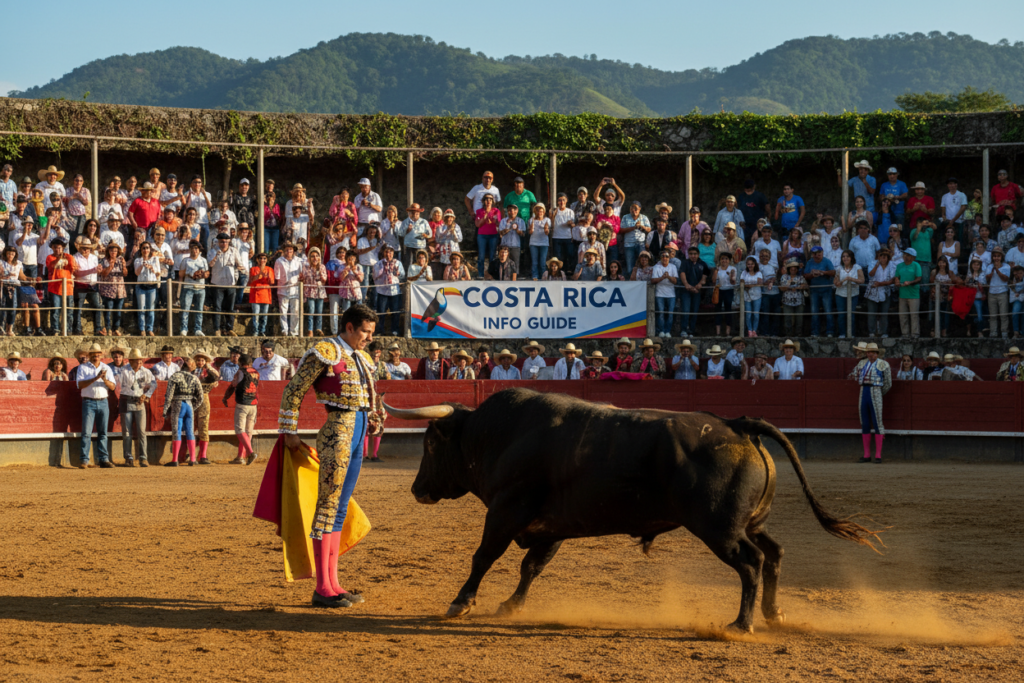
The Zapote arena is an iconic venue. It holds 3,000 cheering spectators. Events run daily from December 25 to January 8.
You can see two shows per day. Each festejo features 10 to 12 powerful bulls. Admission costs around $25, making it a popular family outing.
The stars are Zaino Miura breed bulls. They weigh about 450 kilos and are bred for bravery. Producer Alvaro Lopez calls it “a bit more like the Roman circus.”
In a unique twist, the bulls are the celebrities. People remember their names and past exploits. The improvised bullfighters, however, often remain anonymous.
By law, a bull must rest for 30 days between appearances. Rancher Luis Collado says his bulls “play” once a month. They are treated as cared-for athletes.
The Thrill and Safety Behind Tica Bullfights
The electric charge in a Costa Rican bullring is undeniable, but it’s matched by a sobering reality of real physical risk. This activity celebrates the bull’s power, but participants face a powerful, unpredictable animal.
Dos and Don’ts in the Bullring
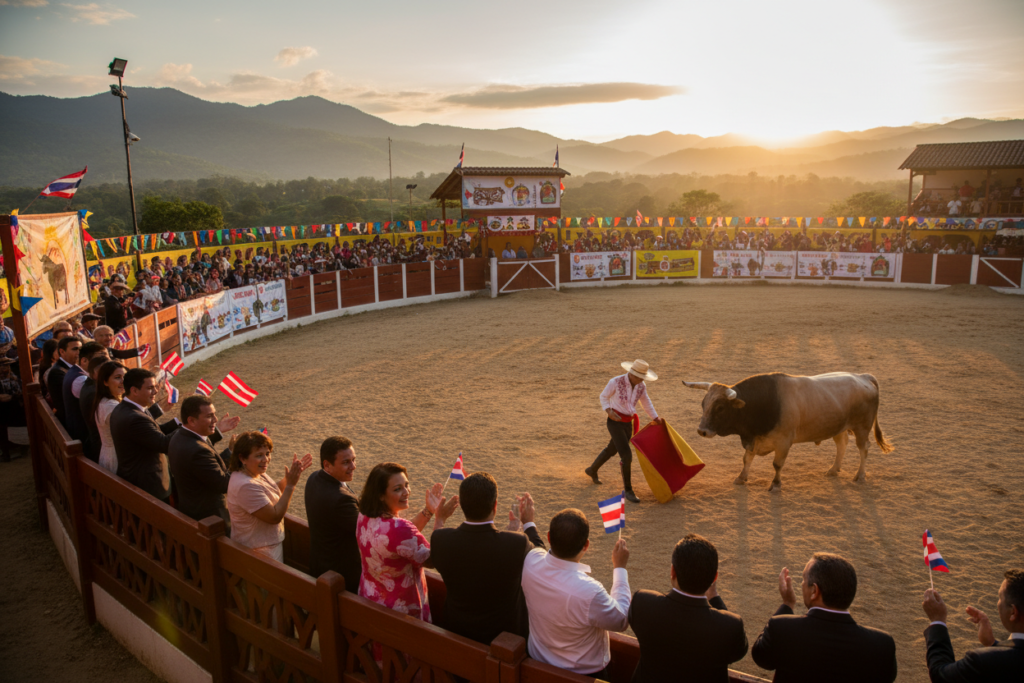
For those entering the ring, preparation is key. Veteran bullfighter Maynor Jiménez stresses wearing tennis shoes or soccer cleats for mobility. Never wear sandals.
Always know where the exit barriers are. Never turn your back on the bull. William Portugués, a participant for years, warns the bull can gore you at any moment.
A critical don’t is entering under the influence of alcohol. Do not attempt to touch or grab the animal. Avoid showboating, as it increases danger.
Essential Safety Tips for Spectators and Participants
One severe risk is a “levantín.” This is when a bull picks up a person, tosses them, and rolls them repeatedly. Jiménez experienced this, leading to a nine-day hospital stay.
Spectators must also be cautious. Sit in designated areas and never lean over the ring barrier. Always keep children closely supervised.
Producer Alvaro Lopez notes a cultural expectation of risk. Crowds may feel a show is bad if no one gets rolled by the bull. Understand this peer pressure exists.
Deaths and serious injuries have occurred. Portugués has lost companions and suffered broken bones. Anyone considering joining should watch several events first to learn the bull’s behavior.
Cultural Impact and Community Celebrations
The Palmares Festival transforms the town of Alajuela into a massive party every January. It draws people from across the nation. This event is the country’s biggest annual celebration.
These festivities are a powerful homecoming. They reunite families and friends. They also showcase local pride to the world.
The Role of Bullfighting in Costa Rican Festivities
Bullfighting “a la tica” is a central holiday tradition. It marks the arrival of Christmas and New Year. Families gather to watch the thrilling, comedic spectacle.
The brave improvised bullfighters create a uniquely Costa Rican entertainment style. It brings communities together in a shared cultural experience. This tradition extends from late December through January.
How Events Like the Palmares Festival Highlight Local Pride
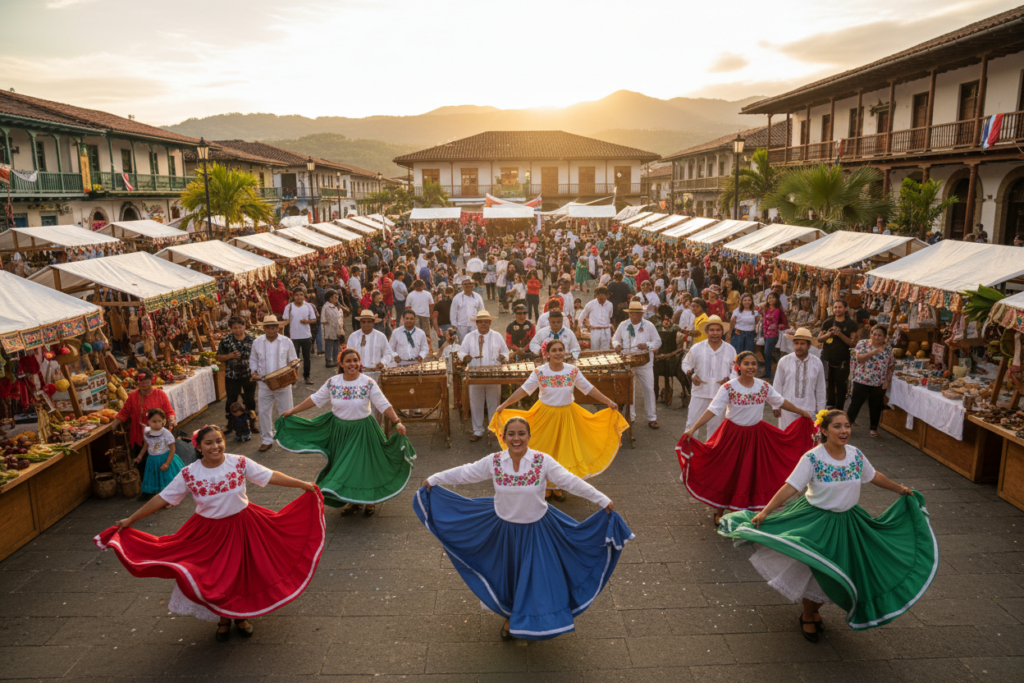
The Palmares Festival has a 30-year history. It attracts over one million attendees. It keeps the New Year’s spirit alive with concerts, carnivals, and bullfights.
World-class artists like Maroon 5 have performed here. The event blends international and local culture perfectly. A key tradition is “El Tope,” a huge horse parade.
Thousands ride their best horses through the streets. Officials from SENASA ensure all animals are cared for. The final Friday features a vibrant carnival with music and dance.
Social bonding centers on traditional food and drink. Locals say more beer is consumed here than any other time of the year. It is a true celebration of Costa Rican identity.
| Festival Name | Location | Time of Year | Key Features | Community Focus |
|---|---|---|---|---|
| Zapote Bullfighting Festival | San José | Late Dec – Early Jan | Daily bullfights, family arena | Local holiday tradition, family outing |
| Palmares Festival | Alajuela | January | Concerts, bullfights, El Tope, carnival | National homecoming, cultural showcase |
| Fiestas de Los Diablitos | Boruca | Late Dec – Early Jan | Indigenous reenactment, masks, dance | Indigenous heritage, community storytelling |
Practical Guidance for Experiencing a La Tica Bullfight
Planning your visit to a Costa Rican bullring requires some practical know-how to ensure a great time. This is a peak season activity in Costa Rica, running from December 25 through January 8.
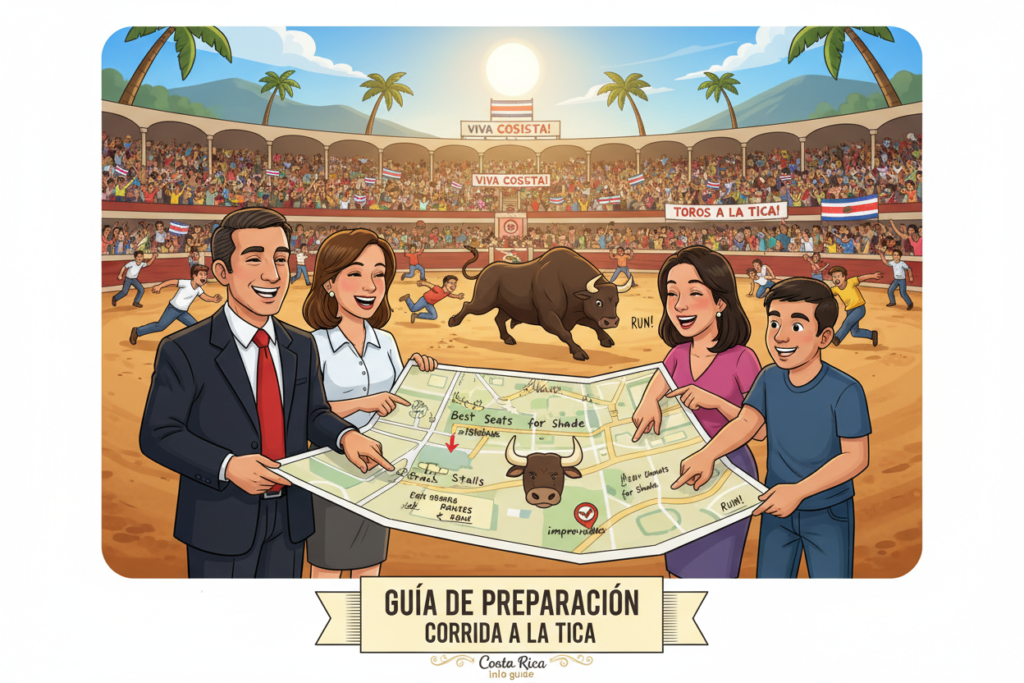
What to Wear and How to Prepare for the Event
First, book accommodations well in advance. The main season is busy, and the Palmares Festival extends celebrations through January.
Dress for warm weather in comfortable, casual clothes. Wear closed-toe shoes for crowded areas and a hat for sun protection. Bring cash for the roughly $25 admission and vendors.
Also pack sunscreen and a light jacket for cooler evenings.
Follow these tips for a smooth experience:
- Arrive early to get good seats in the 3,000-person venues.
- Plan your transportation. Use taxis due to limited parking and festive crowds.
- Experience the full festival for a week. Enjoy concerts, food, and the “El Tope” parade.
- It’s a family-friendly activity, but consider the noise and intensity for young kids.
- Watch a broadcast on TV first. This gives you a preview of the bull and bullfighters in the ring.
This preparation helps you enjoy the unique spectacle safely and fully.
Embracing Tradition: Reflecting on Costa Rica’s Vibrant Culture
The return of bullfighting festivals in 2022 sparked renewed debate. It highlights a deep cultural conversation in Costa Rica. Supporters see a protected heritage with strict animal oversight. Critics argue tradition does not justify animal stress.
This unique spectacle offers real insight into Costa Rican values. It shows community celebration and humor in the face of danger. Understanding it provides valuable context for visitors or future residents.
Quick Checklist for Experiencing Bullfighting a la Tica:
Research dates (Dec 25-Jan 8). Budget about $25 for entry.
Wear comfortable clothes and closed-toe shoes. Arrive early for good seats.
Arrange safe transport and bring cash. Keep an open mind.
Frequently Asked Questions:
Is it safe for spectators? Yes, when seated in designated areas.
Do they harm the bull? No. Bulls are protected by law and veterinarians.
What’s the best venue for first-timers? Zapote or Palmares offer the full experience.
For those considering making Costa Rica their home, understanding local traditions aids cultural integration. For residency questions, CRIE can help you choose the correct category. Contact: WhatsApp +506 8706 3888 | info@crie.cr | www.crie.cr.
FAQ
What makes bullfighting in Costa Rica different from other countries?
Are the animals safe during these bullfighting events?
What is the cultural significance of these bullfights in Costa Rica?
When is the best time of year to experience this tradition?
How should a first-time visitor prepare for attending a bullfight?
Article by Glenn Tellier (Founder of CRIE and Grupo Gap)
Don't wait, contact us right now!
Call or WhatsApp Costa Rica +506 8373 2085 or +506 8706 3888
Call USA/Canada +1 305-906-6784