

You are planning an amazing trip to Costa Rica. This small country is packed with incredible destinations, from beaches to rainforests. Luckily, getting around is easier than you might think.
The public transportation system here is widely used and offers many options. This guide will show you how to use it safely and efficiently.
We will cover buses, taxis, shuttles, car rentals, trains, and ferries. You will also get practical safety tips and real-world examples.
Understanding your options helps you explore confidently and affordably. With a little planning, navigating Costa Rica becomes part of your adventure.
This article will help you choose the best method for your budget, schedule, and comfort level. Let’s get started on your journey.
Understanding Costa Rica’s Transportation Landscape
Costa Rica presents a transportation mosaic that caters to every budget and travel style. The country offers everything from budget-friendly buses to convenient domestic flights. San Jose serves as the central hub, connecting travelers to destinations throughout the nation.
Overview of Transportation Options and Local Culture
Travelers can choose from public buses, taxis, shuttles, rental cars, trains, ferries, and flights. Locals and tourists alike rely on these systems daily. This creates a vibrant, shared travel experience.

General Tips for Navigating the Country Safely
Planning ahead is crucial, especially during high season from December through April. Transportation fills up quickly during holidays. Always research routes in advance and allow extra time for connections.
Flexibility and patience are essential when using transit here. Schedules and conditions can vary. Stay alert and keep belongings secure at all times.
Key do’s and don’ts include:
- Do research routes beforehand using local apps
- Do learn basic Spanish numbers and phrases
- Do allow extra time for connections
- Don’t arrive without transportation plans
- Don’t assume all services run exactly on time
- Don’t expect infrastructure to match North American standards
The two main international airports in Liberia and San Jose serve different regions. This helps travelers choose their ideal starting point.
Navigating Bus Routes and Schedules
Your bus adventure starts with choosing between faster direct routes and slower local ones. This network is run by private companies, not a single national system. Each company operates its own terminals and sets its own schedules.
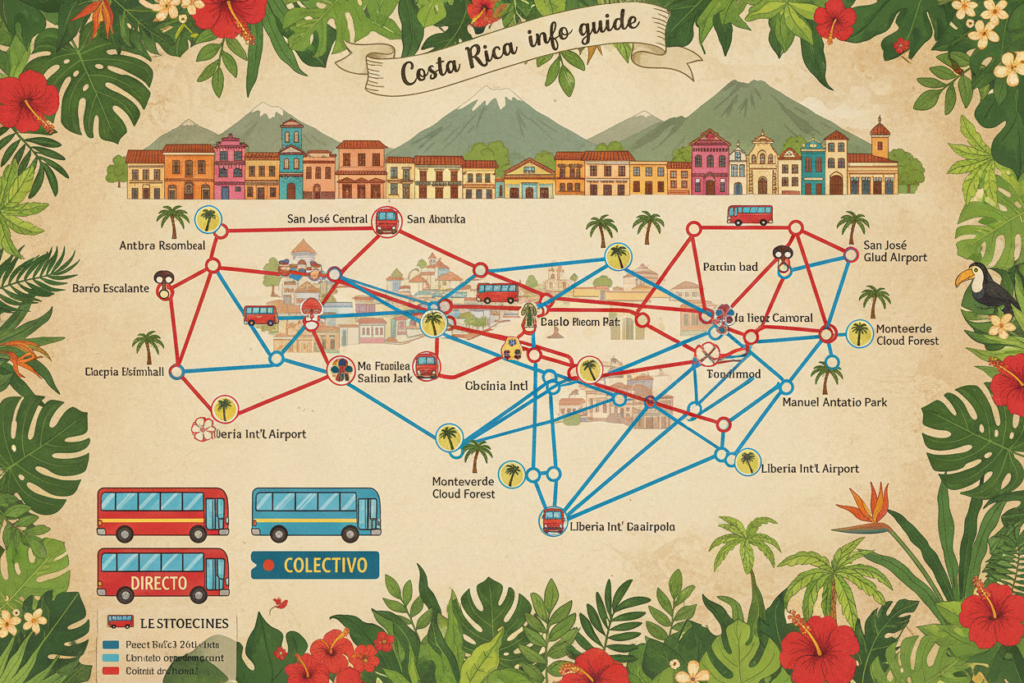
Directo vs. Colectivo Buses and Fare Details
You will encounter two main bus types. Directo buses offer express service between major destinations with minimal stops. Colectivo buses make frequent stops through towns and neighborhoods, taking longer.
Major companies like Pulmitan, Tracopa, and Tuasa run specific routes. For example, you can find direct buses from San Jose to Tamarindo, Monteverde, or La Fortuna. Amenities like air conditioning vary by company.
How to Locate Bus Stops and Purchase Tickets
Bus stops are often simple covered benches without clear signs. Look for groups of waiting people or ask a local for “La Parada,” which means the bus station.
For longer routes from San Jose, buy tickets at the company terminal a day in advance, especially on weekends. For shorter trips, you often pay the driver directly. Always keep the claim ticket the driver gives you for your stored luggage.
Use apps like “Yo Viajo Bus Info Costa Rica” or “Moovit” to check current routes and times. A dedicated Facebook group also shares real-time bus experiences and schedules.
Follow these key do’s and don’ts for a smooth trip:
- Do arrive at the terminal an hour early during busy periods.
- Do verify the bus company and destination before boarding.
- Don’t plan a tight connection from your flight to a bus departure.
- Don’t expect every bus stop to have a posted schedule.
Tips for Using Taxis and Meter Awareness
Taxis offer a convenient and flexible way to navigate Costa Rican cities. They are a popular option in urban areas like San Jose and Liberia. For a safe and fair ride, understanding local practices is key.
How to Request the “La Maria” to Ensure Fair Fares
The taxi meter is called “la Maria”. It is mounted on the dashboard. Always ask the driver to turn it on at the start of your trip.
Use the phrase “Puede poner la Maria por favor”. This simple request helps ensure you pay the correct fare. Official cabs in Costa Rica are always red.

Look for a yellow triangle on the door with a license number. This marks a legitimate taxi. Avoid unlicensed “pirate taxis” which are common scams.
Do’s and Don’ts When Hailing an Official Taxi
Follow these guidelines for a smooth experience. They focus on safety and fair pricing.
| Action | Do or Don’t | Reason |
|---|---|---|
| Verify taxi is red with yellow triangle | Do | Confirms it’s an official, licensed vehicle |
| Request “la Maria” meter before departure | Do | Prevents overcharging and ensures meter use |
| Use small bills for payment | Do | Drivers often carry limited change |
| Use pirate taxis | Don’t | Illegal operation and frequent scams |
| Assume the meter is on automatically | Don’t | Always request it to be activated |
For longer journeys, agree on a rate before you go. A trip from San Jose to Manuel Antonio is one example. Uber is also available in major cities like San Jose.
It is useful for airport transfers. Night rates start after 10pm, shown by a “2” on the meter. Tipping drivers is not expected but is appreciated.
Exploring Shuttle Services for Comfort and Convenience
For travelers seeking a balance between comfort and convenience, shuttle services offer an excellent solution. They provide a comfortable middle ground. You get more space and direct service than a bus, without needing to drive yourself.
Comparing Shared and Private Shuttle Options
You have two main choices. Shared shuttles follow set routes and you travel with other tourists. Private shuttles give your group a dedicated vehicle.
Reputable companies like Easy Ride, Gray Line, Interbus, and Monkey Ride operate these services. They connect popular destinations across the country.

Typical routes link San Jose to places like Tamarindo, Monteverde, and Jaco. The comfort advantages are clear. You enjoy air conditioning, door-to-door pickup, and more spacious seating.
When to Opt for a Shuttle Over Other Choices
A shared shuttle makes sense for budget-conscious travelers. It is ideal for solo travelers or couples on a moderate schedule.
Choose a private shuttle for families with young children or seniors. It is also perfect for groups or those with lots of luggage. This option offers maximum flexibility for your trip.
Shuttles eliminate the stress of navigating unfamiliar roads. They also avoid complicated bus transfers. This is often the best way to get around Costa Rica efficiently.
| Action | Do or Don’t | Reason |
|---|---|---|
| Book in advance during high season | Do | Secures your spot as services fill quickly |
| Confirm pickup time and location | Do | Prevents confusion and missed rides |
| Verify company reputation via reviews | Do | Ensures reliable and quality service |
| Book with unlicensed operators | Don’t | Risk of scams or unreliable vehicles |
| Expect unscheduled stops | Don’t | Shuttles typically follow a direct route |
Renting a Car: Freedom to Explore at Your Own Pace
Renting a car unlocks the ultimate freedom to discover Costa Rica’s hidden gems on your own schedule. It is the most flexible way to explore. You can create a personal itinerary and visit off-the-beaten-path locations.
Requirements and Safety Tips for Renting a Car
You need a valid US driver’s license to rent a car here. Reputable companies include international brands like Avis and National. Solid local options like Vamos Rent-A-Car are also available.
Always get a car with GPS or ensure your smartphone data works. Four-wheel drive is highly recommended. Many roads are muddy and uneven outside major cities.
Some national parks, like Rincon de la Vieja, require 4WD for certain sections. This preparation is key for safety.
Handling Challenging Road Conditions
Major routes connecting to San Jose, like Routes 1, 2, and 27, are well-paved. This is not the case throughout the country.
Roads in mountains and remote areas are narrow and winding. They are sometimes unpaved. Driving in an unfamiliar country requires caution.
Follow these essential guidelines for a safe trip.
| Action | Do or Don’t | Reason |
|---|---|---|
| Rent from reputable companies | Do | Ensures reliable vehicles and proper insurance |
| Choose 4WD for rural areas | Do | Handles muddy and uneven terrain safely |
| Download offline maps | Do | Provides navigation without cellular service |
| Drive at night in remote areas | Don’t | Poor visibility and increased risk on bad roads |
| Leave valuables visible in the car | Don’t | Prevents theft and break-ins |
Train and Ferry Options: Scenic Alternatives
For a scenic journey away from the roads, consider Costa Rica’s trains and ferries. These options offer unique views and a different pace.
The Revival of Costa Rica’s Train System
An earthquake damaged the railways in 1991. Today, the system is experiencing a revival.
If your travel starts from San Jose, trains can be a good option. They connect the capital to other parts of the country. This mode of transportation is affordable and easy to use for specific routes.
Ferry Routes and Practical Travel Examples
Ferries connect popular coastal areas. For example, one regularly crosses the Golfo de Nicoya.
Another connects Puntarenas with shoreline destinations. Companies like Coonatramar and Naviera Tambor operate these services.
Ferries run several times a day. Most crossings are short, adding a fun, scenic element to your trip. A great example is the bus from San Jose to Santa Teresa, which includes the Puntarenas-Paquera ferry ticket.
Trains and ferries make sense for budget travelers and those wanting scenic alternatives. They work well for connecting specific regions.
Follow these simple do’s and don’ts:
- Do check ferry schedules in advance, especially during holidays.
- Do arrive early during peak times.
- Do enjoy the unique coastal views.
- Don’t assume trains run to all destinations; the network is still limited.
- Don’t miss a ferry departure; you may wait hours for the next one.
For more details on managing your travel budget with these options, consult our guide.
costa-rica-public-transportation: Must-Know Practical Tips
Before you even pack your bags, your phone can become your most valuable travel companion for getting around. Digital tools simplify route planning and keep you informed.
Using Apps and Downloadable Resources for Route Planning
Download key apps before your trip. Test them at home with reliable WiFi. This ensures you’re familiar with their functions upon arrival.
The “Yo Viajo Bus Info Costa Rica” app is a primary resource. It recently added English language support and includes current bus fares. Use it to check schedules for various private companies.
For routes leaving San Jose, the “Moovit” app is also excellent. It provides detailed directions and real-time updates. These apps help you navigate the complex bus system confidently.
Offline, the downloadable “Costa-Rica bus itinerary” guide is comprehensive. It’s available in both English and Spanish. Keep a copy on your device for reference without internet.
Join the dedicated Facebook group for bus travel around Costa Rica. Members post current schedules, experiences, and rate updates. This crowdsourced info is often more current than official sources.
Make sure you have internet access throughout your journey. Get a pre-paid Costa Rican SIM card or an international data plan. Reliable connectivity is a safety net for emergencies and changes.
Follow these do’s and don’ts for smooth tech use:
- Do download all apps and offline maps before departure.
- Do join the Facebook group and browse past posts for insights.
- Do screenshot key schedules and bookmark important resources.
- Don’t rely solely on one app; use multiple sources for backup.
- Don’t assume you’ll find WiFi everywhere; plan for offline use.
- Don’t wait until you’re at the station to figure out your route.
Using these tools helps you master understanding Costa Rica’s public transportation. You can travel smarter and with greater confidence.
Practical Safety Guidelines and Do’s/Don’ts
Staying safe while using transit requires awareness of common scams and smart planning. You can protect your money and enjoy a stress-free trip by following these core principles.
Preventing Scams and Securing Your Belongings
Never let a stranger “watch” your bags, even if they seem friendly. This is a common theft tactic. Always keep valuables on your lap or between your feet.
Avoid the overhead rack on a bus. Thieves can easily take items when you are not looking. Stay alert when exiting, as pickpockets target sleepy travelers.
If a taxi driver claims your bus is canceled or full, do not believe them. Go directly to the station to check. Using a ride-share app can often avoid this pushy scam.
Strategies for Smooth Transfers and Timely Travel
Plan ample time for connections. If your flight leaves San Jose at 7 PM, don’t take a 2 PM bus from Liberia. Traffic or delays could make you miss it.
Remember, the main airport is in Alajuela, not downtown. This adds about 30 minutes of travel time. Build in a buffer for any long bus route.
| Do | Don’t |
|---|---|
| Keep bags on your lap or secured. | Store valuables in overhead compartments. |
| Verify schedules at the official terminal. | Believe taxi drivers about bus cancellations. |
| Allow extra time for all connections. | Plan tight links between buses and flights. |
| Stay alert during stops and exits. | Flash expensive items or large amounts of cash. |
Final Quick Checklist and Wrap Up
Choosing how to travel through Costa Rica ultimately comes down to your priorities for time and money. Buses remain the best way to get around cheaply for those with flexible schedules.
For travelers short on time, domestic flights are a fantastic option. Airlines like NatureAir and SANSA operate from San Jose. They offer quick trips to places like Liberia and Jaco.
Flight costs can be similar to private shuttles when you value time savings. With the right planning, navigating the country is manageable and rewarding.
Your Quick Travel Checklist
- Download transportation apps before you arrive.
- Research routes and schedules in advance.
- Book tickets early during the high season.
- Keep your belongings secure at all times.
- Verify the taxi meter is running.
- Build extra time into all connections.
- Have emergency contact numbers saved.
- Consider getting a local SIM card.
- Stay flexible with your timing.
- Trust your instincts about safety.
Frequently Asked Questions
What’s the cheapest way to get around Costa Rica? Buses are the best way for budget travel.
Do I need to speak Spanish? It’s helpful but not required, especially with translation apps.
Is it safe to use public transportation? Yes, with proper precautions like securing your bags.
Should I rent a car or take buses? It depends on your budget, comfort level, and destinations.
How early should I arrive at bus stations? At least one hour during busy periods.
Can I use US dollars? Yes, but have local colones for bus fares.
What’s the best transportation app? Yo Viajo Bus Info Costa Rica and Moovit are excellent.
If you’re considering extended stays or residency, CRIE can help. They assist with understanding your options and choosing the correct residency category. Contact them via WhatsApp at +506 8706 3888, email at info@crie.cr, or visit www.crie.cr.
Costa Rica’s system offers authentic experiences. It connects you to incredible destinations across the country. Have a wonderful trip!
FAQ
What is the difference between a Directo and a Colectivo bus?
How can I ensure a taxi driver uses the meter for a fair fare?
When is a shuttle service a better option than a public bus?
What are the main requirements for renting a car in the country?
Are there passenger trains available for tourists?
Which ferry routes are commonly used to reach popular destinations?
What apps are useful for planning travel around Costa Rica?
What is the most important tip for navigating the bus system?
Article by Glenn Tellier (Founder of CRIE and Grupo Gap)
Don't wait, contact us right now!
Call or WhatsApp Costa Rica +506 8373 2085 or +506 8706 3888
Call USA/Canada +1 305-906-6784