
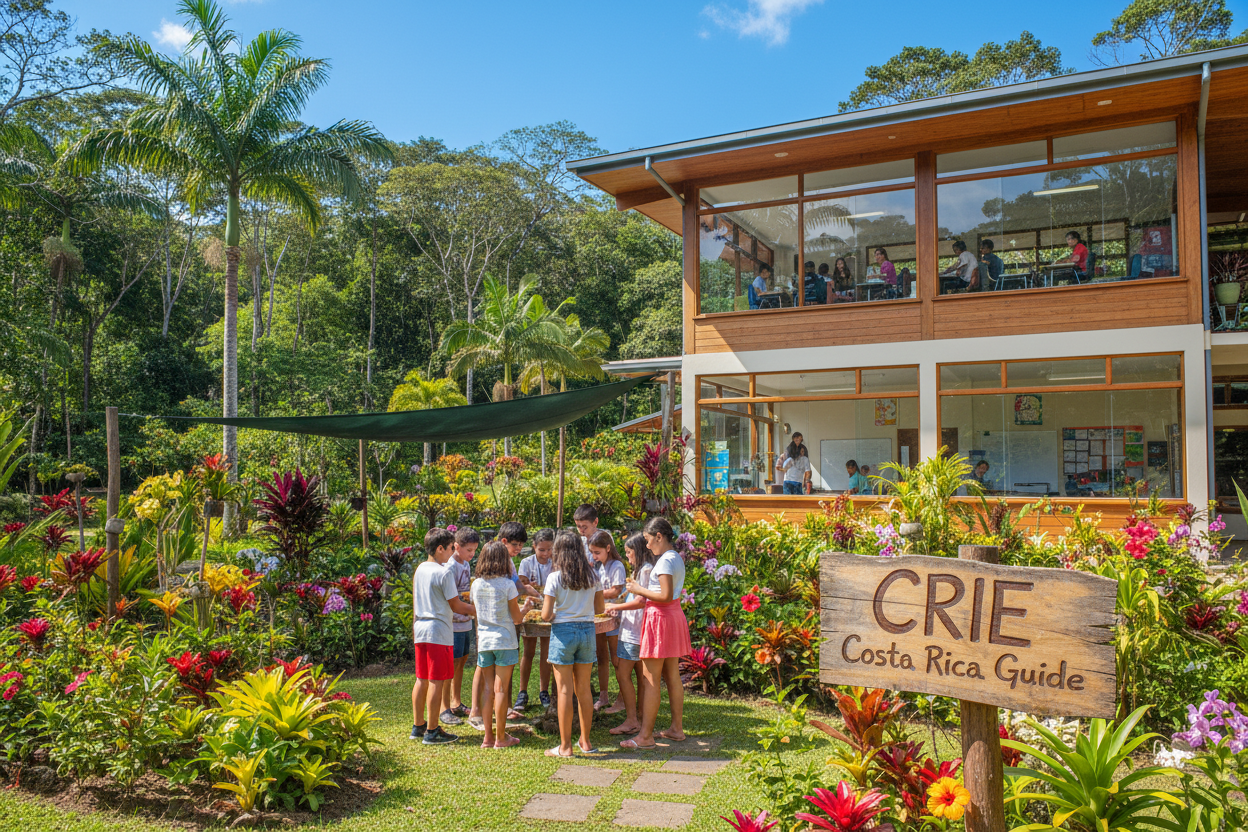
This guide helps a family move to costa rica and choose the right schools. It defines what “costa-rica-schools-for-expats” looks like in real life: age, timeline, and how much Spanish immersion you want.
Choose a school and you shape friendships, commute, the parent network, and how settled the family feels. The country’s education system rates highly in the region, with strong literacy and multiple school models: public, private, and international.
The guide compares those three paths and shows when each fits best. It walks you from move scenario to region, school type, language plan, and next steps. Expect practical takeaways: tour questions, an enrollment checklist, safe transport tips, and do’s and don’ts.
Terms like MEP, cycles, and Bachillerato will appear, explained simply. Costs vary widely, so ask schools directly. By the end, the reader will have a short list of schools to tour and the right questions to ask.
Why school choice shapes the whole Costa Rica move
The school a family picks quickly sets daily rhythm, commute patterns, and social life. It affects when mornings start, how traffic feels, and who children spend time with outside class.
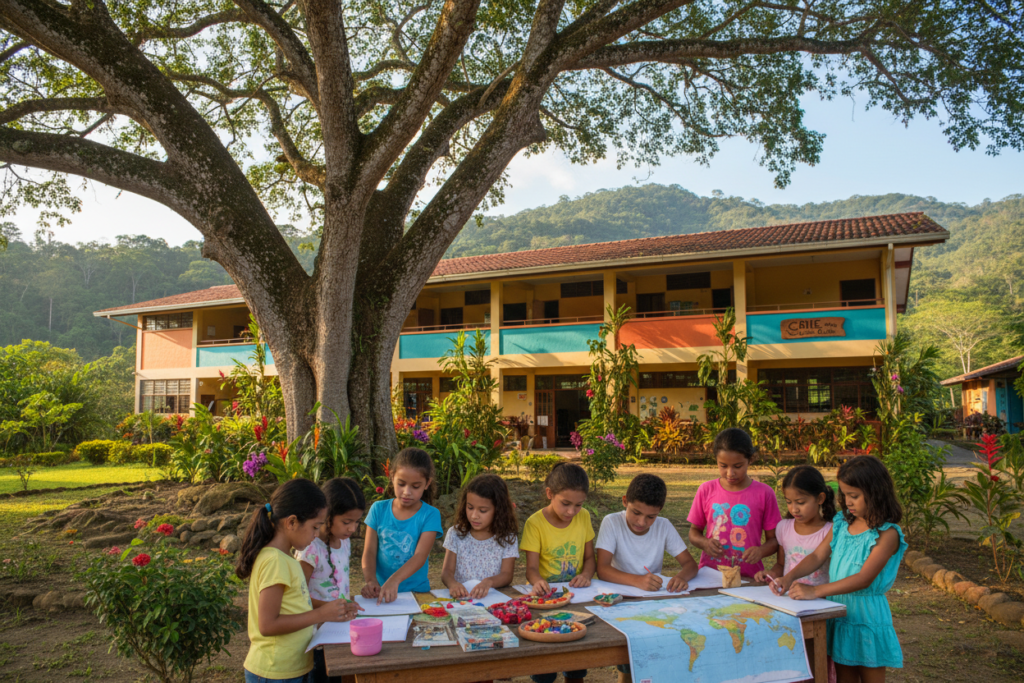
What changes most for U.S. families: calendar, language, and routines
The school year in costa rica typically runs February through late November. That calendar mismatch can create gaps for summer travel, transfer timing, and childcare between systems.
Language becomes a daily lifestyle factor. The school’s language often becomes the language of playdates, birthday parties, and parent WhatsApp groups. That shapes how quickly a child adapts and how the family experiences local culture.
Real-life examples: short-term assignment vs. long-term relocation
Short-term assignment: families often choose an international school to cut disruption and keep re-entry to U.S. schools simple.
Long-term move: many pick bilingual or public options to build Spanish skills and local friendships that last beyond the initial move.
- Do align your school choice with move length and family routines.
- Don’t assume any school in costa rica will match U.S. schedules exactly.
- Note how extracurriculars and what schools offer change after-school supervision for working parents.
How the Costa Rica education system works (the basics families actually need)
A clear map of the school year, levels, daily cycles, and grading helps families plan transfers and enrollment. This short primer focuses on practical points parents use when lining up tours, timelines, and support for new students.
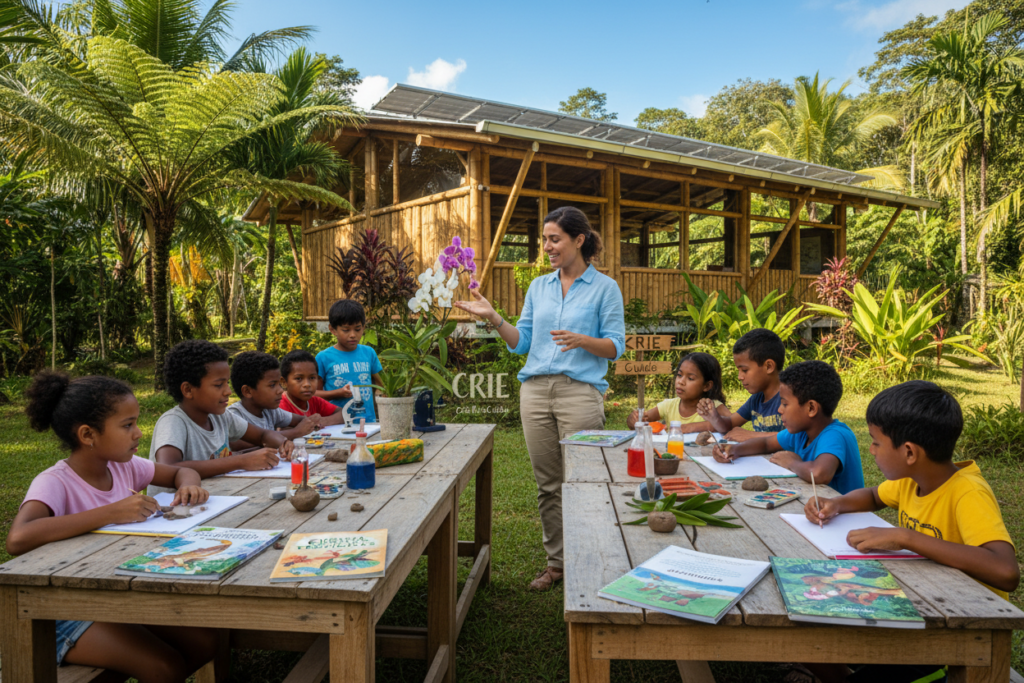
School year timing and transfer impact
The academic year generally runs February through November or early December, with a mid-year break. Arriving from a U.S. calendar mid-term often means joining after classes start or waiting for the next semester.
Tip: ask how the school handles make-up work and evaluation for late arrivals.
Levels: preschool, primary, secondary education
Preschool: typically required by age 4. Primary: roughly ages 6–12. Secondary education: about 12–18. Match your child’s age and social readiness, not just grade number, for placement.
Daily schedules and grading
Public schools often use morning (7:00–13:00) and afternoon (13:00–17:00) cycles. That affects work schedules, meals, and after-school care options.
Report cards may use a 100- or 10-point scale, or marks like S (Suf), N (Needs), and I (Incomplete). Ask what each mark means in practice.
| Level | Typical Ages | Common Schedule |
|---|---|---|
| Preschool | 4–5 | Half-day or morning sessions |
| Primary | 6–12 | Full day or morning/afternoon cycles |
| Secondary | 12–18 | Full day, subject blocks, exam periods |
For practical next steps, request the school’s calendar, sample report card, and their late-entry policy. For private options, see a list of the best private schools to compare instruction and schedules.
Public schools in Costa Rica: full Spanish immersion
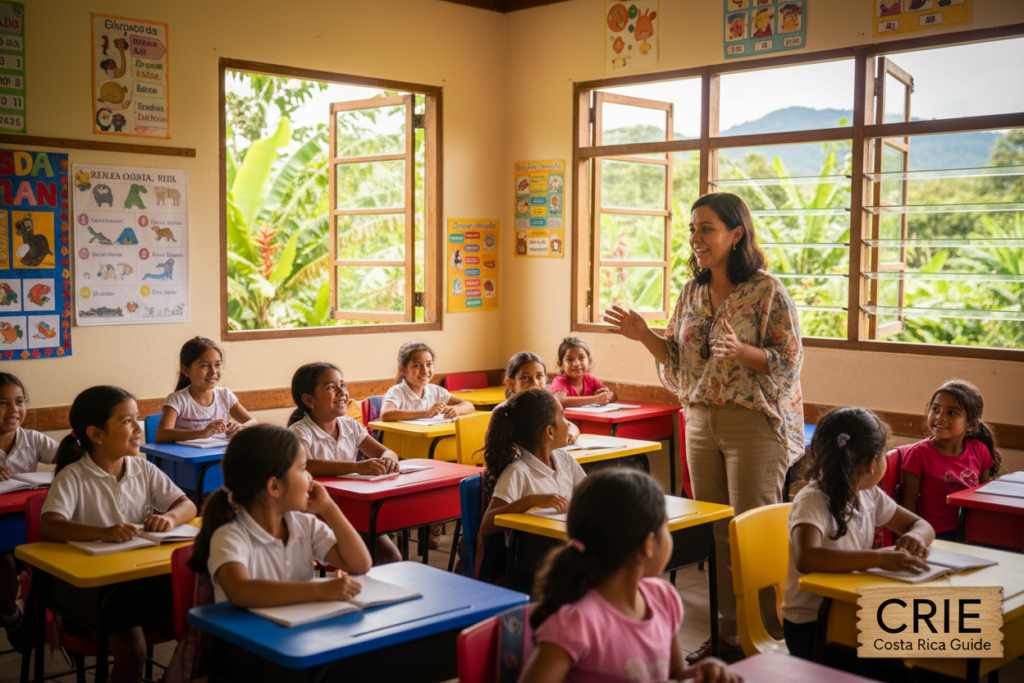
For children ready to dive into Spanish, public schools provide immediate language-rich days with local peers. That steady exposure often speeds practical conversation and cultural comfort.
What these schools do well for new families
The biggest win is immersion. Students spend full days learning in Spanish and playing with local classmates. This daily contact builds speaking confidence faster than occasional classes.
Common challenges families should expect
Class sizes can be large—often around 30–40 students. Extracurricular options may be limited, and formal newcomer language support is not guaranteed.
Do’s and don’ts when starting
- Do tour at arrival or dismissal to see real routines and transportation flow.
- Do ask teachers how they check understanding and support newcomers.
- Do plan uniforms and basic supplies so the first week runs smoothly.
- Don’t assume public private differences are only about funding; schedules, parent communication, and culture differ too.
- Don’t push homework translation; build a simple Spanish routine at home instead.
Quick on-ramp suggestions
Consider short-term after-school tutoring or a bilingual neighbor buddy for the first months. A common example: a 1st–2nd grader with limited Spanish often gains confidence through play, repetition, and steady school days.
Private schools: Costa Rican curriculum with more resources and structure
If a family wants predictable routines and smaller groups, private schools often fit that need. They follow national curriculum requirements but add extra English, tutoring, and clearer parent communication. Class sizes commonly hover near 25, so students usually get more teacher attention than in larger public classrooms.
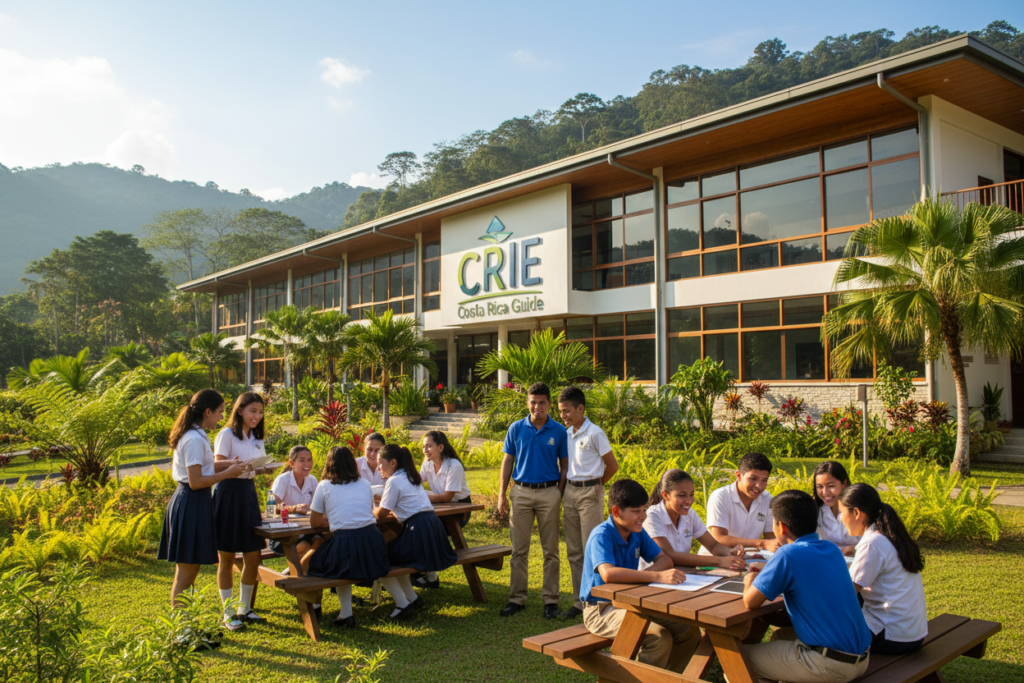
Bilingual private schools as a middle path
Bilingual programs vary. Some teach core subjects in English. Others teach Spanish first and add strong English classes. This middle path gives meaningful Spanish exposure without full immersion on day one.
What to watch for: English levels, class size, and campus consistency
- Ask to see actual classroom instruction and student work in both languages.
- Confirm whether multiple campuses keep the same teachers and standards.
- Ask how students are assessed in each language and what support is available if a child lags in one area.
- Verify extracurricular schedules and who supervises after-school activities.
International schools: American, British, European, and IB-style options
When continuity matters most, many families choose international schools that mirror foreign systems.
These institutions usually teach primarily in English and follow an external curriculum. They often hold foreign accreditation and offer counseling for college planning. That makes them a practical choice for middle and high school students who cannot pause academics while learning Spanish.
Common examples include Lincoln School and Country Day School for American-style pathways, the British School for IGCSE/A-level routes, and schools offering an IB diploma. Many are clustered in the Central Valley, which helps with commute and community fit.
Ask about graduation requirements, credit transfer policies, and how the calendar aligns with U.S. timing. Also ask what support exists if a student stays one or two years only. Social fit matters: older students usually adapt faster when peers share similar international moves.
| Pathway | Instruction Language | Accreditation | Best for |
|---|---|---|---|
| American-style | English | U.S. regional or American | Students planning U.S. college or easy transcript transfer |
| British-style | English | IGCSE/A-level frameworks | Students on British or Commonwealth paths |
| IB/European | English or bilingual | IB or European accreditation | Mobile students seeking internationally recognized diploma |
costa-rica-schools-for-expats: a quick comparison of the main school types
A side-by-side view helps families match language goals to daily routine and community fit.
Below is a clear comparison of public, private, and international options across key factors parents care about.
Public vs private vs international: language, schedule, and culture
| Type | Language | Schedule | Teaching & instruction | Parent communication & culture |
|---|---|---|---|---|
| Public | Spanish immersion; local dialect | Often split morning/afternoon cycles | National curriculum, large classes, practical focus | Local parent community; informal communication |
| Private | Varies—frequent English classes; mixed delivery | More consistent full-day schedules | Smaller classes, extra support, bilingual options | Structured updates; active parent networks |
| International | English-first or bilingual; accredited pathways | Schedules closer to U.S./foreign calendars | Foreign curriculum, college prep, standardized testing | Highly international community; formal communication |
What “bilingual” can mean in practice (and why ratios matter)
Bilingual programs sit on a spectrum. A 30/70 split (English/Spanish) gives quick Spanish growth.
A 70/30 split keeps academic continuity in English but slows immersion. Verify how subjects are taught.
- Decision shortcut: short-term stay → prioritize continuity; long-term → prioritize integration and language growth.
- Do verify the actual language of instruction by subject and grade.
- Don’t assume “bilingual” equals academic-level English in math or science.
Weekly routine note: each choice changes dismissal time, homework load, and available extracurriculars. Families should match the system and calendar to their work and travel plans for a smoother transition.
Picking a region: where expat families find the most school options
Where you live narrows your school list faster than any single preference. Region affects commute time, the number of international schools nearby, and daily routines for families.
Central Valley (San José, Heredia, Alajuela, Cartago)
The central valley holds the largest concentration of schools costa rica offers. Many international schools and established private schools sit here, which makes comparing programs easy.
Expect shorter commutes inside the valley but plan for rush-hour delays. If continuity, specialized programs, or an international diploma matter, this is the most practical region to target.
Guanacaste: beach communities with growing options
Guanacaste has more bilingual and international-style options than in past years. Campuses tend to be smaller and friendlier, but advanced secondary offerings can be limited.
Choose Guanacaste if lifestyle near the coast is a top priority, and verify any senior-year options before committing.
Central Pacific and Southern Zone
These regions often mean fewer formal options and longer daily drives. Families may use hybrid plans: local primary plus remote classes or transfers for later grades.
- Region narrows your realistic choices more than a wish list will.
- Pick non-negotiables first: calendar alignment, language support, and after-school coverage.
- Tour strategy: schedule 3–6 campus visits over 2–3 days in one region to compare in real traffic.
| Region | School Density | Best fit for | Commute reality |
|---|---|---|---|
| Central Valley | High | International pathways, private schools, program variety | Short to moderate; heavy rush-hour traffic |
| Guanacaste | Growing | Beach lifestyle, bilingual options, smaller campuses | Moderate; fewer nearby senior options |
| Central Pacific & Southern Zone | Low | Local community schools, hybrid solutions | Longer daily drives; plan for seasonal delays |
Transportation and commute reality checks (safety + sanity)
Planning commute time, pickup routines, and backup plans is essential before choosing a school. Short map distances can stretch into long runs when rain, narrow roads, or rush hour add delays.
Why a short distance can turn into a long school run
Heavy rain and single-lane roads slow traffic in costa rica, especially during the wet season. A 15-minute Google estimate can double in the morning peak.
What to ask about bus services and drop-off routines
- Are official bus routes supervised and licensed?
- What are pickup windows and late pickup policies?
- How does the school communicate delays (often WhatsApp groups)?
- Where do students wait if a parent is late or plans change?
Safety tips for pickup, carpools, and after-school transitions
Do a test-drive at the actual drop-off time. Confirm who is allowed to collect your child and share backup contacts.
Arrive early the first week, use designated zones, and teach a simple plan if plans change. For carpools, verify driver ID, vehicle details, and emergency contacts.
| Mode | Typical delay risk | Best safety check |
|---|---|---|
| School bus | Low–medium | Driver license and supervision |
| Carpool | Medium | Driver identity and backups |
| Private car | High in rain/traffic | Test route at peak time |
Do test commutes before enrolling. Don’t assume the “best” school on paper stays that way if daily travel drains family time and patience.
Age-by-age guidance: what works best for toddlers through high school
Age changes how quickly a child learns a new language and settles into school routines. This short guide maps practical choices by stage and offers clear do’s and don’ts for transitions.
Preschool and early elementary
Younger children adapt quickly. Many preschool children gain conversational Spanish within months through play and routine.
They often thrive in public or bilingual settings where daily language immersion is constant.
Upper elementary
Students may speak well but hit a confidence gap with reading and writing. Bilingual support for literacy helps prevent falling behind.
Middle school and high school
Older students face credit and curriculum risks. Verify secondary education requirements, course sequencing, and transcript transfer before enrolling.
Real teen example
A 15-year-old who chats socially in Spanish struggled in science and history. Weekly tutoring plus school language support kept grades on track and eased re-entry to the original curriculum.
- Do ask about assessment, leveling, and a first-semester transition plan.
- Do request clear transcript and credit policies if the student is midstream.
- Don’t rely on grade-by-age placement alone.
- Don’t assume an older child can perform instantly in academic Spanish.
Rule of thumb: the older the student, the more structured language support and transcript clarity the family should prioritize when choosing a school.
Language strategy for expat families (without setting kids up to struggle)
A simple, realistic approach to Spanish helps students keep up in class without losing confidence. Families should separate playground Spanish from school Spanish and plan support for both.
Conversational vs. academic Spanish
Conversational Spanish boosts social ease. It helps students make friends and follow verbal instructions.
Academic Spanish is different. It covers textbooks, tests, and written assignments. Being fluent in conversation does not always mean a student can read or write at grade level.
What strong schools offer
Top programs include targeted ESL or Spanish support blocks. They pair newcomers with a buddy and use differentiated instruction in content classes.
Schools often run early check-ins and benchmark tests during the first semester to measure progress and adjust instruction.
Do’s and don’ts for parents
- Do build a short daily Spanish routine: read a page, watch a children’s show, and run small errands in Spanish.
- Do communicate regularly with teachers about language goals and assessment timelines.
- Do celebrate small wins to keep motivation high.
- Don’t over-translate every assignment; encourage effort before offering full answers.
- Don’t let the child stay only in English-speaking social circles; mixing helps practical learning.
Practical ask list for tours
| Question | What to expect | Why it matters |
|---|---|---|
| How is language growth measured? | Baseline tests, monthly check-ins | Shows progress and triggers extra support |
| How do content teachers support newcomers? | Scaffolded materials, visuals, peer buddies | Keeps students learning subject matter while language builds |
| What happens if a student stalls mid-semester? | Targeted tutoring or adjusted placement | Prevents academic gaps and preserves confidence |
Finally, connect language work to local life. Participation in playground games and school clubs helps students practice and belong in the costa rican community.
For more on how families handle classroom language challenges, see language barrier in costa rica.
Curriculum fit: aligning school choice with future plans
Choosing the right curriculum now helps protect a student’s options for college and careers later.
Costa Rican secondary tracks explained
In the local system, secondary education splits into tracks: academic, artistic, and technical. Each track shapes subject focus, daily course loads, and graduation credentials.
The academic track mirrors university prep. The artistic track emphasizes creative subjects and portfolio work. The technical track gives vocational skills and certificates that students can use in the job market.
Which international pathways suit which students?
American-style programs help students who plan to return to U.S. schools. British systems suit students heading to UK-style exams. IB-style institutions benefit mobile students who want a global diploma.
Questions for U.S. university planning
- What transcript format and grading scale do you provide?
- Are AP or IB courses available and recognized by U.S. colleges?
- How does counseling support applications and credit transfer?
Do ask how the school supports moves between institutions. Don’t assume every school prepares students equally for U.S. admissions—verify counseling, documentation, and credit policies before enrolling.
What to look for on a campus tour (a buyer’s guide walkthrough)
A campus tour reveals what daily school life actually looks like, not just glossy brochures. Parents should watch routines, listen to how staff communicate, and note the real pace of arrival and dismissal.
Classrooms, instruction, and how teachers check understanding
Observe a class in session. Verify the language used for each subject and ask teachers how they check comprehension for newcomers.
They should request examples: quick diagnostics, visual supports, or paired work in math and science where language can block content.
Student support and newcomer onboarding
Ask what the first-week plan looks like and whether a buddy or mentor is assigned. Confirm counseling availability and learning support services.
Find out how referrals are handled and how the school updates families during transition weeks.
Facilities that affect daily life
Look for covered play areas for rainy days, secure pickup points, usable science labs, arts rooms, and sports fields. International schools and private institutions often show stronger inventory here.
Culture clues and discipline
Watch students at break. Do interactions feel warm and orderly? Note how staff redirect behavior and whether rules are explained calmly and consistently.
Questions to ask other parents
- What surprised you after the first month?
- How realistic is the daily commute in peak traffic?
- What would they change in the first 90 days?
| What to observe | Why it matters | Red flag | Good sign |
|---|---|---|---|
| Classroom language by subject | Shows real instruction mix | All subjects only in one language despite bilingual claim | Clear split and teacher examples |
| Newcomer plan & communication | Indicates ease of transition | No formal first-week plan or parent updates | Buddy system and daily check-ins |
| Pickup, visitor controls, supervision | Direct impact on safety | Open gates, unclear pickup authorization | Signed IDs, locked perimeter, staff at dismissal |
After the tour, compare notes and follow up with targeted questions. A short, focused visit will reveal more than glossy brochures and help families choose the right institution for daily life in costa rica.
Enrollment in Costa Rica: documents, timelines, and common pitfalls
A clear plan for records, translations, and timelines prevents avoidable delays at enrollment.
Most institutions ask for a concise set of documents early in the process. Start outreach from the U.S. 3–4 months before your move. Schedule tours 6–8 weeks ahead when possible and request sealed transcripts as soon as you decide to apply.
What schools typically request
Common items include passports/IDs, recent transcripts or report cards, prior school records, and proof of residency for parents when required. Provide copies for both the student and the enrolling parent unless a school asks otherwise.
Vaccination records and health forms
Keep health information organized: maintain a digital folder plus one printed set in a single plastic sleeve. Label each form with the student’s name and the years covered so documents are easy to find during registration.
Translations and authentication
Ask each institution early which format they accept. Some require notarized translations or apostilles for U.S. transcripts. Treat this as the biggest avoidable delay and verify exact requirements in writing.
Space limits, interviews, and entrance steps
High-demand programs fill quickly. A waitlist can mean months of uncertainty, so plan backup choices. Expect short interviews or assessments that check fit, language readiness, and learning support needs rather than full academic exams.
| Document | Purpose | Who provides it |
|---|---|---|
| Transcripts / report cards | Grade placement and credit review | Previous school (sealed if requested) |
| Passport / ID for student | Identity and enrollment record | Family (copy provided) |
| Vaccination & health form | School health record and safety | Family (from medical provider) |
| Translations / apostille | Legal acceptability of foreign documents | Certified translator / notary |
Common pitfalls: assuming all institutions accept the same formats, waiting until arrival to request sealed school records, and not confirming grade placement rules. Families who start early, keep a simple checklist, and confirm exact document formats cut stress and speed enrollment.
Residency and schooling: a simple, non-legal overview
Residency rules can affect how smoothly a child enrolls, yet they often vary by school type and local practice. This is a plain, practical summary to help families reduce surprises during registration.
How requirements can differ between public and private institutions
Public schools commonly ask for proof of residency or evidence that the residency process is underway. They may also want basic Spanish ability to place a child in the right class.
Private and international schools tend to be more flexible. Many accept passports, temporary address proof, and enrollment while paperwork continues.
Practical steps and a realistic scenario
- Ask the registrar what documents they accept if residency is in process.
- Keep copies of every submission and any receipts you receive.
- If you arrive with little lead time, explain your timeline calmly and request a temporary placement while official papers catch up.
For clear guidance on which residency category might apply to your household, contact CRIE for more information: WhatsApp +506 8706 3888 | info@crie.cr | www.crie.cr. This is informational only and not legal advice.
Family life extras that matter: uniforms, supplies, and extracurriculars
Small daily details often decide whether a move feels smooth or chaotic in the first month.
Uniform expectations and quick planning
Uniforms are common, especially in public schools. Confirm where uniforms and PE kits are sold before arrival.
Pack a rainy-season jacket and a spare uniform in the backpack. That cuts morning stress and keeps the child ready for sudden weather or spills.
Extracurricular reality: what to check
Some schools have strong sports and arts programs; others run only a few after-school clubs.
- Ask for a weekly schedule and who supervises each activity.
- Check start times—many activities begin right after dismissal.
Making friends and building a support network
For children, joining one club or accepting early playdate invites speeds social integration.
For parents, show up at pickup, introduce yourself to a few families, and join class messaging groups. Consistent presence builds trust in local school culture.
| Focus | Do | Don’t |
|---|---|---|
| Routine | Keep mornings simple | Over-schedule new activities |
| Social | Encourage one club | Force many new friendships |
| Parent role | Attend pickups regularly | Rely only on brochures |
Closing notes: quick checklist for choosing the right school in Costa Rica
A practical school choice ties calendar, commute, and language to real family life. The right school is the one a child can thrive in this year, not the label that sounds best.
Quick checklist: confirm the academic calendar; verify language of instruction by subject; ask about newcomer language support; test the commute at peak times; review extracurricular coverage; confirm enrollment documents and timelines; ask about onboarding and progress reports.
First 30 days plan: keep routines steady, contact teachers early, track sleep and homework, and note social progress. Adjust supports fast if academics or wellbeing lag.
FAQ: Does the Costa Rica school year match the U.S.? Most run Feb–Nov; some international schools follow U.S. calendars. Should a child start in public schools to learn Spanish faster? Younger children gain fast immersion; older students may need structured support. What does “bilingual” mean here? It varies by subject split and program ratio. How to compare private vs international schools? Look at curriculum origin, language, and transfer policies. What documents prepare before a move? Pack transcripts, IDs, vaccination records, and any needed translations.
If residency questions affect enrollment, CRIE can help: WhatsApp +506 8706 3888 | info@crie.cr | www.crie.cr.
FAQ
What are the main school types available for international families in Costa Rica?
How does the school year in Costa Rica differ from the United States?
Will a child who speaks English only manage in a public Costa Rican school?
What documents are usually required for school enrollment?
How do grading scales and report cards compare to U.S. systems?
What is “bilingual” in practice, and how can families evaluate it?
Do international schools follow foreign accreditation or local curriculum?
How should families pick a region based on school options?
What transportation and commute issues should parents expect?
How do age and grade level affect school choice?
What language support services should parents look for?
How can parents assess campus culture during a tour?
Are uniforms and school supplies different from what U.S. families expect?
What are common enrollment pitfalls to avoid?
How do residency rules affect school options?
How should parents support a child new to academic Spanish?
What practical differences separate private Costa Rican schools from international schools?
Article by Glenn Tellier (Founder of CRIE and Grupo Gap)
Don't wait, contact us right now!
Call or WhatsApp Costa Rica +506 8373 2085 or +506 8706 3888
Call USA/Canada +1 305-906-6784