
Costa Rica has become a haven for individuals and families seeking a better quality of life and new opportunities. With its lush landscapes, pleasant climate, and vibrant culture, this Central American country is an attractive destination for those looking to settle.
For those applying for residency through the Pensionado Visa program, managing finances is crucial. The program requires regular deposits into a Costa Rican bank account, making it essential to choose the right banking institution.
We will explore the top banking options for Pensionado Visa holders, examining both state-owned and private banks that cater to expatriates and retirees, and provide insights into account opening processes and ongoing maintenance requirements.
Understanding the Costa Rican Banking System
Costa Rica’s banking system is known for its stability and adherence to international standards. This stability is crucial for pensionados who are considering relocating to Costa Rica.
Structure of Banking in Costa Rica
The banking sector in Costa Rica is composed of both state-owned and private banks. State-owned banks have a long history of stability, with no failures recorded in over 30 years.
This stability is a result of the government’s efforts to ensure bank trustworthiness by implementing strong know-your-customer practices and monitoring transactions.
Compliance with International Standards
Costa Rica’s banking rules are up to par with global standards, making it a secure environment for foreign depositors. The country’s commitment to transparency and compliance with global banking regulations has strengthened its reputation in the international financial community.
Costa Rican banks follow strict know-your-customer (KYC) protocols, which protect all account holders. Understanding these compliance standards helps pensionados appreciate the necessity of certain documentation and verification processes when establishing and maintaining bank accounts in Costa Rica.
Pensionado Visa Requirements in Costa Rica
Costa Rica’s Pensionado visa program offers a unique opportunity for retirees, but it comes with certain financial obligations. To apply for this visa, individuals must demonstrate a stable income source. This requirement is crucial for ensuring that Pensionados can support themselves during their stay in Costa Rica.
Monthly Income Requirements
The Pensionado visa requires applicants to show proof of a minimum monthly income. This income must be deposited into a Costa Rican bank account. The specific amount required may vary, so it’s essential to check the latest regulations.
We will outline the verification process that Costa Rican immigration authorities use to confirm that pensionados are receiving their required monthly income through local banks. This process involves the bank verifying the deposits as part of the visa application and renewal process.
Bank Deposit Verification Process
The bank deposit verification is a critical component of both the initial visa application and subsequent renewals. It requires consistent documentation of regular deposits. Pensionados need to coordinate with their home country pension providers to ensure smooth transfers to their Costa Rican accounts for verification purposes.
Understanding the timing of these verifications is important, as delays in deposits or transfers could potentially affect visa status or renewals. We will provide practical advice on maintaining proper records of all bank deposits and statements that may be requested during the verification process by immigration officials.
State-Owned vs. Private Banks in Costa Rica

When considering banking options in Costa Rica, pensionados must weigh the advantages of state-owned banks against those of private banks. The banking system in Costa Rica is robust, offering a range of services tailored to both locals and expatriates.
Advantages of State-Owned Banks
State-owned banks in Costa Rica, such as Banco de Costa Rica and Banco Nacional, offer extensive branch and ATM networks, making it easier for pensionados to access their funds across the country. These banks are often perceived as more stable and secure, which can be reassuring for retirees managing their pensions.
Additionally, state-owned banks typically have a wide range of services and often provide government-backed guarantees on deposits, enhancing the sense of security for account holders.
Benefits of Private Banking Options
Private banks, such as BAC Credomatic and Scotiabank, offer personalized services that cater specifically to the needs of expats. These banks often have staff who speak English, making it easier for pensionados to manage their accounts without language barriers.
Private banks may also offer more flexible account opening requirements and advanced digital banking platforms, which can be particularly beneficial for pensionados who manage finances across multiple countries. While they may have fewer physical branches and ATMs compared to state-owned banks, their specialized services can provide a more tailored banking experience.
Best Banks for Pensionado Visa Deposits in Costa Rica
For retirees moving to Costa Rica on a Pensionado Visa, selecting the right bank is crucial, and both Banco de Costa Rica and Banco Nacional offer compelling options.
When it comes to managing pension deposits, Costa Rica’s banking system is known for its stability and security, making it an attractive destination for expats.
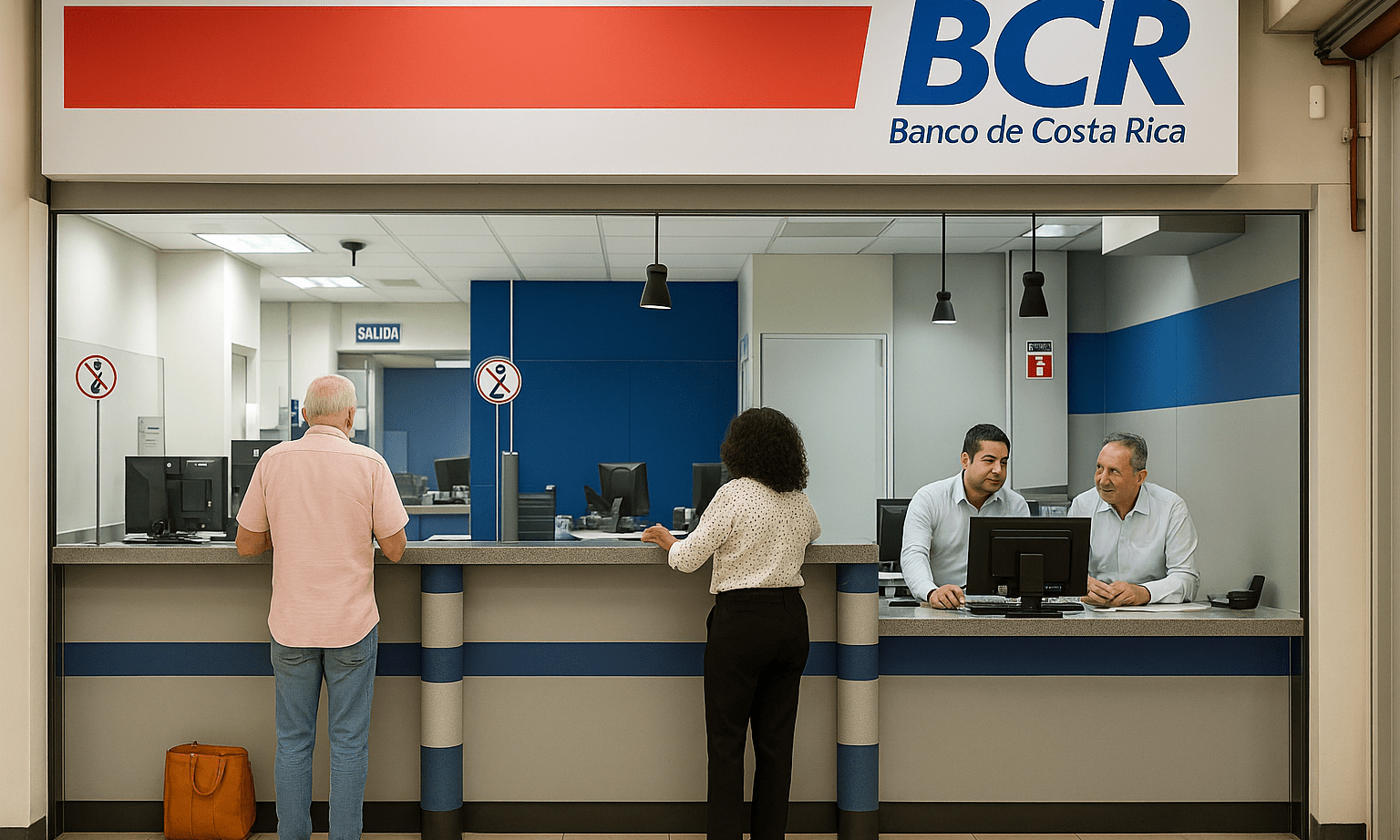
Banco de Costa Rica (BCR)

Banco de Costa Rica (BCR) is a state-owned bank that provides a range of services suitable for pensionados, including account options designed to facilitate regular pension deposits from abroad.
The bank’s extensive network of branches and ATMs across Costa Rica ensures that pensionados can easily access their funds and manage their accounts.
Banco Nacional de Costa Rica
Banco Nacional de Costa Rica is one of the country’s largest state-owned banks, offering comprehensive services that align well with pensionado visa requirements.
Its government backing provides a sense of security that many retirees value when establishing their financial presence in a new country.
The bank offers specific account options for pensionados, including features designed to facilitate regular pension deposits from abroad and manage expenses in local currency.
Banco Nacional’s approach to currency exchange and dual-currency accounts can be particularly beneficial for pensionados receiving income in dollars but needing to manage expenses in colones.
Private Banking Options for Pensionados
As a pensionado in Costa Rica, choosing a bank that understands the needs of international retirees is essential for a smooth financial transition. Private banks in Costa Rica offer a range of services tailored to the needs of expatriates.
BAC Credomatic
BAC Credomatic is a prominent banking option in Costa Rica, known for its comprehensive services for expats. They offer a range of account options that cater to the needs of pensionados, including international banking services.
BAC Credomatic’s experience in serving international clients translates into specialized services for expatriates, including those on pensionado visas. Their banking solutions are designed to facilitate easy management of finances, both locally and internationally.

Scotiabank Costa Rica
Scotiabank Costa Rica is part of a large international banking group, offering services that may be familiar to North American expats. They provide specialized services for international clients, though they may have stricter residency requirements for opening accounts compared to some other options.
We will evaluate Scotiabank Costa Rica as an option for pensionados, emphasizing its connection to the international Scotiabank network. The bank’s experience with international clients translates into services specifically designed for expatriates, including those on pensionado visas. We’ll examine Scotiabank’s approach to international transfers and currency exchange, which can be particularly important for pensionados receiving regular deposits from abroad.

Specialized Expat Banking Services
Expatriates in Costa Rica have unique banking needs that not all financial institutions can meet. Specialized expat banking services offer tailored solutions for foreign residents, making managing finances easier.
Banco Promerica

Banco Promerica is a significant player in Costa Rica’s banking sector, offering a range of services that cater to expatriates. Their expat services include easy account opening processes, international money transfers, and personalized customer service.
With Banco Promerica, expats can benefit from competitive exchange rates and flexible account management options, making it easier to manage their finances from abroad.
Coopenae

Coopenae is a financial cooperative that offers an alternative to traditional banking for expatriates in Costa Rica. As a cooperative, Coopenae provides a more personalized banking experience, with a focus on customer service and community involvement.
Coopenae’s services for expats include retirement accounts with favorable terms and competitive interest rates. Their cooperative model allows for more flexible account requirements, making it an attractive option for pensionados.
Documentation Required for Opening Accounts

When applying for a pensionado visa in Costa Rica, understanding the documentation required to open a bank account is crucial. The process involves gathering specific documents to comply with banking regulations and visa requirements.
Standard Documentation for All Banks
To open a bank account in Costa Rica, individuals typically need to provide standard documentation, including a valid passport, proof of address, and a Costa Rican tax identification number (known as a cédula). Some banks may also require proof of income or employment. These documents are necessary for verifying identity and complying with anti-money laundering regulations.
Additional Requirements for Pensionados
Pensionado visa holders may need to provide additional documentation when opening a bank account, including proof of pension income, visa documentation, and evidence of regular transfers to maintain their visa status. Some banks may request documentation related to the pensionado application or approval process. The specific requirements can vary between banks, with some having more streamlined processes for pensionados.
Understanding which documents need to be apostilled or officially translated can save pensionados significant time and frustration during the account opening process. We will provide guidance on maintaining ongoing documentation for account reviews that may occur periodically to verify continued eligibility for pensionado-specific banking services.
Account Opening Process for Pensionados

The process of opening a bank account as a pensionado in Costa Rica can be streamlined by knowing what to expect. Costa Rica’s banking system is designed to be accessible, but like many countries, it has its specific requirements and procedures.
Step-by-Step Application Process
To open a bank account, pensionados should first choose a bank that suits their needs, considering factors such as language support, fees, and branch locations. The application process typically begins with submitting an application form, which may be available online or at a branch. Required documents usually include a valid passport, proof of income, and proof of address. Some banks may also require a reference from an existing bank.
Once the application is submitted, the bank will process it, which may involve verifying the submitted documents. This step can sometimes require multiple visits or interactions with the bank.
Common Challenges and Solutions
Expats often face challenges when opening bank accounts in Costa Rica, including language barriers and unfamiliarity with local banking procedures. To overcome these challenges, pensionados can seek banks with English-speaking staff or bring a translator. Inconsistent application of requirements between different bank branches can also be a frustration; addressing this involves understanding the specific requirements of the chosen bank and being prepared to provide all necessary documentation.
By understanding these potential challenges and being prepared, pensionados can navigate the account opening process more smoothly, ensuring they can manage their finances effectively in Costa Rica.
Banking Fees and Minimum Deposits

When opening a bank account in Costa Rica, understanding the fees and minimum deposits required is crucial for pensionados. The banking landscape offers various options, each with its own fee structure and minimum deposit requirements.
Comparison of Monthly Maintenance Fees
Monthly maintenance fees in Costa Rica can vary significantly between banks. Some banks offer accounts with no monthly maintenance fees, while others may charge between 1,000 to 5,000 CRC (approximately $2 to $8 USD). For instance, Banco de Costa Rica and Banco Nacional de Costa Rica are known for having competitive fee structures. We will compare the fees of major banks to help pensionados make informed decisions.
Minimum Balance Requirements
Most Costa Rican banks require minimum balances to open and maintain accounts. The initial deposit to start an account typically ranges between 14,240 to 57,000 CRC (around $25 to $100). Some accounts may have ongoing minimum balance requirements to avoid additional fees or account restrictions. Understanding these requirements is essential for managing accounts effectively.
Pensionados should consider how minimum balance requirements interact with their pensionado visa verification needs. By selecting accounts that satisfy both banking and immigration requirements, retirees can simplify their financial management. Strategies for maintaining minimum balances while accessing funds for daily living expenses in Costa Rica include setting up multiple accounts or maintaining a buffer in a single account.
Currency Options for Pensionado Accounts
As pensionados settle in Costa Rica, navigating the complexities of currency exchange becomes essential for their financial stability. Living in a country with a different local currency (Costa Rican colones) than the one in which they receive their pension (typically USD) presents unique financial challenges.
Benefits of Dual Currency Accounts
Dual currency accounts offer a practical solution for pensionados by allowing them to hold funds in both USD and colones. This flexibility is crucial for managing day-to-day expenses in the local currency while keeping pension income in a stable foreign currency.
The ability to time currency conversions based on favorable exchange rates can significantly reduce potential losses due to currency fluctuations, thereby maximizing the pensionado’s purchasing power.
Managing Exchange Rate Risks
Pensionados can benefit from understanding the factors that influence the USD-CRC exchange rate, enabling them to make more informed decisions about when to convert their funds. Some Costa Rican banks offer preferential exchange rates for certain account types or transaction volumes, which can be advantageous for pensionados making regular currency conversions.
To minimize conversion fees and maximize value, pensionados should consider strategic approaches to timing their currency conversions. By doing so, they can protect their financial assets against unfavorable exchange rate movements, ensuring a more stable financial future in Costa Rica.
Online and Digital Banking Services
The advent of online banking in Costa Rica has revolutionized the way pensionados handle their financial affairs, offering unprecedented convenience and flexibility. Digital and online banking options in Costa Rica allow expats to handle their money from any place in the world.
These platforms offer many ways to manage money conveniently and flexibly. When choosing a bank for online banking in Costa Rica, consider the services offered online, ease of platform use, and any fees for online transactions.
Mobile Banking Applications
Mobile banking applications have become a crucial tool for pensionados, enabling them to manage their accounts, transfer funds, and pay bills on the go. Many Costa Rican banks offer robust mobile apps that are highly rated for their functionality and user experience.
Remote Account Management Options
Beyond mobile apps, Costa Rican banks provide various remote account management options, including web-based platforms and telephone banking services. These services are particularly valuable for pensionados who travel frequently or split their time between Costa Rica and their home country.
Understanding the transaction limits and security protocols for remote banking helps pensionados use these services confidently while protecting their accounts. We will explore which banks excel at providing comprehensive remote banking capabilities that minimize the need for in-person branch visits.
International Money Transfers for Pensionados
For pensionados residing in Costa Rica, managing international money transfers is a crucial aspect of financial planning. To comply with the Pensionado visa requirements, applicants must demonstrate that their pension or retirement income is being deposited into a Costa Rican bank account.
Transfer Options and Fees
Various banks in Costa Rica offer different international money transfer options, each with its associated fees. State-owned banks like Banco de Costa Rica (BCR) and Banco Nacional de Costa Rica may offer more competitive rates compared to private banks.
Private banking options such as BAC Credomatic and Scotiabank Costa Rica also provide international transfer services, often with the added benefit of online banking platforms for easier management.
Receiving Pension Payments from Abroad
To set up direct deposits from foreign pension sources, pensionados may need to provide specific documentation or verification from their Costa Rican bank. This can include proof of account ownership and pension documentation from the pension provider.
Understanding the typical timeline for international pension transfers is essential for financial planning. Pensionados should be aware of the processing times and potential delays to manage their finances effectively.
By understanding the available transfer options, associated fees, and required documentation, pensionados can ensure a smooth and efficient process for receiving their pension payments in Costa Rica.
Tax Implications for Pensionado Account Holders
Navigating the tax requirements for pensionado bank accounts in Costa Rica is essential for financial compliance. As U.S. citizens residing abroad, pensionados must understand their tax obligations in both Costa Rica and the United States.
Costa Rican Tax Considerations
Costa Rica has its own set of tax regulations that apply to pensionados. Understanding these is crucial for managing your financial affairs effectively. Pensionados should be aware of the local tax laws and how they impact their bank accounts and other financial assets.
It’s also important to consider how Costa Rican tax laws interact with U.S. tax requirements to avoid double taxation and ensure compliance with both countries’ regulations.
U.S. Tax Reporting Requirements
U.S. citizens, including pensionados living in Costa Rica, are required to file federal tax returns annually using Form 1040, reporting their worldwide income. Americans living abroad may qualify for the Foreign Earned Income Exclusion, which can exclude up to $130,000 of foreign earned income using Form 2555.
Additionally, pensionados with foreign financial accounts exceeding $10,000 must file an FBAR (FinCEN Form 114), and if their specified foreign financial assets exceed certain thresholds, they must submit Form 8938 under FATCA. Understanding these requirements and working with a tax professional specializing in expatriate taxation can help pensionados comply with U.S. tax laws and maximize available tax benefits.
Security Features and Deposit Protection
Understanding the security features and deposit protection in Costa Rica’s banking system is crucial for pensionados to manage their accounts effectively. Costa Rica’s banks have implemented various measures to protect account holders’ funds and personal information.
Account Insurance and Protections
Costa Rican banks offer account insurance that protects deposits up to a certain amount. This insurance provides a safety net for pensionados in case of bank failure, ensuring that their deposits are secure. Additionally, banks implement various security protocols, including encryption and secure login processes, to protect account information.
Fraud Prevention Measures
Costa Rican banks employ several fraud prevention measures to safeguard pensionados’ accounts. These include transaction monitoring, security alerts for unusual activity, and verification procedures for large transactions. Pensionados can also take steps to protect their accounts by using strong passwords, monitoring their account activity regularly, and being cautious of phishing scams.
By understanding these security features and working with their banks, pensionados can enjoy a secure banking experience in Costa Rica.
Additional Banking Services for Retirees
The banking landscape in Costa Rica includes specialized services for retirees, making it an attractive destination for pensionados. Costa Rica’s banks have developed a range of financial products and services tailored to the needs of retirees.
Investment Options for Pensionados
Pensionados can access various investment options through Costa Rican banks. These may include fixed-term deposits, investment funds, and other financial products designed to help retirees manage their pension income effectively. Some banks in Costa Rica offer preferential rates for pensionados, enhancing their investment potential.
Special Programs for Retirees
Banks in Costa Rica offer special programs for retirees, including dedicated customer service representatives familiar with pensionado requirements. These programs often feature preferential treatment, such as reduced waiting times and sometimes fee waivers or discounts. Additionally, some banks provide credit options for pensionados, evaluating loan applications from foreign retirees based on their pension income and other factors.
Understanding the additional services bundled with pensionado accounts, such as insurance products or concierge services, can help retirees maximize their banking relationship. By choosing a bank that offers comprehensive services tailored to their needs, pensionados can enjoy a more streamlined and beneficial banking experience in Costa Rica.
Conclusion
As a popular destination for expats, Costa Rica provides a variety of banking options that can support the financial needs of pensionado visa holders, ensuring a comfortable and secure retirement. We have explored the best banking options for pensionado visa holders in Costa Rica, comparing both state-owned and private institutions that cater to the specific needs of retirees establishing residency.
Choosing the right bank is a crucial step in successfully transitioning to life in Costa Rica, as your banking relationship will facilitate the required deposits for maintaining pensionado visa status. Factors such as documentation requirements, fee structures, international transfer capabilities, and digital banking services should be considered when selecting a financial institution in Costa Rica.
Understanding the tax implications of banking in Costa Rica as a US citizen is essential for proper financial planning and compliance with both countries’ regulations. For those ready to move forward with their Costa Rican retirement plans, consulting with residency experts who can provide personalized guidance on both visa requirements and banking considerations is recommended.
Costa Rica continues to be a top destination for retirees seeking a high quality of life, excellent healthcare, and a welcoming community, with the right banking partner playing an important role in this lifestyle transition. For additional information about residency options and banking solutions in Costa Rica, you can visit www.crie.cr or email info@crie.cr. cr. cr for personalized assistance with your move to Costa Rica.
Costa Rica offers a variety of residency options, including rentista residency for those with stable income, investment residency for business investors, and permanent residency for long-term living. By choosing the right banking partner and understanding the residency requirements, you can enjoy a smooth transition to your new life in Costa Rica.
Article by Glenn Tellier (Founder of CRIE and Grupo Gap)
Don't wait, contact us right now!
Call or WhatsApp Costa Rica +506 8373 2085 or +506 8706 3888
Call USA/Canada +1 305-906-6784