
Costa Rica, known for its breathtaking natural beauty and biodiversity, has become a premier tourist destination in Central America. However, many travelers are concerned about the costs associated with their visit, particularly food prices.
The average Costa Rica vacation costs around $1,200 euros per week per person, excluding flight costs. While costs can vary depending on travel style, accommodation type, and planned activities, prices for food are a significant concern. Notably, food prices in Costa Rica can vary significantly between tourist areas and local communities.
This comprehensive guide will explore the factors affecting food costs in different regions of Costa Rica, providing practical advice for finding affordable dining options and helping visitors budget effectively for their trip.
Understanding Food Costs in Costa Rica
The cost of food in Costa Rica can vary significantly based on several factors, making it essential for travelers to be informed.
Daily food expenses for travelers in Costa Rica can range widely. For two people, the daily expenses can be between $118 and $170, depending on the quality of lodging and dining choices.
Key Factors Affecting Food Prices
Several factors influence food prices in Costa Rica. The quality of accommodations, location, and type of dining experiences chosen by travelers can significantly impact their food expenses. For instance, dining at upscale restaurants in tourist areas tends to be more expensive than eating at local eateries or preparing meals.
Average Daily Food Expenses for Travelers
Travelers to Costa Rica can expect varying daily food expenses based on their budget and dining preferences. On average, mid-range travelers can expect to spend between $30-50 per person per day. Budget-conscious travelers can manage with $15-25 per day by opting for local food and street vendors. In contrast, luxury travelers may spend $70-100 or more per day on fine dining experiences.
Breakfast is generally the most affordable meal, costing between $5-8 at local establishments. Lunch averages around $25, while dinner can be the most expensive, especially in tourist areas where prices can be 2-3 times higher than in local eateries.
Is Food More Expensive in the Tourist Areas in Costa Rica?
Tourist areas in Costa Rica are often associated with higher food prices, but what drives this phenomenon? The answer lies in several factors that contribute to the increased costs.
Price Comparison: Tourist Zones vs. Local Areas
The difference in food prices between tourist zones and local areas in Costa Rica is significant. Meals at local eateries, known as “sodas,” can cost between $20 and $30 per day, catering to the budget constraints of the local population, where about 65% of Costa Ricans make less than $500 a month. In contrast, dining in tourist areas can range from moderately expensive to very costly, with some high-end restaurants charging up to $250 for two people for a day. For more detailed information on food prices in Costa Rica, you can visit this resource.
The disparity is largely due to the different target markets and operational costs. Local areas focus on serving the local population with affordable meals, while tourist zones cater to international visitors who are often willing to pay more for a unique dining experience.

Why Tourist Areas Charge Premium Prices
Several factors contribute to the premium pricing in tourist areas. Firstly, operational costs are higher due to increased rent for prime locations and higher wages needed to attract bilingual staff. Additionally, restaurants in these areas often import specialty ingredients to cater to international tastes, incurring additional import taxes and transportation costs.
The seasonal nature of tourism also plays a role, as businesses need to maximize profits during peak seasons to sustain themselves during slower periods. Moreover, many tourist-oriented restaurants invest heavily in creating ambiance and unique dining experiences that appeal to visitors looking for memorable meals. Lastly, the target market in tourist areas consists primarily of international visitors with higher purchasing power compared to locals, allowing businesses to set higher prices.
Typical Food Prices in Popular Tourist Destinations
When traveling to Costa Rica, understanding the typical food prices in popular tourist destinations is crucial for budgeting. The cost of meals can vary significantly depending on the location, with some areas being more expensive than others.
Costa Rica’s tourist hotspots, such as Tamarindo, Manuel Antonio, San José, and Monteverde, offer a range of dining experiences. The prices in these areas can be influenced by their popularity among tourists and the local economy.
Tamarindo and Manuel Antonio Food Costs
Tamarindo and Manuel Antonio are known for their vibrant dining scenes, catering to a wide range of budgets. However, these areas tend to have higher food prices due to their popularity among tourists. Meals at mid-range restaurants can cost between $15 and $30 per person. In contrast, eating at local eateries or preparing one’s own meals can significantly reduce expenses.
San José and Monteverde Dining Expenses
San José, the capital city, and Monteverde offer more affordable dining options compared to the coastal tourist areas. In San José, meals at local “sodas” can be found for $5-8, and mid-range restaurants typically charge $10-20 per person. The Central Market in San José is particularly noteworthy, offering a variety of traditional dishes at affordable prices, ranging from $3-6 per plate. Monteverde also maintains relatively reasonable food prices, with average meal costs at casual restaurants ranging from $8-15.
In both San José and Monteverde, coffee shops and bakeries provide good value for breakfast, with options typically available for $4-8. International cuisine in San José is also generally 20-30% less expensive than in beach towns, making it an attractive option for travelers looking to enjoy diverse dining experiences on a budget.
Budget-Friendly Dining Options in Costa Rica
Dining on a budget in Costa Rica is easier than you think, with many affordable options. Whether you’re staying in a tourist area or exploring local neighborhoods, you can find delicious and authentic food without overspending.
Local “Sodas”: Costa Rica’s Affordable Eateries
Local “sodas” are small, family-run eateries that serve traditional Costa Rican dishes at affordable prices. These casual restaurants offer a range of meals, from casados to empanadas, typically costing between $5 to $10 per person. Visiting a local “soda” is not only budget-friendly but also a great way to experience the authentic flavors of Costa Rica.

Street Food and Farmers Markets
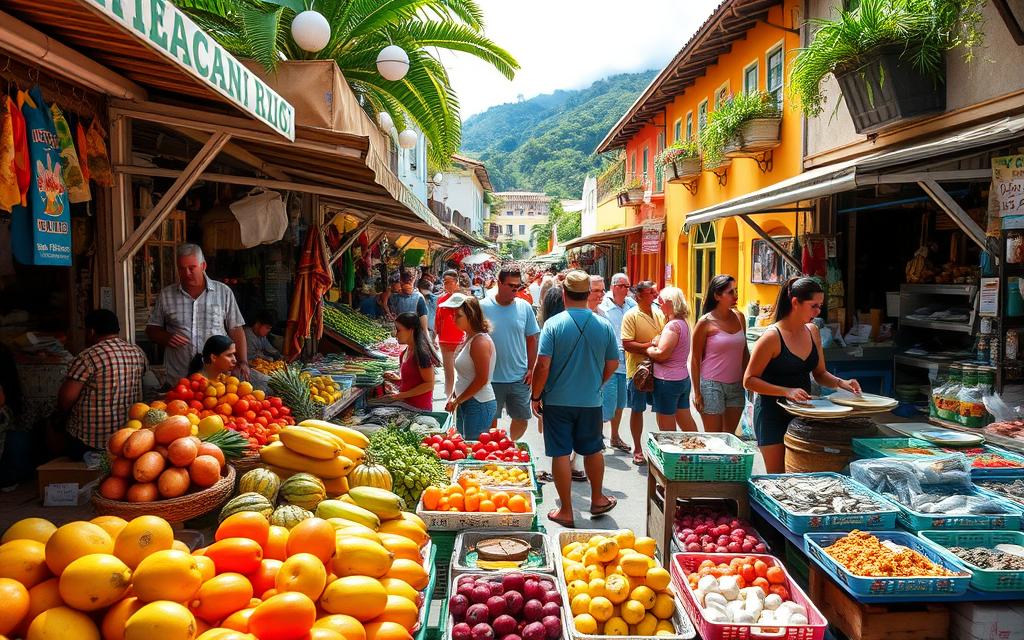
Street food is another affordable option in Costa Rica, with popular items like empanadas ($1-2), patacones ($2-4), and fresh fruit smoothies ($2-3). Additionally, farmers markets (ferias) offer fresh produce at prices 30-50% lower than supermarkets. Many markets also feature food stalls where visitors can enjoy freshly prepared meals for $4-7. Exploring street food and farmers markets provides not only a budget-friendly dining experience but also a chance to interact with local vendors and immerse oneself in the culture.
By choosing local “sodas,” street food, and shopping at farmers markets, travelers can enjoy the rich culinary delights of Costa Rica while keeping their food costs in check.
Traditional Costa Rican Dishes and Their Costs
Costa Rica’s culinary scene is a vibrant reflection of its culture, with traditional dishes that are both delicious and affordable. Visitors can enjoy a wide range of local flavors without breaking the bank.

Casado, Gallo Pinto, and Other Local Favorites
Traditional Costa Rican cuisine is characterized by dishes such as Casado, Gallo Pinto, and various seafood options. Casado, which translates to “married man,” is a hearty dish consisting of rice, beans, meat, and vegetables. For more information on food prices in Costa Rica, you can visit this resource. Gallo Pinto, a breakfast staple made from fried rice and beans, is another local favorite. These dishes are not only flavorful but also budget-friendly, with prices ranging from $5 to $10 at family-run eateries known as “sodas.”
Where to Find Authentic Meals at Reasonable Prices
To experience authentic Costa Rican cuisine at reasonable prices, visitors can explore local markets, known as “mercados,” where food stalls serve traditional dishes at 30-50% less than standalone restaurants. The Central Market in San José and similar markets in other towns offer a variety of options. Additionally, areas where locals live and work, slightly removed from main tourist zones, typically have sodas and small restaurants with prices 40-60% lower than those in prime tourist locations.
- Municipal markets offer authentic meals at lower prices.
- Areas with local eateries provide good value dining options.
- University areas have meal prices ranging from $4 to $ 8 for complete dishes.
Grocery Shopping in Costa Rica

The cost of groceries in Costa Rica can vary significantly depending on where you shop and what you buy. Travelers often find that while some items are reasonably priced, others can be surprisingly expensive.
Supermarket Prices vs. Local Markets
When comparing supermarket prices to those at local markets in Costa Rica, significant differences emerge. Local markets often offer fresh produce at lower prices compared to supermarkets, especially for items like fruits and vegetables. For instance, a kilo of bananas might cost between 500-700 colónes (0.80-1.10 euros) at a local market.
Supermarkets, on the other hand, tend to have higher prices for many products, including staples like rice and beans. However, they may offer a wider range of products, including imported goods.
Cost of Basic Food Items and Ingredients
Basic food staples in Costa Rica show significant price variations between tourist and local areas. For example, rice (1kg) can cost approximately $1.50-2.00 in local markets and $2.50-3.00 in tourist area supermarkets. Fresh tropical fruits like pineapples, bananas, and mangoes are generally affordable throughout Costa Rica.
Protein sources show some of the largest price disparities, with chicken breast costing $3-4 per pound in local markets and $5-7 in tourist area stores. Beef is generally expensive throughout the country. Imported items and specialty foods carry significant premiums due to import taxes.
Luxury Dining Experiences and Their Price Points

Luxury dining in Costa Rica is characterized by its emphasis on fresh, locally sourced ingredients and exceptional service. Luxury travelers should budget at least $250 daily for food and beverages. The best restaurants in Costa Rica offer a unique blend of traditional cuisine and modern flair, making for a memorable dining experience.
Fine Dining in Tourist Areas
Tourist areas in Costa Rica are home to many high-end restaurants that offer a range of luxury dining experiences. Many of these establishments emphasize farm-to-table practices and sustainability, with direct relationships to local producers resulting in exceptionally fresh ingredients. The service level at these luxury establishments typically far exceeds that of standard restaurants, with bilingual staff, personalized attention, and expertise about food and wine that enhances the overall dining experience.
Is the Premium Price Worth the Experience?
The value proposition of premium dining in Costa Rica depends largely on individual priorities, with travelers seeking unique culinary experiences often finding the higher prices justified by the quality, creativity, and setting. For special occasions or memorable vacation moments, the premium price of an upscale dining experience can be worth the splurge, particularly at restaurants with spectacular views or unique settings. Budget-conscious travelers can experience elements of luxury dining by visiting high-end restaurants during lunch when prices are often 30-40% lower than dinner, or by focusing on appetizers and shared plates rather than full tasting menus.
Alcohol and Beverage Costs in Costa Rica
Understanding the costs of alcohol and beverages is crucial for travelers planning to enjoy Costa Rica’s vibrant dining scene. The prices can vary significantly depending on the location, type of establishment, and whether the drinks are local or imported.
Prices of Local and Imported Drinks
In Costa Rica, the prices for alcohol differ a lot between restaurants and supermarkets. Beers like Imperial and Pilsen are popular among locals and tourists alike, but they are pricier at bars than at supermarkets. A meal at a local soda costs about $5, but drinks can add up fast.
- Local beers are generally more affordable than imported ones.
- Supermarkets offer better prices for drinks compared to bars and restaurants.
- Specialty cocktails made with local ingredients like guaro and tropical fruits can be a unique experience.

Happy Hours and Drink Specials
Happy hours offer significant savings on drinks in Costa Rica, with many establishments in tourist areas offering 2-for-1 specials or 30-50% discounts during off-peak hours, typically between 4-7 pm. Beach towns like Tamarindo, Jaco, and Puerto Viejo have the most competitive happy hour scenes.
- Many establishments extend happy hour discounts to appetizers or small plates.
- During the green season (May-November), drink specials become more prevalent and generous.
- Hotel bars often have the most expensive regular drink prices but may offer the most substantial happy hour discounts.
Money-Saving Tips for Food Expenses in Costa Rica
Traveling to Costa Rica can be a culinary adventure without breaking the bank if you plan your meals wisely. Knowing the local prices and planning your meals can significantly reduce your food expenses.
Planning Meals and Budgeting Strategies
To save on food costs in Costa Rica, it’s essential to plan your meals and budget accordingly. Self-catering can reduce food expenses by 40-60% compared to eating out. Opting for accommodations with kitchenettes or shared kitchen facilities can provide the best opportunities for self-catering.
Balancing Restaurant Meals with Self-Catering
A balanced approach to dining can also help reduce costs. Consider self-prepared breakfasts, a mix of restaurant and picnic lunches, and alternating between dining out and cooking simple dinners. This approach can reduce overall food costs by approximately 30-40%. Even without kitchen facilities, purchasing ready-to-eat items from supermarkets and local bakeries can help save money.

Conclusion: Enjoying Costa Rican Cuisine Without Breaking the Bank
Ultimately, Costa Rica proves that delicious meals and budget-friendliness can go hand in hand. Exploring Costa Rica’s food scene can be both fun and affordable, with a wide range of options to suit every traveler’s budget. By understanding the local food prices and being aware of the differences in costs between tourist areas and local neighborhoods, visitors can make informed decisions about their dining experiences.
For those looking to enjoy traditional Costa Rican dishes without overspending, this guide has highlighted the importance of venturing beyond tourist zones to discover authentic local eateries where prices are reasonable and quality remains high. Whether it’s savoring a casado at a local “soda” or enjoying street food, there are plenty of affordable options. For more insights on food expenses in Costa Rica, you can visit this resource to further understand the costs involved.
By balancing the occasional splurge with budget-friendly choices and planning meals strategically, travelers can enjoy the rich culinary heritage of Costa Rica without financial stress. This approach not only makes food an enjoyable highlight of the trip but also ensures that it doesn’t become a budget concern. With its diverse culinary options, from luxury dining to affordable street food, Costa Rica truly has something for everyone, making it possible to have a fulfilling dining experience regardless of one’s budget.
Article by Glenn Tellier (Founder of CRIE and Grupo Gap)
Don't wait, contact us right now!
Call or WhatsApp Costa Rica +506 8373 2085 or +506 8706 3888
Call USA/Canada +1 305-906-6784