
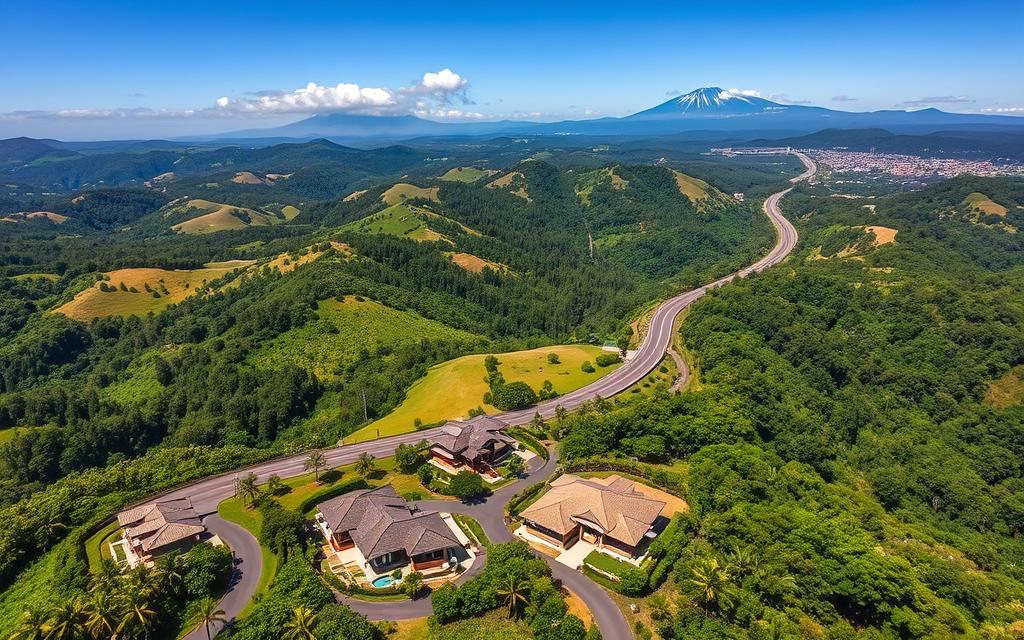
Costa Rica has become a sought-after destination for real estate investment, attracting many expats and retirees to its tropical paradise. Understanding the current home prices is crucial for potential buyers to make informed decisions.
The Costa Rican real estate market offers diverse options across different regions, with property prices varying significantly based on location, property type, and amenities. Recent market trends show fluctuations in property values, with certain regions experiencing growth while others see slight declines.
According to the latest data from Properstar.com, as of March 2024, the average home price in Costa Rica is CRC 991,166/m² for houses and CRC 1,181,258/m² for apartments.
The Current State of Costa Rica’s Real Estate Market
The current state of Costa Rica’s real estate market in 2024 is characterized by adjustments. The market has experienced notable shifts across different regions, with transaction volumes down by 10% compared to the same period in 2023.
Market Trends and Activity
Despite the decrease in transactions, properties are selling faster than before, with the average time on market reduced by 33% to 395 days. This suggests that well-priced properties are still attracting buyers. The inventory of single-family homes has increased by 24% compared to 2023 averages, providing more options for potential buyers.
The increased inventory may be contributing to downward pressure on prices, as average sold prices for single-family homes have decreased by 7% year-to-date. Luxury homes have experienced an even more significant decline of 28%, indicating a market correction after previous years of growth.
Price Fluctuations Across Regions
Regional variations are significant, with some areas maintaining strong demand while others experience more substantial price adjustments. Foreign interest remains a significant driver in the market, particularly in coastal and tourist-friendly regions, though buyers are becoming more price-sensitive and selective.
The market is showing signs of becoming more buyer-friendly, with increased inventory and moderating prices creating opportunities for those looking to invest in Costa Rican real estate.
Average Home Price in Costa Rica: A Regional Breakdown
Understanding the average home price in Costa Rica requires a closer look at the regional variations that define the country’s real estate market. The diverse geography and economic conditions across different regions significantly influence property prices.
Central Valley Prices
The Central Valley region, which includes San José and surrounding areas, has seen a 17% increase in average home prices, reaching $476,075. Despite a 13% decrease in transaction volume compared to 2023, the sustained demand in this populous area is evident. The number of days on the market has decreased by 31%, with properties selling in about 407 days on average. The inventory has grown by 9%, providing more choices for potential buyers.
Luxury properties in the Central Valley have also experienced a significant price increase of 15%, with average values reaching $863,846. This makes the region more affordable for high-end properties compared to coastal areas.
Coastal Region Valuations
The Coastal Region presents a varied picture. In Guanacaste & Nicoya Peninsula, transaction volumes have surged by 28% compared to 2023, but average prices have dropped by 36% to $967,506. This suggests increased inventory and possibly more motivated sellers in this popular beach destination. Properties are selling quicker, with a 28% decrease in time on the market, now at 418 days.
In contrast, the Central & South Pacific region has experienced strong price growth, with a 42% increase, bringing average home values to $893,841. This growth is likely driven by limited inventory and the region’s growing popularity among foreign buyers. The luxury segment has also seen a modest increase of 8%, with average prices at $1,593,219.
Mountain and Rural Area Costs
Rural and mountain areas, such as Lake Arenal, offer more affordable options, with properties often available at significantly lower price points than coastal or Central Valley locations. These regions provide alternatives for buyers looking for value in Costa Rica’s real estate market.
The regional price variations highlight the importance of location-specific research when considering Costa Rican real estate investment. Micro-markets can behave quite differently from national trends, making it crucial for buyers to understand the local dynamics.
- The Central Valley region shows average home prices of $476,075, a 17% increase despite a decrease in transaction volume.
- Luxury properties in the Central Valley have seen a 15% price increase, with average values at $863,846.
- Guanacaste and Nicoya Peninsula have experienced a 28% surge in transactions but a 36% drop in average prices to $967,506.
- The Central and South Pacific coast has seen a 42% price increase, with average home values at $893,841.
Factors Influencing Costa Rican Property Prices
Understanding the factors that influence property prices in Costa Rica is crucial for making informed decisions in the real estate market. The country’s diverse geography, economy, and legal framework all contribute to the complexity of its property market.
Location and Accessibility
Location remains a primary factor influencing property prices in Costa Rica. Beachfront and ocean-view properties command significant premiums, particularly in established tourist destinations like Guanacaste and the Central Pacific coast. The proximity to amenities such as international airports, quality healthcare facilities, and shopping centers also significantly impacts property values.
- Beachfront properties in popular areas see higher demand and prices.
- Accessibility to amenities like airports and healthcare facilities increases property value.
- Properties with ocean views are highly sought after, commanding premium prices.
Infrastructure Development
Infrastructure development has dramatically increased property values in previously remote areas. Improvements in road networks, water systems, and reliable internet connectivity have enhanced the quality of life in these areas, making them more attractive to buyers.
Foreign Investment Impact
Foreign investment continues to drive prices in popular expatriate communities. North American and European buyers have influenced market dynamics in regions like Tamarindo, Nosara, and parts of the Central Valley. This foreign demand has contributed to the appreciation of property values in these areas.
Other factors such as environmental considerations, legal restrictions, and the development of luxury amenities also play significant roles in shaping property prices in Costa Rica. Understanding these factors is essential for navigating the Costa Rican real estate market effectively.
Popular Regions for Real Estate Investment
The diverse geography of Costa Rica presents multiple attractive regions for real estate investment, catering to different investor preferences. From coastal areas with strong rental potential to mountain communities offering cooler climates and agricultural opportunities, each region has its unique advantages.
Guanacaste and the Gold Coast
Guanacaste and the Gold Coast continue to be premier investment destinations in Costa Rica, offering beautiful beaches, developed infrastructure, and strong rental potential. Despite recent price adjustments, the region remains attractive due to its well-developed tourist infrastructure and the growing demand for short-term rentals.
Playa Flamingo, part of the Guanacaste region, exemplifies the area’s appeal with its picturesque beaches and improving accessibility. The region’s transformation from an underdeveloped area to a thriving tourist destination has created new opportunities for investors.
Central Valley Opportunities
The Central Valley, including San José and surrounding communities like Escazú and Santa Ana, remains an attractive location for its temperate climate, modern amenities, and proximity to business centers. Property values in the area have shown a steady appreciation of 17%, making it a stable investment option.
The region’s appeal lies in its balanced offering of urban and natural environments, providing investors with a range of property types and rental opportunities.
Emerging Investment Hotspots
Emerging regions such as Lake Arenal, the Central and South Pacific coast, and the Southern Zone near the Panama border are gaining attention for their unique investment opportunities. Lake Arenal, for instance, offers stunning views and affordable prices, particularly on its less developed west side.
The Central and South Pacific coast, including areas like Manuel Antonio and Dominical, has seen significant growth, with property values increasing by 42%. These emerging hotspots offer a mix of natural beauty, improving infrastructure, and potential for long-term appreciation.
Each of these regions offers distinct investment advantages, whether through short-term rental returns in coastal areas or long-term appreciation in the Central Valley. Investors can choose from a variety of opportunities that align with their investment goals and preferences.
Legal Considerations for Buying Property in Costa Rica

When investing in Costa Rica’s real estate market, understanding the legal landscape is crucial. Costa Rica offers an attractive environment for foreign property buyers, but certain legal considerations must be taken into account to ensure a smooth transaction.
Property Ownership Rights for Foreigners
Costa Rica provides foreigners with the same property ownership rights as its citizens, making it an appealing destination for international real estate investors. However, specific restrictions apply, particularly in coastal areas governed by the Maritime Zone law.
The Maritime Zone law prohibits private ownership within 50 meters of the high tide line and restricts development in the next 150 meters to concession-based arrangements. These concessions come with specific limitations for foreigners, although residency in Costa Rica for more than five years can simplify the process.
Title Search and Due Diligence
A thorough title search is essential in Costa Rica, as the country adheres to the “first in time, first in right” doctrine. This means that the person with the oldest valid title to a property is considered the rightful owner. Buyers should verify that the property title is registered in the National Registry through their attorney.
Unlike in North America, title insurance is generally not available in Costa Rica, making proper legal due diligence critical to ensure a clean title and avoid future disputes.
Working with Legal Professionals
Working with an experienced, bilingual real estate attorney is crucial when purchasing property in Costa Rica. They will conduct the necessary searches and guide buyers through the complex legal process, ensuring compliance with all legal requirements.
Buyers should be particularly cautious with oceanfront properties, verifying that they have proper title if within the Maritime Zone and that any concession rights are transferable and valid.
Closing Costs and Property Taxes
When buying a property in Costa Rica, it’s essential to understand the various costs involved beyond the purchase price. These costs can significantly impact the overall expense of acquiring and maintaining a property.
Transfer Taxes and Fees
In Costa Rica, closing costs are typically higher than in the United States or Canada, ranging from 3.5% to 4% of the purchase price. The buyer is responsible for these costs, which include transfer taxes, Notary fees, documentary stamps, and legal fees, as well as VAT/IVA costs.
A significant component of closing costs is the property transfer tax, known as “Impuesto de Traspaso,” which is 1.5% of the registered property value. This tax must be paid before the National Registry will record the transfer deed.
Annual Property Tax Obligations
Annual property taxes in Costa Rica are relatively low, at 0.25% of the registered property value. This makes ongoing ownership costs manageable, even for those on fixed incomes.
Properties valued at over 126 million colones (approximately $247,073) are subject to an additional luxury property tax, ranging from 0.25% to 0.55% on a sliding scale. This tax affects primarily high-end homes and investments.
Additional Expenses to Consider
Other expenses to consider when buying a property in Costa Rica include Notary fees, which follow a sliding scale based on property value, and documentary stamps, which cost approximately 0.5% of the transaction value.
- Notary fees start at 2% for properties up to 10 million colones and decrease to 1% for higher-valued properties, plus a 13% VAT (IVA) on legal fees.
- Municipal taxes vary by location.
- Potential homeowners association fees apply in gated communities or condominiums.
Property owners must also have their home’s value reassessed every five years to avoid potential penalties.
Comparing Costa Rica’s Real Estate Market to Other Central American Countries
The Central American real estate landscape is diverse, with Costa Rica offering a distinct combination of natural beauty and investment potential. When evaluating real estate options, investors often compare Costa Rica to its neighbors, particularly Panama and Nicaragua.
Price Comparisons with Panama and Nicaragua
Costa Rica’s real estate prices are more affordable compared to Panama, with the average price per square foot to buy an apartment in the city center being $181.47 in Costa Rica versus $213.97 in Panama. For instance, apartments outside the city center are priced at $107.97 per square foot in Costa Rica, lower than Panama’s $119.35. Nicaragua presents even lower entry prices, but this comes with higher political and economic risks, making Costa Rica a balanced choice for investors seeking reasonable prices and stability.
Investment Security and Stability Factors
Costa Rica’s democratic stability, lack of a standing army, and history of peaceful governance provide a security advantage for real estate investments. While Panama boasts a dollarized economy and significant infrastructure development, Costa Rica counters with robust environmental protections and a well-established tourism industry that supports rental returns.
Return on Investment Potential
The price-to-rent ratio in Costa Rica is 14.32, higher than Panama’s 12.08, suggesting potentially stronger long-term appreciation potential in Costa Rica. Costa Rica’s real estate market tends to experience less dramatic fluctuations than some neighboring countries, offering more predictable appreciation over time. For more information on rental options and housing in Costa Rica, visit Costa Rica Rent and Housing Options.
Investment Potential and Rental Yields
Costa Rica offers a compelling investment landscape for real estate buyers, driven by its growing tourism industry and increasing demand for both short-term vacation rentals and long-term residential properties.
Short-term Rental Market Analysis
The short-term rental market in Costa Rica’s popular tourist destinations like Guanacaste and Manuel Antonio is robust, generating gross rental yields of 6-10% annually. Peak season rates often double or triple low season rates, making these properties highly lucrative for investors.
Coastal properties in established areas such as Tamarindo and Playa Flamingo have shown particularly strong rental performance. The limited developable land due to strict permitting requirements and Maritime Zone restrictions contributes to their high demand.
Long-term Rental Opportunities
In contrast, the Central Valley offers more stable, year-round rental potential with lower yields, typically ranging from 4-7%. This region attracts investors seeking steady income rather than seasonal peaks.
Luxury properties, especially those in gated communities with amenities like golf courses and beach clubs, command premium rental rates. However, they often show lower percentage yields due to their higher acquisition costs.
ROI Expectations by Region
Regional ROI expectations vary significantly across Costa Rica. Guanacaste properties might offer stronger appreciation potential but more seasonal rental income, while Central Valley investments typically provide more consistent cash flow with moderate appreciation.
Property management costs, typically ranging from 20-30% of gross rental income, must be factored into investment calculations. Professional management can offset these expenses with higher occupancy rates and better property maintenance.
Tips for Finding the Best Property Deals in Costa Rica
Finding the best property deals in Costa Rica requires a combination of local knowledge and strategic planning. The country’s diverse real estate market offers a wide range of opportunities for buyers, from luxury homes to investment properties.
Working with Reputable Agents
One of the most critical steps in finding a great property deal is working with reputable, licensed real estate agents who specialize in specific regions of Costa Rica. This is particularly important due to the lack of a centralized MLS system in the country, making local expertise invaluable for identifying the best properties. For more information on the process of purchasing property in Costa Rica, you can visit this resource.
Timing Your Purchase
Timing is also crucial when looking for property deals in Costa Rica. The green season, which runs from May to November, often presents advantages as it is a slower tourist period, coinciding with more motivated sellers and potentially better negotiating positions.

Negotiation Strategies
Several strategies can help buyers secure the best deals. Looking for motivated sellers, such as those facing financial pressure or expatriates needing to return to their home countries, can yield significant discounts. Properties with highly personalized designs or unusual features often linger on the market longer and can represent excellent value opportunities for buyers who can see past cosmetic issues.
Additionally, considering properties with larger land parcels offers potential for future subdivision or development, particularly in areas experiencing growth or improved infrastructure. Being prepared to act quickly with financing already arranged is also essential in competitive markets.
- Work with licensed real estate agents specializing in your desired region.
- Consider purchasing during the green season for better deals.
- Look for motivated sellers who may offer significant discounts.
Conclusion: Is Now the Right Time to Buy in Costa Rica?
As the Costa Rican real estate market continues to evolve, potential buyers and investors are left wondering if now is the right time to make a purchase. The answer depends on various factors, including regional market trends, personal financial goals, and long-term investment strategies.
Assessing Market Timing
The current Costa Rican real estate market presents a mixed picture. Transaction volumes have decreased by 10% nationally, but properties are selling 33% faster, indicating a more efficient market. Regional variations are significant, with the Central Valley and Central Pacific coast showing resilience in home prices, while Guanacaste and the Nicoya Peninsula have experienced more substantial price declines.
For buyers considering entering the market, understanding these regional trends is crucial. The increased inventory in certain areas, such as Guanacaste, may provide better negotiating positions. Conversely, regions like the Central Valley continue to demonstrate stability and potential for long-term appreciation.
Long-term Investment Outlook
Costa Rica remains an attractive destination for real estate investment due to its political stability, growing tourism industry, and improving infrastructure. For long-term investors, the country’s environmental protections and limited overdevelopment help preserve property values.
When evaluating the total cost of ownership, foreign buyers should consider not only the purchase price but also closing costs (typically 3.5-4%), annual property taxes, and potential luxury taxes for higher-value properties. Ongoing maintenance expenses in Costa Rica’s tropical climate should also be factored into the investment calculation.
Final Recommendations for Buyers
Prospective buyers should prioritize properties that meet their personal lifestyle needs while also considering investment potential. Working with reputable real estate agents who specialize in specific regions can provide invaluable local expertise in identifying the best opportunities.
For those considering renting out their property, understanding the rental market is essential. More information on renting a house in Costa Rica can be found here.
In conclusion, while the current market presents both challenges and opportunities, Costa Rica’s real estate market continues to offer attractive options for buyers and investors who approach the market with careful planning and local expertise.
Article by Glenn Tellier (Founder of CRIE and Grupo Gap)
Don't wait, contact us right now!
Call or WhatsApp Costa Rica +506 8373 2085 or +506 8706 3888
Call USA/Canada +1 305-906-6784