
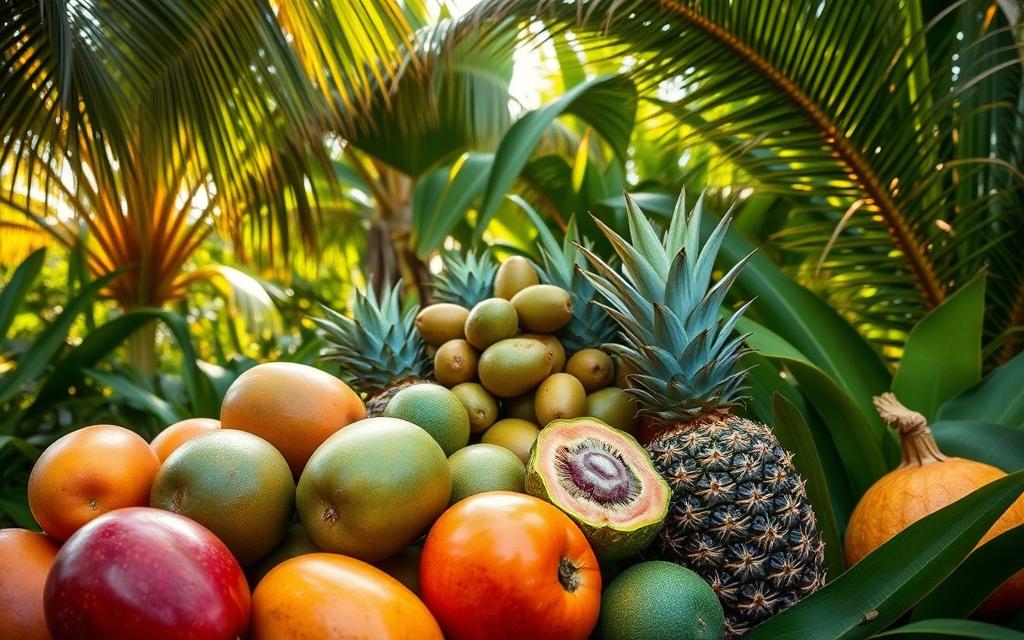
Did you know that Costa Rica is home to over 1,000 unique fruit varieties? This small Central American country boasts a diverse climate, ranging from tropical lowlands to cool highlands. This variety allows for an incredible range of fruits to thrive.
The country’s volcanic soil and pristine water quality contribute to the exceptional flavor of its produce. From the sweet and tangy mamon chino to the creamy guanabana, each fruit offers a unique taste experience. Many of these fruits are enjoyed fresh, in juices, or even in traditional Costa Rican drinks.
Seeds play a vital role in the natural growth of these fruits, ensuring their authenticity and quality. Whether you’re a fruit enthusiast or a curious traveler, Costa Rica’s exotic offerings are sure to delight your senses. Dive into this guide to discover the vibrant world of Costa Rican fruits.
Tropical Fruit Diversity in Costa Rica
Costa Rica’s tropical climate nurtures a stunning array of fruits, blending native treasures with exotic imports. This diversity makes it a paradise for fruit enthusiasts and curious travelers alike. From the tangy passion fruit to the creamy guanabana, each variety offers a unique taste and texture.
Overview of Native and Exotic Varieties
Costa Rica is home to both native fruits and those introduced from other parts of the world. Native varieties like the cas fruit and nance are deeply rooted in local traditions. Exotic imports, such as mangoes and guavas, have adapted beautifully to the fertile soil and warm climate.
Mangoes, for instance, come in various shapes, sizes, and colors, each with distinct flavors. Guavas, especially the pink-fleshed guayaba de Puriscal, are a favorite among locals. This blend of native and exotic fruits creates a rich tapestry of flavors and textures.
Unique Characteristics of Tropical Fruits
The physical attributes of these fruits set them apart. The flesh of a ripe mango is smooth and juicy, while the skin of a passion fruit is thick and slightly wrinkled. These features not only define their appearance but also influence their flavor profiles.
Passion fruit, known locally as maracuya, is a tropical favorite. Its aromatic pulp is both tangy and sweet, making it ideal for juices and desserts. The texture of the flesh, combined with the quality of the skin, ensures a delightful sensory experience.
Other fruits, like the starfruit, have a unique shape and a sweet-tart flavor. The flesh of the guanabana is creamy, with a taste reminiscent of pineapple and strawberry. These characteristics make Costa Rica’s fruits truly one-of-a-kind.
Cultural Significance and Culinary Traditions
From breakfast to dessert, fruits play a central role in Costa Rican culture. They are not just ingredients but a reflection of the country’s rich agricultural heritage and vibrant traditions.

Fruit in Daily Costa Rican Cuisine
Fresh fruit juices are a staple in Costa Rican meals. Whether it’s a tangy passion fruit blend or a sweet mango smoothie, these drinks are enjoyed throughout the day. Fruits from local trees are harvested daily, ensuring freshness and flavor.
Breakfast often includes a “plato de frutas,” a colorful plate of seasonal fruits like pineapple, papaya, and melon. This ritual highlights the importance of fresh produce in the Costa Rican diet. Families gather to enjoy these simple yet nutritious meals.
Traditional Dishes and Fruit-Based Treats
Traditional snacks and desserts showcase the versatility of Costa Rican fruit. Rambutan, with its juicy flesh, is a popular street snack. Homemade ice cream made from tropical fruits like guanabana and coconut is a favorite treat.
Seasonal festivals celebrate the abundance of local produce. From fruit-themed parades to cooking competitions, these events highlight the cultural significance of Costa Rican fruit. The passion for fresh, locally-sourced ingredients is evident in every dish.
Explore more about the vibrant world of Costa Rican fruit and its role in daily life. Whether it’s a refreshing juice or a creamy dessert, these fruits are a testament to the country’s culinary heritage.
fruits-in-costa-rica: A Comprehensive Overview
The flavors of Costa Rican fruits are as diverse as the landscapes they grow in. From the tangy passion fruit to the creamy guanabana, each variety offers a unique taste experience. This section dives into the profiles of these fruits, exploring their sweetness, acidity, and cultural significance.
Exploring Fruit Profiles and Their Flavors
Costa Rican fruits are celebrated for their distinct flavor profiles. The passion fruit, known locally as maracuya, combines tanginess with a hint of sweetness. Its aromatic pulp is a favorite in juices and desserts, showcasing the passion behind local culinary traditions.
Natural sugars play a key role in the taste of these fruits. The cas fruit, a cousin of the guava, is known for its high sugar content and is often used in traditional drinks. Its unique flavor adds depth to local recipes, making it a staple in many households.
Local markets are the heart of fruit availability in Costa Rica. Here, you’ll find everything from the juicy pineapple to the exotic starfruit. These markets not only provide fresh produce but also reflect the cultural passion for rican fruit.
Some fruits, like the guanabana, feature black seeds that add texture and complexity to their flavor. These seeds are often removed before consumption, but they contribute to the fruit’s overall sensory experience. The interplay of sweetness, acidity, and texture makes Costa Rican fruits truly unforgettable.
Whether you’re sampling a slice of mango or sipping on a cas-based juice, each fruit tells a story of Costa Rica’s rich agricultural heritage. The passion for fresh, locally-sourced ingredients is evident in every bite and sip.
Farmers’ Markets and Local Produce Scenes
Costa Rica’s farmers’ markets are a sensory explosion of colors, flavors, and traditions. These bustling hubs are where locals and visitors alike come to experience the best of the country’s agricultural bounty. From vibrant tropical fruit to handcrafted goods, every market visit is a cultural adventure.

Discovering Costa Rican Market Culture
Markets like the Liberia Farmers Market and Nicoya Farmers Market are weekly favorites. Vendors display a colorful array of products, from local staples to exotic fruit like lychee and guanabana. The atmosphere is lively, often accompanied by live music and traditional dances.
Supporting local farmers is a key part of the experience. Prices at these markets are often more competitive than supermarkets, making it a win-win for shoppers and producers. Visitors can find everything from fresh mangoes to cream-based sweets, all sourced directly from nearby farms.
Tips for Finding the Best Local Fruits
Identifying ripe fruit is an art. Look for vibrant color, a slight give when pressed, and a sweet or tart aroma. For example, a ripe lychee will have a bright red skin and a fragrant scent. Texture also matters—creamy guanabana should feel soft but not mushy.
- Visit on weekends for the freshest produce.
- Ask vendors for recommendations—they know their products best.
- Try seasonal treats like ice-cold coconut water or cream-filled pastries.
Exploring these markets is more than just shopping—it’s a cultural immersion. Whether you’re sampling exotic fruit or chatting with local farmers, the experience is unforgettable.
Health Benefits and Uses in Beverages
Costa Rica’s exotic fruits are not just a treat for the taste buds but also a powerhouse of nutrients. Packed with vitamins, antioxidants, and natural sugars, these fruits offer a wide variety of health benefits. Families across the country enjoy them year-round, incorporating them into daily meals and beverages.

Nutritional Power of Exotic Fruits
Many Costa Rican fruits are rich in essential vitamins. For example, guayaba (guava) is loaded with vitamin C and A, supporting immune health and vision. The caimite fruit, with its high vitamin C content, rivals even oranges in nutritional value.
Antioxidants are another key benefit. Fruits like rambutan and noni are known for their ability to combat oxidative stress. These nutrients not only boost overall health but also contribute to glowing skin and increased energy levels.
Refreshing Juices, Smoothies, and Cocktails
Costa Rican fruits are often transformed into delicious beverages. Smoothies, or “batidos,” are a popular choice, blending fruits like mango, guanabana, and apple into creamy, nutrient-packed drinks. These beverages are perfect for breakfast or as a refreshing snack.
For those seeking a more indulgent treat, fruit-based cocktails are a hit. Passion fruit and tamarind are often used to create tangy, tropical drinks. Whether enjoyed as a healthy juice or a decadent dessert, these beverages showcase the versatility of Costa Rican fruits.
From boosting immunity to providing natural energy, these fruits are a vital part of a balanced diet. Their health benefits and delicious flavors make them a staple in Costa Rican households.
Seasonal Availability and Emerging Trends
Costa Rica’s diverse climate ensures a continuous supply of fresh fruits throughout the year. While some fruits thrive year-round, others have specific peak seasons. This unique rhythm allows locals and visitors to enjoy a variety of flavors all year long.

Year-Round Harvest and Seasonal Highlights
Many fruits, like pineapples and bananas, are available year-round due to the country’s tropical climate. However, others, such as mangoes and guavas, have distinct seasons. Mangoes, for example, are at their sweetest from March to June, offering the perfect taste experience during these months.
Guavas, on the other hand, peak from August to October. Their unique flavor and aroma make them a favorite during this time. Knowing these seasonal highlights can help visitors plan their trips to enjoy the freshest produce.
Market Trends and Sustainable Production
The fruit industry in Costa Rica is evolving, with a growing focus on sustainable practices. Farmers are adopting eco-friendly methods to ensure year-round availability without compromising quality. This shift not only benefits the environment but also meets the increasing demand for organic produce.
Emerging trends include the use of modern agricultural techniques to enhance yield and taste. For instance, controlled irrigation systems and natural pest control methods are becoming more common. These innovations help maintain consistent quality while supporting local farmers.
Tourists can use this guide to explore the best fruit types during their visit. Whether it’s the creamy texture of a ripe mango or the tangy sweetness of a guava, Costa Rica’s fruits offer a taste of its rich agricultural heritage.
Conclusion
Costa Rica’s fruit diversity is a testament to its rich agricultural heritage. From the ever-popular pineapple to the exotic dragon fruit, each variety offers unique properties that make them a staple in local cuisine. These fruits are often used in creative ways, from refreshing smoothies to traditional desserts, showcasing their versatility.
Seasonal availability ensures that every visit brings a new taste experience. Sustainable production practices guarantee quality and freshness year-round. The cultural significance of these fruits is deeply rooted in family traditions and culinary innovation.
For those eager to explore, visiting local markets is a must. Sample authentic smoothies made with fresh produce and immerse yourself in the vibrant fruit culture. Discover more about these treasures and their role in Costa Rican life by exploring Costa Rica’s fruit offerings firsthand.
Article by Glenn Tellier (Founder of CRIE and Grupo Gap)
Don't wait, contact us right now!
Call or WhatsApp Costa Rica +506 8373 2085 or +506 8706 3888
Call USA/Canada +1 305-906-6784