
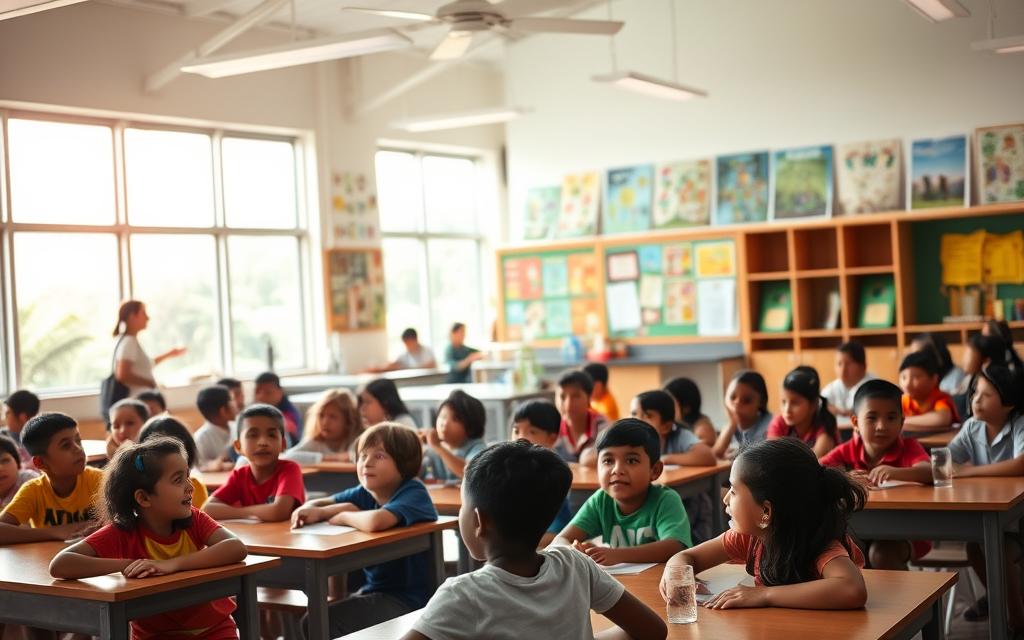
Did you know that Costa Rica boasts a literacy rate of nearly 98%? This Central American nation has made education a top priority, investing 6.5% of its GDP into its school system. For expat families, this commitment translates into a reliable and high-quality education option.
The country’s public schools are free, with costs limited to materials like books and uniforms. This makes them an attractive choice for families seeking affordability without compromising on quality. In contrast, private schools offer smaller class sizes and bilingual programs, catering to diverse needs.
Structured academic cycles and early enrollment are key features of the system. Families can expect a well-organized calendar, with breaks in July and December. Whether choosing public or private options, expats will find a supportive environment for their children’s education.
Overview of Costa Rica’s Education System
Education has long been a cornerstone of national development in this Central American nation. Following the civil war, the government made a pivotal decision to prioritize education over military spending. This shift laid the foundation for a system that now boasts one of the highest literacy rates in Latin America.
Historical Context and Government Investment
In the mid-20th century, the country redirected funds from its military budget to education. This bold move was part of a broader strategy to foster social and economic growth. By investing heavily in schools, the government aimed to create a more educated and skilled population.
These efforts paid off, with literacy rates soaring to nearly 95%. The focus on education also helped reduce poverty and improve overall quality of life. Today, the system continues to benefit from these early investments.
Current Education Landscape
The modern education system is well-structured, with clear academic cycles and a focus on accessibility. Public schools are widespread, serving both urban and suburban communities. Families can expect a consistent academic calendar, with breaks in July and December.
This infrastructure supports a diverse student population, ensuring that education remains a top priority. The legacy of historical investments is evident in the quality and reach of the system today.
Understanding Costa Rica Public Schools
One of the key strengths of the local education system is its focus on foundational learning. Families benefit from a well-structured approach that prioritizes accessibility and quality. Public institutions play a vital role in shaping the academic and social development of students.

Core Features and Advantages
Public schools here are free, with costs limited to essentials like uniforms and materials. This makes them an affordable option for families. The curriculum is standardized, ensuring consistent quality across institutions.
Schools are designed to be inclusive, serving both residents and qualified expats. Smaller class sizes in some areas allow for more personalized attention. Community engagement is also a priority, fostering a supportive learning environment.
These institutions play a crucial role in early development. They provide a strong foundation in core subjects while encouraging social skills. For many families, they are the first step toward a brighter future.
Public vs Private Education: Key Differences
Choosing the right school for your child involves understanding the key differences between public and private options. Both systems offer unique benefits, but the choice depends on factors like cost, enrollment flexibility, and curriculum.
Cost Considerations and Enrollment Flexibility
Public schools are free, with families only covering expenses like uniforms and supplies. This makes them an affordable choice for many. In contrast, private schools charge tuition, which can range from $3,000 to $15,000 annually.
Enrollment flexibility is another key factor. Public schools often require residency, while private institutions are more accommodating to expats. This makes private schools a popular choice for families without permanent residency.
Curriculum and Language of Instruction
The curriculum in public schools follows a standardized national framework. This ensures consistency across the country. Private schools, however, often offer enhanced programs, including bilingual education in English and Spanish.
Class sizes also differ significantly. Public schools average around 40 students per class, while private schools maintain smaller groups of about 25. This allows for more personalized attention and a tailored learning experience.
These differences play a crucial role in a family’s decision-making process. Whether prioritizing affordability or specialized programs, understanding these distinctions helps parents choose the best option for their child.
Enrollment Requirements and Procedures
Enrolling a child in the local education system requires careful preparation and understanding of the necessary steps. Families must gather specific documents and meet residency criteria to ensure a smooth process. This ensures compliance with national guidelines and sets the stage for a successful academic journey.

Documentation and Residency Criteria
To register a student, families need to provide several key documents. These include proof of residency for both the child and parent, valid identification, and academic transcripts. These requirements help maintain the integrity of the education system and ensure all students meet the necessary standards.
For expat families, additional documentation may be required. This often includes proof of legal residency or a visa. Younger children or recent arrivals may have some allowances, but thorough preparation is still essential to avoid delays.
Language Proficiency and Proof of ID
Language proficiency plays a significant role in the enrollment process. Students are often required to demonstrate basic skills in the primary language of instruction. This ensures they can fully participate in the classroom and integrate into the school community.
Proof of ID is another critical requirement. Families must provide official documents, such as birth certificates or passports, to verify the child’s identity. This step is crucial for maintaining accurate records and ensuring compliance with national education standards.
By understanding these requirements, families can navigate the enrollment process with confidence. Proper preparation ensures a smooth transition into the academic environment and sets the stage for a successful educational experience.
Academic Structure: Levels and Cycles Explained
The academic journey in this Central American country is designed to nurture students from an early age through structured cycles. The system ensures a seamless transition from preschool to secondary education, preparing learners for future success.
From Preschool to Secondary School
Education begins with mandatory preschool, starting at age 4. This phase includes two cycles: Ciclo Materno Infantil and Ciclo de Transición. These cycles focus on foundational skills, social development, and preparing children for primary school.
Primary education spans six years, divided into two cycles. The first cycle covers grades 1-4, while the second includes grades 5-6. This structure ensures consistent learning and skill-building.
Secondary education follows, consisting of three years of general studies and two to three years of specialized training. This phase culminates in a “Bachillerato,” preparing students for higher education or the workforce.
Cycle Divisions and Grade Progression
The education system is organized into clear cycles to support continuous development. Each cycle builds on the previous one, ensuring students acquire the necessary knowledge and skills.
- Preschool Cycles: Focus on early childhood development and readiness for primary school.
- Primary Cycles: Emphasize core subjects like math, science, and language, fostering a strong academic foundation.
- Secondary Cycles: Offer specialized tracks, allowing students to explore their interests and prepare for high school graduation.
This structured approach ensures that every student progresses smoothly, with each cycle playing a vital role in their academic and personal growth.
School Schedules and Academic Calendar
Efficient scheduling plays a crucial role in the success of the education system. The academic year runs from February to November or December, divided into two main semesters. This structure ensures a balanced approach to learning, with breaks in July and December to recharge.
Morning and Afternoon Cycles
Schools use alternating morning and afternoon cycles to manage resources effectively. Morning sessions typically start at 7:00 AM and end by 12:30 PM. Afternoon sessions begin at 1:00 PM and conclude around 6:00 PM. This system keeps class sizes manageable and ensures all students have access to facilities.
Alternating schedules benefit both students and schools. Smaller class sizes allow for more personalized attention, enhancing the learning experience. Additionally, this approach optimizes infrastructure usage, ensuring resources like classrooms and equipment are fully utilized.
This scheduling strategy also helps students develop time management skills. By following a structured routine, they learn to balance their academic and personal responsibilities. This skill is invaluable for their future success in higher education and beyond.
The academic calendar is designed to maximize learning opportunities. With clear start and end times for each cycle, students can focus on their courses without unnecessary disruptions. This organized approach ensures that every student benefits from a well-rounded education.
Classroom Environment and Teacher Training
The classroom environment plays a pivotal role in shaping student success. From class sizes to teacher preparedness, these factors directly influence learning outcomes. Understanding these dynamics helps parents and educators create a supportive space for academic growth.

Class Size Impact on Learning
In many public institutions, class sizes average around 40 students. While larger groups can challenge personalized attention, they also encourage collaboration and peer learning. Teachers often adapt by using group activities and interactive methods to engage everyone.
Smaller class sizes, common in private settings, allow for more one-on-one interaction. However, public schools compensate with structured lesson plans and trained educators. This balance ensures that students receive quality education despite the numbers.
Ongoing Professional Development
Teacher training is a cornerstone of the school system. Regular workshops and certification programs help educators stay updated with the latest teaching methods. These initiatives ensure that teachers are well-equipped to handle diverse classrooms.
Key programs include:
- Specialized training in bilingual education.
- Workshops on technology integration in classrooms.
- Courses focused on managing large class sizes effectively.
Such efforts not only improve teaching quality but also contribute to the country’s high literacy rate. By investing in educators, the system ensures that students receive the best possible education.
Grading Scales and Assessment Methods
Understanding how student performance is measured is key to navigating the education system. Schools here use a combination of numeric and letter grades to evaluate progress. This dual approach ensures clarity and consistency in tracking academic achievement.
Numeric and Letter Grade Systems
The grading system includes both a 100-point and a 10-point numeric scale. These scales correlate with letter grades such as S (Outstanding), N (Notable), Suf (Sufficient), and I (Insufficient). This method provides a comprehensive view of a student’s performance.
For example, a score of 90-100 on the 100-point scale or 9-10 on the 10-point scale corresponds to an S grade. Mid-range scores like 70-79 or 7-8 align with Suf, indicating satisfactory performance. Lower scores below 50 or 5 result in an I grade, signaling the need for improvement.
Compared to other systems, this approach is straightforward and easy to understand. It aligns with global standards, making it simpler for students transitioning from or to other countries. Clear assessment methods like these are essential for monitoring progress and identifying areas for growth.
Key features of the grading system include:
- Numeric Scales: 100-point and 10-point systems for precise evaluation.
- Letter Grades: S, N, Suf, and I to categorize performance levels.
- Global Comparisons: Similar to grading practices in the US, UK, and Australia.
By using these methods, schools ensure that students receive accurate feedback on their academic journey. This fosters a culture of continuous improvement and supports the country’s high literacy rate.
Role of Extra-Curricular Programs in Student Growth
Extra-curricular programs play a vital role in shaping well-rounded students, offering opportunities beyond the classroom. These activities complement academic learning by fostering creativity, teamwork, and leadership skills. They also provide a platform for students to explore their interests and build confidence.

Promoting Social and Cultural Development
Participation in sports, arts, and cultural events helps students develop essential social skills. Through teamwork and collaboration, they learn to communicate effectively and build lasting relationships. Cultural activities, such as music and theater, also encourage self-expression and appreciation for diversity.
In many schools, community events and festivals further enhance this experience. These gatherings bring students, parents, and teachers together, creating a supportive environment. Such initiatives not only enrich the school culture but also strengthen community bonds.
Opportunities in Sports and the Arts
Sports programs teach students discipline, perseverance, and the value of hard work. Whether through soccer, basketball, or track and field, students gain physical fitness and a sense of accomplishment. These activities also provide a healthy outlet for stress and energy.
Arts programs, on the other hand, nurture creativity and innovation. From painting and dance to drama and music, students explore their artistic talents. These experiences often lead to personal growth and a deeper understanding of the world around them.
While public schools offer limited extra-curricular options, private institutions often provide a wider range of programs. This difference highlights the importance of choosing a school that aligns with a student’s interests and goals. Regardless of the setting, extra-curricular activities remain a cornerstone of holistic education.
- Social Skills: Teamwork and communication are key benefits of participation.
- Cultural Awareness: Activities like music and theater promote diversity and creativity.
- Physical and Mental Health: Sports and arts provide a balanced approach to student well-being.
- School Choice: Consider extra-curricular offerings when selecting a school.
Childcare, Preschool, and Early Childhood Education
Early childhood education lays the foundation for lifelong learning and success. In this Central American nation, preschool programs are structured to nurture cognitive, social, and emotional development. These early years are crucial for preparing children for their academic journey.
Ciclo Materno Infantil and Transition Cycle
The preschool system is divided into two main cycles: Ciclo Materno Infantil and Ciclo de Transición. The first cycle focuses on children aged 2-4, emphasizing play-based learning and socialization. The second cycle, for ages 4-6, prepares children for primary school by introducing foundational academic skills.
These cycles ensure a smooth transition into formal education. Activities are designed to foster curiosity, creativity, and teamwork. By the end of the transition cycle, children are well-prepared for the structured environment of primary school.
Importance of Early Learning Experiences
Early learning experiences have a lasting impact on a child’s development. Studies show that children who attend preschool perform better academically and socially. Programs here focus on holistic development, integrating arts, music, and outdoor activities.
Key benefits include:
- Cognitive Growth: Early exposure to learning enhances problem-solving and critical thinking skills.
- Social Skills: Group activities teach children to communicate and collaborate effectively.
- Emotional Resilience: Structured environments help children build confidence and independence.
Government initiatives ensure that early childhood education is accessible and high quality. Programs are designed to support families, providing both care and academic stimulation. This commitment to early education reflects the nation’s dedication to fostering lifelong learners.
Bilingual and International Education Options
Bilingual education has become a cornerstone for expat families seeking seamless academic transitions. With a growing expat population, the demand for bilingual programs in international schools is on the rise. These programs offer a unique blend of languages, ensuring students can adapt to diverse educational systems.

International schools often feature smaller class sizes compared to local institutions. This allows for more personalized attention and tailored learning experiences. Families appreciate the focus on both academic rigor and cultural integration, making these schools a popular choice.
Integrating English and Other Languages
Bilingual programs typically integrate English alongside Spanish, creating a holistic learning environment. This dual-language approach helps students develop fluency in both languages, preparing them for global opportunities. Schools like the British School of Costa Rica and the Pan-American School are known for their strong bilingual curriculums.
Key benefits of bilingual education include:
- Cultural Integration: Students gain a deeper understanding of diverse cultures.
- Academic Excellence: Bilingual programs often align with international standards, ensuring high-quality education.
- Global Readiness: Fluency in multiple languages prepares students for future academic and professional success.
For families considering schools in Costa Rica, bilingual education offers a pathway to both cultural and academic excellence. These programs not only support language development but also foster a global mindset, making them an ideal choice for expat families.
Higher Education: Universities and Advanced Institutions
Higher education in this Central American country offers diverse opportunities for students. With a mix of public and private institutions, the system caters to various academic and professional goals. These universities are known for their commitment to quality and innovation, making them a popular choice for both local and international students.
Public vs Private University Options
Public universities, such as Universidad de Costa Rica, are renowned for their rigorous academic programs and affordability. They often focus on research and community engagement, providing students with a well-rounded education. Private institutions, on the other hand, offer specialized programs and smaller class sizes, attracting students seeking a more tailored experience.
Key differences include:
- Curriculum: Public universities follow a standardized national framework, while private schools often offer more flexible and diverse programs.
- Language of Instruction: Public institutions primarily teach in Spanish, whereas private universities frequently offer bilingual or English-based programs.
- Cost: Public universities are more affordable, with private institutions charging higher tuition fees.
Admission Processes and Requirements
Admission to higher education institutions typically requires proof of secondary education completion, language proficiency tests, and other documentation. Public universities often have stricter residency requirements, while private schools are more accommodating to international applicants.
Language proficiency is a key factor, especially for non-Spanish speakers. Many institutions require TOEFL or IELTS scores for English-based programs. This ensures students can fully participate in their chosen courses.
International Appeal and Debt-Free Opportunities
The higher education system here is increasingly attracting international students. Programs are designed to provide a debt-free education, making it an appealing option for those seeking quality without financial burden. Universities also collaborate with global institutions, offering exchange programs and dual degrees.
Notable institutions include:
- Universidad de Costa Rica: Known for its research initiatives and comprehensive programs.
- Instituto Tecnológico de Costa Rica: Focused on engineering and technology, it’s a leader in innovation.
- Universidad Latina: A private university offering diverse programs in business, health sciences, and more.
These universities are recognized for their academic excellence and commitment to student success. Whether pursuing a degree in the arts, sciences, or technology, students have access to a wealth of resources and opportunities.
Government Initiatives and Future Developments
The government is actively working to enhance the education system through innovative initiatives. These efforts focus on improving teacher training, expanding infrastructure, and integrating technology into classrooms. By addressing these areas, the aim is to create a more inclusive and effective learning environment for all students.

One key focus is reducing class sizes in public institutions. Smaller class sizes allow for more personalized attention, helping students achieve better academic outcomes. This change is part of a broader strategy to improve resource allocation and ensure equitable access to quality education.
Technological integration is another priority. Plans include providing schools with digital tools and internet access, especially in rural areas. This initiative aims to bridge the digital divide and prepare students for a technology-driven future. Enhanced curriculum development is also underway, with a focus on critical thinking and problem-solving skills.
Partnerships between educational institutions and community organizations are being encouraged. These collaborations aim to support students beyond the classroom, offering resources like tutoring, mentorship, and extracurricular activities. Such efforts help create a holistic approach to education.
Looking ahead, future trends in primary and secondary education include:
- Increased use of technology in teaching and learning.
- Expanded access to early childhood education programs.
- Greater emphasis on bilingual and multicultural education.
These developments reflect the government’s commitment to fostering a robust and inclusive education system. By investing in these areas, the goal is to ensure that every student has the opportunity to succeed academically and personally.
Community Involvement and Expat Integration in Schools
Schools in this region actively foster a sense of belonging for expat families through community-driven initiatives. These efforts aim to create a welcoming environment where families can connect and thrive. By hosting events and activities, schools play a vital role in easing cultural transitions and building strong relationships.

Networking and Social Events
Networking opportunities are a cornerstone of expat integration. Schools organize social events like cultural fairs, parent-teacher meetups, and holiday celebrations. These gatherings provide a platform for families to interact, share experiences, and form lasting connections.
Community-driven activities also help bridge the gap between local and expat families. For example, schools often host language exchange programs or collaborative projects. These initiatives encourage mutual understanding and create a supportive atmosphere for students and parents alike.
Key strategies for fostering connections include:
- Cultural Exchange Programs: Activities that celebrate diverse traditions and customs.
- Parent Support Groups: Forums where families can discuss challenges and solutions.
- School-Led Workshops: Sessions on topics like language learning or local customs.
These efforts not only improve student adaptation but also enhance social skills. Children benefit from a more inclusive environment, while parents gain valuable insights into the local culture. Schools that prioritize community involvement often see higher levels of satisfaction among expat families.
Examples of successful programs include annual multicultural festivals and mentorship initiatives. These events bring together students, parents, and teachers, fostering a sense of unity. By offering such opportunities, schools ensure that expat families feel supported and integrated into their new community.
Navigating School Choice as an Expat Family
For expat families, selecting the right school is a critical decision that shapes their child’s future. The choice between public, private, and international schools involves evaluating factors like cost, curriculum, and cultural fit. Understanding these differences ensures a smooth transition and a positive educational experience.
When comparing public and private school options, cost is often a primary concern. Public schools are free, with families only covering expenses like uniforms and supplies. Private institutions, on the other hand, charge tuition, which can range significantly. International schools, while more expensive, offer bilingual programs and global curricula tailored to expat needs.
Enrollment criteria also vary. Public schools typically require proof of residency, while private and international schools are more flexible. Language proficiency is another key factor, especially for non-Spanish speakers. Families should assess their child’s language skills and choose a school that provides adequate support.
To make an informed decision, expat families should:
- Visit schools to observe the environment and meet staff.
- Talk to other expat families for firsthand recommendations.
- Compare curricula to ensure alignment with their child’s needs.
- Evaluate extracurricular offerings for a well-rounded experience.
Proactive research is essential. Gathering insights from school websites, forums, and local communities can provide valuable information. By considering these factors, expat families can choose a school that best supports their child’s academic and personal growth.
Conclusion
From early childhood to secondary school, the academic journey is designed to foster growth. The education system in this Central American country combines accessibility with quality, offering diverse options for families. Public institutions provide a strong foundation, while private and international schools cater to specialized needs.
Understanding the distinctions between these options is crucial. Proper documentation and preparedness ensure a smooth enrollment process. Government initiatives continue to enhance the system, focusing on teacher training and technological integration.
This commitment to education makes the country an attractive choice for families seeking excellence. Whether at the primary or secondary school level, students benefit from a structured and supportive environment. The system’s evolution ensures that every child has the opportunity to thrive.
Article by Glenn Tellier (Founder of CRIE and Grupo Gap)
Don't wait, contact us right now!
Call or WhatsApp Costa Rica +506 8373 2085 or +506 8706 3888
Call USA/Canada +1 305-906-6784