
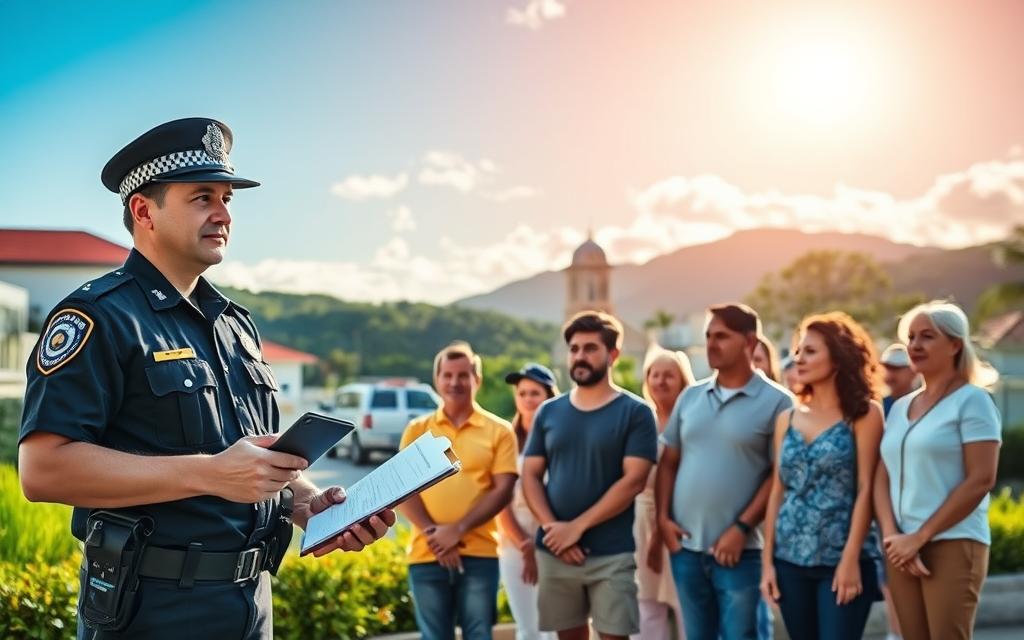
Have you ever wondered why Costa Rica is so safe despite its complex society? The Costa Rican police force is key to keeping everyone safe. They work hard to protect both locals and visitors.
Costa Rica’s police are known for focusing on the community. They ranked 39th on the Global Peace Index for 2023. The Costa Rica law enforcement system is a unique model of community-focused policing.
The Policia de Costa Rica is dedicated to being open and working with the community. Unlike many other countries, Costa Rica’s police focus on preventing crimes. They work together with the community to keep everyone safe.
It’s important to know about the Costa Rican police if you’re thinking of moving or visiting. Their way of protecting the community is different from many other places. It’s a unique approach in a region with many challenges.
This guide will dive into the world of the Costa Rica police. It will give you the information you need to understand the local law enforcement. This will help you feel more confident and prepared when dealing with the police in Costa Rica.
Understanding Costa Rica’s Law Enforcement System
Costa Rica’s law enforcement system is a complex network of security forces. They work hard to protect citizens and keep the public safe. The Fuerza Publica de Costa Rica is key in this effort, using smart security measures and crime prevention strategies.
The law enforcement in Costa Rica is made up of many agencies working together. They tackle different security challenges. Knowing how they work helps both locals and visitors.
Structure of Police Forces
Costa Rican law enforcement has several important parts:
- National Police Force (Fuerza Pública)
- Municipal Police Units
- Specialized Investigative Units
- Traffic Police
Jurisdiction and Authority
Each police unit in Costa Rica has its own area of responsibility. The community policing Costa Rica model focuses on local involvement and proactive security. National forces handle big criminal cases, while local units protect neighborhoods.
Police Training and Standards
Costa Rican law enforcement has strict training standards. Officers get ready with:
- Comprehensive legal education
- Physical fitness requirements
- Advanced communication skills
- Cultural sensitivity training
The security measures Costa Rica uses show a dedication to professional, community-focused policing. They aim to keep everyone safe while also respecting individual rights.
About the Costa Rica Police: Organization and Departments
The Fuerza Pública, Costa Rica’s national police, is key to keeping everyone safe. With rising crime, knowing about the police is vital for locals and tourists.
The police in Costa Rica have several important departments. They work hard to prevent crime and protect communities:
- Judicial Investigation Police (OIJ): They solve complex crimes.
- Traffic Police: They keep roads safe and enforce traffic laws.
- Community Policing Unit: They work with neighborhoods to prevent crime.
- Special Response Team: They handle dangerous and special cases.
Police training in Costa Rica is thorough. Officers learn to face new security issues. They focus on working with the community.
Crime is getting more complex. There are 340 criminal groups and a 38% rise in murders. The police need to get better at keeping up.
The government wants to help the police. They plan to hire 1,004 new officers in 2023-2024. This is part of their effort to make the police stronger.
Even with limited resources, the Costa Rican police are dedicated. They work hard to keep everyone safe and lower crime rates. They do this by engaging with the community and being proactive.
The Fuerza Pública: Costa Rica’s National Police Force
The Fuerza Pública is Costa Rica’s main police force. They work hard to keep people safe and order in society. These officers are key in protecting the nation’s communities.
Role and Responsibilities
Police in Costa Rica do more than just enforce laws. They have many important tasks. These include:
- Stopping and solving crimes
- Keeping public areas and important buildings safe
- Quickly responding to emergencies
- Helping local areas stay safe
Community Policing Initiatives
Costa Rica has started new ways of policing. The Fuerza Pública is working to build trust with the community. They focus on working together, building partnerships, and being open.
Emergency Response Capabilities
The national police in Costa Rica are ready for emergencies. They have special training and tools for different crisis situations. In 2023, they handled about 123,000 emergency calls, showing their importance.
The training for police in Costa Rica keeps getting better. This ensures officers have the latest skills and technology to protect their communities.
Police Response Times and Resources in Different Regions
Costa Rica’s diverse landscape makes policing a big challenge. The Ministerio de Seguridad Pública de Costa Rica works hard to cover all areas. This includes both cities and rural spots.
How fast police arrive can change a lot based on where you are. In big cities like San José, help comes quickly. But in rural areas, it takes longer because of fewer resources and tough terrain.
- Urban centers have faster police response times (15-30 minutes)
- Remote mountain and coastal regions may wait 45-90 minutes for assistance
- Police accountability in Costa Rica remains a critical focus for improvement
The criminal justice system in Costa Rica knows about these differences. The national police are working on plans to help more areas. They’re doing things like:
- Setting up police stations in far-off places
- Adding more mobile patrols
- Building better communication systems
- Buying more vehicles
Costa Rica is trying to fix these problems with new strategies. Even though it’s tough, they keep working to make everyone safer.
Safety Measures and Crime Prevention Programs
Costa Rica takes a detailed approach to safety, aiming to protect everyone. It’s seen as safe in Central America but still works hard to prevent crime. The police have updated their methods to meet new security needs.
Costa Rica’s security forces have launched several important projects to boost safety. The rise in crime has led to specific prevention programs for different areas. These programs aim to meet the unique needs of each community.
Neighborhood Watch Programs
Getting the community involved is key to safety. These programs help locals:
- Watch out for odd activities
- Report any security concerns
- Work with the police
- Build strong networks
Tourist Area Security
Places popular with tourists get extra attention from the police. These areas have:
- More police around
- Surveillance cameras
- Units just for tourist safety
Emergency Contact Information
It’s smart to save important emergency numbers. The emergency contact list is full of useful info to keep you safe.
The police in Costa Rica focus on protecting the community and responding quickly. This makes sure both visitors and locals can enjoy the country’s beauty safely.
Police Interaction Guidelines for Expats
When dealing with the police in Costa Rica, it’s key to know the local rules and cultural differences. The Ministerio de Seguridad Pública de Costa Rica sets high standards for police behavior. Expats should follow these to ensure a good experience.
Here are some important tips for talking to Costa Rican police:
- Always carry official identification documents
- Remain calm and respectful during interactions
- Communicate clearly and politely
- Be prepared for potential language barriers
Knowing about crime rates in Costa Rica can make you feel safer. The country has one of the lowest crime rates in Latin America. This makes it a safe place for foreigners.
Here’s what to do during police stops:
- Speak slowly and clearly
- Request an interpreter if communication becomes challenging
- Know your basic legal rights
- Cooperate with law enforcement officials
Costa Rica focuses on keeping everyone safe and professional. If expats understand and respect these rules, they’ll have better interactions with the police. This ensures a positive and secure stay in this friendly country.
Law Enforcement Challenges in Costa Rica
Public safety in Costa Rica is complex. It affects the police’s ability to keep communities safe. The Fuerza Pública, the national police, faces big challenges in keeping the country safe.
Resource Limitations
Costa Rican police have too few resources. With 8,500 officers for 3 million people, they are overworked. Budget issues also limit their tools and training.
- Limited funding for advanced training
- Insufficient modern law enforcement equipment
- Constrained operational budgets
Rural vs Urban Police Coverage
Police work differs a lot in cities and the countryside. Cities like San Jose have more police. But, rural areas often have very few officers.
- Urban areas have higher police density
- Rural regions face significant security gaps
- Uneven distribution of law enforcement resources
Language Barriers
Language issues add to the police’s problems. They often struggle to talk to tourists and expats. This makes it harder to keep everyone safe.
- Limited Spanish-English translation services
- Communication challenges during incidents
- Potential misunderstandings in legal interactions
Rights and Responsibilities When Dealing with Police
When you interact with Costa Rica’s security forces, it’s important to know your rights and duties. The Fuerza Publica Costa Rica works under strict laws. These laws protect both citizens and police during their duties.
It’s crucial to understand your legal rights when dealing with law and order in Costa Rica. Here are some key protections:
- Right to remain silent during questioning
- Right to legal representation
- Protection against arbitrary detention
- Requirement to provide valid identification when requested
Costa Rica’s police follow a clear plan for talking to citizens. Here’s what you should do during a police stop:
- Remain calm and respectful
- Comply with lawful instructions
- Request official identification from the officer
- Document interaction details if possible
The legal system in Costa Rica protects you with important rules. These rules include the Presumption of Innocence and Due Process. They make sure you can’t be held for more than 24 hours without a court order. Only a prosecutor can extend your detention.
Police and community relations in Costa Rica focus on respect and understanding. Knowing your rights can lead to better interactions with local police. It ensures fair treatment during any official encounter.
Reporting Crimes and Emergency Procedures
Understanding law and order in Costa Rica is key. Knowing the local security and police operations is crucial. When you face a tough situation, knowing what to do can help a lot.
Filing Police Reports
The Costa Rican police organization has a clear process for reporting crimes. Victims need to follow certain steps:
- Contact local police immediately by dialing 911
- Gather all relevant documentation and evidence
- Visit the nearest police station to file an official report
- Request a copy of the police report for personal records
Documentation Requirements
When reporting crimes, detailed documentation is essential. Travelers should be ready with:
- Valid passport or residency identification
- Detailed description of the incident
- Any physical evidence or witness contact information
- Proof of residence or current location in Costa Rica
Follow-up Procedures
After filing a report, keep in touch with the police. The Costa Rican Investigative Police (OIJ) handles complex cases. Victims can follow their case by contacting the officer and asking for updates.
Expatriates should keep all documents safe and stay in touch with the local police and their embassy. This way, they get full support during the investigation.
Conclusion
Costa Rica’s law enforcement system is complex but effective. It balances keeping society safe with new solutions. With about 10,000 officers for 4.5 million people, they manage crime well.
The crime rates in Costa Rica show a detailed view of safety. Despite having fewer resources, the police, like Fuerza Pública, work hard to keep everyone safe. Looking at police salaries, there’s a need for better pay to support families. Learning more about living in Costa helps us understand these issues.
Police brutality in Costa Rica is a big worry, but they’re working to fix it. They focus on human rights and working with the community. This makes them different from other countries.
Costa Rica’s police system shows the country’s forward-thinking on security. It’s not perfect, but it’s getting better. They’re committed to keeping everyone safe and respected.
Article by Glenn Tellier (Founder of CRIE and Grupo Gap)
Don't wait, contact us right now!
Call or WhatsApp Costa Rica +506 8373 2085 or +506 8706 3888
Call USA/Canada +1 305-906-6784