
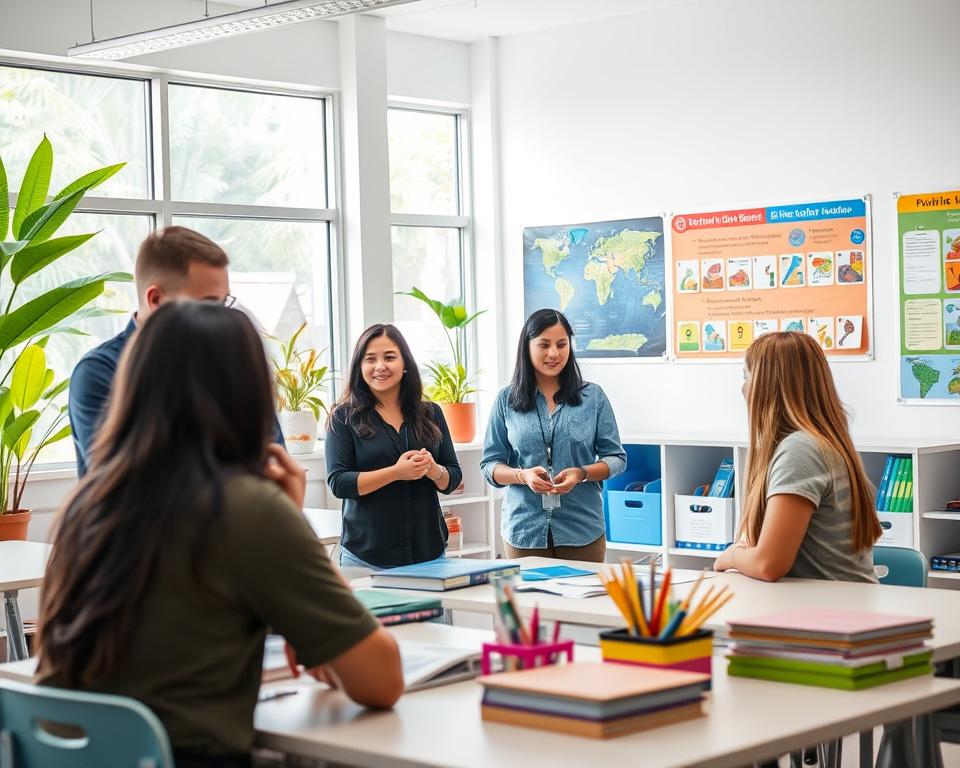
Have you ever wondered why many families in Costa Rica prefer private schools? Despite the country’s good public schools, private education is a top choice. This is because private schools offer smaller classes and better facilities.
This guide will explore what makes these schools stand out. You’ll learn about their international programs, bilingual education benefits, and how they help students grow.
Key Takeaways
- Average class sizes in private schools are significantly smaller, averaging 25 students.
- Private schools in Costa Rica feature more than 20 international schools, fostering diverse learning environments.
- Tuition fees for private education range from $300 to over $1,000 per month, varying based on location and amenities.
- The European School holds the distinction of being the only institution in Costa Rica with European accreditation.
- Character development is a core principle in private schools, promoting values like responsibility and compassion.
- Many top private schools have embraced eco-friendly practices and technology in their curriculums.
- Extracurricular activities play a vital role in the holistic development of students at private institutions.
Introduction to Private Schools in Costa Rica
Private schools in Costa Rica, known as “escuelas privadas,” are becoming more popular. Families want the best for their kids, and these schools offer it. Costa Rica’s literacy rate is 97.9%, showing its strong focus on education.
Private schools have smaller classes, with 10 to 25 students. This means each student gets more attention and a better learning experience. These schools meet different educational needs and offer bilingual programs.
They also have international programs like the International Baccalaureate (IB). This prepares students for the world. Private schools are a big deal in Costa Rica, attracting both expats and locals.
Benefits of Choosing Private Education
Choosing private education in Costa Rica offers many benefits. The best private schools focus on smaller class sizes. This allows for education that fits each student’s needs.
Teachers can spend more time with each student. This helps students learn in ways that work best for them. It also helps them succeed in school.
Enhanced Class Sizes and Facilities
Private schools have better facilities than public schools. They have advanced classrooms, science labs, and places for fun. These places help students learn and grow.
Good schools get 100% approval from the Ministry of Public Education (MEP). This means they meet high standards of education.
Extracurricular Activities and Holistic Development
Extracurricular activities are key in private schools. They offer sports, arts, and community service. These activities help students develop important skills like teamwork and leadership.
They also help students grow in many ways. Students try new things and learn to be creative. This prepares them for life’s challenges.
If you want to find the best schools, check out the top-rated private schools in Costa Rica. They offer a lot of information on programs and services. This can really help students improve their education.
Importance of Bilingual Education in Costa Rica
Bilingual education in Costa Rica is key in private schools, like bilingual schools. It teaches both Spanish and English. This helps students do well in a world that’s getting smaller.
Students spend half their day learning English and the other half Spanish. This way, they learn languages and cultures. It makes them good at talking to people from different places.
International private schools in Costa Rica push for bilingual education. It makes students smarter and more creative. Knowing two languages is a big plus in jobs, both at home and abroad.
Bilingual education also helps students think globally. They learn about different cultures. This prepares them for a world where knowing many cultures is important.
Types of Private School Accreditation
Understanding private education in Costa Rica means knowing about school accreditation. Accreditation shows a school’s dedication to quality education. It affects many parts of a student’s learning journey. There are different types of accreditation, each meeting various educational standards.
MEP-Accredited Schools
MEP-accredited schools are overseen by Costa Rica’s Ministry of Public Education. These schools follow national standards, ensuring quality education. They focus on curriculum, teacher skills, and how students are tested.
Families choose these schools for their high standards and adherence to rules. This makes them a top pick in Costa Rica’s private education.
International School Accreditation
International schools get accreditation from global bodies like Cognia. This allows them to offer different programs, like International Baccalaureate (IB) and Advanced Placement (AP). These programs improve English skills and introduce new learning methods.
Students learn to succeed globally, opening doors to many opportunities. This prepares them for education and careers worldwide.
International Curricula Offered in Private Schools
In Costa Rica, private schools offer many international curricula. These are designed for both locals and expats. The American programs and International Baccalaureate (IB) stand out. They focus on academic success, critical thinking, and cultural awareness.
American and IB Programs
American programs in Costa Rica’s schools cover core subjects and U.S. culture. This prepares students for college in North America and beyond. The IB program, found in schools like Country Day School and Lincoln School, offers a challenging curriculum. It aims to give students a global perspective.
Project-Based Learning Approaches
Project-based learning is becoming more common in private schools. It lets students tackle real-world issues, promoting teamwork and practical learning. La Paz Community School is a leader in this approach, helping students innovate and apply their knowledge.
School Calendars and Schedules in Private Education
In Costa Rica, private schools have different schedules. Many follow the school calendar costa rica, starting in mid-February and ending in November. Schools like Elimar High School stick to this traditional year, matching the national system.
But, some schools like Casa de las Estrellas use a U.S. school calendar. It starts in September and ends in July. This helps families who switch between school systems.
Thrive School also has a U.S. calendar, but it runs from October to August. This allows for a more tailored learning experience for its students.
Private school calendars include breaks and celebrations. For example, Tide Academy and CPI School at Flamingo Beach have many events. They celebrate Diwali and have academic tests and meetings with parents.
Knowing about these schedules helps parents a lot. It tells them about holidays, when to enroll, and how students progress. By understanding the private education calendar, families can help their kids succeed in school.
Admissions and Application Process for Private Schools in Costa Rica
The process to get into private schools in Costa Rica is detailed. Families must gather many documents to show they qualify. Knowing what’s needed can make the application smoother.
Documentation Requirements
To apply to private schools in Costa Rica, you’ll need to provide several important documents. These include:
- Passports for the student and parents
- Vaccination records
- Academic transcripts from previous schools
- A completed application form
Having all these documents ready helps schools check if a student fits their program. Many schools encourage applying early to have a better chance of getting in.
Entrance Exams and Interviews
Many private schools in Costa Rica require entrance exams. These tests check if a student is ready for their curriculum. Interviews with students and their families also happen. They help schools see if the student will fit in.
Applying early not only meets requirements but also boosts your chances of getting into your preferred school.

Private Schools in Costa Rica: An Overview
Private schools in Costa Rica offer a wide range of educational options. Over 20 international schools are found in places like San José and Heredia. They differ in size, resources, and teaching styles, meeting various student and family needs.
Top private schools in Costa Rica are known for their quality education and experienced teachers. Schools like Del Mar Academy and Elimar High School focus on bilingual education. Del Mar Academy, with tuition from $12,000 to $16,500, also offers International Baccalaureate (IB) programs for advanced students.
CPI School and Tide Academy are known for their strong bilingual programs. CPI is near Flamingo Beach, and Tide focuses on U.S.-based curricula. These schools attract families who want a mix of local and international education.
{strong}Public universities in Costa Rica offer scholarships to many students. This helps private schools have higher graduation rates. Students from these schools often go to universities locally or abroad.{/strong} Lincoln School and the United World College show the diversity in Costa Rica’s education. Lincoln School has over 25 nationalities.
Homeschooling is also popular in Costa Rica. Parents can create their own curricula, often focusing on local nature and environmental studies. Homeschooling families often hold social events to foster community and learning.
Learning Philosophies and Curricula Variations
Costa Rica’s private schools offer a wide range of learning philosophies and curricula. Parents see many educational models that meet different needs. For those who prefer traditional teaching, there are options that focus on structured lessons and textbooks.
Traditional Curriculum-Based Learning
Traditional learning focuses on clear goals, core subjects, and tests. It gives students a solid foundation through planned lessons. Textbooks and worksheets are key tools in this method, helping students learn in a systematic way.
Montessori and Waldorf Approaches
Montessori and Waldorf schools take a different path. Montessori lets students learn at their own speed with hands-on activities. Waldorf education combines arts and real-life experiences to help students grow holistically.
These approaches aim to boost creativity, critical thinking, and social skills. Families can look into the best private schools in Costa Rica to find the right fit for their child. Knowing the various philosophies in Costa Rica helps parents choose the best education for their kids.
Uniforms and Dress Codes in Private Schools
Many private schools in Costa Rica have a uniform policy. This policy promotes equality and builds a sense of community among students. The cost for a full set of uniforms is about $50, covering items like shirts and shorts or skirts.
Uniforms help schools focus on learning by reducing distractions. Parents like the ease of not having to choose outfits every day. Plus, uniforms boost school spirit and make students feel part of a community.
Uniforms play a big role in making school better. They teach discipline and respect. By having a dress code, schools show their commitment to creating a great place to learn.
Private Schools Fees and Financial Considerations
It’s important for families to understand the costs of private schools in Costa Rica. The private school fees Costa Rica can vary a lot. Tuition costs usually range from $300 to over $1,000 per month. There are also extra costs like registration fees, uniforms, and fees for activities outside of class.
Parents need to carefully think about these costs when planning their kids’ education. This helps them make informed decisions.
Tuition Costs and Additional Fees
When looking at tuition costs, families should also think about extra expenses. Some schools charge extra for things like supplies, technology, and field trips. It’s key for parents to ask about all possible costs to avoid surprises.
Knowing what financial options private schools offer can help families plan their budget better.
Discounts for Multiple Enrollments
Many private schools give discounts for families with multiple kids. This can make education more affordable for families. It’s a good way to encourage siblings to go to the same school.
Looking into these discounts can make quality education more accessible in Costa Rica. For more information, visit this resource on financial options in Costa.
Conclusion
In summary, Costa Rica’s top private schools offer a wide range of educational options. Schools like Costa Rica International Academy and La Paz Community School have bilingual programs. These programs help students do well in school and develop important skills.
Private schools in Costa Rica have many choices, from international programs to sports and clubs. This means every child can find a school that fits their dreams. Public schools, while free and welcoming, might not meet the needs of all students, like those who don’t speak Spanish or want a more personalized education.
Choosing private education can give your child a strong start in life. Costa Rica is a safe and beautiful place. Families can trust that their educational choice will help their children grow and succeed.
Article by Glenn Tellier (Founder of CRIE and Grupo Gap)
Don't wait, contact us right now!
Call or WhatsApp Costa Rica +506 8373 2085 or +506 8706 3888
Call USA/Canada +1 305-906-6784