
Costa Rica Immigration & Residency Options
Costa Rica offers several legal pathways to live here long-term, but the right option depends on your income source, family ties, and whether you need local work authorization. Many people begin with a temporary residency category such as Pensionado, Rentista, or Investor, while others may qualify through family ties. There are also long-stay options that are not residency.
On this page, you can review the main residency categories, who they are generally designed for, the documents that most often matter, and a simple overview of how the process usually works. If you are not sure which path fits best, we can review your case on WhatsApp and help you choose the cleanest option before you start ordering documents.
How to Get Residency in Costa Rica: The Short Version
Almost everyone follows the same shape, whatever category they end up in:
- Work out which category you qualify for. This is the decision that matters most, because the wrong choice can cost you years, not just money. The main routes are a qualifying pension (Pensionado), qualifying income without a pension (Rentista), a qualifying investment here (Investor), or family ties to a Costa Rican.
- Gather your civil documents at home, before you travel. Birth certificate, police clearance, marriage certificate where relevant — obtained from the right authority, then authenticated and translated as required. This step is where most delays begin.
- Have them checked before you spend money on them. Documents have validity windows, and ordering the wrong thing or ordering it too early means ordering it twice.
- File and wait. The authority decides. Nobody can promise you an approval or a date — see how long it realistically takes.
- Complete the steps after approval — DIMEX and registration — and keep to the renewal timing from then on.
Two things worth knowing before you start. Temporary residency generally comes first and
permanent residency comes later — it is a destination rather than a starting point. And the Digital Nomad Visa is worth understanding separately, because it is not a residency category and does not build toward permanent status.
The rest of this page sets out each option, what each one needs, and the process in full.
Qualification Snapshot
- Most common starting points: Pensionado (US$1,000 per month), Rentista (US$2,500 per month for two years, income-based), and Investor (US$150,000).
- Family ties can change your options: Certain relationships with a Costa Rican citizen can create different residency pathways.
- Work rules are strict: Many residency categories allow you to live in Costa Rica but do not allow local employment as an employee.
- Permanent residency usually comes later: Often after maintaining a qualifying temporary residency category for the required time, or through qualifying family ties — see when you can apply for permanent residency.
- Digital Nomad is not residency: It is an estancia category for remote workers with foreign-sourced income, and our digital nomad and residency comparison explains the difference.
- Documents drive approvals: Authentication, official translation, and validity windows are where many delays happen.
- Consistency matters: Names, dates, and identity details must match across every document and filing.
- Organization matters: Clean category selection and clean documentation help avoid preventable delays.
Who This Page Is For
- People comparing the main residency options before starting the Costa Rica immigration process.
- Retirees deciding between Pensionado and other possible paths.
- Applicants with stable foreign income exploring Rentista or Investor.
- People with a Costa Rican spouse, parent, or child who may qualify through family ties.
- Remote workers evaluating the Digital Nomad option and what it does not do.
- Anyone who wants a high-level roadmap before ordering documents.
Requirements at a Glance
Each residency category has its own specific requirements, but most applications share the same basic foundation: choose the correct category, prepare foreign civil documents correctly, complete official Spanish translations when required, and submit a complete file that fits the chosen pathway. Many delays happen because of document timing and formatting, not because someone missed a basic form.
- Identity: Valid passport and required copies.
- Civil records: Birth certificate and, where relevant, marriage or divorce records, each apostilled and translated as required.
- Police record: Usually required in the proper format and within accepted validity windows.
- Category-specific proof: Pension letter, income proof, investment documentation, or family-tie evidence depending on the category.
- Translations: Official Spanish translations where required.
- Local steps: Fingerprints, appointments, and post-approval documentation such as DIMEX.
Residency Options Overview
The categories below cover the most common ways people become legal residents in Costa Rica. Each section explains who it is generally for, what it usually requires, and the main points to watch.
Pensionado Residency

Pensionado is often the cleanest residency path for retirees who receive a qualifying lifetime pension. It is popular because the income threshold is straightforward and the category is well established. If you have more than one pension source, the key is documenting the income clearly in the way Costa Rica immigration expects.
- Threshold: US$1,000 per month in lifetime pension income.
- Best for: Retirees with stable, documentable pension income.
- Work note: This category generally does not allow local employment as an employee.
Learn more about Pensionado Residency
Rentista Residency

Rentista is usually for people who are not yet retired but have stable foreign income. It is a strong option for applicants who want a true residency category rather than a temporary stay solution. Rentista is income-based, and the way that income is documented matters; the bank deposit requirement is where many files stall.
- Threshold: At least US$2,500 per month in stable income for two years.
- Best for: People with stable foreign income who want residency without an investment requirement.
- Work note: This category generally does not allow local employment as an employee.
Learn more about Rentista Residency
Investor Residency

Investor residency is for applicants who meet the investment threshold and can document the investment properly. This is often tied to real estate or a qualifying business investment. The required evidence depends on the type of investment. DGME lists direct real-estate investment and investment in shares among the qualifying types; do not assume a company must transfer its assets into your personal name. Review the investor regulation before changing ownership.
- Threshold: US$150,000 qualifying investment.
- Best for: Applicants seeking residency through a qualifying investment in Costa Rica.
- Documentation focus: The investment must be documented clearly and consistently.
Learn more about Investor Residency
Residency Through Family Ties
Some applicants qualify through family ties to a Costa Rican citizen. These cases can be very strong when the relationship is documented clearly and the supporting civil records are correct.
- Best for: Applicants with qualifying ties to a Costa Rican spouse, parent, or child.
- Documentation focus: Civil records, relationship proof, and consistency across all documents.
- Important note: The correct category depends on the relationship and the facts of the case.
Family categories:
- Residency for Spouses in Costa Rica
- Residency for Parents in Costa Rica
- Residency as a Child of a Costa Rican
Long-Stay Option That Is Not Residency
Digital Nomad Visa
Costa Rica’s Digital Nomad category is for remote workers with foreign-sourced income who want to stay in Costa Rica longer than a standard tourist entry. It can be useful for some people, but it is not a residency category and does not count toward permanent residency.
- Not residency: It is an estancia category, not temporary residency.
- Remote work focus: Income must come from outside Costa Rica.
- Best for: People who want a longer stay while maintaining foreign employment or clients.
Learn more about the Digital Nomad Visa
Permanent Residency and Citizenship
Permanent residency and citizenship are often long-term goals, but they are usually not the first step. The right path depends on your current category, timeline, and whether you qualify through family ties.
Permanent Residency
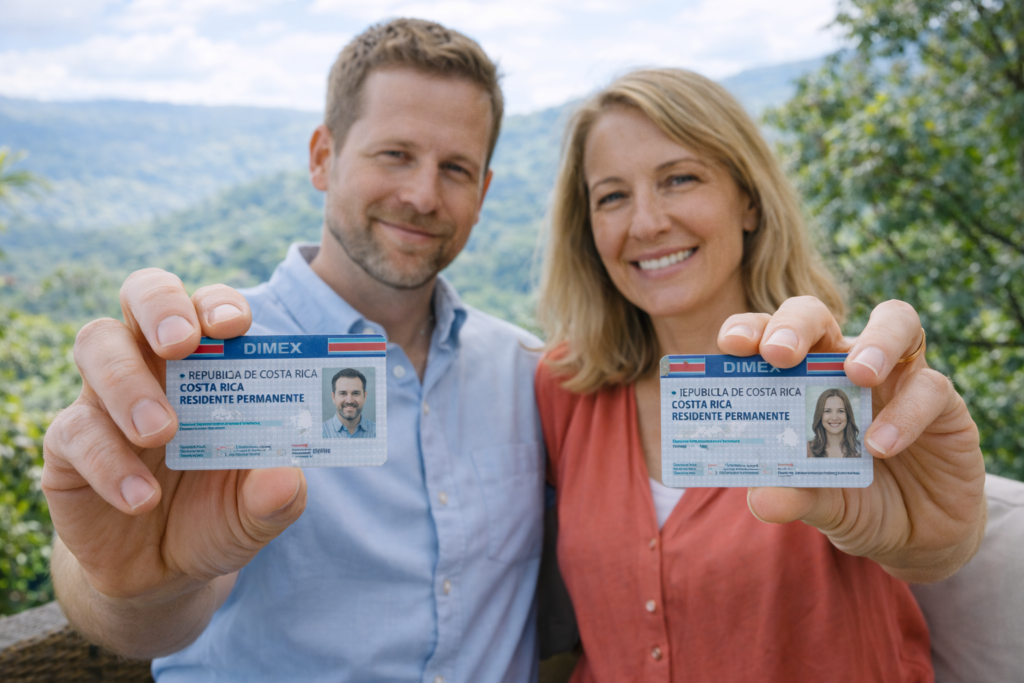
Permanent residency is often available after maintaining qualifying temporary residency for the required time, or through certain family ties. It usually offers more long-term stability and broader work rights than many temporary categories.
See the Costa Rica permanent residency requirements
Citizenship
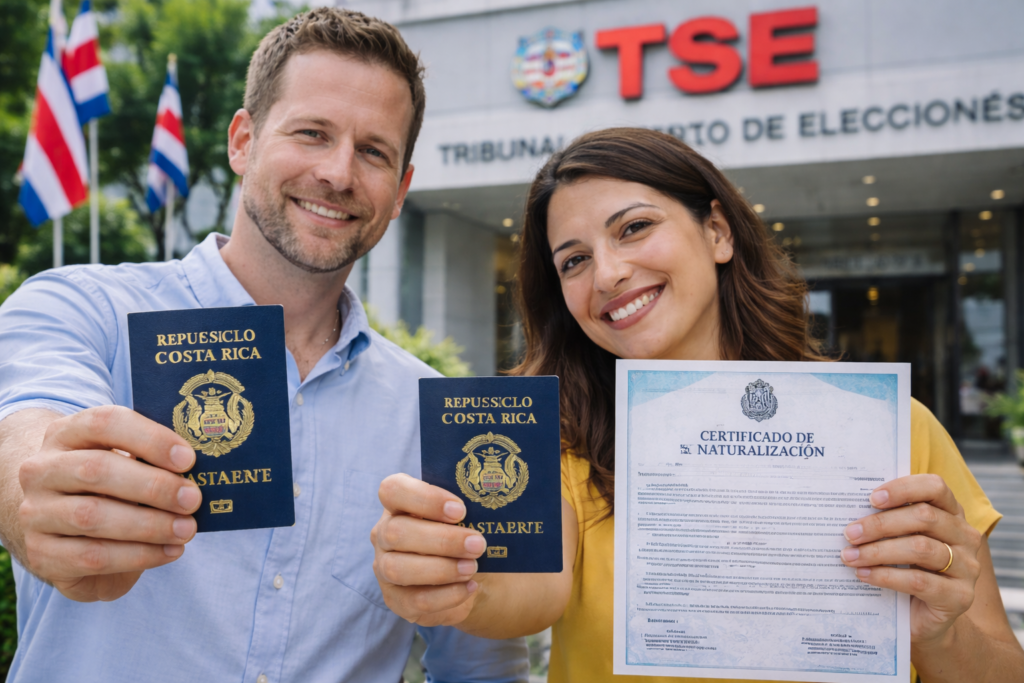
Citizenship is a separate process with its own requirements and timelines. Some routes depend on years of residency, while others may be affected by marriage or family ties. If citizenship is your long-term goal, it helps to plan the sequence correctly from the beginning.
Documents to Prepare Before You Arrive
If you want your residency process to go more smoothly, it is smart to start your key documents from back home before you come to Costa Rica, especially if you hope to file soon after arrival. That gives you time to have your documents reviewed early and catch problems before you spend money on travel, translations, reissued records, or avoidable delays.
Many people arrive thinking they are ready, only to find out that a birth certificate, police record, or other key document is incorrect, missing the required authentication, outside the accepted validity window, or not ready for official Spanish processing. It is much better to catch those issues before you travel.
- Birth certificate: Official version suitable for international use.
- Police record: Issued by the correct authority and still valid for filing purposes.
- Marriage or divorce records: If relevant to your case.
- Category proof: Pension, income, investment, or relationship evidence depending on the category.
- Passport: Valid and ready with clean copies.
Authentication, translation, and validity windows matter. Depending on the country and document type, you may need an apostille or other authentication, and official Spanish translations in Costa Rica. Timing matters, because some documents must still be recent when the application is filed.
Process Overview
Costa Rica immigration is much easier when the sequence is handled properly. At a high level, the process usually looks like this:
- Choose the correct category: Pensionado, Rentista, Investor, family ties, or another qualifying option.
- Create the document plan: Identify what you need and when each item should be issued.
- Confirm authentication requirements: Apostille or other required legalization depending on the issuing country.
- Handle official translations: Complete translations in the proper format when required.
- Submit the application: File under the correct category with a complete set of documents.
- Respond during processing: Stay ready in case clarification or follow-up is requested.
- Complete post-approval steps: Finish DIMEX and other required local documentation.
Can I Work With This Status?
Work rights depend on your immigration category. Many temporary residency categories allow you to live in Costa Rica but do not allow local employment as an employee. Permanent residency and citizenship usually provide broader work rights. If local work is important to you, it is better to review that issue early.
See: Work Permit in Costa Rica
Common Mistakes That Delay Approvals
- Choosing the wrong category or mixing requirements from different categories.
- Ordering documents too early and missing validity windows by the time of filing.
- Missing apostille or other required authentication.
- Using non-official translations or translations that do not match the authenticated original.
- Name or date inconsistencies across passport, civil records, and supporting documents.
- Income proof that does not clearly show the required source or stability.
- Investor documentation that does not clearly prove the qualifying investment.
- Assuming Digital Nomad counts as residency toward permanent residency.
- Underestimating local appointment timing and post-approval follow-up steps.
- Trying to work locally without the proper authorization.
Quick Comparison
- Pensionado — US$1,000 per month lifetime pension.
- Rentista — At least US$2,500 per month in stable income for two years.
- Investor — US$150,000 qualifying investment.
- Permanent Residency — Long-term status after qualifying temporary residency or family ties.
- Digital Nomad Visa (not residency)
- Work Permit
- Citizenship
Frequently Asked Questions
Which residency category is best for most retirees?
Many retirees begin with Pensionado if they have a qualifying lifetime pension of at least US$1,000 per month. The best fit still depends on how the pension is documented and whether another category may fit better.
What if I am not retired but I have steady foreign income?
Rentista is often the main category to review if you can show at least US$2,500 per month in stable income for two years. If your situation is structured differently, another category may be more appropriate.
Does Digital Nomad count toward permanent residency?
No. Digital Nomad is not residency and does not count toward permanent residency.
Can I work in Costa Rica as a temporary resident?
Many temporary residency categories do not allow local employment as an employee. The answer depends on your immigration category and any specific work authorization.
How do family ties change my options?
Family ties to a Costa Rican citizen can create different pathways, but the exact category depends on the relationship and the documentation.
What documents should I start with first?
Birth certificate and police record are usually the first documents to plan, because authentication, translation, and validity windows often affect timing.
What document issues should I check before applying?
Check timing, authentication, accepted translations and consistency across your documents. These checks do not guarantee a processing time.
Do I have to be in Costa Rica to apply?
Many people prepare their documents abroad first and then file once they are in Costa Rica. The best approach depends on the category and how ready the documents are.
When do I get a DIMEX?
DIMEX is usually part of the post-approval stage after the immigration category has been approved and the next local steps are completed.
If I want citizenship one day, what is the best strategy?
Start with the correct legal status and keep your immigration record clean and consistent. Citizenship is a separate process, and the right sequence matters.
Message CRIE on WhatsApp
If you want a clearer path, start with a quick eligibility review. We can help you compare the main options and tell you which category fits best before you spend time and money ordering documents.
WhatsApp: +506 8373 2085
Email: info@crie.cr
Professional Disclaimer
This page is provided for general informational purposes only. Immigration rules, internal criteria, and required documentation can change. Information on this page is based on, and checked against, Costa Rica’s official immigration authority (Migración/DGME): https://migracion.go.cr/.