
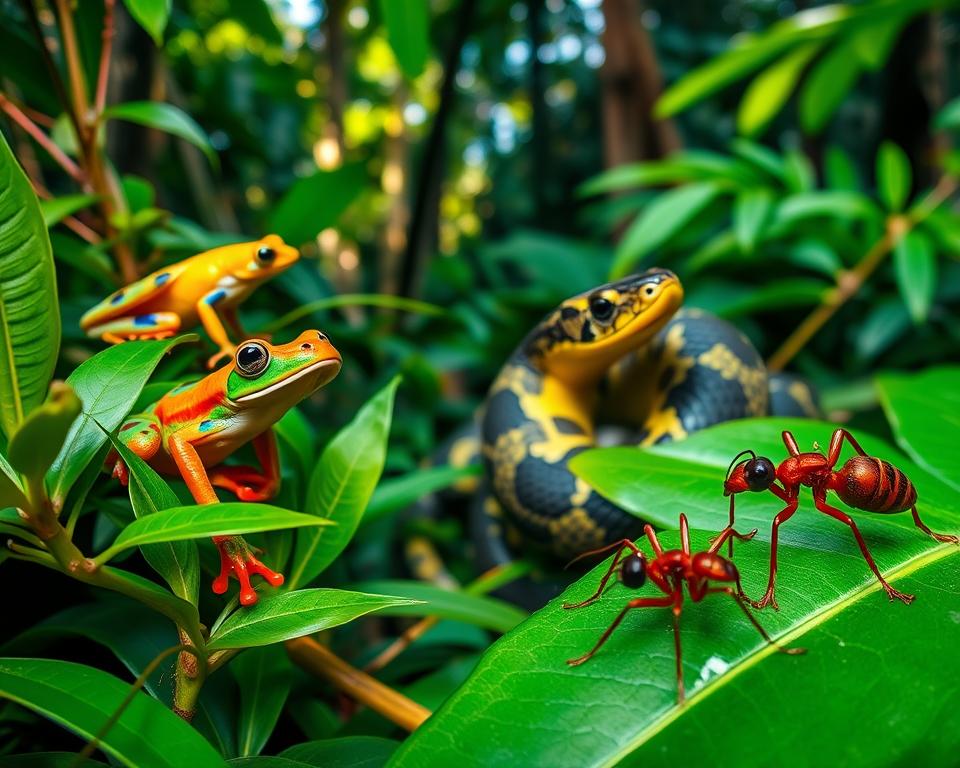
Have you ever wondered about the dangers in Costa Rica’s lush jungles? This country is known for its stunning landscapes and diverse wildlife. But, it also has deadly animals that can make your trip risky. This guide will help you understand the dangers and stay safe while exploring.
Knowing about the threats from wildlife is key. This includes venomous snakes, deadly spiders, and fierce animals. Tips from local guides can help you stay safe. For example, knowing how to avoid the Fer-de-Lance viper in Corcovado National Park is crucial. Understanding how to react to big cats like Pumas and Jaguars is also important for a safe trip.
Introduction to Costa Rica’s Wildlife
Costa Rica is known for its amazing biodiversity. It has many ecosystems with exotic plants and animals. With over 5 million people, it’s a lively country. It’s bordered by Nicaragua, Panama, and the Caribbean and Pacific Oceans.
The country has about 850 bird species, with 10 found only there. It’s home to many mammals like monkeys, sloths, and anteaters. The forests are filled with tall trees like emerald cedar and mahogany.
Exploring wildlife in Costa Rica is exciting. But it’s important to know about the risks some animals pose. This knowledge helps us appreciate nature and interact responsibly.
It’s also key to know about threats like poaching and mining. These activities harm native species. Eco-friendly tourism helps protect wildlife.
Understanding Costa Rica’s laws is important for wildlife exploration. Knowing about vehicle licensing can be helpful. For more on regulations, check out license plate rules in Costa Rica.
Understanding the Risks of Deadly Animals in Costa Rica
Costa Rica’s diverse ecosystems offer exciting adventures and wildlife risks. The country’s rich biodiversity is stunning, but it also has dangerous creatures. Knowing these risks is key for staying safe.
Venomous snakes and frogs, like the golden poison dart frog, are part of the region’s ecology. They can be deadly. Also, aggressive mammals like jaguars and large cats can be harmful if not treated with caution.

Guided tours can help you see the beauty of nature and learn about safety. These tours teach you to respect wildlife habitats. This way, you can have safe and fun interactions with nature.
Costa Rica is home to over 2,000 spider species and about 12,000 moths. Knowing which ones are dangerous is important. Understanding wildlife risks can make your trip safer and more enjoyable.
Venomous Snakes in Costa Rica
Costa Rica is home to many venomous snakes, making it key to know about them. The country has 22 species, with at least two venomous snakes per hectare. This means encounters are more likely, mainly in rural areas along the Pacific Coast.
Common Venomous Snakes
The Fer-de-Lance (Bothrops asper) is the most feared snake in Costa Rica. It causes many serious snake bites. Other dangerous snakes include the Eyelash Palm Pit Viper and the Central American Jumping Pit Viper.
These snakes have beautiful patterns but can give painful bites. The Tropical Rattlesnake is also dangerous, known for its quick strikes. The Bushmaster, found in tropical forests, is another dangerous snake in the area.
Identifying Venomous Snakes
To avoid snake bites, it’s important to know how to identify snakes. Look for:
- Triangular-shaped heads
- Vertical pupils
- Distinctive body markings
These signs can help you spot dangerous snakes. Knowing how to identify snakes is crucial, even for tourists. Getting advice from locals and experts can help keep you safe.
Deadly Insects of Costa Rica
Costa Rica is home to many deadly insects. These include stinging ants and venomous bees. It’s important to know about these dangers to stay safe.
Understanding these insects can prevent serious injuries. Knowing their behavior is key when exploring Costa Rica’s landscapes.
Dangerous Ants and Bees
The Bullet Ant has the most painful sting in the insect world. They live in tropical rainforests and are very defensive. Tarantula hawk wasps are also a threat, with their bright orange wings and dark bodies.
These wasps have a very strong sting. But they usually don’t attack humans. The New World screwworm has also caused deaths in Costa Rica. It mainly harms livestock but can affect pets and humans too.
Understanding Insect Bites and Stings
Knowing the signs of insect bites and stings is vital. Symptoms include pain, swelling, and sometimes anaphylaxis. Look out for unusual wounds that get worse, like those from screw-worms.
Wear protective clothes and use insect repellent to avoid these insects. Keep wounds clean and covered. Regular checks on pets and livestock can help prevent infestations.

Lethal Spiders Found in Costa Rica
Costa Rica is home to many dangerous spiders. Some of these spiders have venom that can be deadly. It’s important for everyone to know which spiders to watch out for.
Knowing where these spiders live can help avoid them. This makes it safer to explore this beautiful country.
Most Dangerous Spider Species
The Brazilian wandering spider and the black widow are among the most dangerous in Costa Rica. The Brazilian wandering spider is known for its aggressive behavior and deadly venom. It likes to hide in leaf litter and dark corners.
Tarantulas are also common in Costa Rica, with over 40 species found here. They can grow up to 20 cm long and live in burrows or trees. Males have two breeding cycles a year, which affects their habitat.
Wolves spiders are another type found in Costa Rica. They live in beaches and gardens. They have eight eyes and can lay up to 100 eggs at a time. To avoid bites, keep your living space clean and wear gloves outside.
If you get bitten by a venomous spider, seek medical help right away. Look for signs like intense pain, redness, or allergic reactions. By staying safe and aware, you can enjoy Costa Rica’s beauty without worrying about spiders.
Deadly Reptiles of Costa Rica
Costa Rica is home to many hazardous reptiles. It’s important for everyone to know about them. You’ll find American crocodiles in rivers and the venomous Gila monster around. There are about 245 reptile species in the country.

The Costa Rica deadly reptiles include snakes like the Common Lancehead and the Terciopelo. These snakes bite many people every year. They cause thousands of bites and hundreds of deaths in the Americas.
It’s key to know where they live and how they act. This helps keep you safe from them.
- Stay away from places where venomous snakes are common.
- Watch reptiles from a safe distance.
- Keep a safe distance from crocodiles near water.
Keeping a safe distance is very important. If you get too close, snakes or crocodiles might attack. It’s a good idea to read the field guide “Reptiles of Costa Rica”. It has lots of useful information about these animals.
Knowing about the hazardous reptiles in Costa Rica helps keep you safe. Learning about them is a smart way to enjoy the country’s unique wildlife.
Hazardous Wildlife in Costa Rica’s Forests
Costa Rica’s forests are home to many dangerous animals. These include agile carnivorous mammals like jaguars and pumas. They are important for keeping the ecosystem balanced. But, seeing them is rare, and knowing about them is key for those exploring the wild.

Agile Carnivorous Mammals
Jaguars and pumas are amazing hunters. They help control the number of prey in their homes. But, it’s important to keep a safe distance from them. This is because getting too close can make them angry.
Exploring places like Corcovado National Park or Tortuguero needs careful planning. Knowing their habits helps keep everyone safe. It also lets us enjoy watching them without disturbing their natural behavior.
Learning about these animals makes us appreciate Costa Rica’s biodiversity more. Even though they are wary of humans, they don’t usually see us as food. For those who love the wild, knowing how to watch wildlife safely is important. It helps us enjoy the beauty of nature while staying safe.
Every time we go into Costa Rica’s beautiful wilderness, knowing about the dangers is important. This knowledge makes our adventures better.
For more information on the dangerous creatures in these forests, check out this resource.
Exploring Costa Rica’s Aquatic Hazards
The waters around Costa Rica are full of beauty, but they also have deadly marine life in Costa Rica. Creatures like bull sharks and stingrays can be dangerous. It’s important to know about these risks before swimming.
Knowing about aquatic hazards Costa Rica is key, for those who love water sports or swimming. Here are some tips:
- Swim in areas marked by local authorities.
- Listen to safety advice from your tour guides.
- Be careful of your surroundings, like when snorkeling or surfing.
Learning about the wildlife in coastal and river areas is also important for swimming safety. For more information on staying safe, check out this helpful resource.

How to Stay Safe Around Deadly Animals of Costa Rica
Costa Rica’s stunning landscapes offer unforgettable adventures. But, they also come with challenges related to wildlife safety. By following key wildlife safety tips, you can enjoy your time in Costa Rica safely. You’ll also get to see the amazing animals the country is known for.
It’s important to stay on designated trails. Going off-path can lead to dangerous encounters with animals like the Fer-de-Lance viper. Wear long pants and sturdy boots to protect yourself. Also, keep a safe distance from wildlife to avoid stressing them and yourself.

Knowing when and where animals are most active is crucial. This knowledge helps you avoid unwanted encounters. Stay calm and move slowly when you see animals. This way, you create a safer space for everyone.
- Observe animals from a distance
- Follow park regulations and guidelines
- Keep food sealed and stored properly
Learning about Costa Rica’s wildlife, from howler monkeys to pumas, adds to your adventure. It also helps you stay safe. By using these tips, you can enjoy Costa Rica’s incredible wildlife while keeping yourself safe.
Precautionary Measures for Wildlife Encounters
Effective measures in Costa Rica make visits safer for those exploring its lively landscapes. Visitors should join guided tours led by experts. These tours offer insights and ensure safety with experienced guides.
When exploring Costa Rica’s nature, wearing the right clothes and gear is key. Here are some traveling precautions:
- Wear long sleeves and pants to minimize skin exposure.
- Opt for sturdy hiking boots to protect against bites from insects or encounters with snakes.
- Utilize insect and mosquito repellent to ward off potential threats.
Keeping food safe is crucial during these trips. Store food properly to avoid attracting animals. Never try to touch wild animals, as it can be dangerous.
Knowing these safety tips helps visitors enjoy Costa Rica’s beautiful ecosystems safely. It also helps protect both humans and wildlife. For more information, check out additional resources.
Conclusion
Costa Rica is home to over 550,000 species, making up 5% of the world’s biodiversity. This diversity comes with risks from deadly wildlife. It’s crucial to know about these dangers before visiting.
Visitors can enjoy Costa Rica’s beauty by following safety rules and respecting wildlife. It’s important to stay safe and informed when seeing these natural wonders. For more on Costa Rica’s volcanoes, check out Costa Rica’s volcano monitoring efforts.
Exploring Costa Rica safely means appreciating its nature while being careful around wildlife. With knowledge and responsible actions, you can see its wonders and help protect its ecosystems.
Source Links
- https://crie.cr/costa-ricas-dangerous-wildlife-what-to-know/
- https://www.gaprealestate.com/about-costa-ricas-dangerous-animals/
- https://www.allworld.com/costa-rica-dangerous-animals/
- https://www.britannica.com/place/Costa-Rica
- https://travelingtulls.com/birding-costa-rica/
- https://en.wikipedia.org/wiki/Corcovado_National_Park
- https://www.tinyfootstepstravel.com/bugs-in-costa-rica-everything-you-need-to-know/
- https://www.worldnomads.com/travel-safety/central-america/costa-rica/crime-in-costa-rica
- https://ticotimes.net/2024/07/16/costa-ricas-most-dangerous-creatures
- https://crie.cr/top-10-deadly-and-venomous-snakes-in-costa-rica/
- https://ticotimes.net/2024/03/20/costa-ricas-insects-meet-the-tarantula-hawk-winged-nightmare
- https://cr.usembassy.gov/health-alert-screwworm-in-costa-rica-june-21-2024/
- https://www.the-microbiologist.com/features/tarantula-bites-and-the-emerging-field-of-venom-microbiomics/3353.article
- https://www.webmd.com/a-to-z-guides/what-you-need-to-know-about-a-wolf-spider-bite
- https://www.worldatlas.com/articles/the-most-dangerous-animals-of-the-amazon-rainforest.html
- https://www.everand.com/book/490561983/Reptiles-of-Costa-Rica-A-Field-Guide
- https://www.forbes.com/sites/scotttravers/2024/06/05/a-biologist-spotlights-the-most-dangerous-american-reptile-hint-its-not-a-rattlesnake/
- https://edventure-travel.com/blog/dangerous-animals-in-costa-rica/
- https://crie.cr/dangerous-animals-in-costa-rica/
- https://bestcostaricadmc.com/inspiring-holidays/wellness-wilderness-wonders-of-costa-rica/
- https://www.copadearbol.com/ultimate-guide-corcovado-national-park-costa-rica/
- https://www.costaricantrails.com/visit-the-international-animal-rescue-in-costa-rica/
- https://www.costaricavibes.com/crime-in-costa-rica/
- https://www.exodustravels.com/trips/costa-rica-holidays/culture/costa-rica-adventure/ahs
- https://www.allworld.com/crocodiles-in-costa-rica/
- https://worldwidetravel.tips/costa-rica/animals-in-costa-rica/
- https://ticotimes.net/2024/04/25/the-difficulty-of-enforcing-laws-on-feeding-wild-animals
- https://www.sensoria.cr/immersed-in-nature/
Article by Glenn Tellier (Founder of CRIE and Grupo Gap)
Don't wait, contact us right now!
Call or WhatsApp Costa Rica +506 8373 2085 or +506 8706 3888
Call USA/Canada +1 305-906-6784