

If you’re moving to Costa Rica, buying a vehicle, paying rent, covering school fees, or simply managing monthly living costs, you’ll eventually need a reliable way to transfer money into the country. The good news is that there are several common ways people do this, but the best choice depends on what you’re paying for, how quickly you need the funds, and what documentation the receiving side may require.
This guide explains the most common transfer methods used for Costa Rica, what typically happens on the Costa Rica side, and practical checks that help you avoid delays.
Before You Transfer: Know What the Receiver Actually Needs
Not all payments in Costa Rica are handled the same way. Paying a landlord, paying a service provider, funding your own expenses, and sending a larger one-time payment may each require different details and timelines.
Before sending anything, confirm the basics with the recipient: the currency they want to receive, whether they need the funds in a local bank account, and what identifying information they require to match the payment to you.
Common Ways People Transfer Money to Costa Rica

International bank wire transfer
Bank wires are widely used for larger payments and situations where a recipient wants funds deposited directly into a Costa Rican bank account. Wires generally require accurate account information and bank routing details, and they can take several business days depending on the sending bank, intermediary routing, and the receiving bank’s processing timeline.
Online money transfer services
Many people use online transfer services for personal expenses and recurring transfers because they can be convenient and easier to initiate than a bank wire. These services often allow transfers to a bank account and, in some cases, other delivery methods. The best approach is to focus on reliability, clear tracking, and predictable processing timelines rather than trying to optimize based on marketing claims.
Using a Costa Rican bank account
If you already have a Costa Rican bank account, you may choose to transfer funds into your own account and then pay locally from there. This can simplify monthly living costs and recurring payments, but it still requires planning for transfer timing, documentation requests, and normal bank processing steps.
What Can Cause Delays

Most transfer delays come down to missing details, mismatched names, or unclear transfer references. Even when the money is sent correctly, the receiving bank may ask for clarification depending on the amount, the sender, or the payment purpose.
To reduce delays, double-check the recipient’s account details, use your full legal name when sending, and keep a copy of the confirmation or reference number so the payment can be traced if needed.
Currency Questions: Colones vs. US Dollars
In Costa Rica, some expenses are paid in colones, and others are commonly quoted in US dollars. What matters most is what the recipient expects and how the receiving bank handles currency conversion for your specific transfer.
If you are unsure, ask the recipient what currency they want to receive and confirm whether the destination account is set up to receive that currency directly.
Planning Transfers Around Real Life Timelines
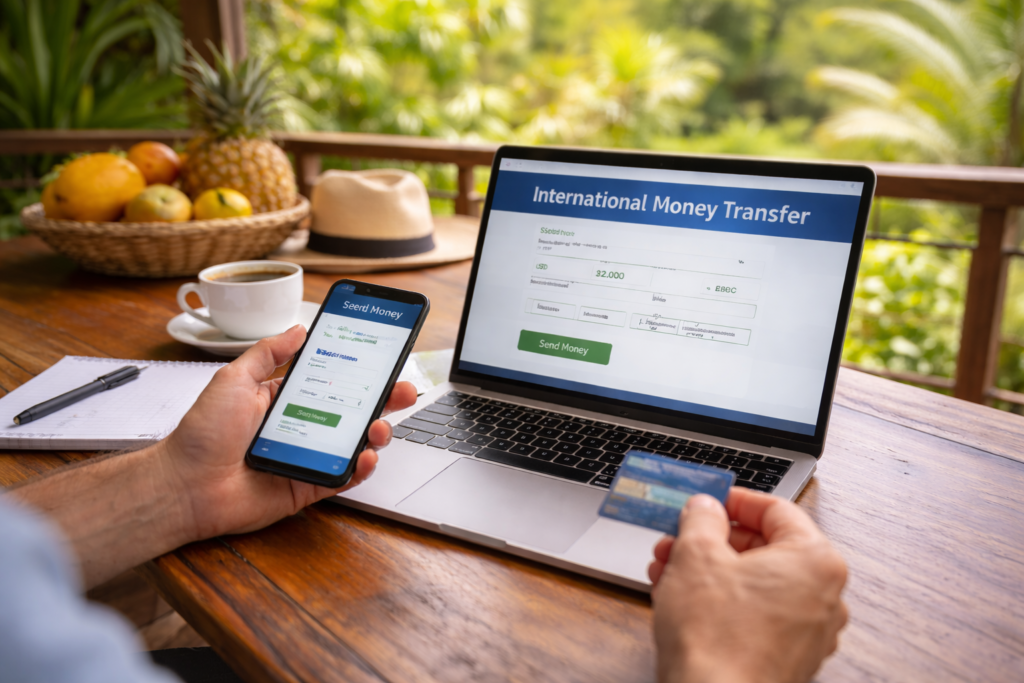
If you are paying rent, booking a long-term accommodation, paying a deposit, or covering a larger one-time expense, timing matters. International transfers can take longer than people expect, especially around weekends, holidays, or when banks require additional verification.
A practical approach is to send critical payments with extra buffer time, and avoid last-minute transfers when a deadline is strict.
Keeping Records and Proof of Transfer
Whether you’re paying for housing, services, or personal expenses, it’s wise to keep basic records. This can be as simple as saving the transfer confirmation, the reference number, and any receipt the recipient provides once the funds arrive.
Clear records help resolve questions quickly if a payment is delayed or applied incorrectly.
How This Connects to Immigration Planning
If your long-term plan includes Costa Rica residency, money movement and banking questions often come up as part of overall planning. However, the immigration process itself focuses on your residency category requirements and documentation, not on choosing transfer tools or banking products.
If you’re planning residency, it’s still smart to think ahead about how you will handle day-to-day payments and living costs while you organize your move.
Frequently Asked Questions
What is the safest way to transfer money to Costa Rica?
Safety usually comes from using a well-established method, verifying recipient details carefully, and keeping clear records. The “best” method depends on the amount, timing, and whether funds must arrive in a bank account.
How long do transfers to Costa Rica take?
Timing varies by method. Bank wires often take multiple business days. Other transfer options may be faster, but processing still depends on the sender, the route, and the receiving bank’s procedures.
Do I need to transfer money in colones?
Not always. Many payments in Costa Rica can be handled in colones or US dollars depending on the recipient. Confirm the preferred currency before sending.
Why do transfers sometimes get held up?
Common reasons include incorrect bank details, mismatched names, missing references, or follow-up questions from the receiving bank. Keeping documentation and being reachable helps resolve issues faster.
A Practical, Low-Stress Approach
Most people have a smooth experience transferring money to Costa Rica once they choose a reliable method and confirm details in advance. If you plan around timelines, verify recipient information carefully, and keep basic records, you can avoid most of the common frustrations that cause delays.
Article by Glenn Tellier (Founder of CRIE and Grupo Gap)
Don't wait, contact us right now!
Call or WhatsApp Costa Rica +506 8373 2085 or +506 8706 3888
Call USA/Canada +1 305-906-6784