

Costa Rica, a country renowned for its lush rainforests and “Pura Vida” lifestyle, is also making a name for itself in the world of cryptocurrency. For years, it has been a place of quiet but growing crypto adoption, particularly in communities like the “Bitcoin Jungle” in the South Pacific. But as we move through 2025, the landscape is changing. The once hands-off approach to regulation is evolving, and new rules are on the horizon.
The 2025 Shift: New Cryptocurrency Regulations on the Horizon

For a long time, Costa Rica took a hands-off approach to cryptocurrency. There were no specific laws that allowed the sector to grow organically. However, in mid-2025, the Legislative Assembly took a significant step by approving the debate of Bill 23-415, a new law aimed at regulating the crypto market.
This proposed legislation is designed to bring Costa Rica in line with international standards, such as the OECD’s Crypto-Asset Reporting Framework (CARF). The primary goal is to prevent financial crimes like money laundering and terrorist financing, which have been a concern for both local and international authorities.
What Will the New Law Regulate?
The bill proposes a comprehensive framework that will cover:
- Virtual Asset Service Providers (VASPs): This includes cryptocurrency exchanges, wallet providers, and other platforms that facilitate crypto transactions.
- Crypto Mining: The law will establish rules for cryptocurrency mining operations.
- Commercial Use: It will provide a legal framework for businesses that accept crypto as payment.
- Custody and Management: The bill will set standards for companies that hold and manage crypto assets for others.
It’s important to note that as of late 2025, this bill is still under debate and has not yet been fully implemented. However, it signals a clear shift from a non-regulated environment to a regulated one.
The Current Legal Status of Cryptocurrency in Costa Rica
So, what is the legal status of Bitcoin and other cryptocurrencies in Costa Rica right now? Here’s a breakdown:
| Legal Aspect | Current Status (Late 2025) |
|---|---|
| Legal Tender | Not legal tender. The Central Bank of Costa Rica (BCCR) does not recognize cryptocurrencies as official currency. The Costa Rican Colón remains the only legal tender. |
| Legality of Use | Allowed. The use of cryptocurrencies is not prohibited. You are free to buy, sell, and use them as a form of payment where accepted. |
| Licensing | No specific crypto license required (yet). Companies operating in the crypto space can do so under a regular business registration. This is expected to change once the new law is passed. |
How is Cryptocurrency Taxed in Costa Rica?
This is one of the most significant recent developments. For a long time, the tax treatment of crypto was unclear. However, the Costa Rican tax authority has now clarified that gains from cryptocurrency are subject to Tax on Capital Income and Capital Gains.
Here’s what that means:
- Classification: Cryptocurrencies are treated as “virtual or intangible assets” for tax purposes.
- Taxable Event: When you sell or exchange your cryptocurrency for a profit, that gain is considered taxable income.
- VAT: There is no Value Added Tax (VAT) on the act of buying or selling cryptocurrencies themselves.
This is a crucial point for investors and traders. While Costa Rica remains crypto-friendly, it is no longer a tax-free haven for crypto gains.
Bitcoin Adoption: The “Bitcoin Jungle” and Beyond
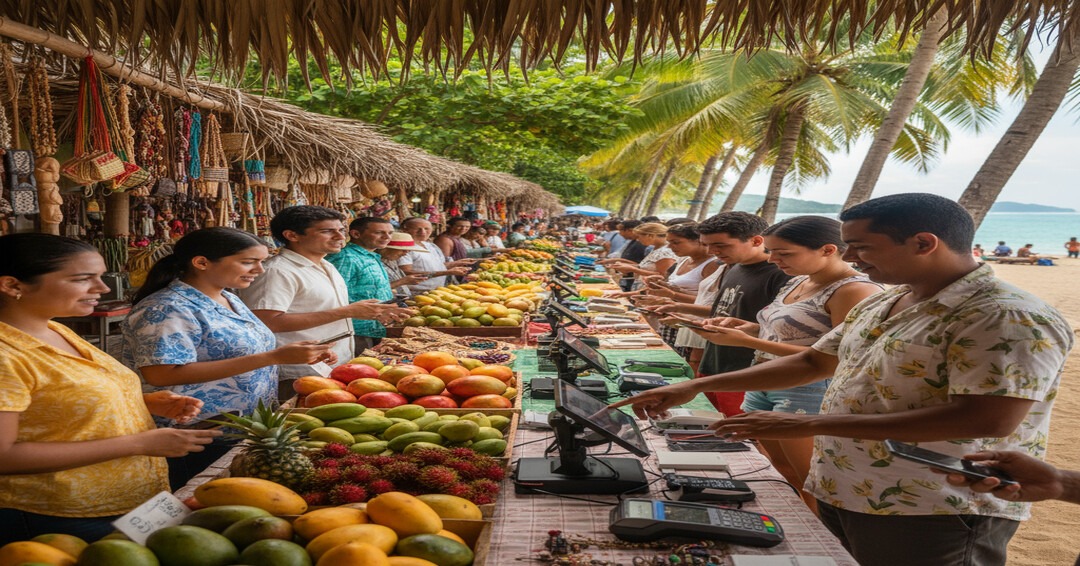
Despite the evolving regulations, grassroots adoption of Bitcoin continues to thrive in Costa Rica. The most famous example is the “Bitcoin Jungle” community in the Costa Ballena region of the South Pacific (including towns like Uvita and Dominical).
This circular economy, built on the Lightning Network for fast and cheap transactions, has seen widespread adoption among local businesses, from market vendors to restaurants and hotels. This initiative has not only empowered local merchants by allowing them to avoid high credit card fees but has also attracted a wave of “crypto tourists” who are eager to spend their Bitcoin in a real-world setting.
FAQ: Your Questions About Bitcoin and Crypto in Costa Rica
Is it legal to buy and sell Bitcoin in Costa Rica?
Yes, it is completely legal to buy, sell, and hold Bitcoin and other cryptocurrencies in Costa Rica. While they are not considered legal tender, they are recognized as assets that can be legally owned and traded.
Do I have to pay taxes on my crypto gains in Costa Rica?
Yes. As of recent clarifications from the Costa Rican tax authority, any capital gains you make from selling or trading cryptocurrencies are subject to the Tax on Capital Income and Capital Gains. This means you must report and pay taxes on your profits.
Can I get paid in cryptocurrency in Costa Rica?
Yes, employers in Costa Rica are legally allowed to pay their employees a portion of their salary in cryptocurrency, as long as the employee agrees to it. This has contributed to the growth of the local crypto ecosystem.
What is the “Bitcoin Jungle”?
The “Bitcoin Jungle” is a community-led initiative in the Costa Ballena region of the South Pacific (including Uvita and Dominical) that promotes the use of Bitcoin for everyday transactions. Many local businesses in this area accept Bitcoin via the Lightning Network, creating a circular economy.
Do I need a special license to operate a crypto business in Costa Rica?
As of late 2025, there is no specific “crypto license” required. You can operate a crypto-related business under a standard business registration. However, this is expected to change with the implementation of the new crypto assets market law (Bill 23-415).
Is Costa Rica considered a “crypto haven”?
While Costa Rica is very crypto-friendly, the term “crypto haven” may no longer be accurate. With the introduction of capital gains tax on crypto profits and the move towards regulation, Costa Rica is becoming a more mature and responsible crypto jurisdiction, rather than a completely unregulated one.
Can I buy real estate with cryptocurrency in Costa Rica?
Directly purchasing real estate with cryptocurrency is still challenging due to anti-money laundering (AML) regulations. Most real estate transactions require funds to pass through the traditional banking system. However, innovative solutions are emerging, such as using a third-party escrow service that can convert crypto to fiat for the transaction.
What does the future of crypto regulation look like in Costa Rica?
The future points towards a regulated market. The government’s goal with Bill 23-415 is to create a safe and transparent environment for crypto innovation while preventing illicit activities. We can expect to see clearer rules for exchanges, wallet providers, and other virtual asset service providers in the near future.
Need Help with Residency? Contact CRIE!
While we can’t give you financial advice, we can help you with the most important step in your journey: securing your legal residency in Costa Rica. Contact the experts at CRIE today for a consultation on your residency options.
- Email: info@crie.cr
- Website: crie.cr
Article by Glenn Tellier (Founder of CRIE and Grupo Gap)
Don't wait, contact us right now!
Call or WhatsApp Costa Rica +506 8373 2085 or +506 8706 3888
Call USA/Canada +1 305-906-6784