
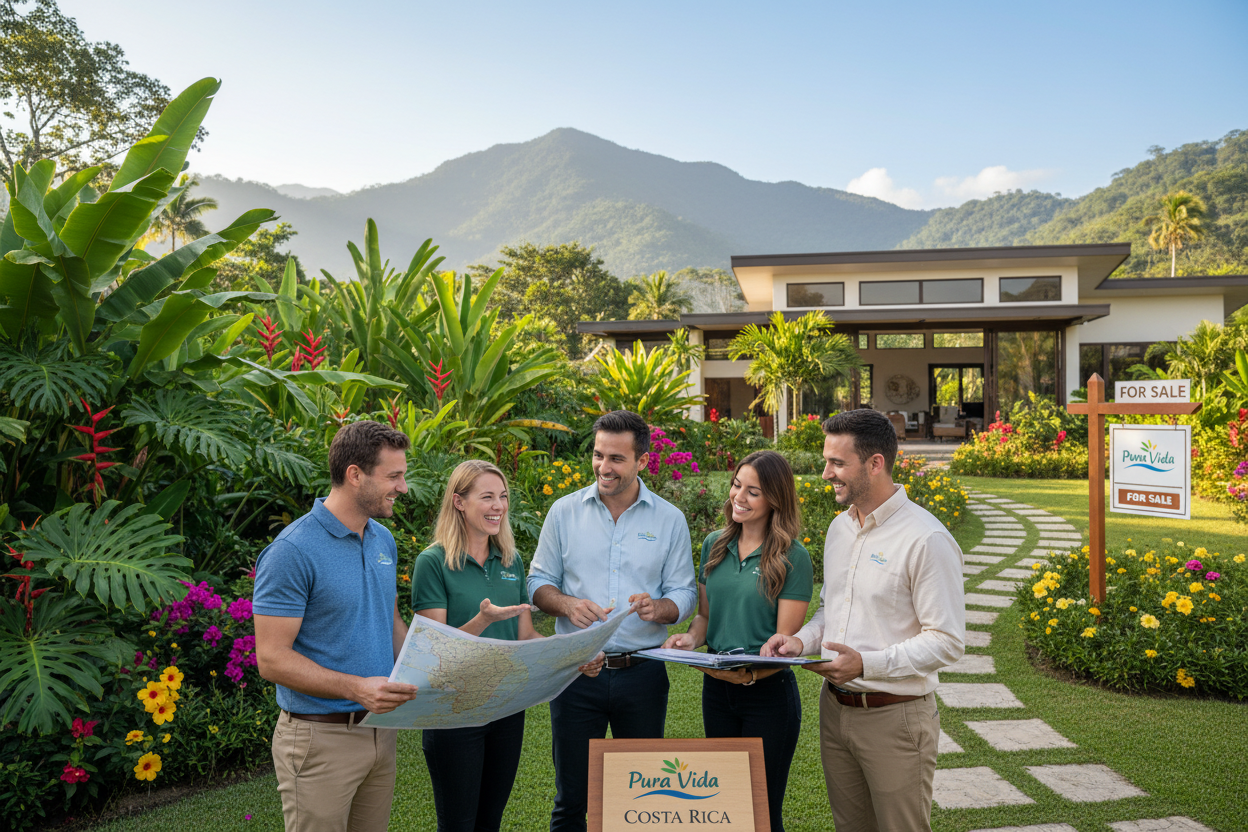
Dreaming of a new life under the sun with your loved ones? The Inversionista (Investor) program offers a clear path. This temporary residency status is designed for individuals making a significant financial commitment to the country.
A minimum investment of US$150,000 is required, often in real estate or a business. This pathway allows your immediate family members to be included on your application. It provides a legal foundation for building a future here.
Success hinges on preparation. Key documents from your home country must be apostilled and translated before you arrive. Starting this work early is the most critical step for a smooth process.
We provide a step-by-step guide covering eligibility, requirements, and timelines. For a deeper look at initial steps, see our detailed guide to the Costa Rica visa. Remember, final approval rests with local authorities. Our role is to be your knowledgeable guide.
Ready to explore your options? Contact us for personalized assistance: WhatsApp +506 8706 3888 | info@crie.cr. Always verify the latest rules at the official migracion.go.cr website.
Overview of Costa Rican Residency Pathways
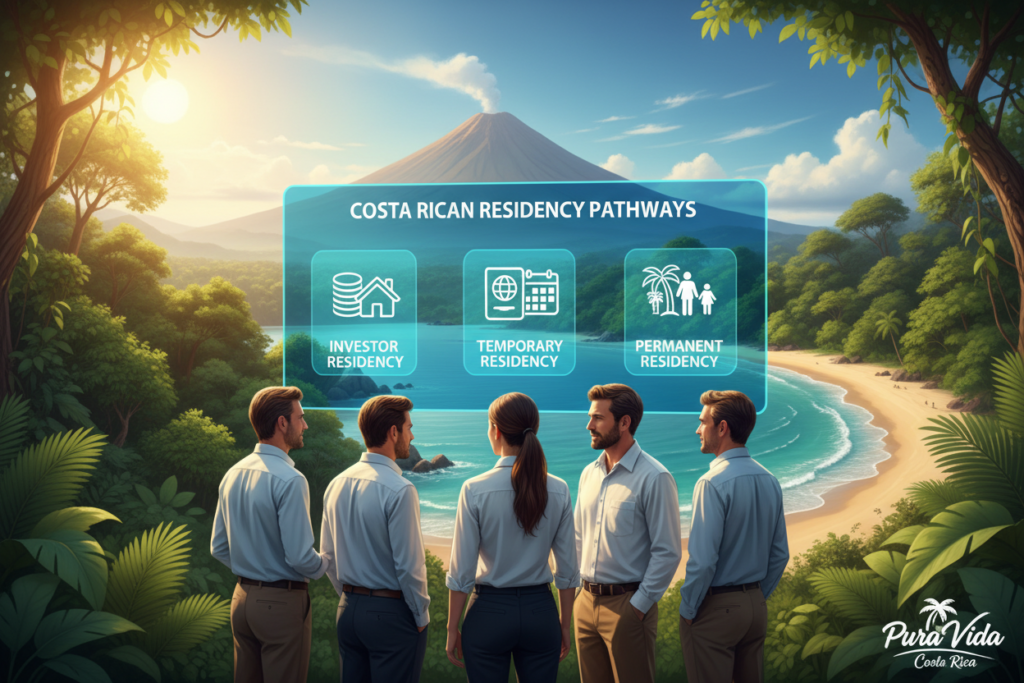
Several distinct programs exist for those seeking long-term legal status, each with its own financial criteria. The three primary temporary residency categories are Pensionado, Rentista, and Inversionista. Understanding these options is the first step in a successful immigration process.
Comparing Residency Options
The Pensionado category is for retirees with a guaranteed pension of at least $1,000 monthly. The Rentista pathway requires proof of $2,500 in stable passive income for two years. Both are based on demonstrating reliable external funds.
Understanding Investor versus Other Categories
The Inversionista, or investor category, is different. It requires a minimum capital commitment of $150,000 into the local economy. This can be in real estate, a business, or other approved projects.
It’s an active financial commitment, not just proof of income. A key point of confusion involves the Digital Nomad permit. This is a temporary stay visa, not a residency category. It does not count toward permanent residency or citizenship.
For remote workers seeking a long-term path, the Rentista or Inversionista programs are the closest fit. All these temporary permits are initially valid for two years. After three consecutive years, you can apply for permanent residency status.
We provide clear, step-by-step guidance to help you navigate these choices and prepare a strong application from the start.
Determining Eligibility: Who Qualifies for Residency
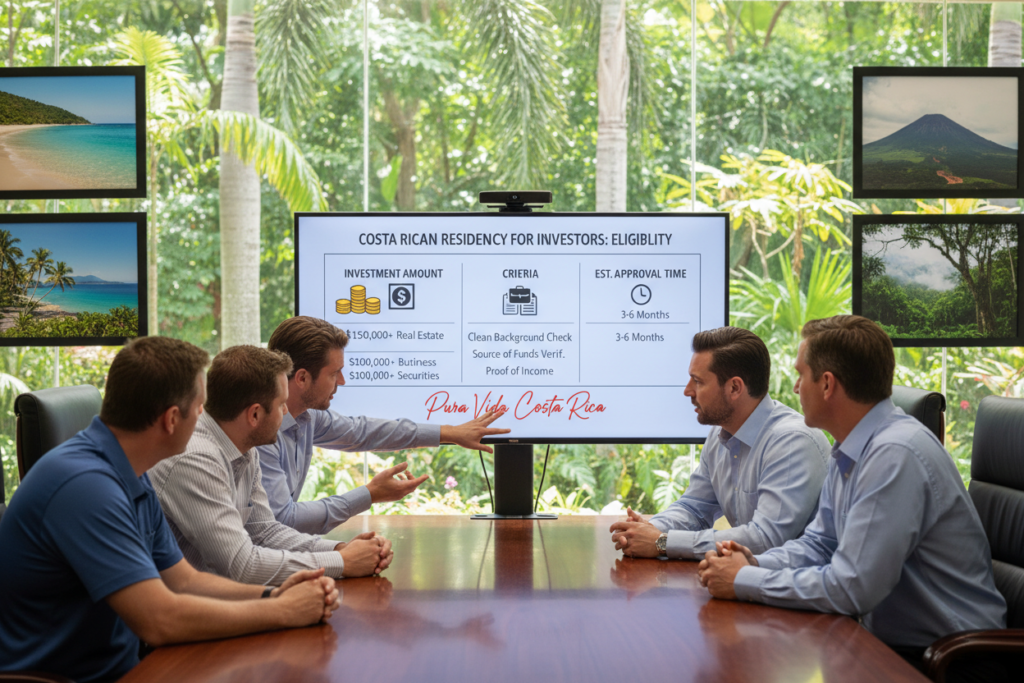
The first step in your application journey is confirming you meet the program’s financial requirements. We break down the exact thresholds so you can assess your fit honestly.
Defining Income and Investment Thresholds
The Pensionado pathway requires a guaranteed pension of at least US$1,000 per month. The Rentista category needs proof of stable passive income of US$2,500 per month for two years.
The Inversionista program demands a minimum investment of US$150,000. If using real estate, the property must be in the applicant’s personal name, not a corporation.
Clarifying Eligibility for Digital Nomads vs. Investors
The Digital Nomad permit is a temporary stay option. It is not a residency pathway and does not count toward permanent residency.
Remote workers seeking long-term status should consider the Rentista or Inversionista categories. Meeting the financial requirement is just one part of a successful application.
Gathering Essential Documents and Legal Prerequisites
A successful application rests on meticulous document preparation, a process best started from your home country. We guide you through each requirement to build a strong foundation.
Required Paperwork: Birth Certificates, Police Clearances, and More
Every applicant must provide an original birth certificate. This vital record proves your identity and nationality. You also need a police clearance certificate from your current country of residence.
This certificate of good conduct must be recent, typically issued within the last six months. If including family, marriage certificates and birth records for children are required.
Apostilles and Translation Requirements
All foreign documents must be apostilled or legally certified. This is a mandatory step for the immigration process. Documents not in Spanish need an official translation.
You cannot translate these yourself. A certified translator recognized by Costa Rican authorities must handle it. Always verify the latest requirements at the official migracion.go.cr website.
Preparing for Timelines and the Step-by-Step Process
Navigating the timeline for your residency application requires careful planning and realistic expectations. We guide you through each procedural stage to set a clear roadmap.
Application Submission and Consulate Procedures
Your journey often starts at a Costa Rican consulate abroad. You submit a provisional visa request with your apostilled documents.
Alternatively, many enter on a tourist visa and file in-country. Both paths require fingerprinting at the Ministry of Public Security.
All foreign paperwork must be legally translated and registered locally. This step finalizes your submission to immigration authorities.
Expected Processing Durations and Follow-Up Tips
The review process typically takes six to twelve months. This time varies based on application volume and completeness.
We emphasize proactive follow-up. Check your status online and respond quickly to any requests.
Once approved, you must enroll in the social security system. Then you receive your DIMEX card, granting temporary residency for two years.
Remember, we provide guidance based on current procedures. Always verify the latest steps at the official migracion.go.cr website.
Common Pitfalls and Mistakes to Avoid
Even well-prepared applicants can stumble on avoidable errors that delay their residency process. We share these insights to help you navigate smoothly.
Document Errors and Oversights
A police clearance certificate must be recent, typically issued within six months. Using an expired one will halt your application.
All foreign documents require proper apostille or legalization. Informal translations are not accepted by local authorities.
For the investment pathway, a critical error involves property ownership. Many homes here are held in corporations. This structure does not meet the requirement.
Financial proof must show the full investment amount. The registered fiscal value of a property is what counts.
Always maintain valid tourist status if applying from within the country. Letting it expire can result in rejection.
Building a Strong Application From Home
The foundation of a smooth immigration journey is laid long before you pack your bags. Starting your document preparation from your home country is the single most effective step you can take. This proactive approach dramatically improves your chances and can reduce processing time.
Organizing and Verifying Your Preparation
Begin by creating a master checklist for all required paperwork. Track each item’s status from obtaining originals to securing apostilles and translations. We recommend working with a qualified attorney remotely to review your documents early.
Establish a clear system using a spreadsheet or app. Keep digital scans in secure cloud storage and store physical originals safely. Always verify the latest official requirements before finalizing your preparation.
For a detailed breakdown of required paperwork, consult our dedicated guide. Remember, while thorough preparation is key, final approval rests with local authorities.
Costa Rica Investor Residency Dependents: Including Family Members Seamlessly
One of the most significant benefits of this pathway is the ability to bring your immediate family from the very start. The process is designed to keep your household united under one legal framework from day one.
Adding Spouses and Children to Your Application
Your legal spouse and dependent children under 25 can be included directly in your primary application. You must provide proof of these family ties.
For a spouse, this means an official marriage certificate. For each child, you need their birth certificate. These foreign documents require apostilling and an official Spanish translation.
Special Considerations for Dependent Family Members
Children between 18 and 25 may need extra proof of continued dependency. This can be evidence of full-time student status.
Adult children over 25 with physical or mental disabilities may also qualify. This requires medical documentation. A critical rule applies if you file from within the country.
Every family member must maintain a valid tourist status throughout the process. An expired entry stamp can jeopardize the entire family’s application.
We guide families through this documentation to ensure a cohesive and successful submission for everyone.
Verifying Requirements with Official Sources
Before finalizing any plans, confirming the latest official rules is a non-negotiable step. Immigration laws can and do change.
While this guide provides comprehensive information, the final authority rests with Costa Rican immigration authorities.
Consulting Information on migracion.go.cr
Always verify requirements directly with the Dirección General de Migración y Extranjería at migracion.go.cr. This government site publishes current forms, fees, and policy updates.
Navigate to the residency section for the Inversionista category. Download the most recent application checklist.
Utilizing CRIE as Your Trusted Guide
Official sources are essential but can be technical. This is where professional guidance adds immense value.
CRIE focuses exclusively on Costa Rican immigration. We offer personalized consultation and step-by-step support for your real estate investment and family application.
Contact us for assistance: WhatsApp +506 8706 3888 | info@crie.cr. We help you build a strong application, but final approval rests with the country’s authorities.
Final Steps and Actionable Next Moves
With the key requirements now clear, you can begin building your application strategy. Confirm you meet the US$150,000 minimum for qualifying assets like real estate held personally.
Start gathering essential documents from your home country now. This includes birth certificates and police clearances for all family members.
The review process typically takes six to twelve months. Your initial status lasts for two years and is renewable.
After three consecutive years, you qualify for permanent residency. This opens a pathway to citizenship if desired.
Your spouse and children under 25 can join you under the same legal framework. This provides stability for your entire household.
Take the first step today. Assess your financial readiness and compile your paperwork.
Contact us for personalized guidance: WhatsApp +506 8706 3888 | info@crie.cr. We help you navigate this significant life transition with confidence.
FAQ
What are the main financial pathways to qualify for residency?
Can my spouse and children join me under my application?
How long does the entire application process typically take?
What is the most common mistake people make with their paperwork?
Do I need to travel to the country to start my application?
Where can I find the most current and official requirements?
Article by Glenn Tellier (Founder of CRIE and Grupo Gap)
Don't wait, contact us right now!
Call or WhatsApp Costa Rica +506 8373 2085 or +506 8706 3888
Call USA/Canada +1 305-906-6784