
Marrying a Costa Rican citizen is one of the most direct routes to legal residency — and eventually citizenship — in Costa Rica. Unlike income-based residency categories, the marriage pathway has no minimum income threshold. Your qualifying relationship is the foundation of the application.
But there are important distinctions between what marriage-based residency grants immediately and what it takes to reach citizenship. Understanding both helps you plan for the long term.
Who Qualifies for Marriage-Based Residency?
Any foreign national who is legally married to a Costa Rican citizen may apply for residency under the first-degree family category. The marriage must be legally valid — performed in accordance with the laws of the country where it took place, and recognized under Costa Rican law.
Common-law partnerships (uniones de hecho) recognized under Costa Rican law may also support a residency application, though the documentation requirements differ from a formal marriage certificate. An attorney can evaluate whether your specific relationship qualifies.

Documents Required
A marriage-based residency application requires the standard documents that all Costa Rica residency applications need — a valid passport with certified copies, an apostilled criminal background check, an apostilled birth certificate, and recent photographs — plus documentation of the qualifying relationship. This typically means: the original marriage certificate (apostilled if issued outside Costa Rica); proof that your Costa Rican spouse holds Costa Rican citizenship; and in some cases, evidence that the marriage is genuine and ongoing.
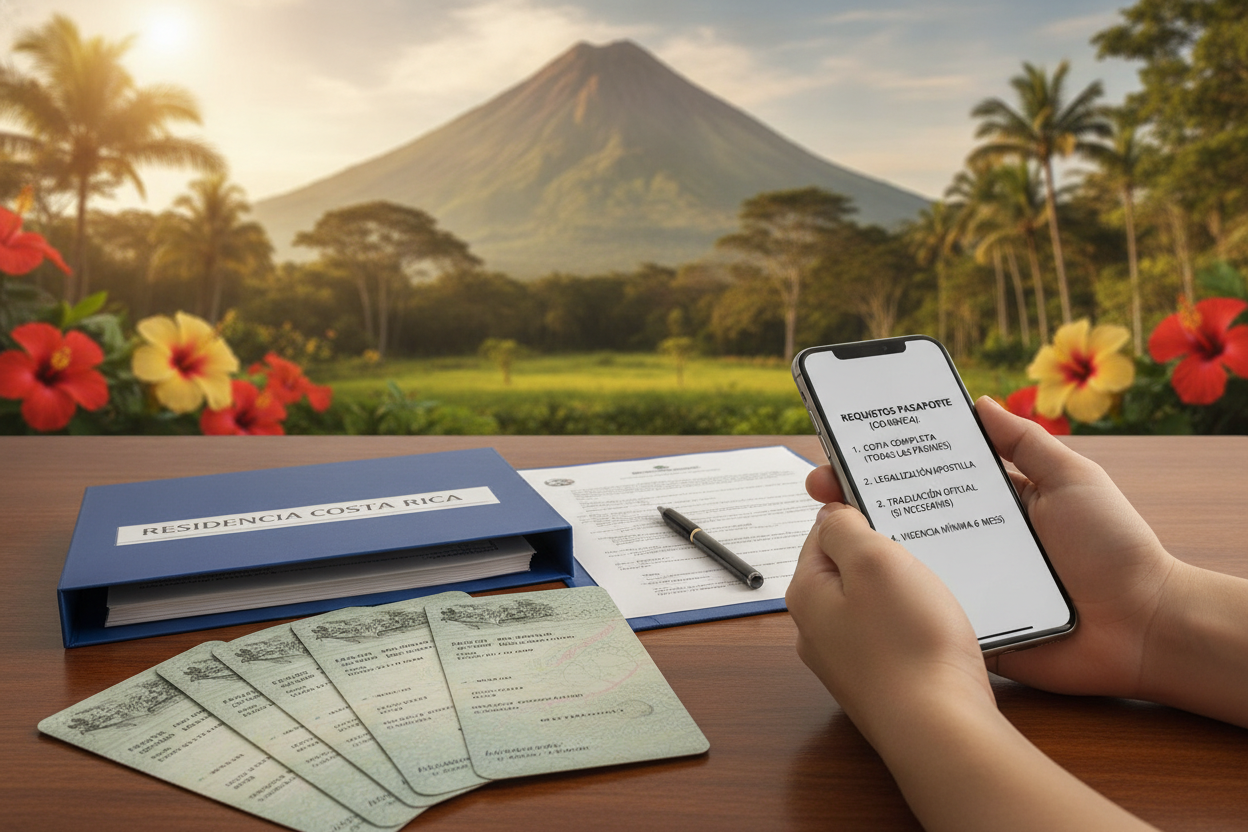
Documents issued outside Costa Rica must be apostilled and, if not in Spanish, certified translated.
What Marriage Residency Grants
Upon approval, you receive temporary residency as a first-degree relative of a Costa Rican. This status allows you to live legally in Costa Rica, access public healthcare (CCSS), buy and rent property, open bank accounts, and remain in the country indefinitely while maintaining your legal status.
Marriage-based temporary residents may apply for a work permit separately, allowing them to work for Costa Rican employers. This is different from the Pensionado and Rentista categories — the family category does not automatically restrict employment, though the work permit is a separate process.
Marriage Residency vs. Citizenship: Different Timelines and Agencies
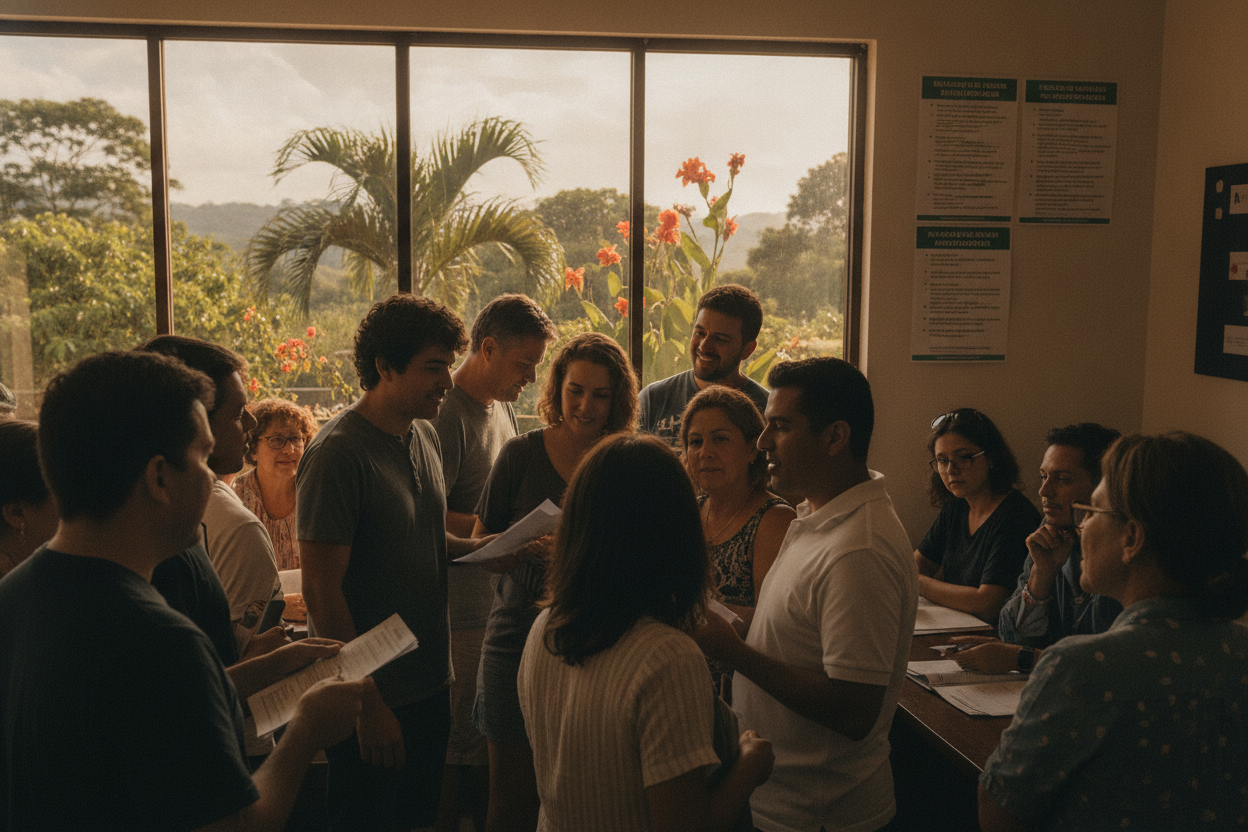
Marriage residency and citizenship are two separate things managed by two different government agencies. Residency is managed by DGME. Citizenship, however, is administered by the Tribunal Supremo de Elecciones (TSE) — not DGME.
Spouses of Costa Rican citizens can apply for citizenship after five years of continuous legal residency — compared to seven years for most other residents. However, this is five years of residency, not just five years of marriage. The residency clock starts from the date your residency was approved.
What Citizenship Requires — A Preview
Citizenship through TSE requires: continuous legal residency for the qualifying period; Spanish language proficiency; knowledge of Costa Rican history, geography, and civics (tested by exam); two Costa Rican citizen witnesses who can attest to your integration into the community; and evidence of good standing — no criminal record, no immigration violations.
The citizenship process is separate from and significantly more involved than the residency process. Planning ahead for both makes the overall path smoother.
The Three-Month Processing Standard
Under Article 27 of the Immigration Law, DGME has three months to resolve a complete residency application. This applies to marriage-based applications as well. A complete, well-organized file — with every document apostilled, translated, and current — is the most effective way to keep the process on schedule.
Ready to Make Costa Rica Official?
CRIE is a Costa Rica-based immigration law firm that has guided hundreds of expats, retirees, and investors through the residency process. Our licensed attorneys handle every step so you can focus on your new life here.
Disclaimer: This article is for informational purposes only and does not constitute legal advice. Costa Rica immigration laws can change. Individual circumstances vary. Consult CRIE or a licensed immigration attorney before filing.