
Anyone starting to look into temporary residency in Costa Rica eventually runs into a practical question: where does this request actually go? It is often buried under general online summaries that mix it together with unrelated details about requirements, costs, or processing time. This article addresses that one question directly and explains why the answer is narrower than it might first appear.

The Two Designated Channels for Submission
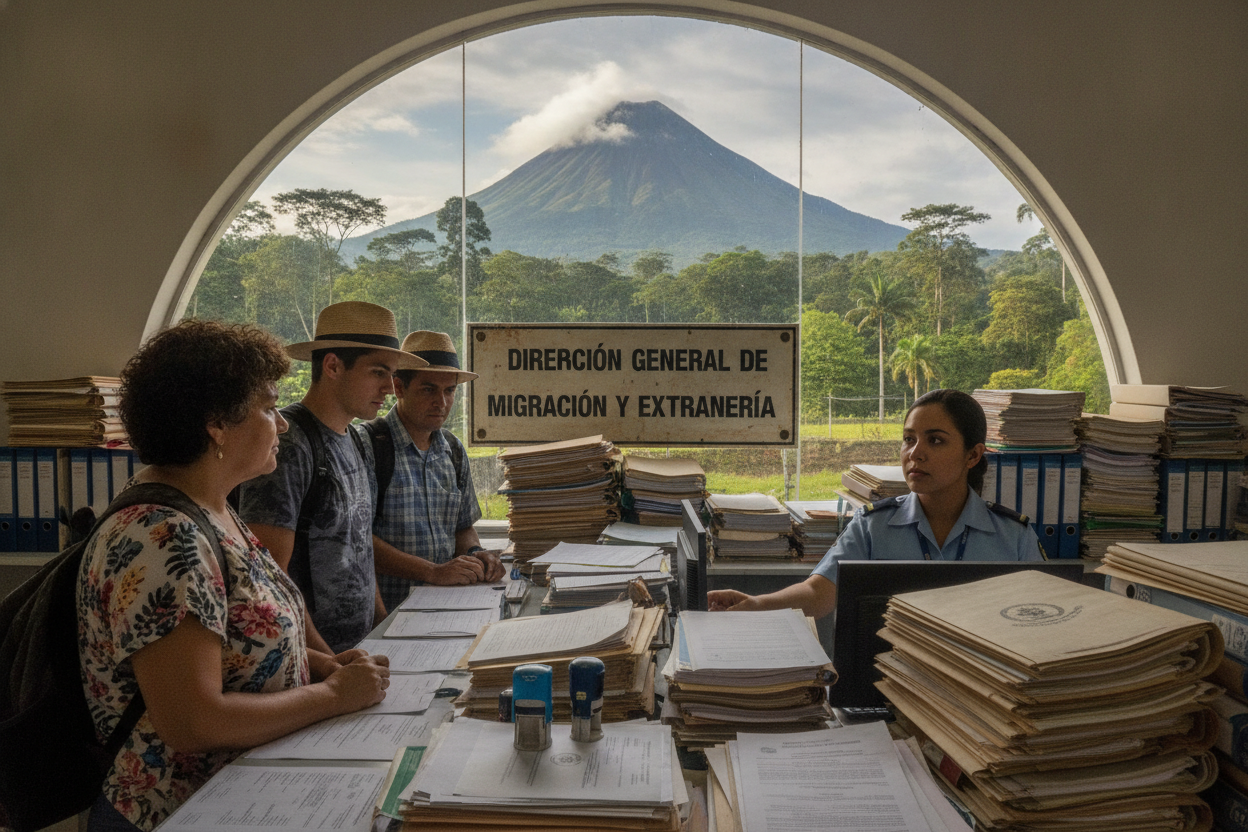
Under Costa Rica’s migration law, individuals interested in obtaining benefits under the law as temporary residents are directed to process their requests through accredited consular officials abroad. When that channel is not possible, the request may instead be handled at national offices of Costa Rica’s General Directorate of Migration and Immigration (DGME), the country’s immigration authority.
The law establishes a primary channel through Costa Rican consular representation abroad and an alternative through DGME’s domestic offices when the consular channel is not an option. The rule identifies where a request is processed; it does not answer the separate questions about a person’s eligibility or the requirements for a particular situation.
Why “Where” Is Separate From “Whether”
Knowing where a request is submitted does not tell someone whether that request will ultimately be approved. The submission channel is a matter of process and structure. Eligibility, required documentation, applicable fees, and processing time are separate matters, and none of them are addressed by the rule discussed in this article.
Knowing the correct channel is therefore a starting point, not a promise of a particular result. Each request remains subject to the current rules and to the responsible authority’s review of the individual circumstances.
Why This Distinction Gets Lost Online
General online content about Costa Rican immigration often blends where to go, what to bring, what something costs, and how long it may take into one narrative. Those are different categories of information. A reader cannot safely treat a statement about a submission channel as an answer about documents, eligibility, timing, or an outcome.
This article intentionally avoids that blending. It focuses on the single verified point about where a request is processed and does not extend into adjacent topics that require separate verification against official sources.
How to Approach Official Sources
For questions beyond the narrow point confirmed here, contact the entities named in the rule: an accredited Costa Rican consular office abroad or, when that is not practical, DGME’s national offices. Those are the appropriate places to confirm information specific to an individual situation.
When reaching out, it is useful to ask a focused question about your own circumstances rather than requesting a broad overview of everything involved. A specific question helps keep the answer tied to the matter that needs confirmation.
Questions to Confirm Directly
Because this article does not address eligibility, documentation, fees, or timelines, anyone preparing an actual request should confirm matters such as which channel is available in their situation, what the relevant office currently expects, and what that office recommends as the next step. These are case-specific questions that a general article cannot resolve.
Keeping a simple list of what has been confirmed directly with an official source and what remains an open question can help prevent assumptions from becoming decisions. A verified submission channel is a useful starting point; it is not a substitute for current, case-specific guidance.
What This Article Intentionally Leaves Out
This article does not describe residency categories, eligibility criteria, required documents, fees, processing timelines, online submission systems, exceptions, or likely outcomes. Those topics are outside the single verified point covered here and should not be inferred from the existence of a designated submission channel.
The limited scope is deliberate. Immigration information should be separated into precise, verifiable points rather than turned into a general impression based on incomplete or outdated summaries.
Using a Limited Rule Responsibly
A rule about where a request may be processed should be used for exactly that purpose: identifying the appropriate official channel to contact. It should not be stretched into a conclusion about a person’s options, documents, timing, or result. Keeping that boundary clear is especially important when information is being compared across different sources or different individual circumstances.
Before acting on any general information, readers should separate what they know from what they still need to confirm. In this case, the verified point is the designated submission channel. Questions that go beyond that point remain questions for DGME or an accredited consular office. That careful approach keeps planning grounded in the responsible authority rather than in assumptions.
Keeping the Distinction in Mind
As you continue researching temporary residency, you may encounter additional rules that govern distinct parts of a process. Treating each one as a separate, verifiable fact helps keep a submission-location rule from being mistaken for an eligibility rule or a document requirement.
General summaries, including this one, are best used as prompts for a direct question to DGME or an accredited consular office. They are not final answers for an individual case.

Frequently Asked Questions
If I know where to submit a request, does that mean I know if I qualify?
No. The designated submission channel is a procedural detail about where a request is sent. It does not determine eligibility, required documents, fees, or an outcome.
What if no Costa Rican consulate is accessible to me?
The rule identifies national DGME offices as the channel used when processing through an accredited consular official abroad is not possible. Confirm your specific situation directly with DGME.
Where can I get information about documents, costs, or timing?
Those topics are not addressed here. Confirm them directly and specifically with DGME or an accredited consular office.
Disclaimer: This article is for general information only. It reflects a narrow, verified point about where certain residency-related requests are processed and does not address eligibility, documentation, fees, timelines, exceptions, or outcomes. Confirm your own situation and current requirements directly with DGME, an accredited consular office, or a licensed immigration attorney.