

Understanding the implications of an expired residency status in Costa Rica is crucial for anyone living here. Maintaining legal residency ensures your peace of mind and security in this beautiful country. With over 20 years of experience, we at CRIE have guided many individuals and families through the complex residency process.
This article aims to provide essential information regarding the legal requirements to keep your residency status intact. Every case is unique, depending on nationality, family circumstances, and immigration history. Therefore, staying informed about current immigration law is vital.
Whether you are a new resident or have been living here for years, knowing the rules is key to avoiding complications. We are committed to helping you navigate these challenges with clarity and support. For more detailed assistance, feel free to visit CRIE’s website.
Understanding Residency Expiration in Costa Rica
It’s essential to grasp the significance of having a valid residency status while living in Costa Rica. Your DIMEX card serves as the primary proof of your legal status in the country. Typically, this card is valid for either two or three years, depending on your residency category.
Many residents overlook the expiration date printed on their card until it’s too late. Maintaining a valid residency card is a fundamental requirement for all temporary and permanent residents. This document confirms your legal presence in Costa Rica, whether you are here through marriage or another category.
We recommend keeping your residency card in a safe place and regularly checking its expiration date. Understanding the specific requirements for your residency category is crucial. This knowledge will help you avoid issues with your legal status and ensure compliance with local regulations.
For more detailed information about the renewal process, you can visit this page.
Risks and Implications of an Expired Residency
For residents in Costa Rica, understanding the risks associated with an expired residency card is vital. An expired card can lead to various challenges in your daily life.
One immediate consequence is the inability to open new accounts, such as cell phone plans or obtaining building permits. Banks and other institutions often reject expired cards as valid identification, complicating financial transactions.
Moreover, without a valid DIMEX card, you will pay higher non-resident prices at national parks. This can be frustrating for those who wish to enjoy Costa Rica’s natural beauty.
Many residents face difficulties accessing essential services due to expired documentation. Maintaining your residency status is crucial for legal compliance and access to services available to residents.
Exploring the Renewal Process and Requirements
Renewing your residency status in Costa Rica is a key step for all residents. The renewal process ensures you maintain your legal standing in the country, allowing you to enjoy all the benefits of residency.
To start, you can initiate the renewal process up to three months before your card expires. This advance preparation helps you avoid last-minute stress.
Here are the essential documents you will need:
- Your original DIMEX card.
- Proof of active coverage in the CCSS social security system.
- If applicable, an apostilled marriage certificate to verify your relationship status if you are a dependent.
The process involves paying fees for renewal, shipping, and bank commissions, which typically total around $150. Before submitting your application, we recommend checking your status in the CCSS system to ensure there are no issues.
Once your application is processed, you will receive a voucher that serves as temporary proof of your ongoing residency while you wait for the new card. For more detailed information on this process, visit this page.
what-happens-if-residency-expires-costa-rica
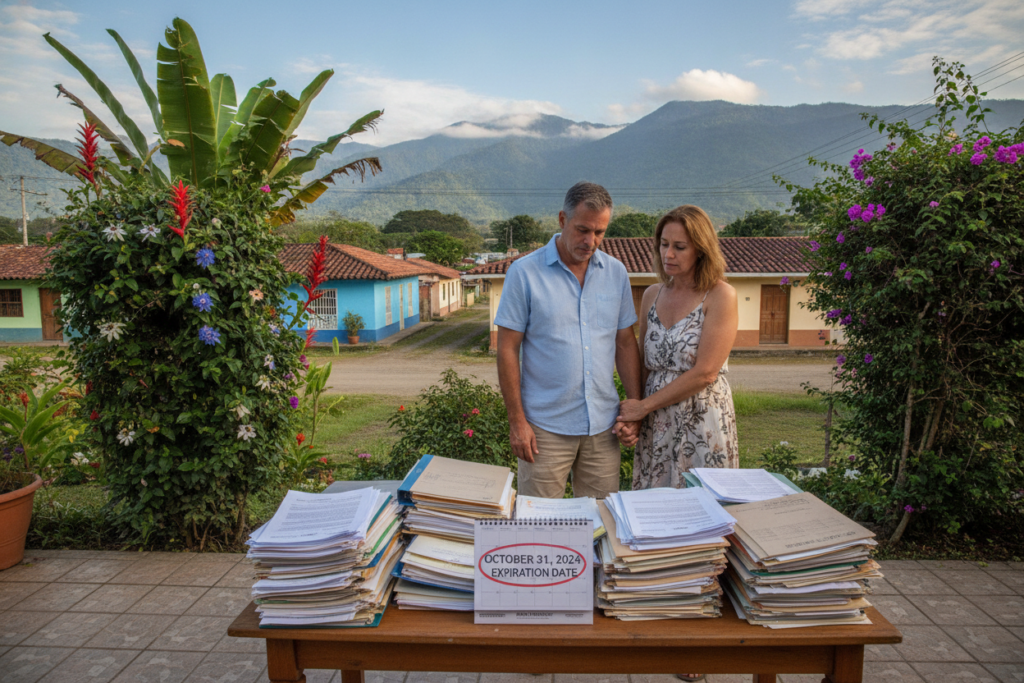
Residents must be aware of the consequences of letting their residency status lapse in Costa Rica. If you miss the renewal deadline, you can still renew your permanent residency card within three months after it expires. However, a $10 monthly fine will apply during this period.
For temporary residents, if you are more than three months overdue, a formal renewal process through the Migracion office is necessary to restore your legal status. We strongly advise against waiting until the last minute, as the renewal process can take several weeks once you submit your documents.
Additionally, having an expired card can complicate your ability to re-enter the country or access certain services upon your return, especially if you travel. This article serves as a reminder that proactive planning is essential to avoid penalties associated with an expired residency card in Costa Rica.
Always keep a copy of your application voucher with you while waiting for your new card to arrive at the post office.
Navigating Costa Rican Immigration Compliance
Awareness of immigration compliance is essential for maintaining residency status in Costa Rica. All foreign residents must adhere to Law 8764, which governs immigration procedures. Failure to meet these obligations can jeopardize your ability to stay in the country.
One critical requirement is your registration with the CCSS social security institution. Keeping this registration current is necessary for every residency renewal. Many residents face challenges because they neglect to update their dependent status at the local CCSS office every two years.
It is also important to be familiar with the specific articles of the immigration law that apply to your residency category. For permanent residents, adhering to rules regarding time spent outside the country each year is crucial.
Our experience shows that those who stay organized and keep their documentation updated have a much smoother experience with the immigration authorities.
Tips for a Seamless Renewal Experience

A well-prepared approach can significantly ease the residency renewal process in Costa Rica. Planning ahead is crucial to avoid delays that can complicate your status.
We recommend booking your appointment at a BCR bank branch at least two weeks in advance. This ensures you secure a time that works for you.
You can call the BCR hotline at 800-BCRCITA to schedule your renewal. However, be prepared for the operator to primarily speak Spanish.
Arriving early for your appointment is wise. Inform the security guard that you have a scheduled time for your residency renewal.
Having all your documents organized, including your current card and proof of CCSS payment, will help the bank representative process your request faster.
If you are over 65, you may visit the Migracion office in La Uruca on Thursdays or Fridays without an appointment, but always confirm this first.
By optimizing your submission and double-checking your requirements, you can significantly reduce the time spent waiting for your new residency card to arrive.
Wrapping Up Your Residency Renewal Journey
Wrapping up your residency renewal journey in Costa Rica is crucial for ensuring your legal status. Staying organized and planning ahead can make this process manageable. We hope this article has equipped you with the information needed to maintain your residency card confidently.
Every case is unique, so it’s essential to stay updated on immigration laws to avoid complications. If you have questions or need personalized guidance, reach out to Johanna Alvarez at CRIE. She can provide expert assistance tailored to your situation.
Contact us via WhatsApp at +506 8706 3888, email at info@crie.cr, or visit our website at crie.cr for more details. We are here to support you on your residency journey, just as we have for families over the past 20 years.
FAQ
What happens if my residency card expires?
How often do I need to renew my temporary residency?
What documents do I need for the residency renewal process?
How long does the residency renewal process take?
Can I work in Costa Rica with an expired residency?
What are the implications of not renewing my residency?
How can I ensure a smooth renewal process?
Article by Glenn Tellier (Founder of CRIE and Grupo Gap)
Don't wait, contact us right now!
Call or WhatsApp Costa Rica +506 8373 2085 or +506 8706 3888
Call USA/Canada +1 305-906-6784