
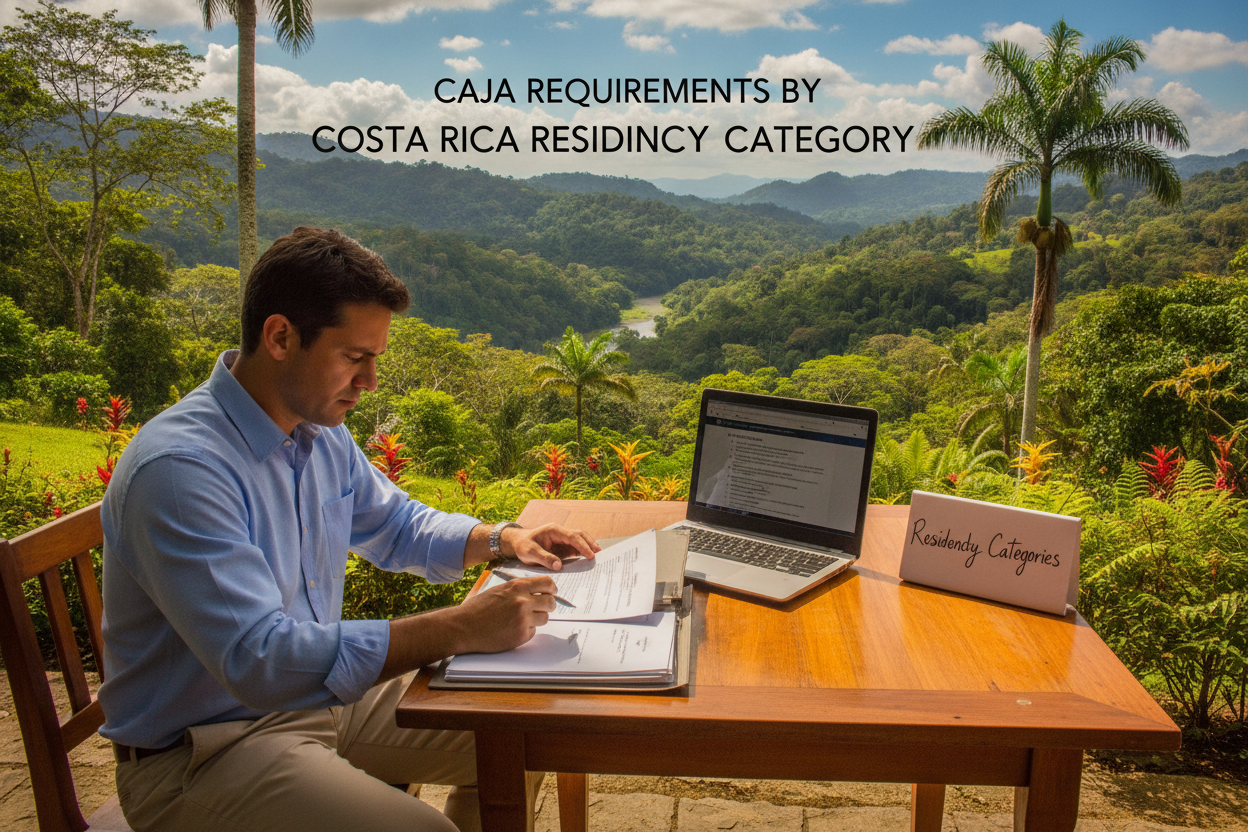
Navigating the residency process in Costa Rica can be complex. Each applicant must understand specific legal and financial obligations. For over 20 years, we at CRIE have assisted individuals and families in successfully transitioning to life in this beautiful Central American country.
This comprehensive guide aims to provide an educational overview of the essential steps and documentation needed for securing your legal status. We focus on delivering factual information to help you grasp the nuances of the application process without making any unfounded claims.
Whether you are planning for retirement or remote work, knowing the specific residency category that suits your situation is crucial. Our goal is to equip you with the practical knowledge necessary to approach your immigration journey with confidence and clarity from the very beginning.
For more assistance, feel free to explore our residency support services.
Overview of Costa Rica Residency and CAJA Essentials
Understanding the residency process in Costa Rica is essential for newcomers. One of the key components of this journey is the national healthcare system, known as the Caja Costarricense de Seguro Social (CCSS). This system serves as a vital pillar of the social security framework in the country.
It’s important to recognize how your residency status connects with this public healthcare system. Many applicants are surprised to discover that immigration and social security are closely linked. Access to healthcare benefits is a significant advantage of obtaining residency.
Successful applicants often prioritize enrolling in the national system. This ensures they have comprehensive access to medical services upon arrival. By maintaining your residency status, you can guarantee uninterrupted access to these essential public benefits throughout your time in Costa Rica.
Understanding caja-requirements-by-costa-rica-residency-category
The journey to secure residency in Costa Rica requires careful navigation. Law 8764 governs the general framework for residency applications, outlining distinct requirements for each residency type.
Every residency category has specific criteria that must be met to satisfy the authorities during the formal application process. It is essential for applicants to review the documentation and financial prerequisites carefully.
We emphasize that the residency process is not a one-size-fits-all endeavor. Each path requires unique supporting evidence and verification. Understanding these requirements early on helps prevent common pitfalls that often lead to delays.
Our experience shows that thorough preparation is the most effective way to navigate the requirements associated with your specific residency category.
For more information on the immigration process, check out our guide on Costa Rica immigration interviews.
Exploring Residency Categories: Pensionado, Rentista, and Inversionista
Exploring the various residency options in Costa Rica is crucial for potential applicants. Each residency category offers unique benefits and requirements tailored to different lifestyles.
The Pensionado category is ideal for retirees. Applicants must show a guaranteed monthly pension income of at least $1,000 from a recognized institution. This ensures a stable financial base for living in Costa Rica.
For those with unearned income, the Rentista category requires proof of a stable monthly income of $2,500 for at least two years. This income must be consistent to meet the residency requirements.
The Inversionista path is for individuals willing to invest in Costa Rica. A minimum investment of $150,000 in property or business is required. This commitment not only fulfills residency requirements but also contributes to the local economy.
Each category influences how you contribute to the social security system. By meeting these income thresholds, you establish your eligibility for national healthcare.
Preparing Your Application: Step-by-Step Guidance
Gathering the right documents is a crucial step in your residency application journey in Costa Rica. The first step involves collecting all necessary documents from your home country, including birth and marriage certificates.
Every foreign document must be authenticated with an apostille to be recognized as valid by the authorities in Costa Rica. Once apostilled, these documents need to be processed by a court-approved translator to ensure that the Spanish translations meet official legal standards.
We advise clients to verify that their criminal background checks are less than six months old, as expired documents are a common cause for rejection. Managing these documents requires careful attention to detail, as even minor inconsistencies can disrupt the entire application process.
Working with a professional translator ensures that your documents are accurately represented, which is a critical step for a successful submission.
For further details on the required documents, check out our guide on birth certificates for Costa Rica residency.
Financial Proof and Income Verification Requirements
Clear income verification is a key component in the residency application process in Costa Rica. Providing proof of your income is mandatory and must be substantiated by official bank statements or certified accountant letters.
For Rentista applicants, the bank must confirm that your monthly income of $2,500 is stable and expected to continue for at least two years. On the other hand, Pensionado applicants need to present official letters from their pension provider showing a consistent monthly payment of at least $1,000 per month.
We have found that authorities look for consistency in your bank records. Ensure that your deposits are clearly documented and easy to verify. If your income comes from abroad, you must provide proof that these funds are being transferred into your account regularly.
Proper financial proof is the cornerstone of your application. It demonstrates your ability to support yourself without relying on local employment.
Navigating the CAJA Process for Costa Rican Residency

Comprehending how the CAJA contributions work is essential for a smooth residency journey. Enrollment in the Caja Costarricense de Seguro Social is mandatory for all residents. This enrollment helps maintain your legal status in the country.
Once your residency is approved, you must provide proof of your declared income during your initial registration interview. The amount you pay to the caja costarricense seguro is calculated as a percentage of this income.
We explain to our clients that the seguro social system operates on a sliding scale. This means your monthly contribution directly correlates with your income level. To navigate the process, you will also need to show proof of residence, such as a lease or utility bill.
Your contributions to the costarricense seguro social fund ensure full access to the national healthcare network throughout your residency. By staying current with your seguro social payments, you fulfill a key requirement of your residency status and avoid potential issues with the authorities.
Legal Documents and Supporting Evidence to Gather
Collecting the necessary legal documents is a fundamental step in the residency application process. Each applicant must ensure they have all required documentation ready for submission.
You need to obtain an official copy of your birth certificate. This document serves as a primary requirement for establishing your identity during the application.
A clean criminal background check is also a strict requirement for every adult applicant. This check must be issued within the last six months to be valid.
If you are applying with a spouse, remember to include an apostilled marriage certificate as part of your supporting evidence. This document is essential for your residency file.
We recommend creating a comprehensive checklist of all required documents. This will help ensure that nothing is missed before you submit your application to the authorities.
Each document acts as a vital piece of evidence that supports your eligibility for the specific residency you have chosen to pursue. Failure to provide any required document can lead to significant delays.
Practical Tips for a Smooth Residency Application Process
Successfully navigating the residency application process in Costa Rica requires careful planning. This journey can be lengthy, often taking several months. Therefore, patience and organization are essential for a smooth experience in the country.
One common pitfall is failing to update your documents if your residency status changes or if your background check expires during the waiting period. To avoid delays, ensure that all your documents are current.
We suggest scheduling your appointments with the immigration office as early as possible. This helps you avoid the long wait times that often occur in the country.
While your application is in process, keep your passport and receipt of submission with you at all times. If you need to leave the country, ensure you have the proper permits to protect your pending residency status.
By following these practical tips, you can navigate the complexities of the immigration system and move closer to your goal of living in Costa Rica.
How Residency Impacts Healthcare and Social Security in Costa Rica

Understanding how residency influences access to healthcare in Costa Rica is vital for newcomers. Your residency in Costa Rica grants you the right to participate in the Caja Costarricense de Seguro Social, which is the backbone of the national healthcare system.
The costarricense seguro social system is designed to provide comprehensive medical coverage to all legal residents who contribute to the social security fund. We emphasize that the Caja Costarricense seguro is not just a healthcare provider but a vital part of the social security system that supports the entire country.
By paying into the costarricense seguro, you ensure that your access to the national healthcare system remains active and compliant with all legal requirements. The Caja Costarricense seguro social is a mandatory system for residents, providing peace of mind by covering a wide range of medical services.
Understanding how your residency impacts your participation in the social security system is crucial for long-term stability while living in Costa Rica.
Maintaining Compliance with Immigration and CAJA Requirements
Staying compliant with immigration regulations is crucial for maintaining your residency in Costa Rica. Every two years, you must complete the renewal process through the Dirección General de Migración y Extranjería.
During each renewal, it’s essential to prove that you still meet the financial requirements. Additionally, ensure that your documents remain valid for your specific residency status.
We help clients track their renewal dates to prevent any lapse in status with the Dirección General de Migración y Extranjería. This is especially important for those who wish to apply for permanent residency after three years.
Ongoing document updates are a standard part of the renewal process. Authorities require current proof of your income and social security contributions. By proactively managing your renewal, you protect your legal status and ensure a seamless experience in the country for many years.
Final Thoughts: Connect with CRIE for Personalized Residency Guidance
Securing your residency in Costa Rica opens doors to new opportunities. Every case is unique, influenced by nationality, family situation, and immigration history. Whether you are on the digital nomad path, planning for retirement, or investing in property, we provide the guidance you need.
With over 20 years of experience, we help you understand the requirements for temporary residency. This includes necessary documents like birth certificates and proof of income. Our expertise covers all residency options, ensuring you know the total cost, registration steps, and benefits of your status.
For personalized guidance and current pricing, contact our immigration expert, Johanna Alvarez. Reach her via WhatsApp at +506 8706 3888 or email info@crie.cr. You can also visit our website at crie.cr to learn more about how we can assist you in achieving your goal of becoming a legal resident in Costa Rica.
FAQ
What is CAJA and why is it important for residency in Costa Rica?
What documents do we need to apply for residency?
How do we prove our income for the residency application?
What are the CAJA contribution rates for different residency categories?
How long does the residency application process take?
What should we do if our application is denied?
How often do we need to renew our residency status?
Can we work in Costa Rica with temporary residency?
What healthcare benefits do we receive as CAJA members?
Are there any fees associated with the CAJA registration process?
Article by Glenn Tellier (Founder of CRIE and Grupo Gap)
Don't wait, contact us right now!
Call or WhatsApp Costa Rica +506 8373 2085 or +506 8706 3888
Call USA/Canada +1 305-906-6784