

Many professionals are drawn to the lush landscapes and peaceful lifestyle of Costa Rica. In fact, over 120,000 private U.S. citizens have already made the move for a better quality of life. The dream of trading a temporary adventure for a permanent home is becoming a common goal.
Costa Rica launched its official Digital Nomad Visa in 2022. This program regulates the stay of remote workers and international service providers. It offers a fantastic, legal way to live and work in this beautiful country for a set period.
However, it is vital to understand a key legal distinction. This specific visa is a temporary permit. It does not, on its own, lead to permanent residency or citizenship. Planning for a long-term future requires a different, formal process.
We provide this guide to help you navigate Costa Rica’s immigration landscape. Our team at CRIE specializes in helping expats understand the transition from a temporary stay to a legal, long-term status. By starting your Costa Rica residency for foreign worker planning early, you ensure the process is handled with precision and clarity.
Understanding Digital Nomad vs. Traditional Residency Options
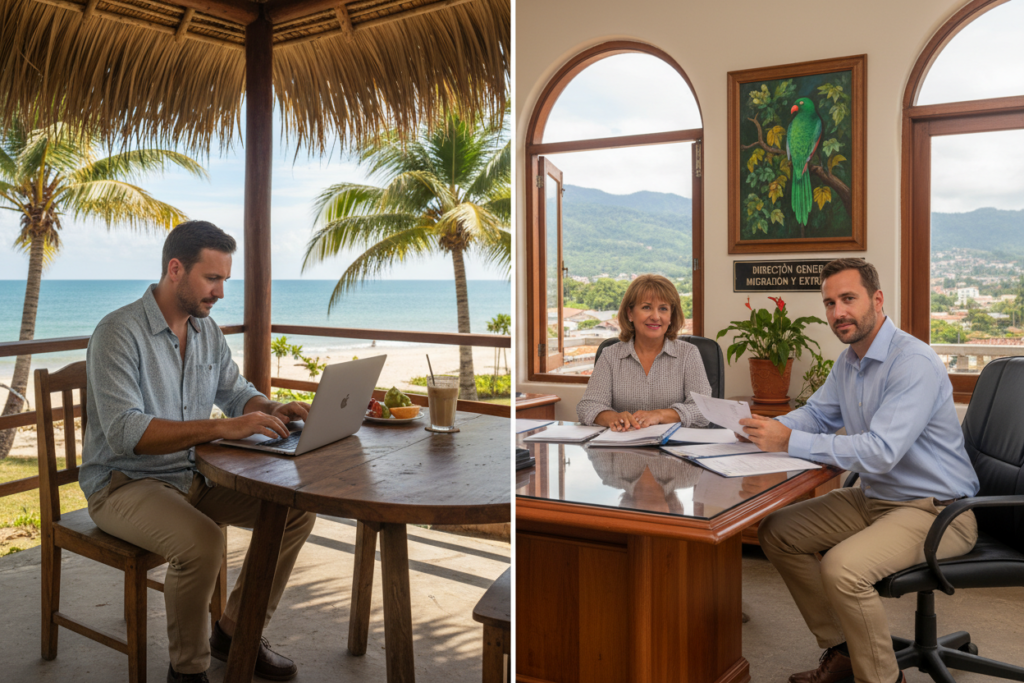
Navigating the legal landscape requires distinguishing between temporary permits and permanent residency. Many people confuse these two tracks, which can lead to significant planning errors.
Digital Nomad Visa Limitations
The Costa Rica digital nomad visa is a temporary stay permit. It allows remote workers to live in the country legally for one or two years.
However, this program has a critical limitation. Time spent under this nomad visa does not count toward the years required for permanent residency or citizenship. It is a separate, non-immigrant track.
We emphasize this is a trial run, not a path to citizenship. Understanding this early prevents costly immigration mistakes.
Pathways to Pensionado, Rentista, and Inversionista
For a long-term future, you must pursue traditional residency. The Pensionado, Rentista, and Inversionista programs are the formal pathways.
These are the only options that start your residency clock. They represent a commitment to living in Costa Rica permanently.
Choosing the right program aligns your immigration strategy with your goals. It ensures a smooth transition from visitor to legal resident.
Eligibility Criteria and Financial Thresholds for Costa Rican Residency

Each traditional residency pathway in Costa Rica has clear, non-negotiable financial thresholds you must meet. These benchmarks prove your financial stability to the immigration authorities.
Understanding these requirements upfront is crucial for a successful application.
Pensionado (Pensionado) Requirements
The Pensionado program is for retirees with a permanent pension. You must prove a stable monthly income of at least $1,000 USD from this source.
Rentista (Rentista) and Inversionista (Inversionista) Criteria
The Rentista visa suits those with stable income but no pension. It requires proof of at least $2,500 USD per month, guaranteed for two years.
The Inversionista option is based on investment. You must invest a minimum of $150,000 USD in approved assets, like real estate or a business.
A critical rule for the Inversionista category: the property must be titled in your personal name, not a corporation. We help verify your documents meet all these specific requirements before you apply.
Step-by-Step Guide: Transitioning from a Digital Nomad Visa
Your path to long-term residency starts with meticulous document preparation, a process best initiated from your home country. We guide you through each critical phase to ensure a smooth transition from your temporary permit.
Document Preparation and Apostilles
Begin by gathering all vital records from your home country. This includes birth certificates, marriage licenses, and police clearance reports. Each document must carry an apostille to be legally recognized in Costa Rica.
Any paper not originally in Spanish requires an official translation. You must use a certified translator approved by local authorities. Organizing these files early prevents delays in the residency process.
Online Application Process Details
The initial submission happens through the official online portal. Accuracy here is paramount. Even a minor error can cause significant setbacks.
We recommend preparing your complete financial and personal dossier before you log in. A thorough, pre-arrival package review minimizes the risk of rejection and keeps your timeline on track.
Preparing Essential Documents Before Arrival
Properly preparing your essential paperwork from your home country is the single most important step in securing your long-term status. We advise starting this process well before your planned move to Costa Rica. Having everything in order prevents frustrating delays at the border and with immigration officials.
Your passport must have at least six months of validity remaining. This is a strict entry requirement for Costa Rica. Securing adequate health insurance is another non-negotiable rule. You must have a policy with a minimum of $50,000 USD in coverage.
Translation and Notarization Guidelines
All official documents, like police records, require an apostille from your home country. These papers must then be translated into Spanish by a certified professional. This translation serves as legal proof for your application.
We guide our clients to keep both digital scans and physical copies of every notarized document. This dual-system facilitates a smooth verification process after you arrive. Meeting these documentation requirements is the foundation for a successful residency application in Costa Rica.
Timelines and Key Milestones in the Residency Process
Setting realistic expectations for the immigration timeline is a cornerstone of successful residency planning. Knowing how long each step takes prevents unnecessary stress. It allows you to manage your legal status confidently while you wait.
Expected Processing Durations
Processing times differ greatly between visa types. A remote worker permit decision typically comes within 15 calendar days of a complete submission.
Traditional residency in Costa Rica, like the Pensionado category, is a longer commitment. The full application process usually takes between six to twelve months. Plan for this extended time frame from the start.
Submission and Review Stages
Once submitted, your file enters an official review. Authorities verify all documents during this phase. They may request additional information within eight working days.
If your application is incomplete, you will receive a notice within five days. You must act quickly to provide the missing data. We help clients track these key milestones to ensure compliance throughout the entire process.
Avoiding Common Mistakes in Residency Applications
Immigration authorities in Costa Rica are strict about documentation. Even a single missing apostille can halt your entire process. We see many applicants face rejection due to preventable oversights.
A common error involves the Rentista visa. You must provide clear proof that your passive income is guaranteed for a full 24-month period. Bank statements must show consistent deposits to meet this requirement.
Every official document from your home country needs an apostille. Missing just one triggers an immediate rejection. This includes birth certificates and police clearance reports.
Another frequent mistake is missing the eight-working-day window to respond to requests. Authorities may ask for additional data during review. Failing to reply promptly causes significant delays.
For the Inversionista visa, the property must be titled in your personal name. Using a corporation instead is a common reason for failure. We help you avoid these pitfalls by ensuring your application package is complete and accurate from the start.
Navigating residency-after-digital-nomad-costa-rica: Key Insights
Successfully transitioning from a temporary stay to permanent status hinges on mastering two core elements: financial thresholds and document integrity. Moving beyond your initial official digital nomad visa requires a shift in strategy.
Important Thresholds and Documentation Tips
Financial benchmarks are non-negotiable. For example, the Rentista category demands proof of a stable $2,500 USD monthly income. Immigration officials scrutinize this proof for consistency.
Every foreign document must be translated by a certified professional. This step transforms your paperwork into valid legal proof for the authorities.
We advise clients to keep apostilled records in a secure, dedicated folder. Also, verify your health insurance meets the $50,000 minimum coverage for Costa Rica. Focusing on these insights builds an application that demonstrates full commitment to all legal requirements.
Exploring the Benefits of Costa Rican Residency
Securing legal residency in Costa Rica unlocks a suite of practical advantages that go far beyond a simple visa stamp. The benefits are both financial and lifestyle-oriented, rewarding your commitment to making this country your long-term home.
Lifestyle and Tax Incentives
One major financial benefit is the territorial tax system. Income you earn from foreign sources is generally not taxed locally. This is a significant advantage for remote professionals and retirees.
Residents also gain access to the public healthcare system, the Caja. For a modest monthly contribution, you receive comprehensive medical services. This provides immense peace of mind for you and your family.
Beyond these incentives, residency allows for true community integration. You can fully embrace the Pura Vida lifestyle with the legal security of a permanent status. This stability is the foundation for building a lasting life here.
A key practical benefit is work eligibility. After establishing residency, you may apply for a local work permit. This option is not available under a temporary digital nomad stay.
We help you understand how these benefits apply to your specific situation. Our guidance ensures you make the most of your new life and all its advantages in Costa Rica.
Comparing Temporary Permits with Permanent Residency Paths
Choosing between a temporary permit and permanent residency in Costa Rica is a critical decision that shapes your future. This choice defines your legal standing and long-term possibilities in the country.
Digital Nomad Visa vs. Traditional Routes
The digital nomad visa is a temporary permit. To renew it, you must spend at least 180 days in Costa Rica during your first year.
This requirement ensures your stay is active. However, this time does not count toward permanent residency.
Traditional routes like the Pensionado program are different. They require you to maintain your status for three full years.
Only after this period can you apply for permanent residency in the country. This is a fundamental legal distinction.
We clarify that the digital nomad visa is not a pathway to citizenship. Traditional residency is the only legal route to that goal.
You must decide if you want a temporary stay or a permanent future. This choice dictates which visa application you should pursue.
By comparing these options, we help you choose the path that best aligns with your long-term plans for living and working in Costa Rica.
Financial Planning: Income and Investment Requirements
A solid financial plan is the backbone of any successful residency application in Costa Rica. The government sets clear financial thresholds for each category. You must prove you can support yourself long-term.
Budgeting and Investment Strategies
For the Rentista visa, you need a stable monthly income of $2,500. Immigration officials will check your bank statements for consistency. We help you structure your finances to meet this benchmark.
The Inversionista route requires a minimum $150,000 investment. This can be in real estate or a local business. A key rule: the asset must be titled in your personal name.
The Pensionado category has a lower income requirement of $1,000 per month. All residents must also budget for mandatory Caja healthcare contributions. This is a fixed monthly cost based on your declared income.
Aligning your investment strategies with these legal rules is crucial. We assist in verifying your financial records for clarity. This preparation builds a stable foundation for your new life and work in Costa Rica.
Practical Tips for Settling into Costa Rican Life
Practical integration into Costa Rican society goes beyond just securing your legal papers. Your daily experience as a resident is shaped by community connections and cultural understanding. We guide clients to focus on these aspects for a truly smooth transition.
Local Integration and Cultural Insights
Embracing the “Pura Vida” philosophy is essential. This mindset prioritizes well-being, nature, and community. It transforms your daily approach to life in this beautiful country.
Learning basic Spanish significantly improves daily navigation. It helps you build stronger relationships with neighbors and local businesses. This effort shows respect and aids deeper integration.
Connecting with established expat networks in areas like Escazú or San José provides valuable support. These groups help remote workers and new residents share practical advice. They make the initial stay much more manageable.
Understanding the local approach to time and business interactions is another key tip. Patience and flexibility are valued highly here. Adapting to this pace will help you build trust within your new community.
CRIE: Expert Guidance for Costa Rica Residency and Immigration
At CRIE, we provide specialized support for those seeking to establish long-term residency in Costa Rica. Our firm focuses exclusively on immigration and residency matters within this beautiful country.
Connect via WhatsApp +506 8706 3888 or Email info@crie.cr
We help clients navigate the complex legal requirements for programs like Pensionado, Rentista, and Inversionista. Our team explains every detail with complete transparency.
This approach helps you avoid common mistakes that cause delays. We pride ourselves on being a professional and approachable partner throughout your application.
Contact us today to discuss your specific goals. You can easily contact our team via WhatsApp at +506 8706 3888 or email info@crie.cr. Start your journey toward a stable future in Costa Rica with expert guidance.
Final Steps and Next Actions for Aspiring Residents in Costa Rica
Your journey to establishing a permanent home in Costa Rica culminates with a few critical final actions. Ensure all documents are apostilled and translated before your formal submission.
We always advise verifying the latest official information at migracion.go.cr. This step guarantees your application meets current legal standards for the country.
If bringing your spouse or children, have their birth and marriage certificates ready. Your health insurance must remain active with adequate coverage throughout your stay.
The final milestone is obtaining your DIMEX card. This official ID solidifies your legal residency status. By completing these steps, you successfully transition to life in this beautiful country.
Contact us to discuss your specific situation. We provide clear guidance for remote workers and families pursuing this option.
FAQ
What are the main limitations of the Costa Rica digital nomad visa that lead people to seek permanent residency?
The digital nomad visa is a fantastic temporary permit, but it has key restrictions. It’s typically valid for one year, with a possible one-year renewal, after which you must leave. It does not provide a direct path to permanent residency or citizenship. For those who fall in love with the country and wish to build a long-term life, transitioning to a traditional residency category like Pensionado, Rentista, or Inversionista becomes essential.
What is the minimum monthly income required for the Pensionado residency option?
To qualify for Pensionado residency, you must prove a stable, permanent lifetime pension of at least
FAQ
What are the main limitations of the Costa Rica digital nomad visa that lead people to seek permanent residency?
The digital nomad visa is a fantastic temporary permit, but it has key restrictions. It’s typically valid for one year, with a possible one-year renewal, after which you must leave. It does not provide a direct path to permanent residency or citizenship. For those who fall in love with the country and wish to build a long-term life, transitioning to a traditional residency category like Pensionado, Rentista, or Inversionista becomes essential.
What is the minimum monthly income required for the Pensionado residency option?
To qualify for Pensionado residency, you must prove a stable, permanent lifetime pension of at least $1,000 USD per month. For a married couple, this minimum increases to $1,500 USD per month. This income must be verified through official documents from your pension provider or social security administration.
How does the Rentista residency category work, and what are its financial requirements?
The Rentista visa is designed for individuals with a stable income from sources other than a pension, such as investments or remote work. You must demonstrate a guaranteed monthly income of at least $2,500 USD for two years. This is typically proven by depositing $60,000 USD into a Costa Rican bank or providing a financial guarantee from a recognized local bank.
What is the most common mistake people make when preparing their residency application?
A frequent and costly error is submitting documents without proper authentication. All foreign-issued documents, like birth certificates and police records, must have an apostille or be legalized by the Costa Rican consulate in their country of origin. Furthermore, these documents must be officially translated into Spanish by a certified translator in Costa Rica. Skipping these steps causes significant delays.
How long does the residency application process typically take from submission to approval?
You should prepare for a process that takes several months, often between 6 to 12 months, depending on the workload at Immigration (Dirección General de Migración y Extranjería). The timeline includes submission, a background check review, and final resolution. We always advise clients to plan for this duration and ensure their legal status (like their digital nomad visa) remains valid throughout.
What are the key tax benefits of obtaining permanent residency in Costa Rica?
One of the most attractive benefits is the favorable tax regime for residents. Once you attain permanent residency, you can import a vehicle and household goods tax-free, which is a significant one-time saving. Furthermore, Costa Rica taxes only income sourced within the country. This means your foreign-earned pension, investments, or remote work income for a company outside Costa Rica are not subject to local income tax.
Why is professional guidance from a firm like CRIE recommended for this transition?
Navigating the shift from a temporary digital nomad permit to permanent residency involves complex, ever-changing immigration laws and meticulous document preparation. A single error can set your application back months. We provide expert guidance to ensure every financial threshold is met, every document is properly apostilled and translated, and your application is presented correctly, greatly increasing your chances for a smooth and successful transition.
,000 USD per month. For a married couple, this minimum increases to
FAQ
What are the main limitations of the Costa Rica digital nomad visa that lead people to seek permanent residency?
The digital nomad visa is a fantastic temporary permit, but it has key restrictions. It’s typically valid for one year, with a possible one-year renewal, after which you must leave. It does not provide a direct path to permanent residency or citizenship. For those who fall in love with the country and wish to build a long-term life, transitioning to a traditional residency category like Pensionado, Rentista, or Inversionista becomes essential.
What is the minimum monthly income required for the Pensionado residency option?
To qualify for Pensionado residency, you must prove a stable, permanent lifetime pension of at least $1,000 USD per month. For a married couple, this minimum increases to $1,500 USD per month. This income must be verified through official documents from your pension provider or social security administration.
How does the Rentista residency category work, and what are its financial requirements?
The Rentista visa is designed for individuals with a stable income from sources other than a pension, such as investments or remote work. You must demonstrate a guaranteed monthly income of at least $2,500 USD for two years. This is typically proven by depositing $60,000 USD into a Costa Rican bank or providing a financial guarantee from a recognized local bank.
What is the most common mistake people make when preparing their residency application?
A frequent and costly error is submitting documents without proper authentication. All foreign-issued documents, like birth certificates and police records, must have an apostille or be legalized by the Costa Rican consulate in their country of origin. Furthermore, these documents must be officially translated into Spanish by a certified translator in Costa Rica. Skipping these steps causes significant delays.
How long does the residency application process typically take from submission to approval?
You should prepare for a process that takes several months, often between 6 to 12 months, depending on the workload at Immigration (Dirección General de Migración y Extranjería). The timeline includes submission, a background check review, and final resolution. We always advise clients to plan for this duration and ensure their legal status (like their digital nomad visa) remains valid throughout.
What are the key tax benefits of obtaining permanent residency in Costa Rica?
One of the most attractive benefits is the favorable tax regime for residents. Once you attain permanent residency, you can import a vehicle and household goods tax-free, which is a significant one-time saving. Furthermore, Costa Rica taxes only income sourced within the country. This means your foreign-earned pension, investments, or remote work income for a company outside Costa Rica are not subject to local income tax.
Why is professional guidance from a firm like CRIE recommended for this transition?
Navigating the shift from a temporary digital nomad permit to permanent residency involves complex, ever-changing immigration laws and meticulous document preparation. A single error can set your application back months. We provide expert guidance to ensure every financial threshold is met, every document is properly apostilled and translated, and your application is presented correctly, greatly increasing your chances for a smooth and successful transition.
,500 USD per month. This income must be verified through official documents from your pension provider or social security administration.
How does the Rentista residency category work, and what are its financial requirements?
The Rentista visa is designed for individuals with a stable income from sources other than a pension, such as investments or remote work. You must demonstrate a guaranteed monthly income of at least ,500 USD for two years. This is typically proven by depositing ,000 USD into a Costa Rican bank or providing a financial guarantee from a recognized local bank.
What is the most common mistake people make when preparing their residency application?
A frequent and costly error is submitting documents without proper authentication. All foreign-issued documents, like birth certificates and police records, must have an apostille or be legalized by the Costa Rican consulate in their country of origin. Furthermore, these documents must be officially translated into Spanish by a certified translator in Costa Rica. Skipping these steps causes significant delays.
How long does the residency application process typically take from submission to approval?
You should prepare for a process that takes several months, often between 6 to 12 months, depending on the workload at Immigration (Dirección General de Migración y Extranjería). The timeline includes submission, a background check review, and final resolution. We always advise clients to plan for this duration and ensure their legal status (like their digital nomad visa) remains valid throughout.
What are the key tax benefits of obtaining permanent residency in Costa Rica?
One of the most attractive benefits is the favorable tax regime for residents. Once you attain permanent residency, you can import a vehicle and household goods tax-free, which is a significant one-time saving. Furthermore, Costa Rica taxes only income sourced within the country. This means your foreign-earned pension, investments, or remote work income for a company outside Costa Rica are not subject to local income tax.
Why is professional guidance from a firm like CRIE recommended for this transition?
Navigating the shift from a temporary digital nomad permit to permanent residency involves complex, ever-changing immigration laws and meticulous document preparation. A single error can set your application back months. We provide expert guidance to ensure every financial threshold is met, every document is properly apostilled and translated, and your application is presented correctly, greatly increasing your chances for a smooth and successful transition.
Article by Glenn Tellier (Founder of CRIE and Grupo Gap)
Don't wait, contact us right now!
Call or WhatsApp Costa Rica +506 8373 2085 or +506 8706 3888
Call USA/Canada +1 305-906-6784