
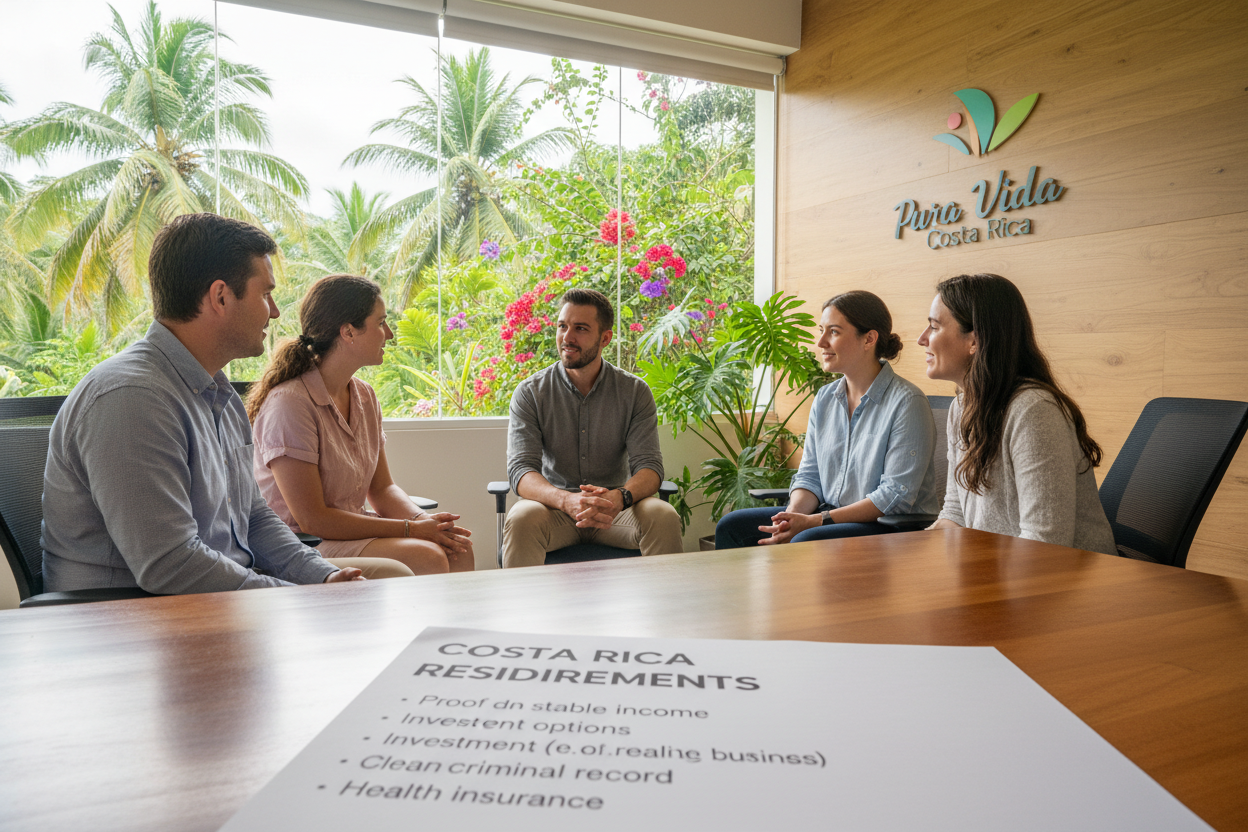
Many people dream of trading their current life for the pura vida lifestyle in Central America. This dream often leads to a pressing question: is it possible to establish legal residency without a traditional income?
We believe in clear, realistic guidance. The straightforward answer is that Costa Rica requires proof of financial stability for all its official residency pathways. The government has set specific financial thresholds that every applicant must meet.
Residency here is a formal legal status, not simply a long-term visit. It requires meticulous documentation and approval from immigration authorities. While the process is structured, it is absolutely navigable with the right information.
Our role is to help you understand this landscape. We cut through the complexity to provide a transparent view of the requirements. You can—and should—always start by reviewing the official source at migracion.go.cr.
Understanding Costa Rica Residency Options (Pensionado, Rentista, Inversionista)
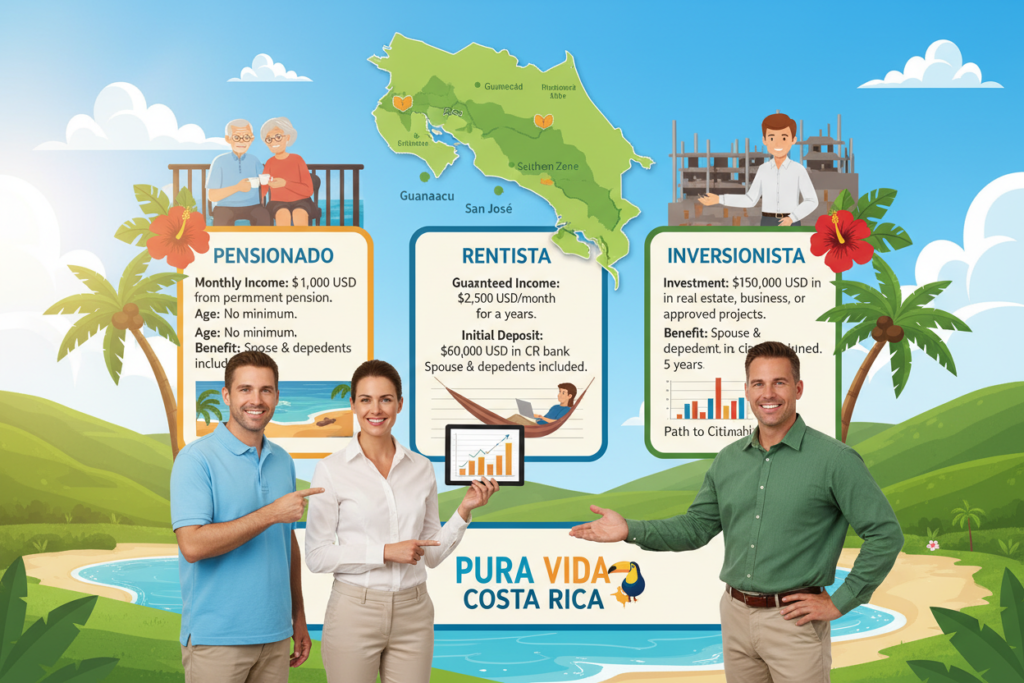
To navigate the residency process effectively, it’s essential to understand the distinct categories available in Costa Rica. The government has designed specific pathways, each with clear financial thresholds.
Overview of Available Categories
The Pensionado (Pensionado) category is designed for retirees. Applicants must demonstrate a lifetime pension of at least US$1,000 per month.
For those not yet retired, the Rentista (Rentista) category is a common choice. It requires proof of a stable monthly income of US$2,500, guaranteed for two years.
The Investor (Inversionista) pathway suits individuals making a substantial commitment. A qualifying investment of US$150,000 or more in Costa Rican business or property is required.
Clarifying the Digital Nomad Option
We must clarify that the Digital Nomad visa is not a residency category. It has its own income requirements: US$3,000 per month for individuals or US$4,000 for families.
This visa does not count toward permanent residency or citizenship. If your goal is long-term status, exploring the Rentista or Pensionado routes is advisable.
Who Qualifies for Costa Rica Residency?
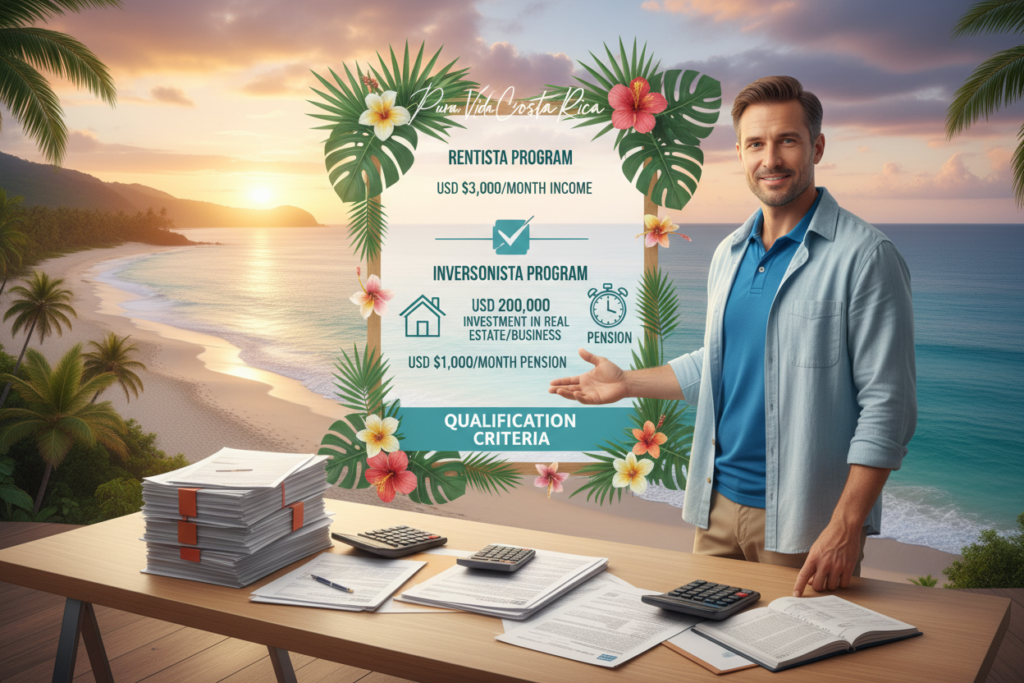
The question of who qualifies for residency in Costa Rica centers on one non-negotiable principle: proven financial stability. The government’s primary concern is ensuring all applicants can support themselves independently.
Basic Eligibility Requirements
At its core, eligibility requires demonstrating financial self-sufficiency. You must prove you won’t need local employment or public assistance.
This proof is mandatory for every official pathway. It’s the foundational step in the application process.
Financial Thresholds for Each Residency Category
Each category has a specific financial benchmark. The Pensionado route requires a guaranteed lifetime pension of at least $1,000 per month.
The Rentista category demands proof of a stable monthly income of at least $2,500 for two years. This income must come from a non-work source like investments or rentals.
For the Investor path, a minimum verified investment of $150,000 in the country is required. This commitment shows a substantial economic tie to Costa Rica.
We help applicants identify which category aligns with their finances and goals. Understanding these thresholds is the first step toward a successful application.
Step-by-Step Guide to the Residency Application Process
A successful residency application hinges on meticulous preparation and precise execution. The official procedure is structured, but following each step correctly is vital for a smooth experience.
Initial Research and Document Checklist
Begin your journey from home. Thorough research ensures you meet Costa Rica’s specific criteria. You must prepare all required documents before arrival.
This includes obtaining apostilles and official translations. We always recommend verifying the current checklist at migracion.go.cr. Having everything ready upfront prevents major delays.
Filing Your Application Correctly
All paperwork must be filed with the Dirección General de Migración y Extranjería. Attention to detail here is non-negotiable. Any error can reset the clock.
The entire application process typically takes 6 to 12 months. Submitting a complete and correct file is the best way to manage this timeline. For expert guidance through this complex procedure, consider our support for your Costa Rica immigration visa journey.
Preparing Your Documents at Home
The most critical phase of your residency journey happens long before you submit any paperwork to Costa Rican authorities. Getting your documents in perfect order from your home country is the single most effective strategy to prevent frustrating delays.
This preparatory work involves two non-negotiable legal steps. Both are mandatory for foreign paperwork to be recognized by officials in Costa Rica.
Document Legalization and Apostilles
Every vital record from abroad requires authentication. This includes birth certificates, marriage licenses, and police clearance reports.
These papers must bear an apostille from your home country. An apostille is a special certification that verifies the document’s authenticity for international use.
Without this stamp, your file will be considered incomplete. We guide clients through obtaining these apostilles well in advance.
Ensuring Accurate Translations
Any document not originally in Spanish must be translated. Costa Rican immigration law requires this step.
The translation must be performed by a certified translator officially recognized within Costa Rica. A simple unofficial translation will not suffice for the application process.
This ensures all authorities can review your file accurately. It is a fundamental requirement for a successful submission.
We advise starting this entire documentation process at least one year before your planned move. Incomplete or improperly legalized papers are the most common cause for lengthy setbacks in Costa Rica.
Key Requirements for Pensionado (Pensionado) Residency
The Pensionado category stands as a primary gateway for retirees aiming to establish life in Costa Rica. This program is designed specifically for individuals who receive a stable, lifelong pension from abroad. Demonstrating financial stability is the core requirement for this residency path.
Minimum Pension Income Criteria
To qualify, you must prove a guaranteed monthly income of at least US$1,000. This pension must be lifelong and verified through official documents. Bank statements or letters from your provider serve as the primary proof.
The guarantee of this income is non-negotiable. Immigration authorities need to see consistent deposits over time. We help applicants structure their financial evidence to meet these strict standards.
Proper documentation is crucial for a successful application. Maintaining this income level is essential for renewing your status every two years. It confirms your ongoing ability to support yourself without local employment in Costa Rica.
Understanding Rentista (Rentista) Residency Requirements
For individuals who are not yet retired but possess reliable passive income, the Rentista residency category offers a viable pathway to life in Costa Rica. This program bridges the gap for those with steady earnings from investments, rentals, or other non-employment sources.
Income Verification and Two-Year Minimum Requirement
The core requirement is proving a stable monthly income of $2,500 USD. This must come from a verifiable, passive source—not from active work within Costa Rica.
You must demonstrate this income is guaranteed for at least two years. Immigration authorities require concrete proof of this financial commitment.
We assist clients in gathering proper verification through bank letters or certified CPA statements. These documents must satisfy the specific standards set by Costa Rican officials.
This category is ideal if you have passive income but don’t qualify for the Pensionado program. Proper documentation is vital for maintaining your status throughout the initial permit period.
Investor (Inversionista) Path: Eligibility and Requirements
For applicants with significant capital, the Investor category provides a direct residency pathway tied to economic contribution. This option is fundamentally different from income-based routes. It requires a verified, upfront financial commitment into the country.
We guide clients through this process to ensure their capital meets the official standards. The goal is to transform your investment into a secure legal status.
Investment Minimum and Property Ownership Rules
The foundational rule is a minimum investment of US$150,000. This capital can be directed into a qualified business, approved development project, or real estate within Costa Rica.
If you choose the real estate route, a crucial legal detail applies. The property title must be registered in your personal name, not under a corporate entity.
This requirement ensures the investment is personally tied to you for residency purposes. Our team verifies all documentation aligns with this rule before submission.
This residency category is a strategic choice for those wishing to contribute to the local economy. We ensure your investment paperwork is perfectly prepared for immigration review in Costa Rica.
Navigating Timelines and Processing Durations
Once your application is submitted, a new phase begins—the waiting period, which is a standard part of the immigration process. Understanding these timeframes is crucial for planning your relocation effectively.
What to Expect During the 6 to 12 Month Process
The residency application process in Costa Rica typically takes between six and twelve months from submission. This duration allows immigration officials to conduct a thorough review of every file.
We advise our clients to be patient during this period. The office carefully verifies all documentation to ensure compliance with local laws.
While your application is in process, you must maintain your legal status. This usually means following standard tourist visa entry regulations until your residency is approved.
Our role is to provide regular updates on your file’s status. This communication helps you stay informed throughout the entire procedure.
Planning your move requires accounting for these timelines. Proper foresight helps avoid gaps in your legal status when establishing your life in Costa Rica.
Common Pitfalls and Mistakes to Avoid
A smooth application process depends on recognizing and avoiding typical pitfalls from the start. Many applicants face unnecessary delays due to errors that are entirely preventable. We guide clients to sidestep these common issues, ensuring a more efficient path to legal status.
Avoiding Incomplete or Incorrect Documentation
Incomplete paperwork is the leading cause of application rejection in Costa Rica. Every document must be apostilled and translated by an official, certified translator within the country.
Submitting anything less will result in a formal request for correction. This step can add months to your residency timeline. We conduct a thorough pre-submission review to catch these errors early.
Strategies for Managing Timelines Effectively
Proper planning is your best defense against timeline surprises. Many vital documents, like police clearances, have expiration dates that must align with the submission process.
We help you create a strategic calendar for gathering and renewing paperwork. This foresight prevents last-minute rushes and keeps your application moving forward smoothly. Understanding the standard 6 to 12 month processing window allows for realistic life planning.
Addressing the residency-without-income-costa-rica Challenge
For those seeking to build a future in this vibrant nation, distinguishing between temporary visas and permanent status is crucial. A search for options without traditional earnings leads to a fundamental truth. All official residency categories require verifiable financial proof.
Exploring Alternative Residency Paths
We must clarify a common point of confusion. The Digital Nomad visa is a temporary permit, not a legal residency path. It does not count toward the years required for citizenship.
If your goal is long-term settlement, you must select a formal residency category. This choice must align with your financial reality. Each pathway has specific, non-negotiable requirements for proof.
After maintaining temporary residency for three years, you may apply for permanent status. This is a key milestone on the journey. Understanding your work rights by residency category becomes important at this stage.
We help clients plan for the ultimate goal: citizenship. This requires seven years of continuous legal residency in Costa Rica. Every step must be built on a foundation of documented financial stability.
The Role of CRIE in Simplifying Your Move
Professional support can transform the complex residency process into a manageable journey. We provide the expert guidance needed to navigate Costa Rica’s immigration system successfully.
Expert Support and Guidance from CRIE
Our team at CRIE specializes in Costa Rica immigration matters. We assist with every step, from preparing your documents to opening a local bank account.
We ensure your transition meets all legal requirements. This includes helping you establish your new life with full compliance.
You can reach us via WhatsApp at +506 8706 3888 or email info@crie.cr. Let’s discuss your residency assessment and create a smooth path forward.
Embarking on Your Costa Rican Journey with Confidence
We are here to ensure your path to Costa Rican residency is clear, compliant, and confident. Embarking on this journey requires careful planning and a solid grasp of the specific requirements for your chosen category.
Our commitment is to help you navigate the local tax, legal, and immigration systems with professional support. Whether you qualify for the Pensionado or Rentista program, we ensure your application meets all government standards for proof of income and financial stability.
By partnering with our expert team, you gain the confidence that your residency status is in capable hands. This allows you to move forward and focus on building your new life in this beautiful country.
Contact us today to start your path toward a fulfilling life in Costa Rica. The pura vida lifestyle awaits you and your family.
FAQ
Can I really get residency in Costa Rica if I don’t have a traditional job or pension income?
Yes, it is possible, but the term “without income” is a bit misleading. The government requires proof of financial stability. If you don’t have a pension, the two main paths are the Rentista category, which requires a guaranteed monthly income from investments or other sources, or the Inversionista category, which requires a significant financial investment in the country, such as in real estate or a business.
What are the main differences between the Pensionado, Rentista, and Inversionista residency categories?
The Pensionado visa is for those with a lifetime pension (like social security) of at least
FAQ
Can I really get residency in Costa Rica if I don’t have a traditional job or pension income?
Yes, it is possible, but the term “without income” is a bit misleading. The government requires proof of financial stability. If you don’t have a pension, the two main paths are the Rentista category, which requires a guaranteed monthly income from investments or other sources, or the Inversionista category, which requires a significant financial investment in the country, such as in real estate or a business.
What are the main differences between the Pensionado, Rentista, and Inversionista residency categories?
The Pensionado visa is for those with a lifetime pension (like social security) of at least $1,000 per month. The Rentista visa requires proof of a guaranteed $2,500 monthly income for two years, often from investments. The Inversionista category requires a minimum investment of $150,000 in a business or approved assets like property. Each has different documentation and financial proof requirements.
How long does the entire residency application process typically take?
A> You should plan for a process that takes between 6 to 12 months from start to finish. This timeline includes gathering and authenticating your documents in your home country, submitting the application to Migración in Costa Rica, and waiting for approval. Delays often happen if paperwork is incomplete, so working with an expert can help manage these timelines effectively.
What is the most common mistake people make when applying for residency?
The biggest pitfall is submitting incomplete or incorrectly prepared documents. Every piece of paper—from bank statements and proof of income to birth certificates and police records—needs proper apostilles, official translations, and specific formatting. A small error can result in a rejection and add months to your application.
If I use the Rentista category, do I need to prove the $2,500 monthly income forever?
No, you only need to demonstrate that this monthly income is guaranteed for the first two years of your residency. After that, for your renewal, you will need to show proof of continued financial stability, but the strict two-year guarantee requirement is for the initial application period.
What role does a service like CRIE play in this complex process?
We act as your experienced guide and project manager. Navigating immigration law and government procedures in a new country is challenging. We help by providing a clear document checklist, ensuring every paper is legally valid for Costa Rican authorities, submitting your application correctly, and managing communications with Migración to avoid costly errors and delays.
,000 per month. The Rentista visa requires proof of a guaranteed ,500 monthly income for two years, often from investments. The Inversionista category requires a minimum investment of 0,000 in a business or approved assets like property. Each has different documentation and financial proof requirements.
How long does the entire residency application process typically take?
A> You should plan for a process that takes between 6 to 12 months from start to finish. This timeline includes gathering and authenticating your documents in your home country, submitting the application to Migración in Costa Rica, and waiting for approval. Delays often happen if paperwork is incomplete, so working with an expert can help manage these timelines effectively.
What is the most common mistake people make when applying for residency?
The biggest pitfall is submitting incomplete or incorrectly prepared documents. Every piece of paper—from bank statements and proof of income to birth certificates and police records—needs proper apostilles, official translations, and specific formatting. A small error can result in a rejection and add months to your application.
If I use the Rentista category, do I need to prove the ,500 monthly income forever?
No, you only need to demonstrate that this monthly income is guaranteed for the first two years of your residency. After that, for your renewal, you will need to show proof of continued financial stability, but the strict two-year guarantee requirement is for the initial application period.
What role does a service like CRIE play in this complex process?
We act as your experienced guide and project manager. Navigating immigration law and government procedures in a new country is challenging. We help by providing a clear document checklist, ensuring every paper is legally valid for Costa Rican authorities, submitting your application correctly, and managing communications with Migración to avoid costly errors and delays.
Article by Glenn Tellier (Founder of CRIE and Grupo Gap)
Don't wait, contact us right now!
Call or WhatsApp Costa Rica +506 8373 2085 or +506 8706 3888
Call USA/Canada +1 305-906-6784