
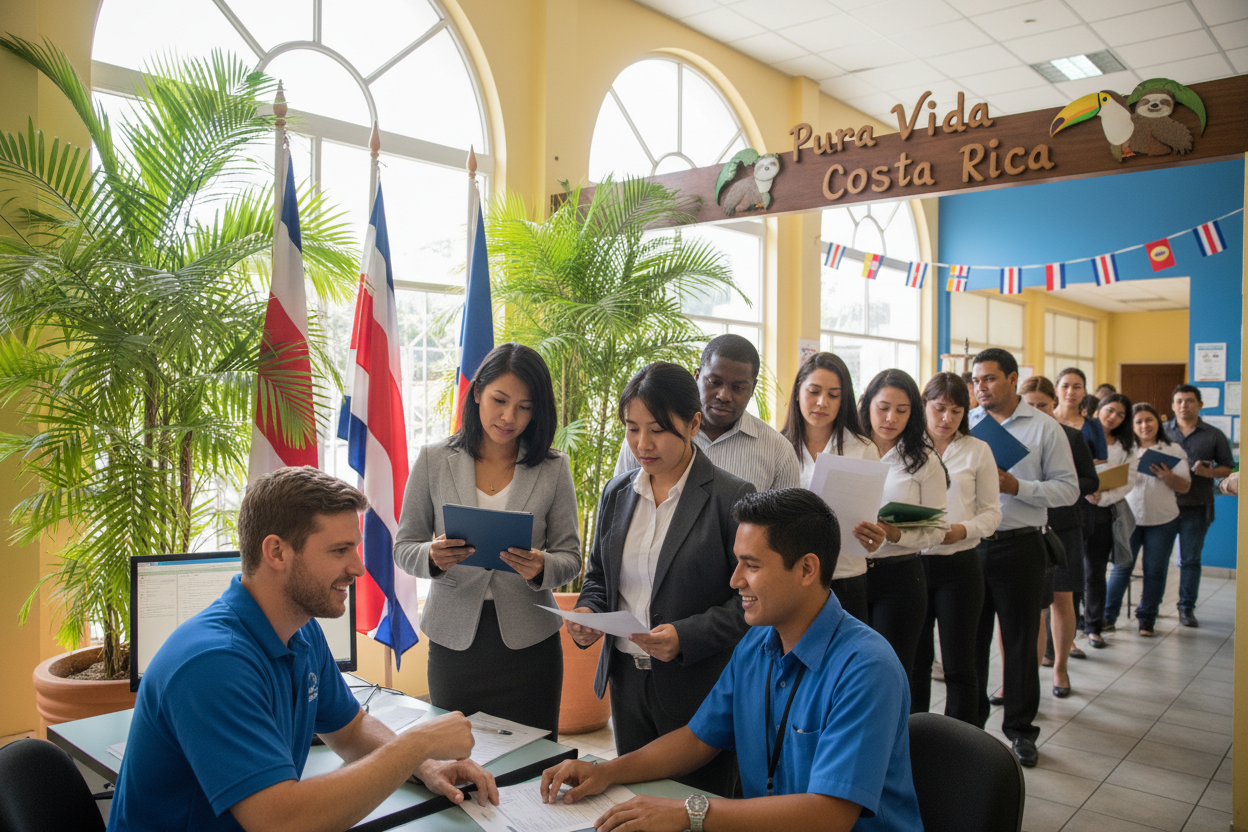
Securing legal status in a new country is a major step. The process can feel overwhelming, especially when facing a potential denial. We understand that a rejected residency application can disrupt your plans for a life in Costa Rica.
Many setbacks stem from incomplete paperwork or misunderstandings of local immigration law. The authorities here maintain strict standards for every foreign national. Starting your application from your home country is the most reliable way to build a strong case.
Our team at CRIE (crie.cr) provides expert guidance through this complex landscape. We help you navigate official pathways like the Pensionado, Rentista, and Inversionista categories. Proper documentation from the outset is your best defense against a denial.
Think of us as your experienced partner. We translate intricate requirements into a clear, actionable plan. For professional support, you can reach us at info@crie.cr or on WhatsApp at +506 8706 3888.
Overview of Costa Rica Residency Options

Costa Rica offers several structured pathways for foreign nationals seeking long-term legal status. The three primary categories are Pensionado, Rentista, and Inversionista. Each program has distinct financial requirements that must be met precisely.
Understanding the Pensionado Requirements
The Pensionado program is designed for retirees with permanent pension income. Applicants must prove a minimum monthly income of US$1,000. This reliable pension must be documented to satisfy immigration authorities.
Exploring Rentista and Inversionista Pathways
For those without a pension, the Rentista option requires demonstrating US$2,500 monthly for two years. The investor residency pathway, called Inversionista, demands a US$150,000 minimum investment in approved assets.
We help clients evaluate which option aligns with their finances. Understanding these programs within Costa Rica’s legal framework is crucial. Proper selection forms the foundation of a strong application.
Preparing Your Step-by-Step Residency Application from Home
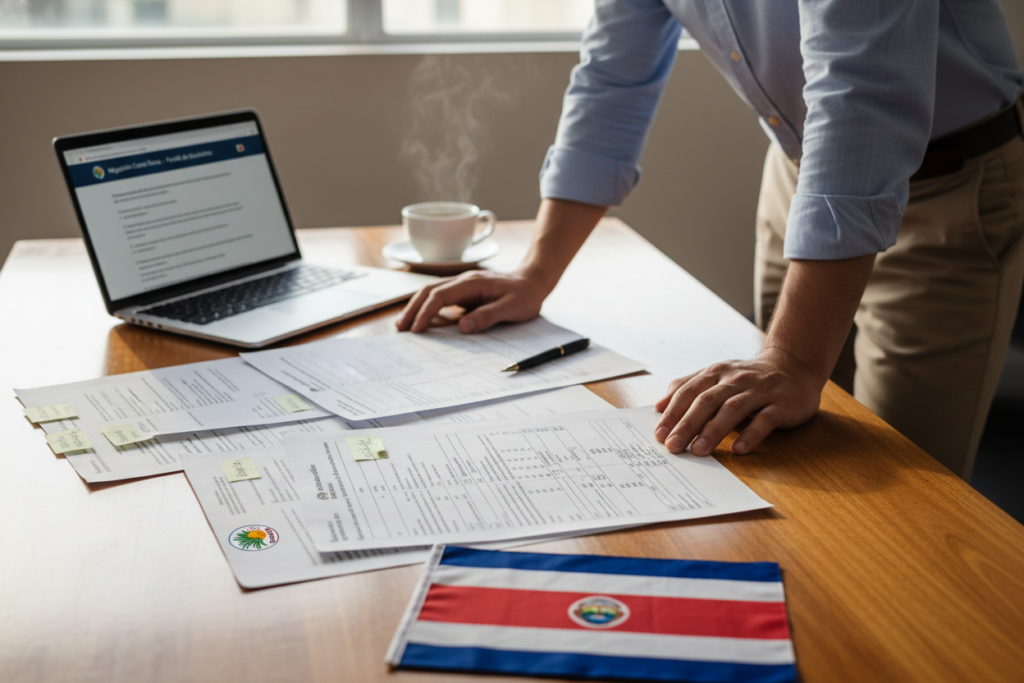
Your journey to legal status begins with a crucial step you must complete abroad: gathering and certifying your personal documents. This foundational work, done from your home country, directly impacts the speed and success of your entire process.
Gathering Essential Documents Before Arrival
You will need several key civil records. These typically include your birth certificate and a police clearance report. It is vital to obtain these originals before you travel to Costa Rica.
Ensuring Apostilles and Official Translations
Every foreign document requires an official apostille. This is a special certification that validates the document’s origin. You must obtain this apostille in the country that issued the original paper.
Once apostilled, each document needs a Spanish translation. This translation cannot be done by just anyone. It must be performed by a translator officially registered with the Ministry of Foreign Affairs.
Missing an apostille or using an unregistered translator causes major delays. We guide you through this step-by-step preparation. Our team can even manage this process for you, ensuring your file is complete and ready for submission.
Who Qualifies for Costa Rica Residency: Meeting Legal Requirements
Your path to residency officially begins with proving you meet the basic legal conditions for admission. The financial criteria for programs like Pensionado or Inversionista are important, but they come later. First, immigration authorities must verify your personal background and current standing.
Establishing a Clean Criminal Record and Valid Entry
All applicants must provide a clean criminal record check from their home country. This document is a non-negotiable requirement. It proves you have no serious convictions that would bar entry under local law.
You must also maintain a valid entry status in the country. This means your passport stamp or tourist visa must be current when you file. Being legally present is a mandatory step in the process.
Our team ensures you understand these specific legal criteria. We help gather and present this proof correctly. Meeting these foundational requirements is your first step toward securing stable legal status.
Understanding your work rights by category is also part of long-term planning. We provide transparent guidance to navigate these complexities. Your eligibility must be clearly documented for a successful outcome.
Detailed Guidance on the Application Process
A successful residency application hinges on a meticulously organized process from start to finish. We provide a clear roadmap to navigate this phase efficiently.
Sequencing Your Documentation and Submission
Proper order is everything. Submitting documents out of sequence can trigger administrative delays.
We guide you to organize every piece of evidence correctly. This ensures your file meets official expectations upon review.
Timeline Overview: From Preparation to Approval
Government review typically takes 3 to 9 months. The exact time depends on their current caseload.
Managing this waiting period is crucial. You must remain compliant with all immigration rules while awaiting a decision.
Our goal is to streamline the entire application. We help you move from preparation to final approval with confidence.
residency-denial-costa-rica: Key Reasons for Application Rejections
Facing a rejection notice doesn’t necessarily close the door on your plans. Many denials are based on technicalities that can be successfully appealed.
Common Documentation Errors and Missing Papers
Incomplete paperwork is a top cause for a negative decision. This often means a missing apostille or an unofficial Spanish translation.
Even one omitted document can halt your entire case. Authorities require a perfectly organized file.
Importance of Meeting Financial Thresholds
Failing to prove the required income or investment is a direct path to rejection. The Pensionado, Rentista, and Inversionista programs have strict minimums.
Submitting bank statements that fall short guarantees a denial. Your financial proof must be exact and verifiable.
Thankfully, a denial often isn’t final. If the rejection is for a minor error, you can file an appeal with the Administrative Immigration Tribunal.
This appeals process can take 10 to 12 months. Successful resolution rates are high for these technical oversights.
We analyze your specific rejection notice. Our team determines if an appeal is your best option or if reapplying makes more sense.
How to Avoid Common Mistakes in Your Residency Application
Avoiding common pitfalls is the most straightforward way to secure a positive decision on your residency file. Many setbacks stem from simple, preventable errors in document preparation.
Preventing Apostille and Translation Issues
A critical issue is using a translation service not officially registered in Costa Rica. This guarantees an immediate rejection. Every foreign document must also have a valid apostille from its country of origin.
Another common mistake involves timing. For example, a police clearance document expires within six months of its issue date. Submitting an expired record is a direct path to a negative outcome.
We help you verify every piece of paper is correctly apostilled and translated. Our oversight prevents these simple errors that often cause an application to be denied. This careful review significantly increases the likelihood of a successful result.
Distinguishing Digital Nomad Status from Permanent Residency Options
The Digital Nomad permit has gained popularity, but it operates under a completely different framework than residency. Many applicants mistakenly believe this status provides a direct path to long-term legal standing.
It is vital to understand this is not a form of legal residency. The permit does not count toward permanent residency or eventual citizenship. It is merely a temporary authorization for staying in the country.
We guide you toward legitimate residency options that establish a solid legal foundation. These programs are designed for integration into the costa rican community.
Choosing the correct residency category is essential for your long-term goals. If you intend to apply for citizenship or permanent status, starting with a bona fide residency application is the only reliable path. Our experts clarify these differences so you invest your efforts wisely.
Ensuring Proper Documentation: Apostilles, Translations, and Legal Proof
We build every client’s file around a core principle: flawless documentation meets every legal standard. Your application’s success depends on this meticulous preparation. Each paper must be correctly apostilled, translated, and presented as irrefutable proof.
Checklist of Critical Documents for Each Category
Your essential documents form the backbone of your case. This checklist always includes a valid passport and an apostilled birth certificate. You must also provide clear proof of your qualifying income or investment.
For investor residency, this means official records showing you meet the $150,000 threshold. We verify every piece of this documentation is in perfect order before submission.
Verifying Investment Ownership for Inversionista Cases
A specific rule applies to the investor residency pathway. The qualifying property must be registered in your personal name. Corporate ownership does not satisfy the legal requirements set by immigration authorities.
We confirm your investment documentation, like the registered deed and official appraisal, meets this standard. This careful verification provides the necessary legal proof to support your application for residency.
Navigating Processing Timelines and Managing Delays
Managing the waiting period for your residency approval is a test of patience and preparation. The government review process typically spans several months. This time frame depends entirely on their current caseload volume.
We help you understand each distinct phase of this review. Our guidance covers everything from the initial submission to the final decision. This clarity helps you set realistic expectations from the start.
Understanding Each Phase of the Application Review
Each administrative phase requires specific documentation to proceed. Delays most often occur because a file is incomplete. We work to ensure your application is accurate and complete from day one.
Our team actively monitors the status of your case. We provide regular updates and address any issues that arise. Managing this timeline is a key part of our service to you.
Maintaining Residency: Compliance, Social Security, and Annual Requirements
Maintaining your residency involves specific compliance steps that are just as important as the application. Your legal status requires active management after approval.
Meeting Social Security Registration Obligations
You must register with the Costa Rican Social Security system (CCSS) within 90 days of approval. This is a mandatory requirement for all temporary residents.
Registration ensures access to the public healthcare system. It also involves making regular monthly contributions. We help you complete this process correctly and on time.
Scheduling Annual Visits to Sustain Legal Status
You are required to visit the country at least once every calendar year. This rule is essential for keeping your residency active.
Failing to make this annual visit can jeopardize your legal standing. We assist in planning these trips to ensure you meet this obligation.
Our team provides reminders for your visit and CCSS payments. This ongoing support helps you avoid losing your hard-earned status. We ensure you remain in good standing with Costa Rican authorities.
Final Steps to Secure Your Costa Rican Residence
Your path to long-term stability culminates in the application for permanent residence. This multi-year journey begins by choosing the right investor or income-based residency type for your family.
After three years of maintaining temporary status, you become eligible for permanent residency. This final step comes with fewer ongoing requirements and greater security.
We provide the expert guidance needed to navigate complex local laws and regulations. Our team ensures your case is handled with the highest level of professional care from start to resolution.
Whether you are investing in real estate or proving a pension, we help gather every necessary document. Proper documentation is key to achieving a positive outcome, including preparation for your final immigration interview.
Contact CRIE today at info@crie.cr or WhatsApp +506 8706 3888 to start your successful residency application.
FAQ
What are the most common reasons for a residency application rejection?
The most frequent reasons we see involve incomplete or improperly prepared documentation. This includes missing apostilles, incorrect translations, or failing to meet the specific financial proof for your chosen category, like the pensionado or investor residency. Submitting documents out of order or with small errors can also trigger a denial.
How long does the entire residency process typically take?
A> From initial document gathering to receiving your final cédula (ID card), you should plan for a process of 6 to 12 months. Much of this time is spent preparing your dossier correctly from your home country and then waiting for the Dirección General de Migración y Extranjería to review your file. Patience and precise preparation are key.
Can I start my application from outside Costa Rica?
A> Absolutely. In fact, we strongly recommend beginning the process from your home country. This allows you to secure vital documents like your birth certificate and FBI check with the required apostilles and official Spanish translations before you arrive. Trying to obtain these after moving often causes significant delays.
What’s the difference between temporary and permanent residency?
A> Most applicants first obtain temporary residency, such as under the pensionado, rentista, or inversionista categories. This status is granted for specific periods and has renewal requirements. After maintaining temporary residency for three years, you may then apply for permanent residency, which offers more stability and fewer renewal conditions.
Is the digital nomad visa a path to permanent residency?
A> No, the digital nomad visa is a separate, non-resident status. It allows remote workers to live in the country for one or two years but does not count toward the time required for permanent residency. If you wish to stay long-term, you will need to apply for a formal residency category through the standard immigration process.
How do I prove my income for a pensionado or rentista application?
A> For pensionado, you must provide official documentation proving a lifetime pension of at least
FAQ
What are the most common reasons for a residency application rejection?
The most frequent reasons we see involve incomplete or improperly prepared documentation. This includes missing apostilles, incorrect translations, or failing to meet the specific financial proof for your chosen category, like the pensionado or investor residency. Submitting documents out of order or with small errors can also trigger a denial.
How long does the entire residency process typically take?
A> From initial document gathering to receiving your final cédula (ID card), you should plan for a process of 6 to 12 months. Much of this time is spent preparing your dossier correctly from your home country and then waiting for the Dirección General de Migración y Extranjería to review your file. Patience and precise preparation are key.
Can I start my application from outside Costa Rica?
A> Absolutely. In fact, we strongly recommend beginning the process from your home country. This allows you to secure vital documents like your birth certificate and FBI check with the required apostilles and official Spanish translations before you arrive. Trying to obtain these after moving often causes significant delays.
What’s the difference between temporary and permanent residency?
A> Most applicants first obtain temporary residency, such as under the pensionado, rentista, or inversionista categories. This status is granted for specific periods and has renewal requirements. After maintaining temporary residency for three years, you may then apply for permanent residency, which offers more stability and fewer renewal conditions.
Is the digital nomad visa a path to permanent residency?
A> No, the digital nomad visa is a separate, non-resident status. It allows remote workers to live in the country for one or two years but does not count toward the time required for permanent residency. If you wish to stay long-term, you will need to apply for a formal residency category through the standard immigration process.
How do I prove my income for a pensionado or rentista application?
A> For pensionado, you must provide official documentation proving a lifetime pension of at least $1,000 USD per month. For rentista, you need to demonstrate a guaranteed stable income of $2,500 USD per month for two years, typically through a bank letter or investment statement. The proof must be apostilled and translated.
What happens if my application is denied?
A> If your residency case is rejected, the immigration authorities will issue a formal resolution stating the reasons. You typically have a legal window to appeal the decision or to correct the specific deficiencies noted and re-submit your application. We guide clients through understanding the denial and formulating the best next step.
What are the ongoing requirements after I get my residency?
A> Maintaining your status involves annual obligations. You must register with the Costa Rican social security system (Caja) and make monthly payments. Furthermore, you cannot be absent from the country for more than one consecutive year, or you risk losing your status. It’s a commitment to partial physical presence and local system participation.
,000 USD per month. For rentista, you need to demonstrate a guaranteed stable income of ,500 USD per month for two years, typically through a bank letter or investment statement. The proof must be apostilled and translated.
What happens if my application is denied?
A> If your residency case is rejected, the immigration authorities will issue a formal resolution stating the reasons. You typically have a legal window to appeal the decision or to correct the specific deficiencies noted and re-submit your application. We guide clients through understanding the denial and formulating the best next step.
What are the ongoing requirements after I get my residency?
A> Maintaining your status involves annual obligations. You must register with the Costa Rican social security system (Caja) and make monthly payments. Furthermore, you cannot be absent from the country for more than one consecutive year, or you risk losing your status. It’s a commitment to partial physical presence and local system participation.
Article by Glenn Tellier (Founder of CRIE and Grupo Gap)
Don't wait, contact us right now!
Call or WhatsApp Costa Rica +506 8373 2085 or +506 8706 3888
Call USA/Canada +1 305-906-6784