
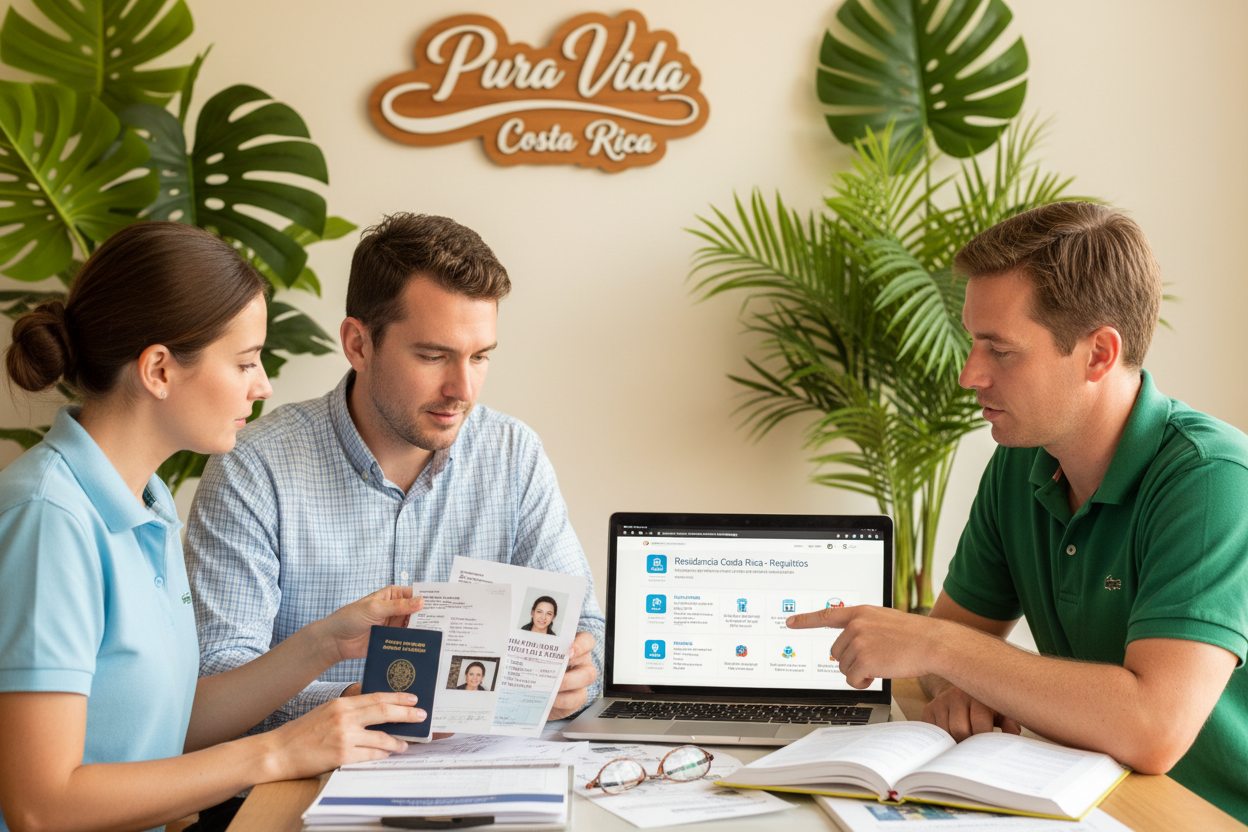
Getting your documentation right is the first critical step. We’re here to provide a complete, step-by-step guide on the specific photo specifications you must submit.
This resource also explains how these pictures fit into your larger application package for immigration authorities.
The rules are the same whether you’re applying for Pensionado (Pensionado), Rentista (Rentista), or Inversionista (Inversionista) status. You’ll need four identical, passport-sized photographs per person.
These images must meet official government standards, which are slightly smaller than typical U.S. passport photos. The entire application process typically spans 3 to 12 months.
While the photo rules are simple, the overall procedure demands precision. A single formatting error can set your timeline back by months.
We strongly advise preparing all documents—including apostilles, translations, and your pictures—from your home country before arriving.
This guide is from CRIE (crie.cr), your dedicated resource for immigration matters. For direct help, contact us via WhatsApp at +506 8706 3888 or email info@crie.cr. We provide guidance but cannot guarantee application outcomes.
Introduction to Costa Rica Residency Photo Requirements

Many applicants focus on major documents but overlook the precise standards needed for their application photographs. These four passport-sized images are a mandatory part of your submission packet to immigration authorities.
While they seem straightforward, the specifications are exact and non-negotiable. We’ve witnessed cases where submissions faced delays due to incorrect sizing or poor image quality.
Your pictures must be current, typically taken within the last six months. They need a clear, face-on view with a neutral expression against a plain background.
The official standards here differ slightly from U.S. passport image standards. Always verify the latest criteria on the government’s migration website before getting your pictures taken.
This is why we advise starting your preparation from your home country. Research the exact dimensions early to avoid last-minute scrambles when your other paperwork is complete.
Remember, these images are just one element in a comprehensive documentation set. That set includes apostilled certificates, translated records, and financial proofs.
Each component must be current and properly authenticated for your file to proceed smoothly. Submitting everything correctly from the start prevents unnecessary setbacks at the Dirección General de Migración y Extranjería.
Overview of Residency Categories in Costa Rica
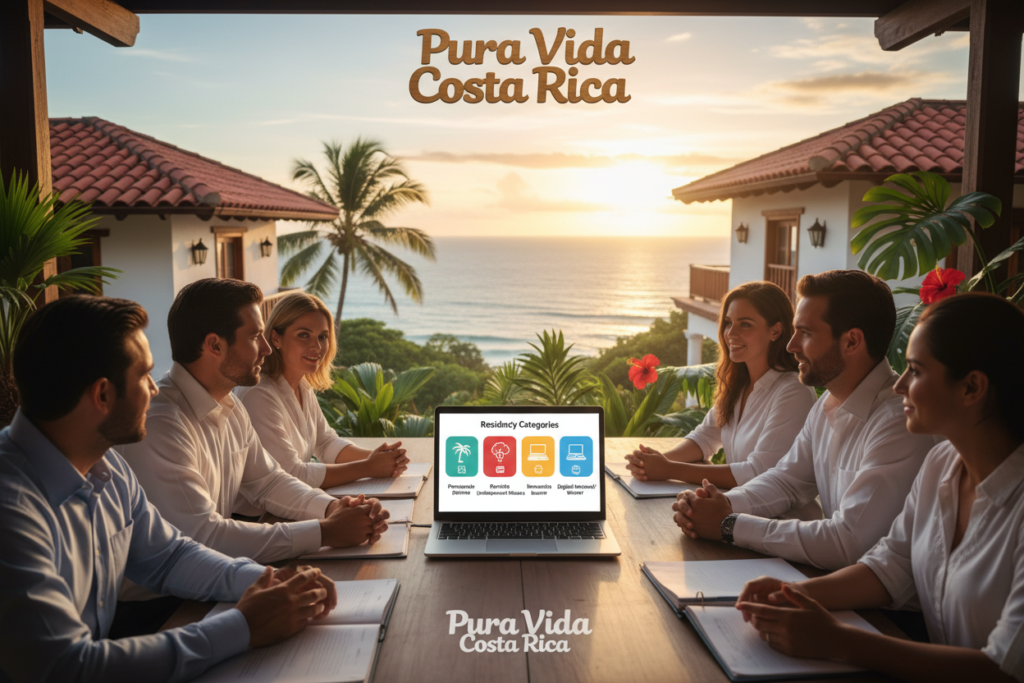
Selecting the right category depends on your source of funds and investment goals. The country offers three primary types for long-term settlement.
Each has distinct financial thresholds. Your choice will define the documentation you must gather.
Pensionado (Pensionado) Eligibility
This status is for retirees with a guaranteed lifetime income. You must prove a pension of at least US$1,000 per month.
Sources include Social Security or a private annuity. A legally married spouse can apply as a dependent under this same financial requirement.
Rentista (Rentista) and Inversionista (Inversionista) Guidelines
The Rentista category requires a guaranteed monthly income of US$2,500 for two years. Applicants often meet this by depositing $60,000 in a local bank.
The Inversionista pathway demands a minimum investment of US$150,000. This must be in real estate, registered in your personal name, or in a business.
A critical note: the Digital Nomad visa is not a residency pathway. It does not count toward permanent status or citizenship.
All three categories begin as temporary residency. After three years, you can apply for permanent status.
Who Qualifies and What Documents to Prepare
Your eligibility for long-term status hinges on meeting specific financial thresholds and preparing a flawless document portfolio. Each category—Pensionado, Rentista, and Inversionista—has its own proof requirements.
Pensionado applicants need a guaranteed $1,000 monthly pension. Rentistas must show $2,500 monthly, often via a $60,000 bank deposit. The Inversionista route demands a $150,000 investment.
Proof of Income, Pension, and Investment Requirements
For Pensionado, provide original pension statements. Rentista applicants get a certified letter from a local bank. Inversionistas using real estate face a critical rule.
The property must be in your personal name in the National Registry. Corporate ownership disqualifies it. The tax assessment must show a value of at least $150,000.
Essential Documents: Apostilles and Translations
Every applicant needs a core set of papers. This includes a long-form birth certificate and an FBI background check. Marriage certificates are needed for a family application.
All these documents must be issued within six months of your submission date. The apostille process is non-negotiable for U.S. papers. Federal documents go to the U.S. Department of State.
State documents require an apostille from your Secretary of State. Finally, every non-Spanish paper needs translation by an official Costa Rican translator.
Starting this process from your home country is the smartest path. It prevents costly delays and ensures your application package is complete upon arrival.
Step-by-Step Guide to Preparing Your Residency Application
The key to a smooth application lies in strategic sequencing of tasks from your home country. We’ll guide you through organizing your paperwork to avoid the most common delays in this multi-month process.
Organizing Your Documents from Home
Start your preparation abroad. The FBI background check is the longest lead-time item, often taking 15 weeks or more. Request this first.
While you wait for that report, gather your birth and marriage certificates. Have them apostilled. This staggered approach ensures no document expires before you submit.
Also, check your passport’s expiration date immediately. Renew it if needed well before starting.
Setting Up a Timeline and Avoiding Common Pitfalls
Plan your schedule backward from your intended submission date. All papers must be issued within six months of filing.
A major pitfall is letting the FBI check expire while waiting for other items. This forces a complete restart of that lengthy step.
Once all apostilled documents are ready, get them translated by an official Costa Rican translator. Then, complete the final forms and fee payments.
Following this sequence saves you significant time and stress.
Costa Rica Residency Photo Requirements
Four standardized images form a mandatory part of every long-term status submission. Each person needs four identical, passport-sized pictures. This rule applies uniformly to all categories—Pensionado, Rentista, and Inversionista.
Your images must be recent, typically taken within the last six months. They require a clear, face-on view with a neutral expression. Avoid hats, sunglasses, or any facial obstructions.
Here’s a frequent oversight. The official dimensions here are slightly smaller than standard U.S. passport pictures. You cannot simply reuse your old U.S. passport images.
You must obtain compliant pictures. Many professional shops in the country offer this service—look for “fotos para pasaporte” signs. International photo services that understand local specifications are also an option.
We advise getting at least six copies instead of just four. The extra cost is minimal, but it provides a crucial backup if any get damaged.
All specifications must align with current standards published by the government at migracion.go.cr. Detailed technical guidelines are covered in the next section.
Remember, these pictures are submitted in person with your complete application packet. Electronic or mailed submissions are not accepted for this part of the process.
Exact Photo Specifications and Required Formats
Your four identical images must adhere to exact dimensional and compositional standards. These technical details are critical for immigration processing.
Costa Rican passport pictures measure approximately 2 inches by 2 inches. This differs from U.S. standards in head-size proportions.
You cannot reuse American passport images. The “face-on” rule means your face must be directly facing the camera.
Passport Photos and Face-On Image Guidelines
Both ears should be visible or at least your facial contours clearly defined. Your eyes must look straight at the lens with a neutral expression.
The background needs to be plain white or off-white without shadows. Most professional services understand this requirement.
If you wear prescription glasses regularly, they’re permitted without glare. Sunglasses or tinted lenses are never acceptable.
Head coverings are only allowed for religious reasons. They must not obscure your hairline or facial features.
Images must be sharp, properly exposed prints on quality photo paper. Photocopies or home-printed versions will be rejected.
Always verify the latest specifications at migracion.go.cr before obtaining your pictures. Government standards can update without notice.
Submitting Your Photos and Application at Migracion.go.cr
Submitting your application is a critical in-person appointment that requires careful timing and compliance. You must appear at a Dirección General de Migración y Extranjería office with your complete packet.
Most people use the main headquarters in La Uruca, San José. Regional offices in cities like Liberia or Puntarenas are also options.
Ensuring Compliance with Government Standards
Timing matters. Offices open at 8 a.m. and stop accepting new tickets at noon. Wait times can be several hours.
We recommend arriving early. During your turn, an official reviews every document, including your four photos.
They check for correct size, quality, and background. If your pictures fail, they are rejected on the spot.
You would need to get new ones and return another day. Once accepted, your information is entered into the system.
You’ll receive a file number (número de expediente). This allows you to track your status online at migracion.go.cr.
The submission itself takes about 15 minutes per person. Afterward, your photos become part of your permanent government file.
Always verify current office hours and procedures on the official website. For answers to common questions, our resource page can help.
Understanding the Timelines and Processing Periods
Official regulations promise one timeline, but practical experience reveals another. The waiting period is a defining part of the journey.
We need to be candid. While rules state a 90-day decision, real-world processing typically takes 3 to 12 months. Cases extending beyond a year are not uncommon.
What to Expect During the 3-12 Month Process
After submission, you’ll get a file number. Use this to track your status online at the official migration website. The system updates as your file moves through review stages.
If officials need more information, they will contact you. You historically have 10 days to supply any requested documents. Missing this window can cause significant delays.
Many factors affect your timeline. These include your chosen category, document completeness, and current government backlogs. The final signature queue alone can add weeks.
Once approved, you must complete final steps. This includes enrolling in the national healthcare system and paying fees. Only then do you schedule an appointment for your official ID card.
We make no promises about processing times. Government schedules are beyond anyone’s control. Building flexibility into your expectations is the best strategy.
Critical Mistakes to Avoid During the Residency Process
The difference between a successful submission and a rejected one often lies in sidestepping a handful of common, yet costly, errors.
We see these pitfalls repeatedly. They add months of delay and unnecessary expense to an already lengthy procedure.
Common Documentation and Translation Errors
Letting your FBI background check expire is the most expensive misstep. It forces a complete restart of that 15-week process.
Using incorrect picture sizes is another frequent error. Submitting U.S. passport images instead of local specifications leads to instant rejection.
Translation failures happen when people use non-authorized translators. The migration office will reject these and demand new ones from their official list.
Apostille confusion is a major documentation headache. Federal papers need authentication from the U.S. Department of State.
State documents require an apostille from your Secretary of State. Mixing these up invalidates your entire authentication effort.
Overstaying your tourist visa while your case processes is a critical compliance failure. It can result in fines or denial.
You must exit and re-enter or pay for an extension. Never assume a pending application grants you legal status.
Not keeping photocopies of your entire submission package is a huge risk. We’ve heard multiple reports of lost applications.
For Inversionista applicants, holding property in a corporate name is a fatal error. The investment must be in your personal name.
Finally, failing to respond within the 10-day window for additional information can cause automatic denial. Check your contact methods regularly.
Resources and Tips for a Smooth Application Experience
Practical resources and tips can transform a complex process into a manageable one. We focus on post-approval steps that ensure your integration goes smoothly.
Opening a bank account in Costa Rica early simplifies fee payments. You’ll need your passport, proof of address, and evidence of your application status. This demonstrates financial integration.
The official migration website at migracion.go.cr is your primary resource. Bookmark it for current forms, translator lists, and status tracking. Requirements in the country can change.
After approval, enroll in the Caja healthcare system at your local EBAIS clinic. Bring your resolution, passport, and proof of address. Contributions are 7-11% of declared income.
These payments are automatically withdrawn from your Costa Rican bank account monthly. This provides access to the universal healthcare system here.
For personalized guidance, CRIE (crie.cr) specializes in immigration services. Contact us via WhatsApp +506 8706 3888 or email info@crie.cr.
We recommend tracking your documentation with a spreadsheet. Note issue dates, apostilles, and translations to prevent delays.
Use authorized translators from the official list. Join expat forums for insights, but always verify information with migracion.go.cr.
Closing Insights and Next Steps for Your Costa Rica Residency Journey
Successfully navigating the immigration system requires a dual focus: immediate document precision and a clear vision of future milestones.
Your pictures are one small, vital piece of a much larger puzzle. The entire process demands meticulous preparation from your home country.
Remember, a Digital Nomad visa is not a path to permanent status. That time does not count toward your required years.
Your initial approval grants temporary residency. After three years, you can apply for permanent status, which removes financial rules.
If citizenship is a later goal, you must first complete these steps. Legal residency for seven years is typically required.
Start now. Verify your passport date and request your FBI check. Use the official website, migracion.go.cr, for all current forms and lists.
For step-by-step guidance, contact us. Reach CRIE via WhatsApp at +506 8706 3888 or email info@crie.cr. We provide assistance but cannot guarantee outcomes.
FAQ
What are the exact specifications for the passport-style photos required?
You need two recent, identical, color photos with a white background. They must measure 5cm x 5cm (2″ x 2″), showing a full front view of your face and shoulders with a neutral expression. We advise using a professional photographer familiar with international standards to ensure compliance.
How do I submit my application and photos to the immigration authorities?
All submissions are made online through the official government portal, Migracion.go.cr. You will upload digital scans of every required document, including your photos, during the application process. We guide our clients through this digital system step-by-step to prevent errors.
What is the typical processing time for a residency application?
Expect a waiting period of 3 to 12 months from submission. The timeline varies based on the applicant category and the current volume at the immigration department. We help set realistic expectations and monitor your application’s status throughout this period.
What are the most common mistakes people make with their documents?
Frequent errors include submitting documents without the required apostille certification, using unofficial translations, and providing outdated financial statements. Another critical misstep is not ensuring all forms are signed and photos meet the strict government format. We meticulously review all materials to avoid these costly delays.
Do I need to open a local bank account as part of the application?
For certain categories like Rentista or Inversionista, demonstrating a deposit into a Costa Rican financial institution is mandatory. We connect you with trusted banking partners to smoothly complete this requirement and obtain the necessary certification letter for your file.
Can I travel in and out of the country while my application is pending?
Yes, you can travel, but you must maintain your legal tourist status by exiting and re-entering every 90 days or filing for a visa extension. Your pending file with immigration does not grant you the right to stay in the country indefinitely during the approval process.
Article by Glenn Tellier (Founder of CRIE and Grupo Gap)
Don't wait, contact us right now!
Call or WhatsApp Costa Rica +506 8373 2085 or +506 8706 3888
Call USA/Canada +1 305-906-6784