
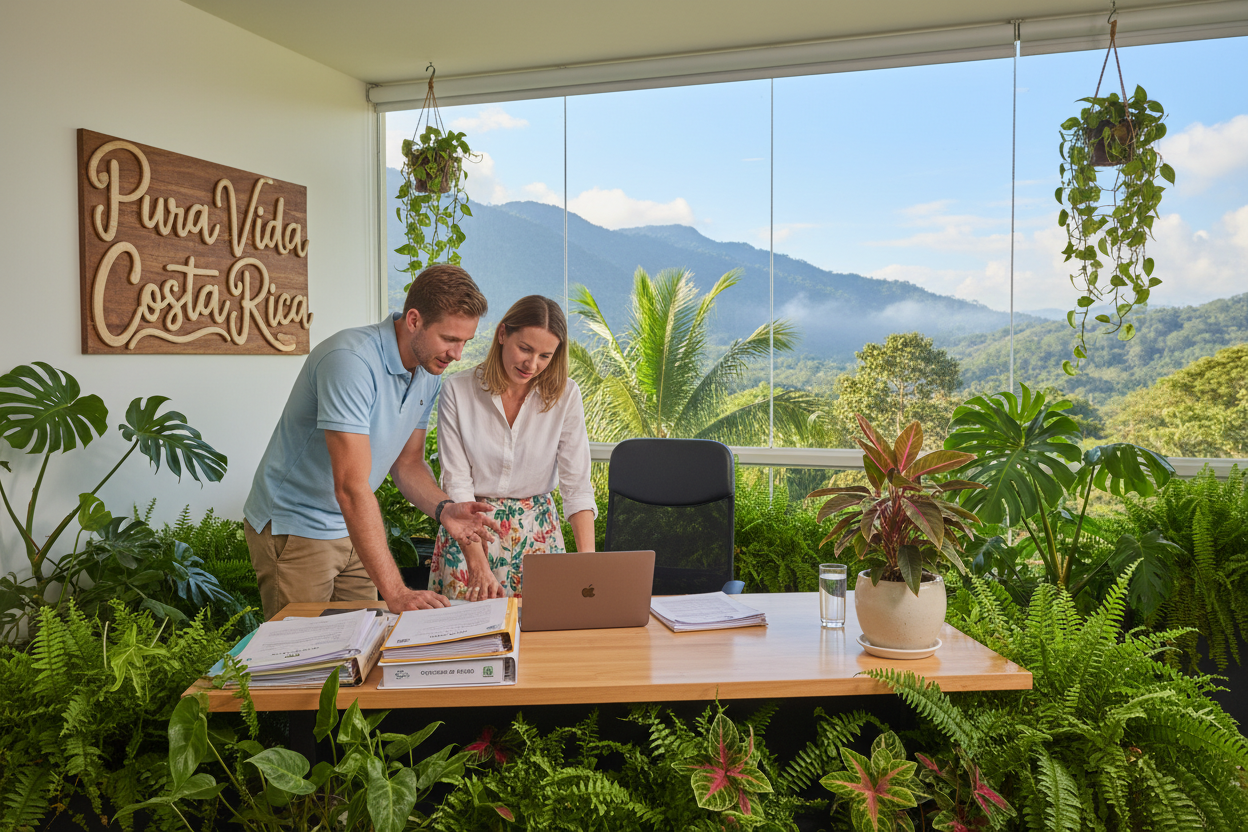
Dreaming of life in a lush, Central American country? You’re not alone. This nation attracts thousands of remote workers and individuals seeking a new home base.
Since launching a specific visa for remote professionals in 2022, the landscape has become more inviting. It’s crucial to understand your options from the start.
We need to clarify a vital point upfront. The popular digital nomad visa is a temporary stay permit. It is not a form of residency and does not count toward permanent status or citizenship.
This is a common point of confusion we see. At CRIE, we specialize exclusively in Costa Rican immigration and residency processes.
Our goal here is to guide you through a clear comparison. We’ll break down eligibility, financial needs, required documents, and timelines for both pathways.
Your choice depends entirely on your long-term goals and commitment level. Proper preparation—starting with documents from your home country—is the foundation for any successful application.
Understanding Costa Rica as a Destination for Residency and Remote Work
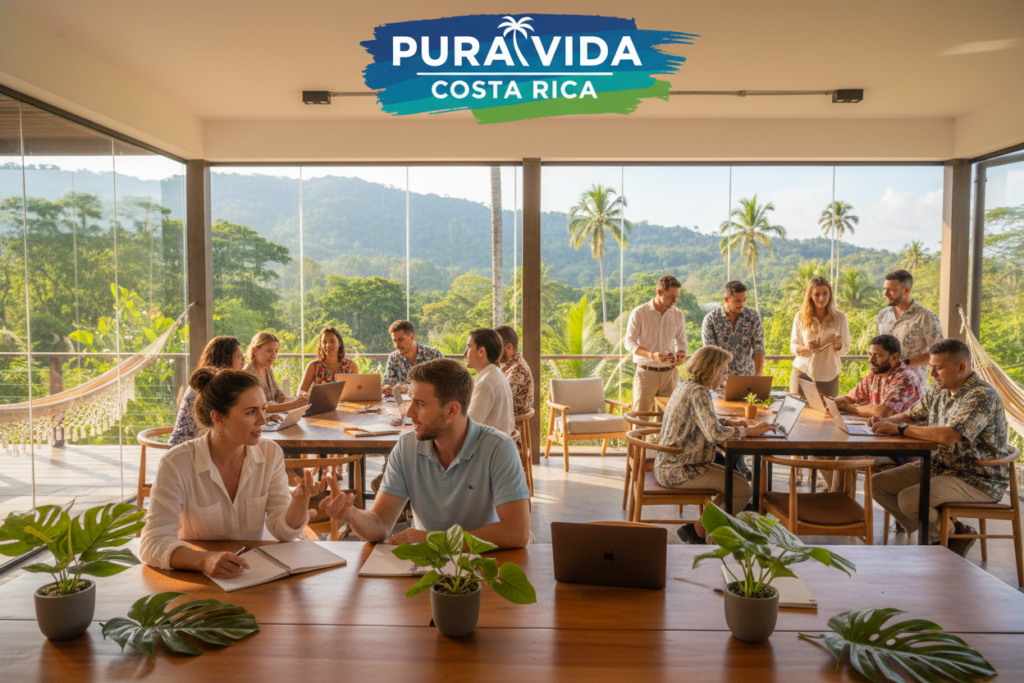
A nation known for its peaceful ethos and stunning landscapes continues to attract new arrivals. Its appeal spans from temporary remote professionals to individuals seeking a permanent home.
We see this destination’s magnetism rooted in concrete factors. A year-round mild climate, proximity to the United States, and a relatively affordable cost of living are significant draws.
The welcoming “Pura Vida” culture also eases the integration process for newcomers. This unique blend makes living in Costa Rica a compelling proposition for many.
Costa Rica’s Unique Appeal
The country offers political stability and modern infrastructure alongside its natural beauty. This combination supports a high quality of life for diverse lifestyles.
Whether you seek urban amenities or tranquil beach towns, options exist. This versatility is a key reason people choose to make the move.
An Overview of Expat and Digital Nomad Communities
Established expatriate networks thrive in areas like Escazú, the Central Valley, and coastal Tamarindo. These communities cater to retirees, families, and professionals.
The growth of remote work accelerated the arrival of digital nomads. Hubs with reliable internet and coworking spaces now support those who work remotely.
Costa Rica offers various residency pathways because it recognizes different immigrant profiles. Your long-term goals will determine which option aligns with your vision for living in Costa Rica.
Costa Rica Digital Nomad vs Residency: A Comparative Overview
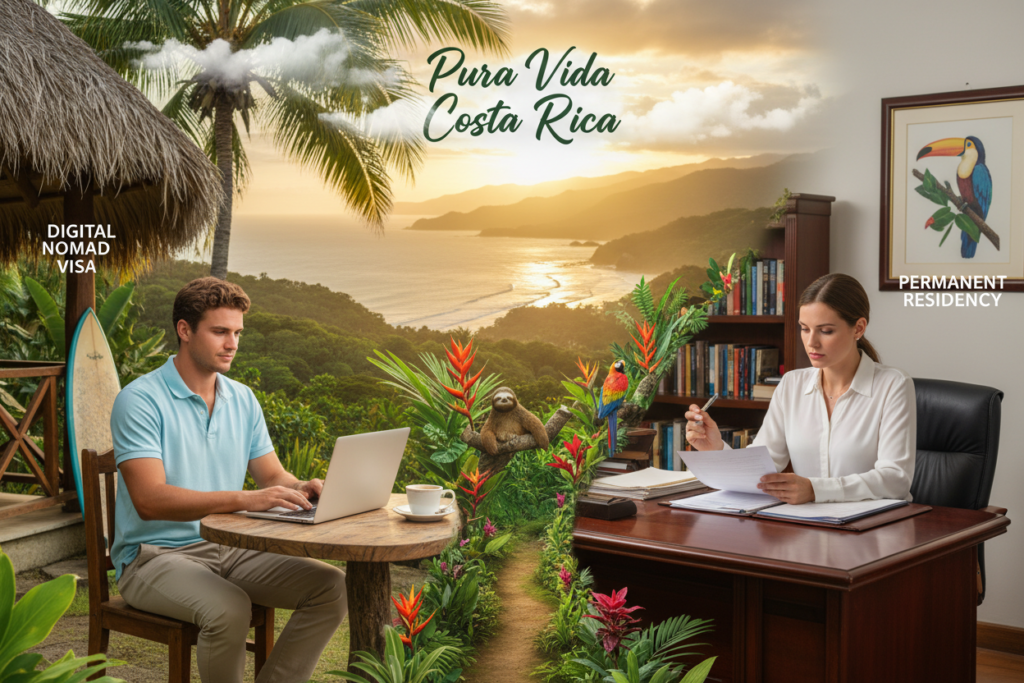
Many remote professionals are surprised to learn their popular visa option does not lead to permanent status. The fundamental distinction is legal: one is a temporary stay permit, the other a formal immigration pathway.
The digital nomad visa in Costa Rica is a one-year, renewable authorization. It requires proof of foreign-source income—$3,000 monthly for individuals. This program does not count toward residency or citizenship, regardless of duration.
Traditional residency options, like Pensionado or Rentista, offer a route to permanent residency after three years. These categories have specific financial thresholds and long-term integration as their goal.
For those who wish to stay beyond two years, the Rentista category is typically the closest fit. Your choice hinges on an honest assessment of your long-term intentions.
Step-by-Step Guidance for Traditional Residency in Costa Rica
Securing formal residency status involves navigating specific categories, each with distinct financial thresholds. We typically guide clients through three primary pathways: Pensionado (Pensionado), Rentista (Rentista), and Inversionista (Inversionista). Your choice depends on your source of funds and long-term goals.
Eligibility for Pensionado (Pensionado)
This retiree category requires a minimum US$1,000 monthly pension from a qualified source. An additional US$250 is needed per dependent. Proof of this permanent income is mandatory for the application.
Requirements for Rentista (Rentista) and Inversionista (Inversionista)
The Rentista category is for those with stable external income. You must demonstrate a guaranteed US$2,500 monthly income for a two-year period. Bank statements or rental agreements typically serve as proof.
Inversionista applicants must invest at least US$150,000 into the local economy. Approved investments include real estate, businesses, or forestry projects. A key rule: any property must be in your personal name, not a corporate entity.
These pathways initially provide two-year temporary residency, renewable thereafter. After three years of maintained status, you can apply for permanent residency—a key long-term benefit.
Preparing Essential Documents Before Arrival
Gathering the correct paperwork from your home country is the non-negotiable first step. You’ll need to provide authenticated documents that meet specific Costa Rican requirements.
Apostilles and Certified Translations
Key documents like birth certificates and police checks require an apostille. This official stamp verifies their authenticity for international use.
All non-Spanish paperwork must have a certified translation. Use translators recognized by Costa Rican authorities for this crucial step.
Verifying Documentation via migracion.go.cr
Always check the official immigration website for current lists. Requirements can change, and outdated information causes delays.
The digital nomad visa needs simpler proof like bank statements. Traditional residency demands a more extensive document package.
We recommend reviewing your checklist with us before starting. Proper preparation is the foundation of any successful application.
Income Thresholds and Financial Requirements
The government sets specific income and investment minimums to qualify for its various stay programs. These financial requirements act as the primary gatekeeper for each pathway.
Monthly Income and Pension Criteria
For the Pensionado category, you need a permanent pension of at least US$1,000 monthly. Add US$250 for each dependent. Proof comes from official pension letters and bank statements.
The Rentista category demands proof of US$2,500 in monthly income for two years. This must be guaranteed through investments or rental agreements. Consistent deposits to a local bank account help demonstrate stability.
Investment and Personal Property Ownership Rules
The Inversionista pathway requires a minimum US$150,000 investment. A critical rule: any real estate must be titled in your personal name.
Using a corporation (sociedad anónima) does not qualify. These figures represent legal minimums that can change. Meeting them is just one part of a complete application.
Timelines and Processing: Key Milestones in the Application Process
We provide realistic expectations for how long each immigration pathway typically takes. Understanding these timeframes helps you plan effectively.
Digital Nomad Visa Processing Duration
Processing for the digital nomad visa usually takes three to six months. The permit is valid for one year upon approval.
Applicants can request a one-time extension for a second year. This brings the maximum total stay under this program to two years.
It involves key steps like document submission, review, and final issuance. This pathway does not count toward permanent status.
Traditional Residency Application Timelines
Formal residency applications often require six to twelve months or more. You first receive a two-year temporary residency status.
After maintaining this status continuously for three years, you become eligible for permanent residency. This is a significant long-term benefit.
Milestones include background checks, financial validation, and card issuance. These are estimates, as government processing times can vary.
Complete preparation is the best way to avoid unnecessary delays in your journey.
Common Pitfalls and Mistakes to Avoid During the Application
The most common application errors we encounter stem from misunderstanding the fundamental requirements. Many are entirely preventable with proper preparation.
Careful attention to detail from the start saves months of potential delays. We see consistent patterns in where applicants stumble.
Document Preparation and Apostille Errors
Incomplete apostilles or using non-certified translators are frequent causes for rejection. Police records must be current, issued within the last six months.
You need records from every country you lived in during the past three years. Submitting photocopies when originals are required will halt your process.
Misunderstanding Visa and Residency Requirements
A major conceptual error is believing time on a digital nomad visa counts toward permanent residency. It does not. This is a temporary stay permit only.
For income documentation, statements must clearly show consistent monthly deposits meeting the minimums. Health insurance must explicitly cover care locally with adequate limits.
Consulting experts before gathering documents can prevent these costly mistakes. Proper verification is your best defense against application setbacks.
Starting Your Journey from Home: How to Prepare Before Arrival
The foundation for a smooth immigration process is laid months before you ever set foot in your new country. We see successful applications begin with proper home-country preparation. This initial phase determines whether your move to Costa Rica proceeds smoothly.
Start gathering documents three to six months before your intended relocation date. First, obtain certified birth certificates for all family members. Request these from vital records offices in your birth state or country.
Next, secure police clearance certificates from every country where you’ve lived in the past three years. Processing times vary—U.S. FBI checks can take 12-14 weeks. For financial proof, gather pension letters or investment statements matching your chosen residency category.
Each document needs an apostille from the correct authority in your home country. All non-Spanish paperwork requires certified translation. Keep original apostilled documents separate from translations.
This home preparation is where our guidance proves most valuable. We provide specific checklists for your residency pathway. Contact us via info@crie.cr or WhatsApp +506 8706 3888 to begin correctly.
Comparing the Digital Nomad Visa with Permanent Residency Options
We often clarify that a popular temporary permit and traditional residency serve entirely different purposes. The first is a short-term authorization for remote work. The second is a formal immigration pathway designed for long-term integration.
Differences in Eligibility and Benefits
The temporary permit requires proof of foreign income and health insurance. Its process is simpler. However, it offers no credit toward permanent status.
Traditional categories demand more extensive documentation. This includes background checks and specific financial proof. In return, they provide a route to indefinite legal status and access to public healthcare.
Transition Strategies for Long-Term Residency
Many remote professionals decide to stay after their temporary permit ends. To pursue permanent residency, they must apply for a traditional category. The Rentista option is often the closest fit.
Time spent on the temporary permit does not count. The residency clock starts from zero upon applying for a traditional pathway. After three years of temporary residency, one can apply for permanent status.
Holding that for seven years opens the door to citizenship. Your choice depends on an honest assessment of your long-term goals.
Utilizing Official Online Resources: crie.cr and migracion.go.cr
Your application’s success hinges on using verified, up-to-date information from official channels. We always direct clients to the primary source: the Dirección General de Migración y Extranjería website, migracion.go.cr.
This is the definitive authority for all immigration rules. Relying on unofficial blogs or outdated guides can lead to costly errors.
How to Verify Current Immigration Policies
The official site contains current forms, fee schedules, and policy announcements. A key point: the interface is primarily in Spanish.
Before gathering documents, check for the latest income thresholds and investment minimums. Verify the validity period required for police records and apostilles.
Staying Updated with Policy Changes
Immigration regulations evolve. Income requirements can adjust, and procedures may change. Ongoing verification is essential, not a one-time task.
Our firm, CRIE (crie.cr), specializes exclusively in this nation’s immigration. We translate official requirements into clear, actionable steps.
While migracion.go.cr provides the law, we offer guidance and document review. For questions on recent changes, contact us at info@crie.cr.
Family Inclusions and Dependents in Residency Applications
Family inclusion policies differ significantly between the temporary remote work permit and formal residency pathways. We help many clients navigate these rules to ensure their loved ones can join them legally.
Including Spouses and Children
The temporary permit allows you to include a spouse and dependent children. The monthly income requirement increases from $3,000 for an individual to $4,000 for a family.
Traditional options are more comprehensive. You can include a spouse, children under 25, and children with disabilities of any age. Dependent parents may also qualify in some cases.
For the Pensionado category, you need an extra $250 per month for each dependent. A couple needs a $1,250 monthly pension minimum. Other categories require proof you can support all family members.
All included relatives receive derivative status. This means they hold the same residency category and timeline as the primary applicant. Their ability to apply permanent status later is linked to yours.
Required documents include apostilled marriage and birth certificates. Proof of dependency, like school enrollment, is also needed for older children. Planning this from the start is crucial, as adding family later is complex.
We can assess your specific family situation and documentation requirements. Contact us for guidance tailored to your needs.
Digital Nomad Visa Limitations: What It Does Not Offer
A key reality check: the digital nomad authorization comes with strict limitations. It is not a form of residency. Time spent under this permit provides zero credit toward permanent status or citizenship.
Holders cannot work for local companies or take on clients within this nation. The program has a hard maximum of two years total. After that, this pathway ends completely.
Access to the public healthcare system is not included. You must maintain private insurance for your entire stay. This differs significantly from traditional residency benefits.
For those wanting to stay longer, the Rentista category is typically the closest fit. It requires proof of stable foreign income. We can help assess if this traditional pathway matches your goals.
Navigating Legal and Immigration Nuances for a Successful Move
Navigating the legal intricacies of immigration can be daunting without expert guidance. The system involves complex requirements and bureaucratic procedures that change frequently.
Consulting with Immigration Experts
Professional assistance becomes valuable for securing residency or a visa in Costa Rica. This is especially true for applicants with complicated finances or multiple family members.
The process within the country has many nuances. Experts review documents to catch errors before submission.
We specialize exclusively in Costa Rican immigration matters. With over 20 years of experience, we offer realistic guidance.
Our help can streamline your application and reduce delays. We cannot guarantee approvals, as decisions remain with authorities.
Investing in professional support often prevents costly mistakes. It provides peace of mind through the entire journey.
Ready to start? Contact us via WhatsApp at +506 8706 3888 or email info@crie.cr for transparent guidance.
Wrapping Up Your Costa Rica Residency Journey
Your journey toward establishing a life in this beautiful nation hinges on one crucial decision. The temporary permit is for exploration, while traditional pathways are for building a permanent home.
Remember, time spent on the digital nomad visa does not count toward residency or citizenship. If you later seek permanent status, you start the three-year clock from zero.
Successful applications are built on proper preparation. Start gathering apostilled documents from your home country early. Always verify current policies at official sources before you begin.
We are here to provide realistic guidance for your move. For a smooth transition, especially when relocating to Costa Rica from the, contact our experts. Reach us via WhatsApp at +506 8706 3888 or email info@crie.cr.
FAQ
What is the main difference between a digital nomad visa and permanent residency?
The key difference is intent and duration. The digital nomad visa is a temporary permit for remote workers to live and work in the country for one or two years. It’s not a path to permanent residency. Permanent residency, like the Pensionado or Rentista categories, is a long-term immigration status with a clear route to citizenship after several years.
Can I apply for a digital nomad visa and then switch to permanent residency?
No, you cannot directly transition from a digital nomad visa to a permanent residency status. The processes are separate. If you wish to pursue permanent residency, you must leave the country and apply from your home country or a country where you have legal residency, meeting all the specific financial and documentation requirements for that residency category.
What are the income requirements for the Rentista residency category?
The Rentista category requires proof of a stable, passive income of at least ,500 per month. This income must be guaranteed for at least two years. You’ll need to provide official documentation, like bank statements or investment income reports, that are apostilled and officially translated into Spanish to support your application.
How long does it take to get a digital nomad visa approved?
Processing times can vary, but the official timeline from the Costa Rican immigration authority is approximately two to three weeks from the date a complete application is submitted. It’s crucial to ensure all documents, including proof of remote work and income, are correctly prepared to avoid delays.
Do I need to hire a local lawyer to apply for residency?
While it’s not a strict legal requirement, we strongly recommend it. The application process involves complex paperwork, specific financial validations, and interactions with various government agencies. An experienced immigration lawyer can navigate these nuances, prevent costly errors, and significantly increase your chances of a smooth, successful application.
Can my family join me if I get a digital nomad visa?
Yes, the digital nomad visa allows you to include dependents, such as a spouse and children under 18. You must demonstrate additional financial means to support them. However, this visa does not grant your dependents the right to work locally unless they obtain their own separate work permit.
What is the most common mistake people make in their residency application?
The most frequent and critical error is submitting documents without the proper apostille or certified translation. Every foreign-issued document, like birth certificates or bank statements, must have an apostille from the issuing country and be translated by an official translator in Costa Rica. Overlooking this step will result in an immediate rejection.
Where can I find the most up-to-date official information on immigration rules?
The primary and most reliable sources are the official government websites: migracion.go.cr for the General Directorate of Migration and Immigration, and crie.cr for the Costa Rican Investment and Trade Promotion agency. Policies can change, so we advise checking these sites directly or consulting with a professional for the latest requirements.
Article by Glenn Tellier (Founder of CRIE and Grupo Gap)
Don't wait, contact us right now!
Call or WhatsApp Costa Rica +506 8373 2085 or +506 8706 3888
Call USA/Canada +1 305-906-6784