

We want to start with a crucial point many miss. The digital nomad visa is a temporary stay permit. It is not a pathway to residency or citizenship here.
Our firm, CRIE, focuses exclusively on residency and immigration. We help clients with permanent pathways, not short-term stays. This guide serves a dual purpose.
We’ll walk you through the paperwork needed for the temporary permit. At the same time, we’ll show what actual residency applications demand. If your goal is a permanent life here, you need a different plan from the start.
The temporary visa allows a one-year stay. You can renew it once. It requires proof of a $3,000 monthly income. That rises to $4,000 if you have dependents.
You must pay a $100 USD application fee. Officials typically process it within 15 calendar days. You also need health insurance with at least $50,000 in coverage.
Please verify all details at the official migration website, migracion.go.cr. Rules can change. For personalized help with long-term residency options, contact us.
Reach our team via WhatsApp at +506 8706 3888 or email info@crie.cr. Let’s build your future here on a solid, permanent foundation.
Immigration Options in Costa Rica: From Digital Nomad to CRIE Residency

The journey to establishing a life here begins with a critical choice between temporary permission and permanent legal status. The nation’s immigration framework is built on this fundamental divide.
Understanding Costa Rica’s immigration framework
The system has two main paths. Short-term stays use permits like tourist and remote work visas. These are not residency.
True long-term status comes from formal residency categories (Categorías de Residencia). The primary options are Pensionado, Rentista, and Inversionista. These can lead to permanent residency.
Why CRIE focuses on residency/immigration
We specialize in Residencia e Inmigración pathways only. Our expertise is building genuine, long-term legal foundations for clients.
A popular temporary permit for remote workers exists outside this formal system. It offers no credit toward permanent status or citizenship eligibility. Choosing the right path from the start saves valuable time.
The government authority manages all programs. We help clients navigate these processes with properly prepared documentation.
Eligibility Criteria and Who Qualifies for Residency (Requisitos)
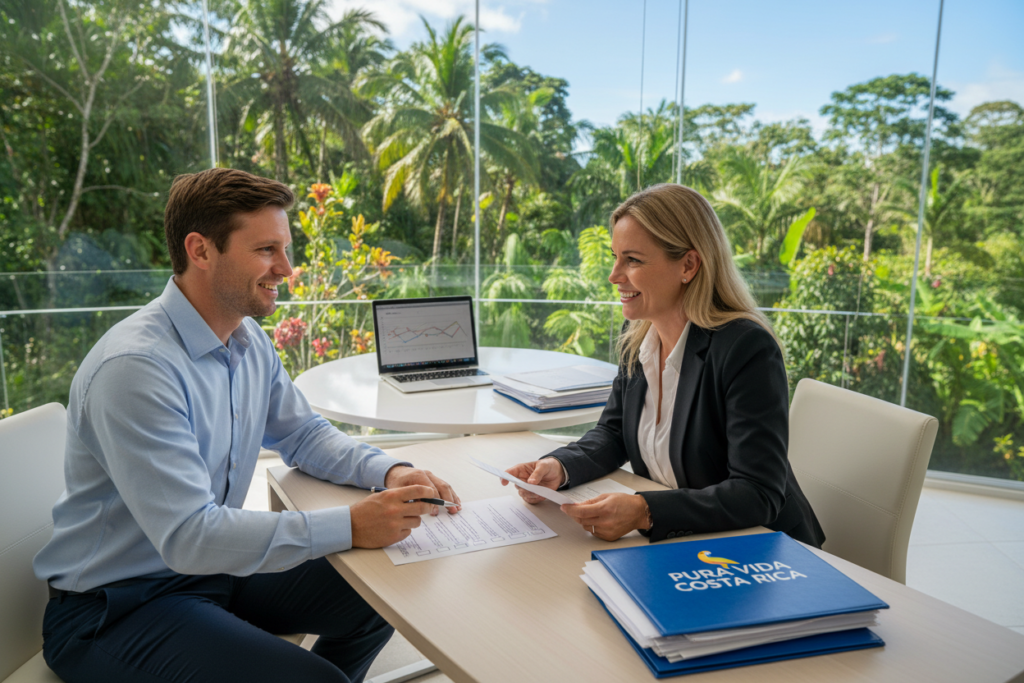
Eligibility for residency hinges on verifiable, long-term financial stability, not just current remote work income. The requirements for permanent status are fundamentally different from those for a temporary stay permit.
Distinguishing digital nomad from residency qualifications
A temporary remote work permit proves you can support yourself now. Residency categories require proof you can support yourself for years. The former is about permission to stay; the latter is about building a legal life.
Financial requirements and income thresholds
The Pensionado category needs a stable pension of at least $1,000 per month. The Rentista category requires proof of $2,500 monthly income guaranteed for two years.
The Inversionista path demands a minimum $150,000 investment. If using real estate, the property must be in your personal name.
These residency options create a pathway to permanent status and eventual citizenship. They are the foundation for a long-term future.
Preparing Your Documents: Apostilles, Notarizations, and Translations (Traducciones)
The foundation of any successful application lies in meticulous document authentication. We always advise clients to begin this paperwork process in their home country. Gathering and legalizing forms takes significant time and cannot be rushed before arrival.
Securing apostilles and notarizations
All foreign public documents require an apostille from their country of origin. This international certification validates their authenticity for use here. Common items needing this seal include birth certificates, marriage certificates, and police background checks.
You must obtain the apostille from the designated authority in your home state or country. This step is non-negotiable for Hague Convention member nations. Plan for this to take several days or even weeks.
Guidelines for translating documents correctly
Every document must also have an official Spanish translation (Traducción Oficial). Only translators authorized by the Costa Rican Ministry of Foreign Affairs can perform this work. Translations done abroad are typically not accepted.
The practical workflow is clear. First, get your original documents apostilled. Then, bring them to the nation and have them translated by a local, authorized professional. Remember that police records and marriage certificates often have a six-month validity period.
Always verify the latest specific requirements at the official migration website, migracion.go.cr. Policies can change, and staying informed prevents delays in your application.
A Step-by-Step Guide to Organizing Your Application
We recommend beginning your document preparation long before you plan to move. A successful application process follows two clear phases: meticulous home-country preparation and official submission through government channels.
Starting from home: gathering all necessary paperwork
Your first step is researching the exact requirements for your chosen residency category. Then, request official documents like birth certificates and police records from issuing authorities.
You’ll need to get these apostilled in your home country. We advise making multiple certified copies for your master file. This organization prevents frantic searches later.
Online submission process with official platforms
Formal residency applications are processed by the Dirección General de Migración y Extranjería. This is a different system than the platform used for temporary remote work permits.
Realistic timelines vary by category and current volume. The initial review can take several months. Our team guides clients through each step, ensuring accuracy and completeness.
Always verify the latest procedures at migracion.go.cr and crie.cr. Official requirements can change, and staying informed is crucial.
Residency Versus Digital Nomad Options: Clarifying the Difference
Many remote workers confuse temporary permission with permanent legal status, a mistake with significant consequences. Understanding this distinction is essential for your long-term goals.
Digital nomad status and its limitations
The popular remote work permit allows a one-year stay, renewable once. It is explicitly not a form of residency. The time spent on this visa provides zero credit toward permanent status or citizenship.
This option is capped at two years total. It requires maintaining foreign employment. You cannot transition from this temporary permit to a residency category.
Exploring the closest available residency options
If you plan to stay beyond two years or establish roots, you need formal residency from the start. The clock on your path to permanence only begins with residency approval.
Retirees should explore Pensionado status. Individuals with stable investment income fit the Rentista category. Those making business investments can pursue the Inversionista path.
We guide clients to choose the correct foundation immediately. This prevents costly delays in building a permanent life in this beautiful nation.
Timeline and Key Milestones in the Application Process
A clear timeline transforms a complex application into a manageable series of steps. We help clients map out each phase to set realistic expectations. Proper planning from the start prevents costly delays.
Standard processing times and critical checkpoints
Gathering and authenticating documents from your home country often takes two to four months. Rushing this stage leads to errors that stall everything later.
Once submitted, the review process varies by residency category. Initial processing can take several months. Always check migracion.go.cr for current official timeframes.
Common checkpoints include requests for additional information. These can add weeks to your timeline. Financial verification and background checks also impact the schedule.
From submission to receiving your temporary residency cédula, the entire approval process often spans over a year. Temporary status is typically granted for one year initially. After three consecutive years, you become eligible for permanent residency.
Mistakes to Avoid When Submitting Your Application
The most frequent cause of application setbacks is preventable document errors. A single oversight can add months to your processing timeline.
Common pitfalls in document preparation
Expired police checks or marriage certificates are a top reason for rejection. These often must be issued within six months of submission.
You’ll need proper apostilles from the correct authority in your home country. Notarization alone is insufficient for international use.
Using a translator not authorized by local officials will invalidate your paperwork. Financial documents like bank statements must cover the full required period and clearly show your name.
For property investments, titles must be in your personal name, not a corporation’s. Selecting the wrong residency category based on misunderstood requirements is another major error.
Our team reviews submissions to catch these issues early. We help clients navigate the precise requirements to avoid unnecessary delays. Always verify the latest rules at the official migration website.
Additional Requirements Specific to CRIE Residency (Inmigración)
Your choice between Pensionado, Rentista, or Inversionista dictates a specialized set of requirements. Each path demands unique financial proofs layered on top of your standard documentation.
Guidance for Pensionado, Rentista, and Inversionista categories
Pensionado applicants must prove a permanent pension of at least $1,000 monthly. Official letters from government or corporate administrators are required.
The Rentista category needs documentation of $2,500 in guaranteed monthly income for two years. This is often shown through bank deposits or annuity contracts.
To qualify as an Inversionista, you must invest a minimum of $150,000. Approved avenues include real estate, business ventures, or government bonds.
Importance of personal property ownership in applications
If using real estate for the investment, the property title must be in your personal name. Holdings under a company structure do not qualify toward the threshold.
This rule exists for clear verification by immigration officials. While corporations offer asset protection, they complicate the residency approval process.
Leveraging Official Resources for Accurate Information
Official government websites provide the definitive word on legal requirements. Immigration rules and fees can change without widespread notice. Relying on secondary sources risks using outdated details.
How to use crie.cr and migracion.go.cr effectively
The Dirección General de Migración y Extranjería runs migracion.go.cr. This is the primary source for current forms, fee schedules, and processing times. The site is in Spanish, but it holds the final authority.
Our website, crie.cr, complements this official data. We translate complex requirements into actionable steps. For a complete overview, see our detailed paperwork guide.
Staying updated with the latest immigration guidelines
We advise a habit of cross-checking information. Before making financial commitments, verify the latest rules on the government portal. Policies evolve, and what worked last year may not apply now.
Our team monitors these updates closely. For personalized guidance on your specific situation, contact us. Reach our experts via WhatsApp at +506 8706 3888 or email info@crie.cr.
Costa Rica Digital Nomad Visa Document Checklist
The difference between a temporary stay and permanent residency is clearly reflected in the complexity of their respective document requirements. We’ll outline the core paperwork for the remote work permit here.
An overview of the must-have documents
You’ll need a completed application from the official platform. A valid passport and recent photo are mandatory.
Proof of the application fee payment is required. Financial proof is critical. Provide bank statements showing a $3,000 monthly minimum.
This rises to $4,000 if you have a family. A sworn income affidavit is also needed.
You must show valid international health insurance. Coverage must be at least $50,000. Travel insurance does not qualify.
Tips for ensuring your checklist is complete
Create a master list for your specific pathway. Track expiration dates for items like police checks.
Maintain both digital scans and physical copies. Organize them in the order officials expect.
Always verify your final package against the latest list on the official migration website. Residency applications demand even more extensive documentation.
This includes apostilled originals and local translations. A complete, accurate checklist prevents costly delays.
Final Guidance and Next Steps for a Smooth Transition
Your ultimate goal should dictate your initial immigration strategy. The popular temporary permit is ideal for a trial period. If you seek a permanent home, you need formal residency from day one.
Remember, years spent on a short-term stay do not count toward long-term status. This makes your first choice critical. Begin gathering your official paperwork early to avoid delays.
Navigating requirements between countries is complex. Our firm provides specialized guidance for people pursuing genuine residency. We help you build a correct, complete application.
Ready to explore your permanent options? Contact our team for personalized advice via WhatsApp at +506 8706 3888 or email info@crie.cr. We guide you through the process, though final approval rests with authorities.
Always verify the latest rules at the official migration website. This ensures your document preparation aligns with current requirements for a smooth transition.
FAQ
What is the main difference between applying for a digital nomad visa and a formal residency through CRIE?
The key difference is permanence and a path to citizenship. The digital nomad permit is a temporary, renewable status for remote workers that doesn’t lead to permanent residency. A formal residency application, like Pensionado or Rentista, is a long-term immigration process managed by the Dirección General de Migración y Extranjería, which can eventually lead to permanent residency and naturalization.
What are the income requirements for the most common residency categories?
Financial thresholds are set by the government and updated periodically. For the Pensionado category, you must prove a stable lifetime pension. For the Rentista category, you need to demonstrate a guaranteed, stable income from sources like investments or rental properties. The Inversionista category requires a significant capital investment in the country. We always advise clients to verify the latest figures directly with official sources like migracion.go.cr.
Why are apostilles and official translations so critical for my application?
Costa Rican immigration law requires that all foreign-issued documents be authenticated for international use. An apostille certifies the document’s origin. After that, a certified translation by a colegiado (a sworn translator registered with the Costa Rican Colegio de Traductores) is mandatory. Submitting documents without these steps is one of the most common reasons for immediate rejection or delays.
How long does the entire application process typically take?
You should prepare for a process that requires patience. From initial document gathering abroad to final approval, it often takes several months to over a year. The timeline depends on the completeness of your submission, the specific residency category, and government processing queues. We help clients plan for this extended timeline to manage expectations from the start.
What is the most frequent mistake people make with their paperwork?
The single biggest pitfall is submitting outdated or incomplete financial proof. This includes bank statements that don’t cover the full required period, income documents not meeting the minimum threshold, or proof of funds that isn’t consistent. Another critical error is using non-certified translations. These oversights can reset your application clock, costing you significant time and money.
Does owning property in Costa Rica help my residency application?
Property ownership itself is not a direct requirement for most standard residency categories like Pensionado or Rentista. However, it can be a factor in demonstrating strong ties to the country. For the Inversionista residency, your property investment can sometimes qualify as the required capital injection, but specific conditions apply. We can review your asset portfolio to see how it aligns with immigration goals.
What are the best official resources to stay updated on immigration rules?
For accurate, current information, always refer to the primary government portals. The Dirección General de Migración y Extranjería website (migracion.go.cr) publishes official decrees and requirements. For broader context and procedures, crie.cr is a valuable resource. Regulations can change, so we recommend checking these sites directly rather than relying solely on third-party summaries or outdated blog posts.
Article by Glenn Tellier (Founder of CRIE and Grupo Gap)
Don't wait, contact us right now!
Call or WhatsApp Costa Rica +506 8373 2085 or +506 8706 3888
Call USA/Canada +1 305-906-6784