
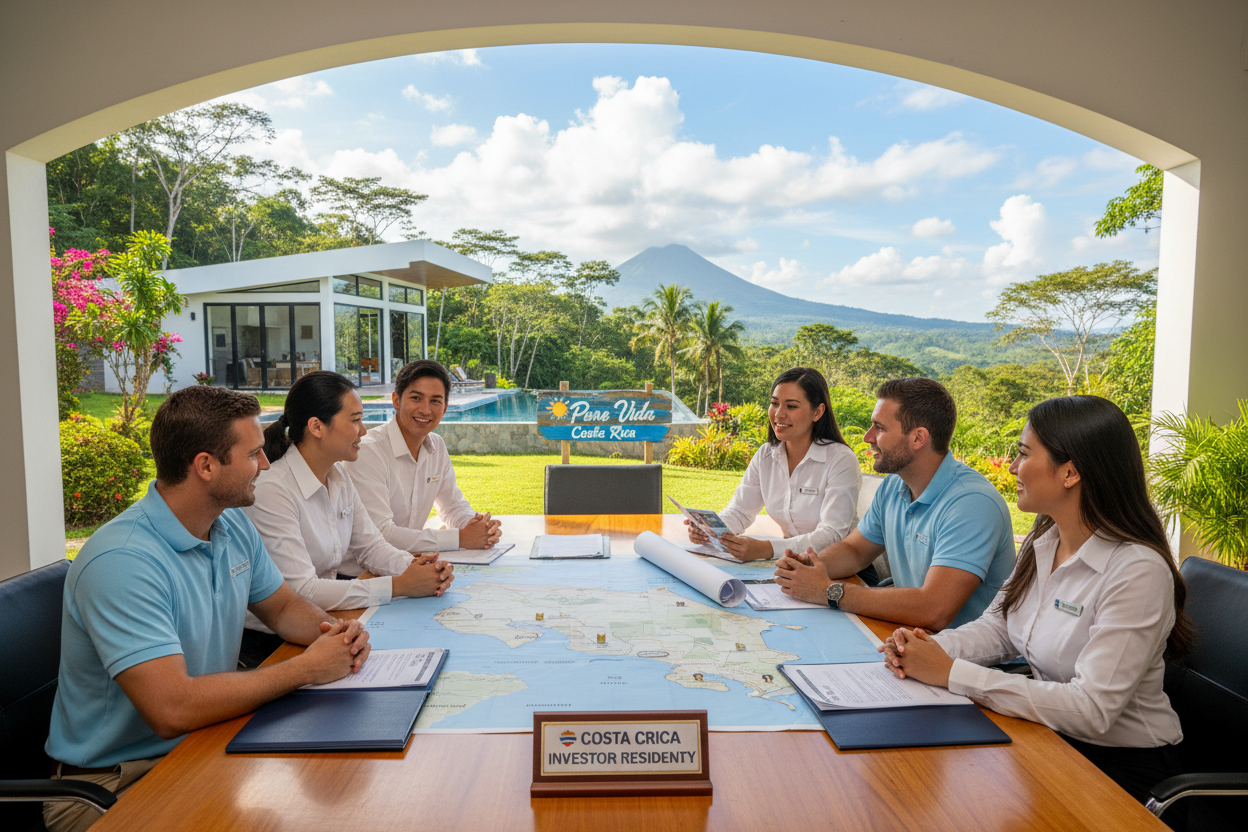
Many dream of a life in a stunning tropical nation. They often believe purchasing a home there automatically grants legal status. The truth is more detailed and requires careful planning.
This comprehensive guide walks you through the actual process. We focus on the investor pathway, known locally as Inversionista. It’s a legal route to establishing your life here.
Current law sets a minimum real estate investment threshold. The property must be registered in your personal name with the national registry. Starting your document preparation from your home country is a critical first step.
We provide clear, step-by-step information to help you navigate successfully. Our approach emphasizes practical steps and realistic timelines. This sets a solid foundation for your application journey.
Understanding Costa Rica’s Investor Residency Landscape
Before committing funds, a clear grasp of the available residency routes is essential for a successful application.
Overview of Residency Options and Legal Pathways
The nation offers several formal categories. The most common for foreign buyers are Pensionado (Pensionado), Rentista (Rentista), and Inversionista (Investor).
Pensionado requires proof of a US$1,000+ monthly pension. Rentista needs US$2,500 monthly income for two years. The Inversionista category demands a minimum US$150,000 investment, often in real estate.
A critical rule: the qualifying asset must be registered in your personal name with the national registry. This is a key legal requirement.
Why Investor Residency Suits Foreign Buyers
This pathway is attractive because your property purchase serves as the qualifying investment. You build equity in a tangible asset while securing legal status.
Temporary residency under this category lasts two years. It does not permit salaried local employment but allows business ownership and rental income.
After three consecutive years, you can apply for permanent residency. This removes work restrictions and reduces the annual stay requirement.
It’s critical to understand that Digital Nomad status is NOT a residency pathway. It does not count toward permanent status or citizenship.
We always advise verifying the latest rules at migracion.go.cr or with a qualified attorney. Immigration policies can change.
Qualifying for Investor Residency: Who Meets the Requirements?
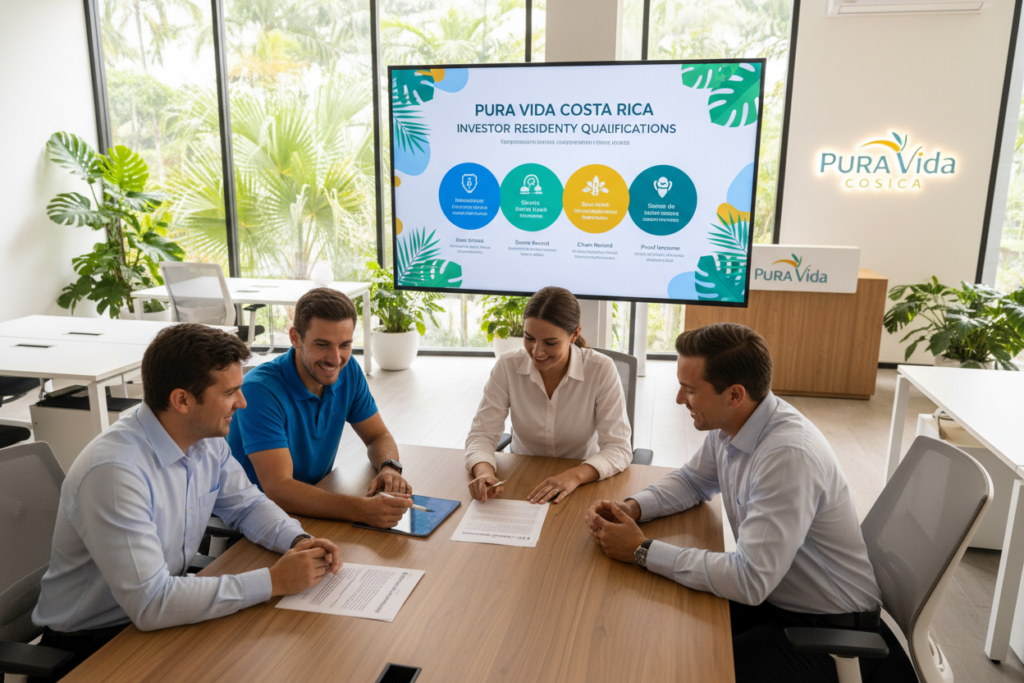
Your journey to legal status hinges on meeting baseline criteria. These universal requirements ensure economic contribution and good standing.
Eligibility Guidelines and Clean Criminal Record
All applicants must be at least 18 years old. You must also demonstrate financial solvency for your chosen category.
A clean criminal record is non-negotiable. You’ll need apostilled police clearance certificates from your home country. Provide them from any nation where you’ve lived over two years as an adult.
These documents must be recent and translated into Spanish by a certified translator in Costa Rica.
Thresholds: Pensionado (Pensionado), Rentista (Rentista), and Inversionista (Investor)
The Pensionado category requires a guaranteed monthly pension of at least US$1,000. Rentista needs proof of stable income of US$2,500 per month for two years.
The Inversionista, or investor, pathway demands a minimum US$150,000 investment. A critical rule: your property must be registered in your personal name in the National Registry. Ownership through a corporation does not qualify.
The main applicant can include a spouse and dependent children. Each dependent pays separate government fees. Those under 65 must later pass language and history exams for citizenship.
We strongly recommend starting your document preparation from your home country. Work with a qualified local attorney and your home document providers. This ensures everything is complete and correct before you travel.
Preparing Your Documents: Apostilles, Translations, and Necessary Proof
The difference between approval and rejection often lies in the quality of your paperwork. This stage is where most residency applications succeed or fail. Fortunately, you can complete the bulk of this work from your home country.
Essential Documentation Before Arrival
You will need several cornerstone documents. These include a current police clearance certificate and your official birth certificate. A valid passport with at least six months of validity is also mandatory.
Proof of your qualifying investment is equally critical. For real estate, this means the registered property title and appraisal. You must also show evidence of the purchase transaction.
Every foreign document requires authentication. They need an apostille from your home country’s authorities. If your nation isn’t a Hague Convention signatory, consular legalization is necessary.
Tips for Obtaining Apostilles and Accurate Translations
Start the apostille process early. Contact your Secretary of State or Ministry of Foreign Affairs. The timeline can vary from days to several weeks.
Once apostilled, documents must be translated into Spanish. This must be done by a certified translator registered in Costa Rica. Translations from your home country are generally not accepted.
This creates a logistical step. You often need to work with a local attorney or service provider. They can coordinate the certified translations after you send the documents.
Plan for a preparation timeline of two to three months. After submission, processing typically takes six to twelve months. You must also maintain your Caja (social security) registration throughout.
Always verify the latest requirements at migracion.go.cr. We recommend consulting a qualified local attorney for the most current information.
Step-by-Step Guide to the Residency Application Process
The path from document preparation to receiving your resident card follows a defined sequence. We outline the key stages to set clear expectations.
Your first step happens in your home country. Gather, apostille, and prepare all required documents. Then, work with your local attorney for certified Spanish translations.
Understanding the Application Timeline and Milestones
Once in Costa Rica, you’ll complete consular registration and a medical exam. Your attorney then submits your complete application packet to immigration authorities.
The review period typically spans six to twelve months. Patience is essential during this waiting phase. Approval leads to providing biometrics and receiving your DIMEX card.
Maintaining Your Investment and Preparing for Renewal
Throughout your initial two-year temporary residency, you must maintain your qualifying investment. You also need to spend at least six months per year in the country.
Enrollment in the Caja social security system is mandatory. Before your status expires, start the renewal process a few months early. Prove your ongoing compliance for a straightforward renewal.
Always verify the latest procedures at migracion.go.cr or with your legal counsel.
Costa Rica Investor Residency With Property in a Corporation
One of the most common and costly mistakes in the residency process involves how the investment property is titled. Current immigration rules mandate that your qualifying asset be registered in your personal name within the National Registry.
Ensuring Property is Registered in Your Personal Name
The authorities require direct proof of personal ownership. Your name must appear as the ‘propietario’ on the official title document. This represents a major shift from older practices where corporate holdings sometimes qualified.
Navigating the Legal Nuances of Corporate vs. Personal Ownership
Holding real estate through a local corporation is common for tax and liability reasons. However, this structure does not satisfy the requirements for the investor pathway. If you already own an asset through a corporation, transferring it to your personal name involves significant legal steps and costs.
We advise clarifying your residency goal with your attorney from the outset. Always verify the latest regulations at migracion.go.cr to ensure compliance.
Managing Your Time: Residency Timelines and Minimum Stay Requirements
A critical yet often overlooked aspect of residency is the mandatory physical presence requirement. Your ability to renew and progress toward permanent status hinges on how many days you spend locally each year.
Interpreting the 6-Month Presence and 72-Hour Annual Visit Rules
For temporary residency, you must spend at least six months per year physically present. This time can be accumulated across multiple visits or in one continuous stay.
The immigration authority reviews your entry and exit records retrospectively at renewal. They do not monitor your presence in real time.
Once you transition to permanent residency, the rule relaxes dramatically. You only need to visit for a minimum of 72 hours per year to maintain your status.
Planning Your Stays and Renewal Strategy
If your long-term goal is citizenship, be aware that months spent abroad are deducted from your total residency time count. Extended absences can delay your eligibility significantly.
We recommend keeping meticulous travel records and consulting with an attorney annually. For detailed temporary residency guidance, always verify the latest rules at the official immigration website.
Navigating Common Pitfalls and Application Mistakes
Even the most diligent applicants can stumble into avoidable errors during their residency journey. We outline key missteps to help you steer clear of delays and denials.
Identifying Frequent Errors During the Application Process
A major error is incorrect asset titling. The qualifying investment must be in your personal name, not held by a legal entity.
Failing to maintain the minimum investment value or your required physical presence also jeopardizes renewal. Letting your social security (Caja) payments lapse creates immediate compliance issues.
Relying on outdated online information is another trap. Rules evolve, so always verify current requirements.
Strategies to Avoid Compliance and Documentation Issues
Begin your document preparation from your home country. Ensure all papers are apostilled and properly translated before arrival.
Work with a qualified local attorney specializing in Costa Rican immigration law. They provide current guidance and manage complex filings.
Remember, maintaining your legal status is an ongoing obligation. Keep meticulous records of your stays and financial commitments.
When uncertain, the official source for the latest information is migracion.go.cr.
Exploring Alternative Residency Pathways and Clarifying Digital Nomad Misconceptions
Achieving full integration into Costa Rican society is a multi-stage process, not a single event. We often see confusion between visitor status, legal residency, and full citizenship.
Understanding these distinctions is key to planning a realistic long-term strategy.
Differences Between Temporary Residency, Permanent Residency, and Citizenship
Pathways like Pensionado (Pensionado) or Rentista (Rentista) offer alternatives to the investor visa. All lead to temporary residency first.
After three consecutive years, you can apply for permanent residency. This status removes work restrictions and reduces annual stay requirements.
Citizenship through naturalization is the final step. It requires at least seven years of legal residency for most.
Applicants under 65 must pass Spanish and Costa Rican history exams. The country allows dual citizenship, so you keep your original passport.
Why Digital Nomad Status Does Not Qualify for Residency
A critical point causes widespread confusion. The Digital Nomad program is a visitor visa, not a form of legal residency.
It does not count toward permanent status or citizenship. For remote workers seeking true residency, the Rentista category is the closest option if you have stable income.
The investor pathway remains viable for those buying property for residency. Always verify the latest news and rules at migracion.go.cr to ensure your plan aligns with current law.
Final Thoughts on Securing Your Costa Rican Residency Journey
Navigating the immigration landscape requires a blend of preparation, patience, and professional guidance. This guide has outlined a structured path to legal status.
Success starts in your home country. Gather and apostille your documents early to avoid delays. Proper preparation is your best security.
Structure your real estate purchase correctly from day one. Ensure personal ownership and maintain meticulous compliance with all rules.
For personalized support, contact us. We can help with your investor visa application and document review. Reach out via WhatsApp at +506 8706 3888 or email info@crie.cr.
Always verify the latest requirements at migracion.go.cr. Your journey to a new home begins with a single, well-informed step.
FAQ
Can I use a property owned by my corporation to qualify for the investor residency program?
No, you cannot. The immigration authorities require the qualifying real estate asset to be registered directly in your personal name. We see this as a common hurdle; if your home is currently held in a corporate entity, you must formally transfer the title to yourself as an individual before applying. This ensures your application meets the strict ownership requirement.
How long does the entire application process typically take from start to finish?
You should plan for a process that spans several months. After submitting your complete dossier to immigration, receiving your initial temporary residency card can take 6 to 9 months. The subsequent wait for your *cédula* (national ID card) adds more time. We manage expectations by advising clients to view this as a marathon, not a sprint, with careful document preparation being the key to avoiding delays.
What are the minimum physical presence requirements to maintain my temporary residency status?
You must enter the country at least once every six months to keep your file active. Furthermore, after your first year, you need to demonstrate a physical presence of at least 72 hours within Costa Rica each calendar year. We help clients plan these necessary visits around their renewal schedule to ensure continuous compliance without disrupting their lives abroad.
What is the most common mistake applicants make that causes a rejection?
Incomplete or improperly legalized documentation is the leading cause. Every foreign-issued document, from your birth certificate to your clean criminal record, must have an apostille (or embassy authentication) and a certified Spanish translation. We meticulously review each paper to ensure it meets the exacting standards of the Dirección General de Migración y Extranjería before submission.
Does obtaining residency through investment lead directly to citizenship?
Not directly. Investor residency is a temporary status. After maintaining it successfully for three years, you can apply for permanent residency. Citizenship, which includes a Costa Rican passport, is a separate process with its own requirements, including a longer period of legal residence and a language/culture test. We guide clients through each distinct stage of this long-term journey.
Why doesn’t the Digital Nomad Visa count as a pathway to permanent residency or citizenship?
The Digital Nomad Visa is a separate, non-residency immigration category. It grants the right to live and work remotely in the country for a limited time but does not provide a bridge to permanent status or citizenship. It’s designed for temporary stays, whereas the investor program is a dedicated route toward establishing long-term legal residency. We clarify this distinction to ensure clients choose the path that aligns with their ultimate goals.
Article by Glenn Tellier (Founder of CRIE and Grupo Gap)
Don't wait, contact us right now!
Call or WhatsApp Costa Rica +506 8373 2085 or +506 8706 3888
Call USA/Canada +1 305-906-6784