
We know the immigration system here can feel confusing. Many foreign nationals wonder about travel during their application. Can you leave and come back? This is a critical concern for your peace of mind and plans.
Understanding these guidelines isn’t just about compliance. It’s about protecting your legal standing. A misstep can disrupt a timeline that often spans many months.
This guide walks you through the complete journey. We focus on your status during the pending period and your ability to travel internationally. We address real-world scenarios at the border.
Officers will check your passport and may ask for proof of exit. Knowing what documents prove your pending status is key. We help you avoid common mistakes that cause delays.
At CRIE, we act as your partner. We provide clear, step-by-step guidance through complex procedures. We build trust through honest disclaimers, as every case depends on individual circumstances.
Overview of the Costa Rica Residency Process

Many prospective residents are surprised to learn that securing residency is a distinct legal classification, not just an extended visit. It grants you the right to remain long-term and establishes your legal presence for matters like banking.
The procedure is managed by Costa Rican immigration authorities, specifically the DGME (Dirección General de Migración y Extranjería). We guide you through their strict legal frameworks, but final approval always comes from the government.
A critical rule often missed: you must file your application while your tourist visa is valid. Once filed, your status changes. You can stay in the country past your tourist visa expiration and gain travel flexibility.
Residency here has temporary and permanent categories. Successful applications start with preparation in your home country. Gathering documents early is essential. Begin by understanding your options with our residency assessment.
Eligibility Criteria: Who Qualifies for Residency
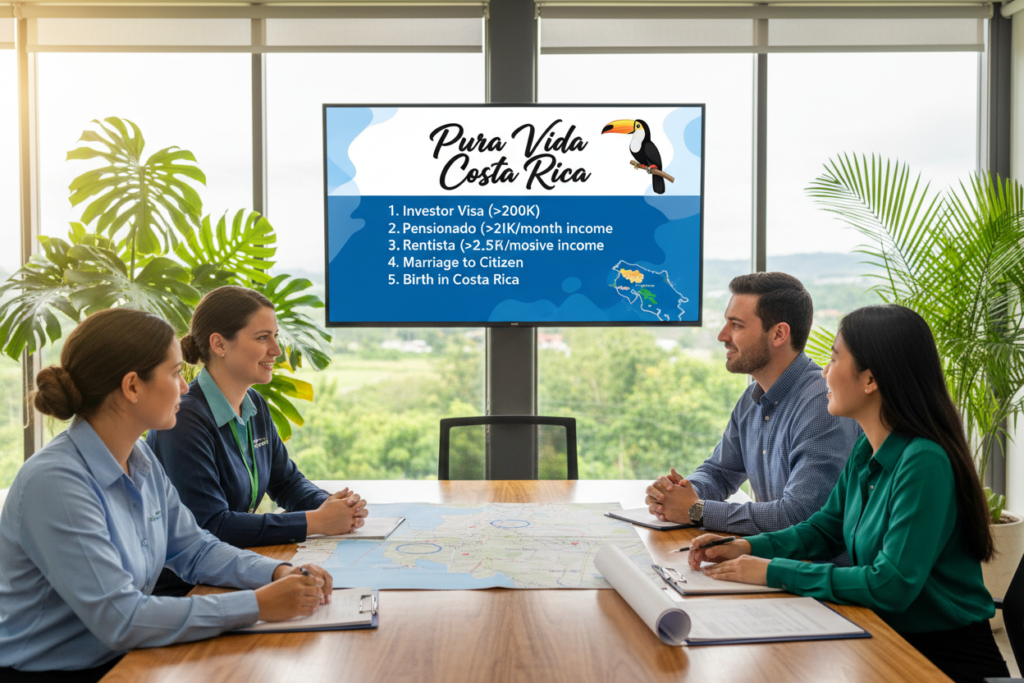
Qualifying for legal residency here hinges on meeting specific financial thresholds. You must fit one of several defined pathways. Each has precise, non-negotiable requirements.
Pensionado (Pensionado) Requirements
The Pensionado category serves retirees. It requires documentation of a lifetime pension of at least US$1,000 per month. This often comes from Social Security or a former employer.
Rentista (Rentista) and Investor (Inversionista) Thresholds
The Rentista pathway demands a bank letter guaranteeing US$2,500 monthly income for two years. Some applicants establish a certificate of deposit locally to secure this letter.
For the Inversionista category, a minimum investment of US$150,000 in real estate is required. A critical rule: the property must be in your personal name, not a corporation.
Note that the Digital Nomad visa is not a residency pathway. For remote workers, Rentista is typically the closest alternative. One qualifying applicant can include a spouse and children under 18.
Temporary status requires proof at each renewal. After three years, you can apply for permanent residency, which removes these recurring requirements.
Step-by-Step Document Preparation Before Arrival
A successful residency application begins with meticulous document preparation long before you arrive. We emphasize building your case on properly authenticated paperwork from your home country. Rushing this phase creates costly delays.
Checklist for Apostilles and Translations
Authentication is a critical step. Your birth, marriage, and police clearance certificates need an apostille from designated authorities in your home country. This international stamp validates them for use here.
All documents not in Spanish require official translation by a certified translator. Machine translations are not accepted for immigration purposes. Plan this step early.
Gathering Essential Certificates and Supporting Documentation
The core requirements include a recent criminal background check, birth certificate, and marriage certificate if applicable. Each must be issued within the last six months.
You must also compile category-specific proof. This means pension letters, bank guarantees, or property titles. We recommend starting this process 2-4 months before your move.
Specific format rules can change. Always verify the current checklist at the official migration website to ensure nothing is missed.
Timelines and How Long the Process Might Take
Setting realistic expectations for processing times is a cornerstone of our guidance. We never promise specific dates, as government reviews depend on many variables.
Typical Processing Timelines at Immigration
A complete, correctly filed residency application in Costa Rica typically takes about one year to resolve. This timeline starts on the official filing date with immigration authorities.
Many factors influence this duration. Current caseloads, staffing, and external events like past pandemics can create significant backlogs. These elements are beyond any applicant’s direct control.
Your application moves through several stages after submission. These include initial review, background checks, and officer assessment. Each phase requires time, and files are often processed in batches.
Incomplete submissions face much longer delays. Officials may issue formal requests for missing data. Each request adds weeks or months to your total processing time.
Some cases, especially those filed without expert guidance, can stretch to two or three years. Proper preparation from the start is the best strategy to minimize your wait.
Common Mistakes to Avoid in Your Application
The path to residency is often lengthened not by government delays, but by simple, avoidable mistakes. We’ve seen countless files stalled for months due to errors that could have been prevented. This candid guide highlights frequent pitfalls to help you navigate the process smoothly.
Frequent Documentation Errors
One major error involves submitting documents that don’t meet authentication requirements. Your birth certificate or police check needs a proper apostille. Translations must be certified by an authorized translator here.
Another critical mistake is letting your tourist visa expire before filing. You must submit your application while your initial entry stamp is valid. Failing this forces you to leave and start over.
We also see issues with document dates. Many certificates must be issued within six months of your filing date. Gathering them too early creates an expired proof that immigration will reject.
Perhaps the costliest error is attempting a do-it-yourself application. The specific form requirements and legal order are complex. Without expert guidance, timelines can extend for years.
Costa Rica Reentry Rules While Residency Is in Process
A common question we receive concerns international travel while your file is under review. The official guidelines provide clear answers that offer both security and flexibility.
Once your application is formally filed with immigration authorities, your legal status changes. You are permitted to stay beyond the expiration date on your entry stamp. For many nationals, this stamp allows a 90-day stay, but officials may assign shorter periods.
This filing must be complete and accepted by the Dirección General de Migración y Extranjería. You will receive a receipt confirming submission. This document is your proof of status if questioned.
Importantly, you are not required to remain in the country during processing. You can leave for business or personal reasons and reenter without jeopardizing your case. This provides tremendous flexibility for maintaining connections abroad.
When returning, carry your filing receipt. Border officers can usually verify your pending case in their system. This prevents confusion at entry checkpoints where they might otherwise enforce tourist visa limits.
Remember, this flexibility applies only after filing. If your tourist visa expires before submission, you must exit and obtain a new stamp. Filing must occur while you hold valid tourist status.
For those who prefer to stay continuously, that is perfectly acceptable. There is no minimum exit requirement during the review period, which often lasts a year or more.
These rules apply specifically while your case is pending. After approval, different regulations govern maintaining your legal status, such as limits on extended absences.
We provide this guidance based on current immigration law. Always confirm the latest policies through official channels or your legal representative, especially for unique circumstances.
Navigating Tourist Visa Limitations and Border Requirements
Before any residency forms are filed, every prospective resident must successfully navigate the country’s tourist entry protocols. This initial encounter with immigration authorities sets the legal stage for everything that follows.
Understanding Entry Stamps and Tourist Visa Durations
Upon arrival, you will proceed through Immigration Control. Use the lane designated for visitors without local citizenship. An officer will scan your passport and ask about your visit.
Common questions include your purpose, intended length of stay, and accommodation details. You must present proof of an onward or return ticket. Officers may also request proof of sufficient funds, though this is less common for air arrivals.
The most crucial action is the entry stamp. The officer handwrites a number on it. This number is the exact count of days you are legally permitted to remain.
For U.S. and Canadian citizens, the maximum is often 180 days. The officer has full discretion to grant fewer based on your plans. Your authorized stay period, as stamped, creates your deadline to submit a residency application.
Remaining beyond this date without filing puts you in violation of law. Understanding these limits is essential for a smooth transition from visitor to applicant.
Maintaining Legal Residency While Your Application Is Processed
Managing your status before and after filing creates two completely different sets of rules. Confusing them leads to unnecessary stress or legal trouble.
Staying Within Visa Limits
Before your submission, you must obey the exit date on your entry stamp. Staying past it without filing puts you in irregular status.
If your stamp nears expiration, you must leave the nation to get a new one. This “border run” is legal but heavily scrutinized.
We must be candid. Frequent exits raise red flags. Officers may grant shorter stays or deny entry next time.
Managing Renewals and Tourist Visa Extensions
Once your residency application is filed, everything changes. The stamp limit no longer applies for the processing duration.
You can stay lawfully. If you travel, reentry is simple—just show your passport and filing receipt if asked.
The cleanest path is to prepare documents abroad. File within your initial stamp period to avoid this complex status management.
Including Family Members in Your Residency Application
For those moving with family, Costa Rican immigration law offers a practical solution. It allows spouses and children to be included under one primary applicant’s qualification.
This means a single financial threshold covers everyone. You don’t need separate income or investment amounts for each dependent.
To include a spouse, you must be legally married. An official marriage certificate is required, with proper authentication and translation.
Dependent children under 18 years old are automatically eligible. The same status and renewal schedule apply to them as to the main applicant.
There is an important education exemption. Children over 18 can remain as dependents if actively pursuing higher education.
Each family member must provide their own documents. This includes a criminal background certificate, birth certificate, and a valid passport.
All paperwork must meet the same strict requirements. Proper planning ensures your entire family’s application proceeds in order.
Pathway from Residency to Citizenship
Citizenship is not an automatic result of residency. It’s a separate application with its own rigorous criteria. Many people begin this journey with that long-term goal in mind.
You must first be a legal resident for many years. For most nationalities, the standard timeline is seven years. This period starts when you obtain temporary status.
The requirements extend beyond just counting years. You must pass tests on Spanish language and local history. Minimum physical presence in the country is also mandatory.
Time spent on a Digital Nomad visa does not count toward this residency period. Only formal legal status qualifies. Starting your proper residency application early is therefore essential if you seek to become one of the nation’s citizens.
The pathway is clear. Secure temporary residency, maintain it for three years, then apply for permanent status. After four more years, you can apply for Costa Rican citizenship.
Utilizing Official Resources and Contact Points
We provide direct pathways to the authorities and specialists who can answer your specific questions. Navigating this process successfully depends on verified information, not outdated advice.
Key Information on crie.cr and migracion.go.cr
For current laws and forms, the government website migracion.go.cr is the definitive source. It lists official requirements and updates.
For personalized application guidance, crie.cr offers specialized services. This resource translates complex rules into clear steps for foreign nationals.
How to Reach Out: WhatsApp +506 8706 3888 | info@crie.cr
Connect directly via WhatsApp at +506 8706 3888 for quick queries. This is ideal for coordinating from abroad before your move.
For detailed case reviews, email info@crie.cr. This creates a written record of your guidance.
If you are outside the country, your local Costa Rican embassy consulate can provide basic entry info. For detailed residency help, the specialized services above are recommended.
Your next step is clear. Use these official contacts to discuss your unique situation and build a solid plan.
Final Reflections on Navigating Your Costa Rica Immigration Journey
Embarking on the journey to establish your life in a new nation requires both careful planning and informed patience. Success hinges on thorough preparation long before you arrive.
Gather and authenticate all documents from your home country. This foundational step prevents the most common delays in the immigration process.
Once your application is filed, you gain valuable flexibility. You can travel internationally without risking your pending status.
Always rely on official resources for current requirements. Avoid assumptions and shortcuts that complicate your path.
We offer candid guidance to build your long-term security here. For a personalized plan, contact our team at CRIE.
FAQ
Can I leave and reenter the country while my residency application is being processed?
Yes, you can travel, but you must follow specific reentry rules. You will enter as a tourist on your passport. It is crucial to maintain a valid tourist visa status and not overstay while your file is under review by immigration authorities.
What documents do I need to show at the border when returning during this process?
Present your valid passport, which will receive a new tourist entry stamp. We strongly recommend carrying proof of your residency application filing, such as your official receipt from the Dirección General de Migración y Extranjería. This helps demonstrate your intent to border officials.
How long can I stay outside Costa Rica without affecting my pending application?
There is no official limit, but prolonged absences can sometimes raise questions. The key is to ensure you do not let your legal tourist status expire while abroad. Always plan your return within the timeframe granted by your last entry stamp or a valid visa extension.
Does my 90-day tourist visa clock reset every time I reenter?
Typically, yes. A new entry stamp generally grants a new 90-day period for tourists. However, border agents have discretion. If they suspect you are living in the country as a resident without the proper document, they may grant fewer days. Consistent back-to-back exits and reentries can trigger scrutiny.
What happens if my tourist visa expires while I’m waiting for my residency?
Letting your status lapse creates a significant problem. You would be in the country illegally, which can jeopardize your entire residency process. You must proactively manage this by applying for a visa extension at immigration offices or by performing a timely “border run” to renew your stamp before the 90 days end.
Who can I contact for official guidance on reentry during my application?
For definitive rules, always consult the official source: the Dirección General de Migración y Extranjería at migracion.go.cr. For procedural assistance, you can reach the Costa Rica Immigration Experts (CRIE) via WhatsApp at +506 8706 3888 or email at info@crie.cr.
Article by Glenn Tellier (Founder of CRIE and Grupo Gap)
Don't wait, contact us right now!
Call or WhatsApp Costa Rica +506 8373 2085 or +506 8706 3888
Call USA/Canada +1 305-906-6784