
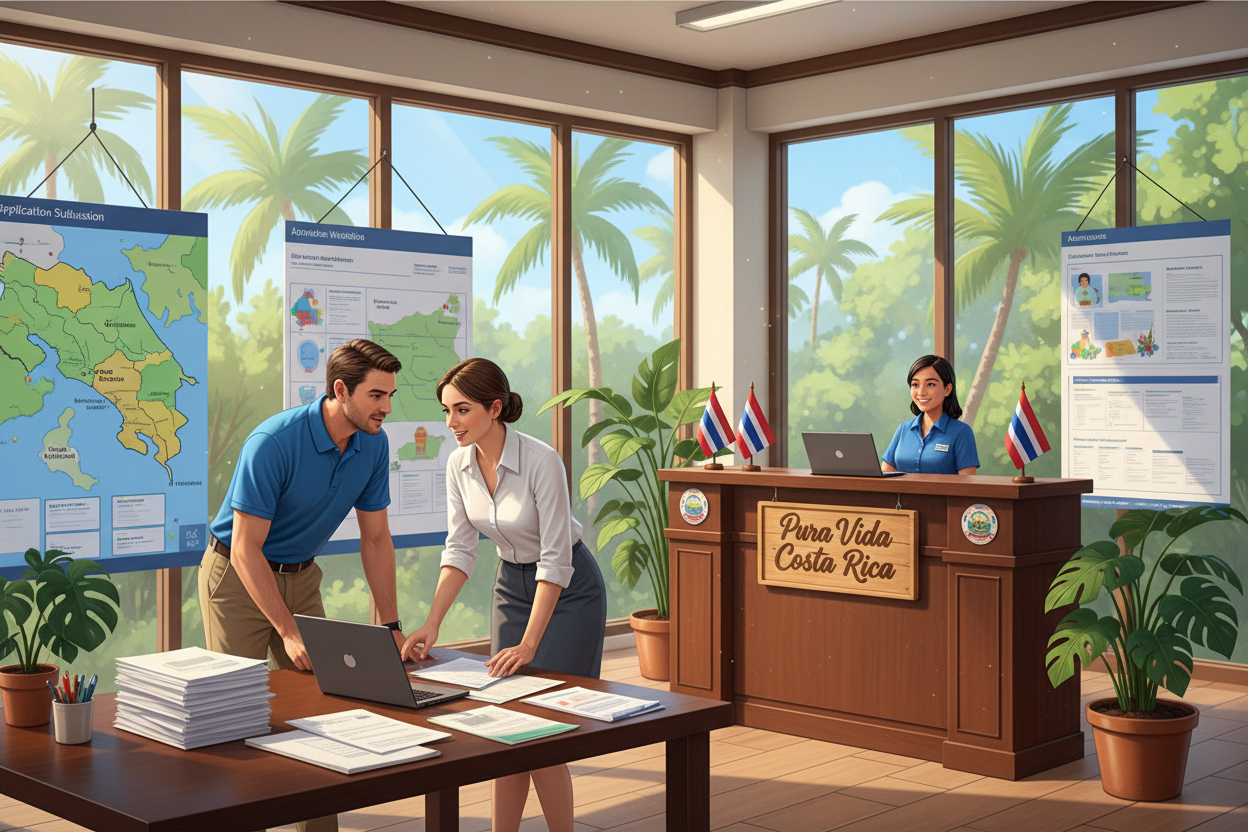
Many people dream of living and working in a beautiful, tropical nation. This Central American destination blends modern life with stunning nature. To access its job market legally, you must understand local immigration laws.
We are here to guide you through that legal process. This isn’t about quick fixes or guarantees. We provide clear, factual steps on who qualifies and what you need.
The system is managed by the Dirección General de Migración y Extranjería. Work authorization is tightly controlled. You must prepare documents like apostilles and translations long before you arrive.
There are no shortcuts for foreign nationals. We’ll help you navigate this complex path with realistic expectations and plain-language explanations.
Understanding Costa Rica Residency Options: Pensionado (Pensionado), Rentista (Rentista), and Inversionista (Inversionista)
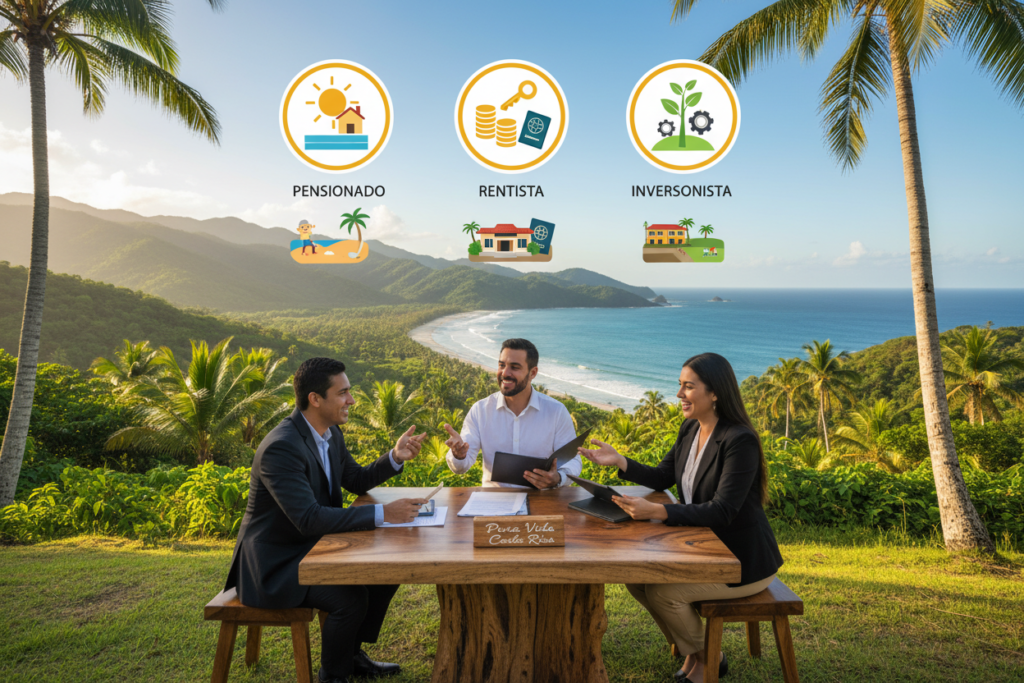
Three primary residency categories serve as gateways for long-term stays in this Central American nation. These are legal residence permits, not work authorizations. They establish your right to live there legally.
We’ll guide you through the Pensionado, Rentista, and Inversionista pathways. Each has strict financial requirements you must prove.
Eligibility Thresholds and Income Requirements
The Pensionado (Pensionado) category is for retirees. It requires a guaranteed pension income of at least US$1,000 per month.
The Rentista (Rentista) option needs proof of US$2,500 in stable monthly income. This must be guaranteed for two years from investments or savings.
Property Ownership and Investment Criteria
The Inversionista (Inversionista) route demands a minimum investment of US$150,000. This must be in local real estate or an approved business venture.
A critical rule: the asset must be in your personal name, not a corporate entity. These are temporary residence permits, valid for two years and renewable.
After maintaining this status for three consecutive years, you may apply for permanent residence. Remember, these categories do not grant automatic work rights.
Step-by-Step Guidance for Securing Residency in Costa Rica
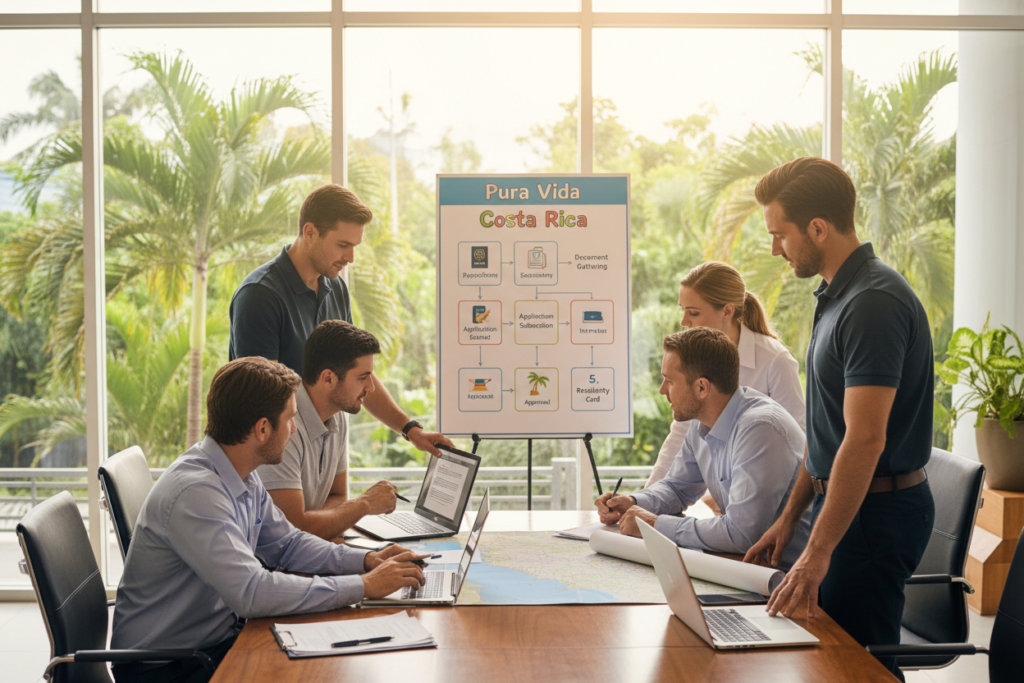
Your journey to establishing legal residence begins long before you set foot in the country. We’ll walk you through the sequential stages.
Who Qualifies and What to Expect
Eligibility hinges on your chosen category—Pensionado, Rentista, Inversionista, or a work-related permit. You must prove you meet all specific financial or professional criteria.
The authorities review every detail. Expect requests for additional information during the process. Timely responses are crucial to avoid delays.
Required Supporting Documents and Certifications
Gather your passport, birth certificate, and police clearance. Every document from abroad needs proper authentication.
This means obtaining apostilles and certified Spanish translations. Submit the complete file to the Dirección General de Migración y Extranjería.
Remember, requirements can change. Always verify the latest procedures at the official immigration website before applying.
Costa Rica Frontier Worker Permit: Who Qualifies and What to Expect
Securing authorization to work legally hinges on a formal job offer from a registered local company. This special category visa is for foreign nationals with skills not found in the local labor market. Your eligibility is directly tied to your employer’s willingness and ability to sponsor you.
Job Offer and Employer Responsibilities
The company hiring you must be registered with the nation’s Ministry of Labor. They carry the burden of proving your unique qualifications justify hiring a non-citizen. This involves submitting a detailed statement about the role, required skills, and salary.
A signed employment contract is mandatory. It must specify your exact duties, compensation, and work location. This authorization is location-specific and employer-specific. You cannot freely change jobs or relocate without new approval.
Processing typically takes one to two months after submission. Your sponsor is responsible for ongoing compliance with labor and immigration rules. We set realistic expectations: the bar for justifying a foreign hire is high. Specialized technical or executive roles are common prerequisites.
Your legal status depends on maintaining that employment relationship. If the job ends, your work permit may also terminate. This requires securing new sponsorship or departing.
Navigating Costa Rica Immigration Requirements and Avoiding Common Pitfalls
A successful application process hinges on understanding and avoiding frequent administrative errors. We see many hopeful applicants stumble over the same hurdles. These missteps can lead to months of delay or a denied request.
Mistakes to Avoid During the Application Process
One major error is confusing residency with work authorization. Owning property or proving income grants legal stay, not the right to a job. These are separate processes with different rules.
Documentation is another critical area. Every foreign document needs an apostille and a certified Spanish translation. Submitting originals in English causes immediate rejection.
The government prioritizes its own citizens for employment. Your sponsoring employer must prove no local candidate can fill your role. A weak justification will sink the application.
Timing mistakes are very common. People often start too late. Attempting to work while your permit is pending is illegal and risks your entire case.
Applying for the wrong visa category wastes time and money. Also, compliance does not stop at approval. Missing social security payments or changing jobs without authorization jeopardizes your status.
We don’t promise outcomes. The nation’s laws are detailed and strictly enforced. Our role is to provide the knowledge for a complete, compliant submission.
Preparing Your Documents Before Arrival in Costa Rica
We see many cases fail not due to eligibility, but because of incomplete or improperly processed paperwork. Your entire application hinges on the quality of your documentation. Begin this critical work in your home country, long before your travel date.
Apostilles, Translations, and Notarizations Essentials
You must navigate three key processes. Notarization certifies signatures and copies. An apostille is an international authentication for countries in the Hague Convention. If your country isn’t a member, consular legalization is required.
Every single foreign document needs a certified Spanish translation. This includes your birth certificate, police record, and marriage certificate. Translators themselves often need official certification.
The essential checklist includes a valid passport, birth certificate, police clearance, and proof of financial means. Start gathering these records at least three to six months ahead. Rushing leads to costly errors and delays.
Complete your file before you arrive. Attempting to obtain documents remotely after moving creates unnecessary complications. Proper preparation is your strongest asset.
Timelines and Key Steps for a Smooth Immigration Process
Understanding the timeline for legal status is crucial for effective planning. We provide realistic expectations because processing durations vary widely.
Tracking Milestones and Managing Waiting Periods
The process unfolds in distinct stages. Initial document gathering can take four to eight weeks. After submission, the official review period often spans two to six months.
For temporary residence visas, plan on three to six months. Special category work permits can take one to eight months. Permanent residence often requires six to twelve months or more.
We recommend building significant buffer time into your plans. Start the process at least six to nine months before your intended start date. For detailed guidance on navigating this, consult our step-by-step work visa guide.
Renew applications several months before your current authorization expires. There is no guaranteed fast track. Patience and complete documentation are your best tools.
Clarifying the Digital Nomad Misconception in Costa Rica
We must address a frequent point of confusion. The digital nomad visa is not a residency pathway. It is a temporary visitor category for remote professionals.
This special visa allows you to stay for up to one year, renewable once. You need proof of stable monthly income from outside the country. Health insurance valid locally is also mandatory.
Exploring the Closest Residency Options for Remote Workers
What does this visa not do? It does not grant residency status. Time spent on it does not count toward permanent residence or citizenship.
You also cannot take local employment. For remote workers seeking a genuine long-term path, actual residency categories are necessary.
The Rentista option is the closest fit. It requires proof of guaranteed passive income. You must show US$2,500 per month for two years.
Alternatively, the Inversionista category involves a significant investment in local assets. Another route is establishing a local business entity to employ yourself.
Choosing the right path from the start prevents costly mistakes. It ensures your time contributes to your long-term goals in this beautiful nation.
The Importance of Starting from Home with Complete Documentation
The single greatest predictor of a smooth process is having a fully authenticated, translated dossier in hand upon landing. Attempting to gather papers remotely after you relocate creates cascading delays and logistical nightmares.
You must coordinate with authorities in your home country from thousands of miles away. This often complicates obtaining apostilles and police clearances.
Essential Checklists and Personalized Guidance
Your pre-departure checklist is non-negotiable. It includes a valid passport, certified birth certificate, recent police clearance, and proof of financial means.
Every foreign document requires a certified Spanish translation for legal purposes. For work authorization, add a detailed employer letter and proof of the company’s registration.
We specialize exclusively in this nation’s residency and immigration landscape. Our focus allows for deep, current expertise in these complex details.
For personalized advice on your situation, contact us directly: WhatsApp +506 8706 3888 or email info@crie.cr. We provide transparent information about requirements and processes.
Always verify the latest details at the official immigration website for the most current information.
Final Reflections on Embracing the Costa Rican Immigration Journey
Navigating immigration systems requires a blend of thorough preparation and adaptive patience. The process to live and work in Costa Rica is indeed complex. Yet, it is entirely navigable with the right approach.
This Central American country offers a stunning natural environment and a high quality of life. The effort to secure legal residence is often worthwhile for committed individuals.
Remember, the journey from a temporary permit to permanent status can span years. The nation rightly prioritizes its own citizens for work, setting a high bar for foreign authorization.
Success hinges on three key actions: starting early with complete documents, choosing the correct visa category, and maintaining full compliance. Immigration rules can and do change.
We at CRIE provide exclusive, current expertise on these processes. We offer factual guidance to help you make informed decisions.
Ready to move forward? Contact us for personalized support: WhatsApp +506 8706 3888 or email info@crie.cr.
FAQ
What are the main residency options for foreigners moving to Costa Rica?
The primary pathways are Pensionado (for retirees with a stable pension), Rentista (for those with guaranteed income), and Inversionista (for significant investors). Each category has specific financial thresholds and requirements for monthly income or capital investment that must be proven to immigration authorities.
What is the Frontier Worker Permit and who qualifies for it?
This is a special work authorization for individuals employed by a company based in another country but performing their duties remotely from within Costa Rica. It’s designed for foreign workers who are not taking a job from a local citizen. Qualification hinges on a valid employment contract with the foreign entity and meeting specific income requirements set by the government.
What is the most common mistake people make during the application process?
The most frequent error is submitting incomplete or incorrectly prepared documentation. This includes failing to obtain the proper apostilles, official translations, or notarizations on required papers like birth certificates and police records. These oversights can cause significant delays or a denial of your temporary residence application.
How long does the residency process typically take from start to finish?
A> You should plan for a process that spans several months. After submitting your complete dossier to immigration, there is a substantial waiting period for review and approval. Managing expectations and tracking key milestones, like document submission dates and follow-up requirements, is crucial for a smooth experience.
I work remotely for a US company. Do I need a Digital Nomad Visa?
A> Costa Rica does not currently offer a specific “Digital Nomad Visa.” However, remote workers often find that the Rentista residency category, which requires proof of stable foreign-sourced income, is the closest and most appropriate legal option for establishing long-term temporary residence while working for an employer abroad.
Why is it important to prepare documents before arriving in the country?
A> Beginning the document gathering and authentication process from your home country is essential because obtaining apostilles and certified translations can take weeks. Having a complete, perfectly prepared dossier ready upon arrival allows you to file your application immediately, avoiding costly extended stays as a tourist while you sort out paperwork.
Article by Glenn Tellier (Founder of CRIE and Grupo Gap)
Don't wait, contact us right now!
Call or WhatsApp Costa Rica +506 8373 2085 or +506 8706 3888
Call USA/Canada +1 305-906-6784