
Sports professionals and creative individuals from across the globe are drawn to this Central American nation. Many seek to establish a new creative base or build a long-term life within its vibrant communities.
This guide focuses on legal immigration pathways. We discuss established routes that lead to permanent status, not temporary retreats or short-term programs.
We act as your experienced guide through this process. Our role is to provide factual information and realistic timelines without making promises.
There is no separate “artist visa.” Creative professionals typically pursue standard categories like Pensionado, Rentista, or Inversionista.
Securing legal residency opens significant possibilities. It allows for long-term living, access to public services, and forms a foundation for future citizenship.
A successful application starts with preparation from your home country. Proper documentation gathered early greatly improves your chances.
Understanding Costa Rica Residency Options
We begin by clarifying a fundamental point: the system does not have special visas for performers or sports figures. Creative professionals pursue the same established immigration categories as other foreign nationals.
Overview of Available Categories
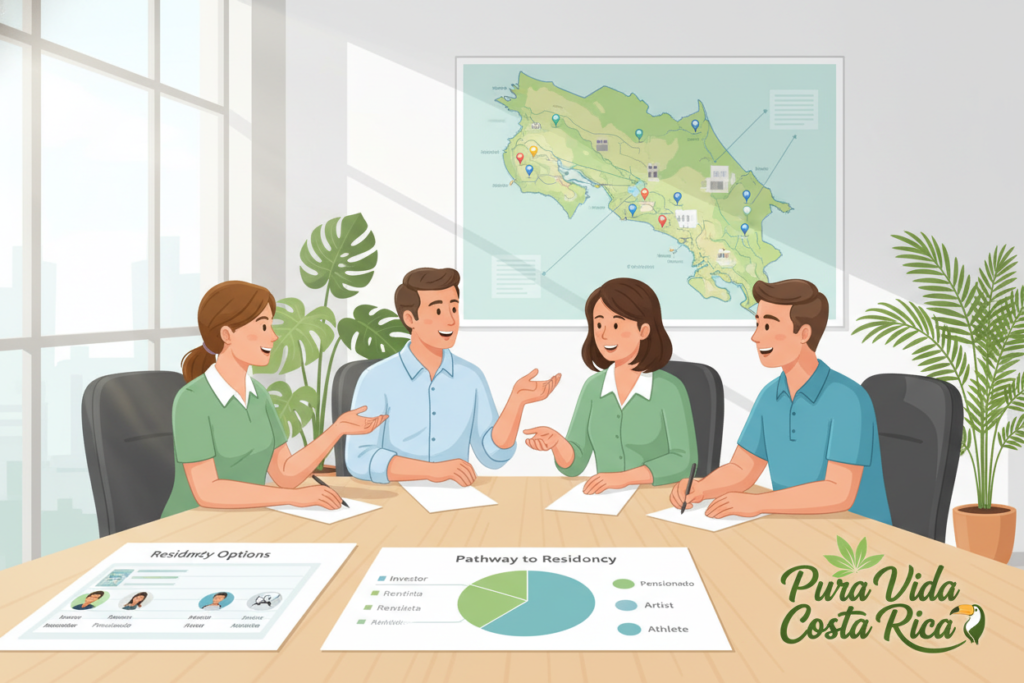
The three primary pathways are Pensionado (Pensionado), Rentista (Rentista), and Inversionista (Investor). Each has clear financial thresholds.
Pensionado requires a guaranteed pension of at least US$1,000 monthly. Rentista needs verifiable income of US$2,500 per month for two years. The Investor category demands a minimum US$150,000 investment in the country.
A critical distinction must be made. Temporary stays or a Digital Nomad program do not constitute legal residency. They do not count toward the time needed for permanent status or future citizenship.
For those attracted to a digital nomad lifestyle, the Rentista category is often the closest fit. It accepts diverse income like royalties or licensing fees.
All these pathways lead to the same outcome: temporary residency. This status can later become permanent, providing a stable foundation for your long-term plans.
Step-by-Step Guidance for the Application Process

The journey to securing your legal status involves a methodical application process that starts long before you arrive. We guide you through each phase to build a strong case from the outset.
Who Qualifies and How to Begin
First, identify which category aligns with your finances. Do you have a pension, stable monthly income, or capital to invest? This initial assessment is crucial.
For creative professionals, the Rentista route often works. Consistent income from galleries, licensing, or teaching can meet the requirement. Athletes may qualify through sponsorships or coaching contracts.
The entire procedure begins in your home country. Gather financial proof like bank statements and contracts. Also, obtain police background checks from places you’ve lived.
These steps take time. We always advise verifying the latest rules at the official migracion.go.cr website. This ensures your preparation matches current requirements.
Qualifying as an Athlete or Artist for Residency
The key to qualifying lies not in your portfolio or trophies, but in your ability to meet standard income or investment thresholds. There is no separate category for performers or sports figures. The system evaluates financial stability, not creative merit or athletic fame.
Eligibility Requirements and Considerations
Immigration officials assess demonstrable, consistent income or capital. For an artist with fluctuating project-based earnings, this presents a challenge. Proving the required monthly amount for the Rentista category can be difficult with sporadic sales.
Athletes may find a better fit if they receive a pension from a league. Others might qualify through structured coaching or endorsement contracts. The core requirement is verifiable financial documentation.
The existing community of creative professionals often finds practical solutions. These include teaching roles, licensing royalties, or property investments. Your professional work can provide the pathway if the income is structured properly.
While your career doesn’t create special immigration opportunities, the revenue it generates absolutely can. Proper documentation transforms your professional experience into a successful application.
Pensionado (Pensionado), Rentista (Rentista), and Investor (Inversionista) Criteria Details
The financial requirements for Pensionado, Rentista, and Inversionista categories form the foundation of eligibility. Each has precise monetary thresholds that cannot be negotiated.
Income and Investment Thresholds
For Pensionado (Pensionado), you need a guaranteed lifetime pension of at least US$1,000 monthly. This must come from a formal government or private pension plan.
The Rentista (Rentista) category requires proof of US$2,500 in stable monthly income for two years. This totals US$60,000 and can come from various legal sources.
Inversionista (Investor) demands a minimum US$150,000 investment in qualifying assets. If using real estate, the property title must be in your personal name, not a corporation.
Specific Documentation Requirements
Pensionado applicants must provide an official pension award letter and recent payment statements. The provider must confirm the lifetime payment status.
Rentista documentation is more complex. You need 24 months of bank statements showing consistent deposits. Letters from income sources explaining the payments are also required.
For the Investor program, you’ll need property appraisals and registered title documents. Business formation papers and bank records showing the investment transfer are essential.
All government application fees are set by immigration authorities. We provide guidance services through this documentation process. Contact us at info@crie.cr for specific assistance.
Preparing Your Documentation Before Arrival
The most critical phase of your journey starts not upon arrival, but long before you book your flight. Attempting to gather required papers remotely after moving creates severe delays. It often forces costly return trips to your home country.
Apostilles, Translations, and Other Essentials
Key documents like birth certificates and police checks need an apostille. This is a special certification for international use under the Hague Convention. The apostille process varies by country and can take several weeks.
After apostille, everything must be translated into Spanish by a certified translator. Our support staff provides specific document lists and can connect you with qualified translators. For detailed guidance on these steps, explore our additional services.
Do not underestimate the physical space and time needed. Background checks often require in-person steps. Starting this foundation early is the single best way to ensure a smooth application process.
Timelines and Key Milestones in the Application Journey
Understanding the expected duration of your application is crucial for planning your move. We provide realistic timeline expectations based on our extensive experience. These are informed estimates, not guarantees, as processing times vary with application volume and documentation completeness.
Estimated Processing Times
The document preparation phase typically takes 2 to 6 months. This period covers obtaining apostilled police checks and gathering financial records. U.S. FBI background checks alone can average 12 to 14 weeks.
Once you submit the complete file, an initial review for completeness usually takes 2 to 4 weeks. The primary processing and investigation period follows. Historically, this stage takes 6 to 12 months, but it can vary widely from one year to the next.
Many applications receive a request for additional information. Responding promptly within the given timeframe prevents delays. After approval, the final step of cédula issuance typically requires 3 to 6 weeks.
The total realistic timeline from start to finish often spans 12 to 24 months. You can stay in the country on tourist status during this process, renewing every 90 days. Maintaining legal status each day is essential, though it does not guarantee faster processing.
Common Mistakes to Avoid When Applying
A smooth application journey often hinges on avoiding a few critical missteps we see repeatedly. These errors can add months to your timeline.
Issues with Documentation Preparation
Submitting incomplete or improperly authenticated paperwork is the top cause of delay. A frequent error is getting an apostille from the wrong authority.
For example, a U.S. FBI check needs a federal apostille, not a state one. Using expired background checks is another pitfall.
These documents are typically valid for only six months. Overlooking the Spanish translation requirement is also common. This adds unexpected weeks to the process.
Overlooking Critical Requirements
For investor applications, buying property through a local corporation invalidates the investment. This is a critical error when purchasing a studio or other spaces.
Rentista applicants often think showing a lump sum is enough. Officials require proof of 24 consistent monthly deposits.
Perhaps the biggest mistake is beginning the process after arrival. This often forces expensive trips back home to get documents in person.
Costa Rica Residency for Athletes and Artists
A common point of confusion we encounter stems directly from the term “artist residency” itself. It has two completely different meanings, and mixing them up leads to major misunderstandings about legal status.
Artist residency programs are temporary creative retreats. They provide studio space and accommodation for weeks or months. These cultural exchanges have nothing to do with immigration law.
Legal residency is the immigration status that allows long-term living. It counts toward permanent status and future citizenship. This is what we help clients navigate at CRIE.
Many discover the country through a creative program. They fall in love with the community and lifestyle. Their next step is often pursuing actual immigration residency to stay.
No amount of participation in these cultural programs grants legal status. You remain a tourist during that time. It does not count toward residency time requirements.
The artists and athletes who become legal residents do so by meeting standard financial criteria. They qualify under Pensionado, Rentista, or Inversionista categories. Their creative work does not create a special visa path.
Access to a vibrant arts community and inspiring space is available to all. Only legal residency provides the foundation for building a permanent life here.
Starting from Home: Organizing Your Application Documents
Organizing your documents from your current location is the most practical first step. This approach prevents delays that often occur when trying to gather papers remotely. We see this as the foundation of every successful case.
Gathering Essential Paperwork
All immigration categories require certain universal documents. These include your valid passport, apostilled birth certificate, and police background checks. Marriage or divorce papers also need proper authentication if applicable.
Category-specific requirements vary significantly. Pensionado needs official pension verification letters. Rentista requires 24 months of bank statements showing consistent deposits.
Inversionista applicants must provide property titles and investment records. Our staff can provide detailed checklists for your specific situation. However, you must personally access and obtain these original documents.
Verification at migracion.go.cr
We strongly recommend checking the official immigration website before starting. Requirements can change, and this source has final authority. Our guidance reflects current standards, but regulations do evolve.
Your dedicated folder—both physical and digital—forms the core of your application. Track apostille dates to prevent expiration during processing. Consider this organizational work as essential preparation for your journey.
Our team provides support in reviewing paperwork for completeness. We help creative professionals navigate these requirements every day. Contact us for assistance with your specific immigration goals.
Additional Considerations for Residency and Citizenship
We often hear from clients planning long-term lives here. They inquire about eventual citizenship. This is certainly achievable, but it requires completing several legal steps first.
Residency Steps Before Pursuing Citizenship
The progression follows a defined sequence. It begins with temporary legal status under categories like Pensionado. This initial approval is typically granted for two years.
You must renew it and maintain your qualifying financial conditions. After maintaining this status for three to seven years, you become eligible for permanent residency.
Permanent standing grants indefinite living rights. It also removes the requirement to prove ongoing income or investment. This is a significant milestone.
Eligibility for naturalization comes later. Those with permanent status can apply for citizenship after five to seven years. The total timeline often spans 8 to 12 years from the start.
Practical life arrangements matter during these years. You’ll need to secure accommodations, whether renting or buying a house. Family planning is another key consideration.
Children born in the country automatically receive citizenship. This is a notable benefit for those starting a family. No special fast-tracks exist for cultural contributors.
Living as a legal resident offers substantial benefits. These include the right to stay indefinitely, access to public healthcare, and the ability to work. Many find these benefits sufficient without pursuing citizenship.
Final Thoughts on Navigating Your Costa Rica Residency Journey
Looking back, those who succeed often credit thorough preparation and realistic expectations. This path is entirely achievable for creative professionals. It requires meeting financial criteria and careful documentation.
Your unique experience as an artist brings valuable perspective to the local community. Legal residency unlocks opportunities to establish a studio or teaching space. It provides a firm foundation for your long-term work.
The process demands patience with bureaucratic timelines. Our team at CRIE offers professional support as your guide. We help you navigate each step with clear-eyed honesty.
Begin by verifying your financial qualification. Gather documents like police checks from your home country. Always check the official immigration website for current rules.
Contact us for a personalized assessment. Reach our team via WhatsApp at +506 8706 3888 or email info@crie.cr. We provide honest guidance for your journey ahead.
FAQ
What makes an athlete or artist eligible for residency here?
Eligibility hinges on proving a stable, external income or making a qualifying investment. For athletes, this often means documented income from sponsorships or competitions. For artists, it can be income from sales, commissions, or grants. The key is providing official, apostilled proof that meets the financial thresholds set by immigration authorities.
What are the most common documentation errors in the application process?
The most frequent mistakes involve outdated paperwork and improper authentication. Documents like birth certificates and police records must be recent (typically issued within the last six months), fully apostilled, and translated by an official translator in Costa Rica. Overlooking these specific requirements is a primary reason for delays or rejections.
How long does the entire residency process typically take?
A>From submitting a complete application to receiving your temporary *cédula* (ID card), you should plan for a timeline of 6 to 9 months. This period includes the initial filing, possible requests for additional information from immigration, and final approval. We always advise starting your document preparation well in advance of your planned move.
Can I work locally once I obtain this type of residency?
The Pensionado, Rentista, and Inversionista categories are designed for individuals with passive income or investments, not for seeking local employment. Your status grants you the right to live in the country, but to work for a Costa Rican company or client, you would need to secure a separate work permit, which is a different process entirely.
Is it necessary to use a lawyer or service for the application?
While not legally mandatory, the process is administratively complex and conducted entirely in Spanish. A single error can set you back months. We strongly recommend engaging a reputable legal service specializing in immigration. They navigate the system daily, ensure your dossier is flawless, and can significantly reduce stress and processing time.
Do I need to live in Costa Rica full-time to maintain my residency?
For the first few years, you must make a physical entry into Costa Rica at least once every 12 months to keep your temporary residency valid. After you renew and obtain permanent status, the requirement changes to entering the country at least once every two years. It’s a common misconception that you must live here full-time from day one.
Article by Glenn Tellier (Founder of CRIE and Grupo Gap)
Don't wait, contact us right now!
Call or WhatsApp Costa Rica +506 8373 2085 or +506 8706 3888
Call USA/Canada +1 305-906-6784