
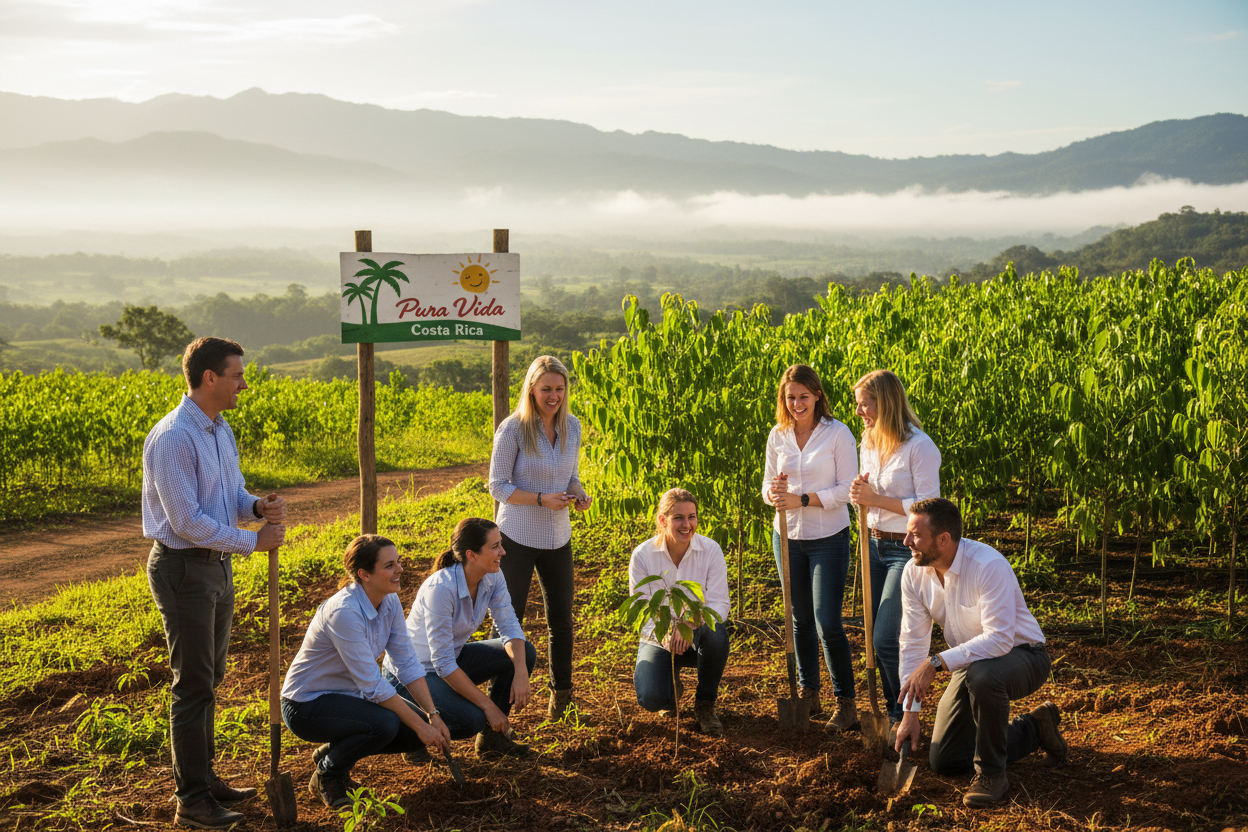
We guide you through a unique pathway within the country’s official Inversionista program. This option combines a financial commitment with a meaningful contribution to conservation goals.
The minimum required commitment is $150,000. This capital must be directed into a government-certified forestry project. Proper certification by the environment ministry (MINAE) is mandatory for the visa application.
A critical rule is that the qualifying asset must be held in your personal name. Using a corporate structure generally does not meet the immigration requirements. We provide clear, step-by-step guidance on this and all compliance points.
This leads to temporary status, renewable every few years. It can transition to permanent residency and, eventually, citizenship. We encourage you to always verify details with the official migration authority for the latest information.
Our role is to offer transparent, vetted information—not promises. Starting document preparation early from your home country is essential for a smooth process. We are here as your trusted partner for this journey.
Overview of Costa Rica Residency and Reforestation Projects (Residencia y Reforestación)
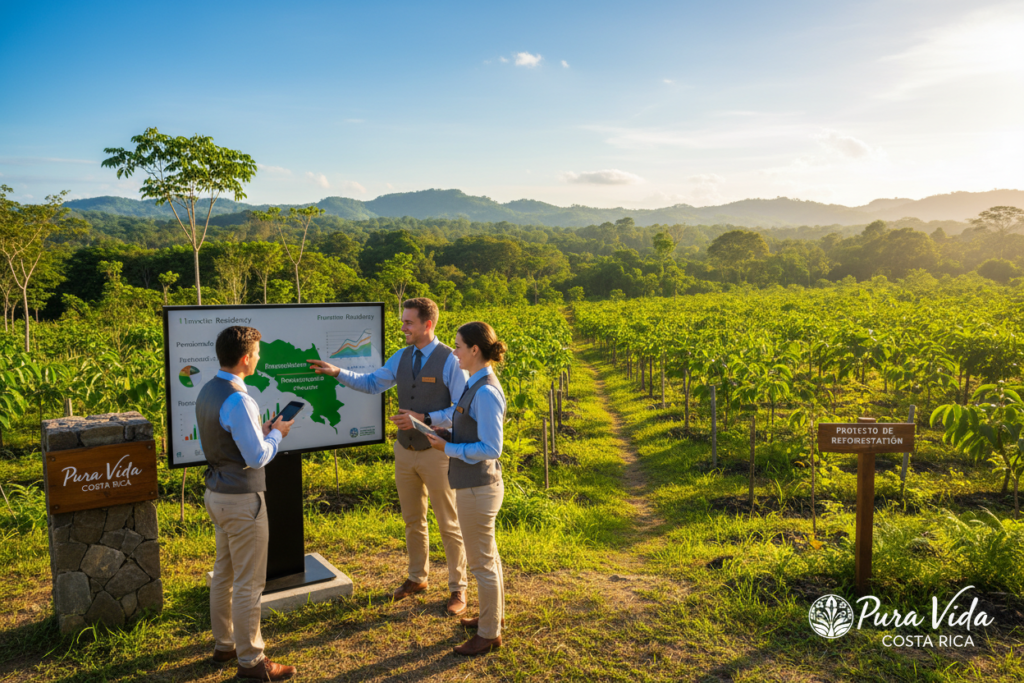
Understanding the broader landscape of legal status options is crucial. Costa Rica’s Residencia y Reforestación (Residency through Reforestation) represents a distinct, eco-focused investment route. It is a specialized pathway within the official Inversionista, or investor, category.
This differs from other common routes like Pensionado for retirees or Rentista for those with stable income. An investment in Costa Rica of at least $150,000 into a certified forestry project qualifies you for this program.
A critical point of clarification is necessary. Digital Nomad permits are not residency visas. They do not count toward permanent status or citizenship. For a genuine pathway to long-term legal status, the Inversionista or Rentista categories are the appropriate options.
The practical benefits of this residency are significant. The country operates on a territorial tax system, meaning foreign-sourced income is not taxed. There is also no minimum stay requirement during the temporary phase, and you can include your spouse and dependent children.
We strongly emphasize starting your document preparation from your home country. This includes apostilles, translations, and background checks. Proper documentation forms the foundation for a successful application.
Always verify the latest program details at the official migration authority website, migracion.go.cr. For personalized, step-by-step support, you can contact the Costa Rican Institute of Experts (CRIE) at crie.cr.
Eligibility and Qualification Criteria for Residency

Determining your eligibility requires a close look at the three main residency categories and their requirements. The financial thresholds and documentation needs differ for each pathway.
Investment Thresholds and Income Requirements
Costa Rica offers three primary routes. The Pensionado category requires a guaranteed pension of at least US$1,000 per month.
The Rentista category needs proof of US$2,500 in stable monthly income for two years. The Inversionista, or investor, pathway has a minimum investment of US$150,000.
For the investor route, qualifying assets like real estate must be held in the applicant’s personal name. Corporate ownership typically does not meet the requirements.
Family and Dependent Eligibility
The rules for including family are generous. A principal applicant can include a spouse, dependent children under 25, and dependent parents over 60.
All dependents are included under the same application. No separate financial commitment is needed for them.
Other key requirements for the principal applicant include being at least 18 years old. You must provide clean criminal records and a medical certificate.
Meeting these criteria is the first step. Accurate document preparation is equally critical for approval.
Step-by-Step Process for Your Residency Application
A successful visa submission hinges on thorough preparation long before you set foot in the country. We outline the clear sequence from initial consultation to receiving your official ID card.
Preparing Key Documentation Before Arrival
Start assembling your paperwork from home. Essential items include your passport, birth certificate, and police clearances.
Each document must carry an apostille and a certified Spanish translation. This upfront work prevents major delays later in the process.
Timelines and Application Milestones
After submission, authorities conduct due diligence for one to three months. Following preliminary approval, you execute your qualified investment.
In-principle approval leads to an oath ceremony. You then receive your cédula, which grants temporary residency for three years.
The entire application process typically takes three to six months. Timelines depend on document completeness and processing volume.
Always verify the latest requirements at migracion.go.cr. For hands-on support at each milestone, contact CRIE via WhatsApp at +506 8706 3888 or info@crie.cr.
Essential Requirements for Reforestation Investments
A government stamp of approval is non-negotiable for any forestry investment seeking to qualify. The process is governed by specific Costa Rican law and environmental standards.
Certification and Environmental Compliance
All projects require formal certification from MINAE under Forestry Law No. 7575. This confirms the initiative meets the nation’s strict sustainability benchmarks.
Approved species include teak, melina, or native hardwoods. The land must have proper permits and a management plan for a 10 to 15-year cycle.
Proof of a qualifying investment in Costa Rica is key. You must show a $150,000 transfer, purchase contracts, and land registry entries in your name. This verifies the capital for an investor.
Recent 2025 guidelines strengthen eco-certification needs. The country now offers 10% tax rebates on qualifying forestry and sustainable real estate projects.
A critical rule: the asset must be in your personal name, not a business or trust. Always verify current procedures at migracion.go.cr and MINAE’s official site.
Guidelines to Maintain Compliance and Avoid Common Pitfalls
The most significant delays in securing legal status often stem from preventable errors in paperwork and structure. We help you sidestep these issues through careful planning.
Mistakes to Avoid in the Application Process
A critical error is holding your qualifying asset in a corporate name. For the visa, the property or project must be registered under your personal ownership.
Structures set up for business or liability reasons typically do not qualify. Restructuring later causes costly delays. Also, a mortgage can be used, but your personal cash contribution must meet the full $150,000 minimum.
Tips for Accurate Document Preparation
All personal documents need an apostille, not just a notary seal. They also require translation by a certified Spanish translator.
Police and medical certificates must be issued within six months of your submission. Prepare your financial proof meticulously. Show clear bank trails for the investment funds.
We provide guidance to help you comply, but we cannot guarantee outcomes. Always verify the latest rules at the official migration authority website, migracion.go.cr.
Investment Options and Their Specific Requirements
Your $150,000 commitment can be directed into various certified assets, each with its own rules. The capital must stay invested and be held in your personal name for the visa’s duration. Corporate ownership typically does not qualify.
Real estate is the most popular choice, handling about 70% of applications. You must purchase residential or commercial property valued at a minimum of $150,000. Assets in tourism zones can offer 4-6% annual rental yields plus appreciation.
An active business investment requires injecting $150,000 of equity into a local company. This must create at least two permanent jobs for nationals. A detailed business plan showing economic viability is mandatory.
For a more liquid option, consider stocks or securities. A $150,000 portfolio in nationally listed instruments qualifies. This route offers easier exit strategies and typically yields 3-5%.
Other pathways include venture capital funds and sustainable tourism projects. All investments require proper registration with the relevant authorities. We can help you select the optimal path for your goals.
Preparing Your Documents for a Smooth Transition
The foundation of a successful transition to legal status lies in meticulous document preparation. This process is best started from your home country, 3 to 6 months before your planned move.
Required Apostilles and Translation Processes
All foreign-issued documents require an apostille under the Hague Convention. This includes birth certificates and police clearance reports.
After apostille, any document not in Spanish needs a certified translation. Using a non-certified translator is a common mistake that causes rejection.
Ensuring Compliance with Official Guidelines
Police and medical certificates are only valid for six months from issuance. Your financial proof must show a clear 6-12 month history of the investment funds.
Your passport must be valid for six months beyond your entry date. Provide copies of all stamped pages.
We stress verifying every current requirement at the official migration authority website, migracion.go.cr. Starting early is the key to smooth processing.
The Role of CRIE and Official Costa Rican Resources
Navigating the complexities of immigration procedures requires reliable support and authoritative information. This is where dedicated resources like CRIE (crie.cr) and the official migration website become invaluable.
How CRIE Supports Your Residency Journey
CRIE acts as your expert partner for the entire process. We provide initial eligibility assessments, detailed document checklists, and guidance on apostilles and translations.
Our team liaises with Costa Rican authorities like the DGME. We help manage timelines and respond to information requests. It’s crucial to understand we offer guidance, not guarantees. Final decisions rest solely with immigration officials.
Using Official Info from migracion.go.cr
Always verify every requirement at the official General Directorate of Migration website, migracion.go.cr. This site provides the latest forms, fee schedules, and policy updates.
Rules change, and official sources offer the most accurate information. CRIE’s value lies in translating these complex official rules into clear, actionable steps for you.
For a personalized assessment of your options, contact us directly. Reach CRIE via WhatsApp at +506 8706 3888 or email info@crie.cr.
Costa Rica Investor Residency Through Reforestation
For those seeking both a tangible asset and a positive ecological impact, investing in certified forestry projects presents a compelling option. This route requires a minimum of $150,000 placed into government-approved tree plantations.
The capital must go into MINAE-certified initiatives, typically involving teak or native species. A critical rule is that the asset must be held in your personal name, not through a company.
This investment grants temporary legal status, renewable every few years. There is no minimum stay requirement during this phase. After three years, you can apply for permanent residency.
Following seven years of continuous residence, naturalization becomes possible. This includes language and culture tests. Dual citizenship is permitted.
Financially, these projects offer 5-7% returns upon harvest after 10-15 years. Potential carbon credit revenue adds upside. Recent 2025 guidelines include 10% tax rebates for qualifying forestry investments.
This pathway suits individuals with longer time horizons who value sustainable development. It aligns with the nation’s environmental ethos.
We provide guidance on identifying certified projects and managing paperwork. Always verify current MINAE rules at migracion.go.cr. For personalized support, uncover Costa Rica citizenship by investment with our experts.
Final Insights for a Successful Residency Journey
A successful outcome is built on meticulous preparation, patience, and a realistic grasp of the steps ahead. The full pathway spans years, beginning with temporary status. After three years, you can apply for permanent residence.
Your spouse and children are included from the start. Following seven total years, naturalization becomes an option, opening visa-free access to many countries.
This nation offers territorial taxation, meaning foreign income isn’t taxed. Over 10,000 individuals have secured status this way. We make no promises, as each case is unique.
Start gathering apostilled documents from home well in advance. Always verify the latest rules at the official migration website. For personalized guidance on your investment and visa journey, contact us via WhatsApp at +506 8706 3888 or email info@crie.cr.
FAQ
What is the minimum investment for the reforestation residency program?
The minimum investment is 0,000 USD. This capital must be directed into a government-approved reforestation project. We always advise confirming the latest figures with official sources, as requirements can change.
Can my family be included in my residency application?
Yes. Your spouse and dependent children under 25 can be included as dependents on your application. You’ll need to provide additional documentation, such as marriage and birth certificates with apostilles, to prove these relationships.
How long does the application process typically take?
A> From submission to approval, you should plan for a processing time of several months. The exact timeline depends on the completeness of your file and government processing queues. We help clients navigate this by ensuring their documentation is flawless from the start.
What are the most common mistakes applicants make?
The most frequent pitfalls involve incomplete or incorrectly legalized documents. Using expired forms, missing apostilles, or providing unofficial translations can cause significant delays. Another common error is not maintaining the investment for the required duration before applying for permanent status.
Do I need to live in the country full-time to maintain this residency?
No, this visa category does not impose strict physical presence requirements. You must enter the country at least once per year to maintain your status. This makes it a flexible option for global citizens.
What role does CRIE play in the process?
The Costa Rican Investment and Trade Promotion Agency (CRIE) is a key official resource. They help validate foreign direct investment and can provide guidance on qualifying projects. We work within their framework to ensure your investment meets all regulatory standards.
Can this investment path lead to a second passport?
Residency is the first step. After maintaining your temporary residency for several years, you may become eligible to apply for citizenship and a passport. This process involves additional requirements, including a language and culture test.
What happens if my reforestation project fails?
Your residency is tied to the compliance of the investment, not its commercial success. You must work with a certified forestry engineer to ensure the project meets all environmental management plans. We strongly recommend professional oversight to maintain compliance regardless of market conditions.
Article by Glenn Tellier (Founder of CRIE and Grupo Gap)
Don't wait, contact us right now!
Call or WhatsApp Costa Rica +506 8373 2085 or +506 8706 3888
Call USA/Canada +1 305-906-6784