

Navigating immigration for your family can feel complex. We specialize exclusively in guiding parents who have a child that is a citizen of this Central American nation.
This guide provides clear, step-by-step information on family-based residency. We set realistic expectations—no promises or guarantees—about timelines and outcomes. You’ll learn who qualifies under Costa Rican immigration law and what documents to prepare before you arrive.
Starting from home with your paperwork ready is the most critical step. Rushing to move without apostilled birth certificates or background checks creates delays. We’ll help you understand the process, common pitfalls, and how to begin your journey toward building a life in Costa Rica. A good first step is a professional residency assessment.
Understanding the Eligibility Criteria and Family Requirements
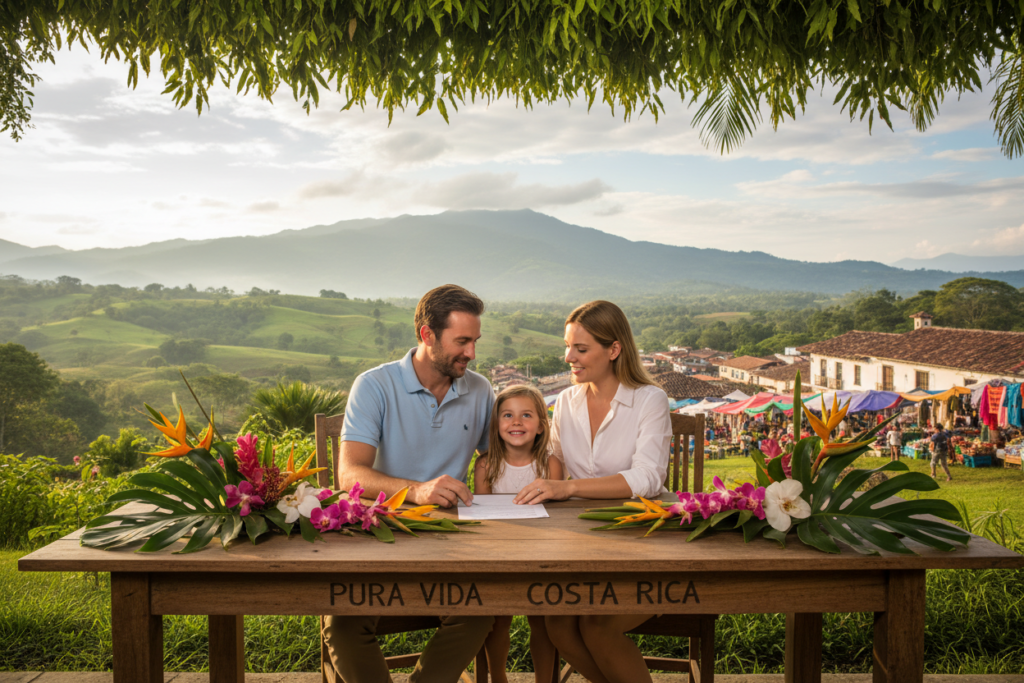
Determining if you qualify involves understanding both your family ties and financial standing. We clarify the key rules so you can assess your situation accurately.
Who Qualifies and Family Member Inclusion
Under local law, a legal parent of a Costa Rican child may apply. The law defines dependents broadly.
This includes your legal spouse—same-sex marriages are recognized with proper documents. Children under 18 are automatic dependents.
Adult children up to age 25 can be included if enrolled in studies. Parents and siblings may qualify in special cases of economic dependence.
Thresholds and Income Requirements (Pensionado, Rentista, Inversionista)
Many applicants use financial categories. The Pensionado category requires a guaranteed pension of at least US$1,000 monthly.
The Rentista status demands proof of US$2,500 in unearned income each month for two years. This equals a total of $60,000 shown in a bank.
The Inversionista option needs a minimum investment of US$150,000. Any property must be in your personal name, not a company.
Temporary residency is granted first. After three years, you can apply for permanent residency.
Preparing Your Documents: Apostilles and Translations
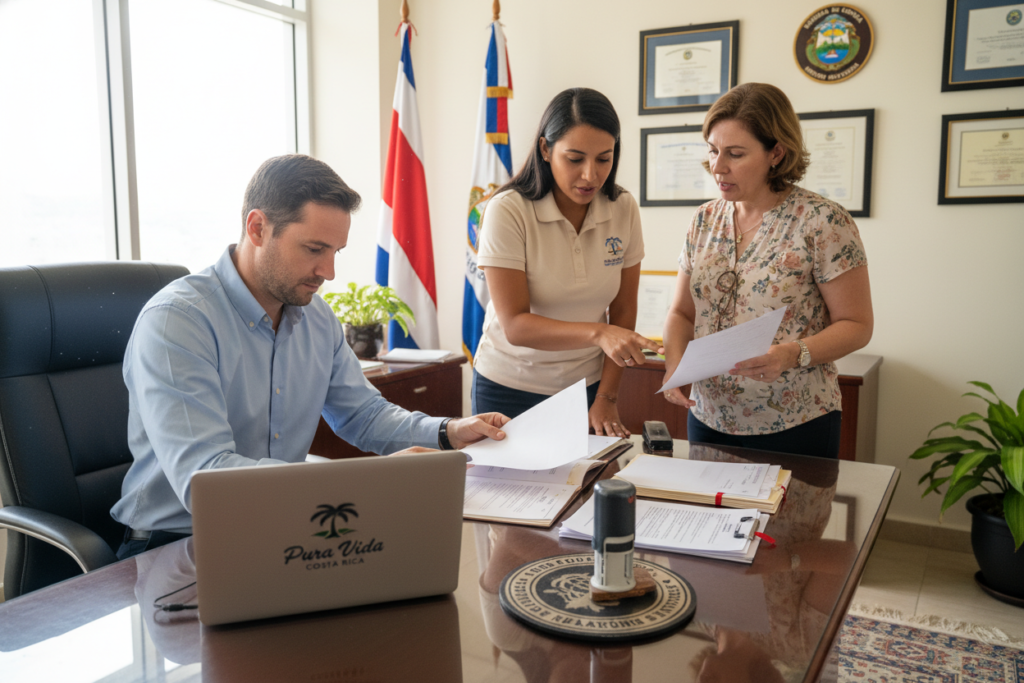
Gathering and authenticating your paperwork is the most critical phase before you even set foot in the country. This documentation process can determine the success of your entire application. We emphasize starting this work from your current home to avoid costly delays.
Essential Documentation to Gather Before Arrival
You will need several key certificates. These include birth records to prove your family link and marriage documents if applying with a spouse.
U.S. criminal history reports are also mandatory. Every foreign document must meet specific authentication standards for your residency case.
Steps for Obtaining Apostilles and Where to Get Translations
An apostille certifies a document’s origin for international use. You must get apostilles from the state or federal authority where each paper was issued.
For state-level certificates, visit www.nass.org to find your Secretary of State’s office. Federal documents, like FBI checks, go to the U.S. Department of State.
After apostilling, most papers need official Spanish translations. A certified translator in Costa Rica must complete this step. Plan for this to add weeks to your timeline.
Handling this for the first time feels complex. Creating a checklist and starting early is the best strategy for a smooth process.
Step-by-Step Guidance for the Application Process
One often-overlooked requirement for U.S. citizens is the consular inscription process with their embassy. The entire application procedure has multiple stages. Understanding this roadmap before you begin prevents costly mistakes.
Detailed Roadmap for Costa Rica Residency Applications
First, ensure all your documentation is apostilled and translated. Then, U.S. applicants must complete consular inscription.
Register your presence via the Smart Traveler Enrollment Program (STEP). Schedule a notarial appointment using the U.S. Citizens Services Navigator.
Bring a partially completed affidavit, valid ID, and $50 to that appointment. The notarized affidavit is then submitted to local immigration authorities.
Finally, submit your complete file to the Dirección General de Migración y Extranjería. We recommend using a qualified attorney to navigate this complex process.
Common Pitfalls and Mistakes to Avoid
A frequent error is submitting documents without proper apostilles. Another is using corporate property for an Inversionista application instead of personal ownership.
Many fail to prove continuous income for Rentista status. Underestimating the time needed for document gathering is also common.
Do not assume time on a tourist visa counts toward residency. It does not. For family-based cases, the birth certificate must clearly show the legal parent-child link.
Processing times vary widely. We cannot guarantee how long your application will take. Always verify current rules at migracion.go.cr.
Understanding Timelines and In-Country Requirements
The clock on your residency application starts long before any official approval. Planning your move and eventual life in Costa Rica requires a clear grasp of both processing durations and the obligations you accept once approved.
Overview of Processing Times and Temporary Residency Duration
Government processing times fluctuate widely. We cannot guarantee a specific timeline because volumes and capacities change. Your wait could be several months or over a year.
Once granted, temporary residency typically lasts one to two years before renewal. You must meet in-country presence rules to maintain it. For example, Rentista category residents must spend at least one day per year physically in Costa Rica.
After three consecutive years as a temporary resident, you become eligible to apply for permanent residency. This permanent residency offers greater stability and is a key step toward long-term goals in this country.
Costa Rica Residency for Parents of Costa Rican Children
This special immigration category is defined by familial bonds rather than financial benchmarks. It offers a legal pathway specifically for mothers and fathers whose child holds local citizenship.
Application Details for Family-Based Residency
The cornerstone of your application is proving the legal parent-child link. You must provide an official birth record for your son or daughter.
This document requires an apostille and a certified Spanish translation. The law under Article 137 allows for a Special Category status.
Each case receives individual review by immigration authorities. They assess factors like economic dependence or caregiving roles within your family structure.
Unlike the Pensionado or Rentista options, this route has no strict monthly income minimums. You must still demonstrate financial self-sufficiency.
For dual citizen children, remember specific travel rules apply. A Permiso de Salida is needed for those under 18 when exiting the country.
We set realistic expectations because outcomes depend on your unique documentation. Working with experienced guidance is valuable for navigating this personalized process.
Navigating Residency Options Beyond Digital Nomad Status
A common point of confusion for many remote workers is the legal distinction between living in Costa Rica and being a resident. We need to provide a crucial clarification.
Clarifying Digital Nomad vs. Residency Options
The Digital Nomad visa is a temporary visitor category. It does not grant you formal residency status in this country.
Time spent under this program does not count toward the years required for permanent resident status. This is a critical misconception.
If your goal is to truly become a resident of Costa Rica, you must pursue a formal option. The closest path for many is the Rentista category.
Only through approved categories can you eventually obtain residency and, after three years, apply for permanent residency. Starting the formal process early is the smartest approach for long-term plans.
Resources, Official Links, and Important Considerations
Official government sources provide the most reliable and up-to-date information for immigration matters. We strongly advise verifying all requirements directly with the authorities, as rules can change.
Consulting crie.cr and migracion.go.cr for the Latest Information
For the most current immigration law and procedures, visit the official government website at migracion.go.cr. For personalized guidance on your case, CRIE at crie.cr offers professional support.
If property ownership is part of your plan, understand local real estate law. Coastal land has strict public zone restrictions. The next 150 meters inland often requires a concession, not outright ownership.
For an Inversionista application, the property must be in your personal name. This is a critical legal detail. Also, be aware of squatter laws that can affect unused land.
For Pensionado applicants, U.S. Social Security income can qualify if it meets the $1,000 monthly threshold. You will need official documentation from the SSA.
Always consult with a qualified local attorney for property transactions and to understand your rights. The legal framework here is different, and professional advice is essential.
Next Steps and How to Get Started from Home
Taking the first step toward a new life abroad requires a methodical approach, starting right where you are. The most effective path begins at home with thorough document preparation.
First, determine which immigration option fits your family’s situation. Then, create a detailed checklist for every person included in your application.
Initiate the apostille process for vital records immediately, as this often causes delays. Be realistic about timelines—gathering paperwork can take months before the official review even starts.
We help applicants navigate this process with clear guidance. For a personalized assessment, contact us via WhatsApp at +506 8706 3888 or email info@crie.cr.
FAQ
What are the basic requirements to apply for residency as a parent of a Costa Rican child?
The primary requirement is proving your biological or legal relationship to your minor child who is a citizen. You’ll need to provide the child’s certified birth certificate, your own birth certificate, and a clean criminal background check from your home country. Financial solvency, typically through a stable monthly income, is also required to show you can support yourselves without local employment.
How long does the entire application process typically take?
A> You should plan for a multi-year journey. After submitting your complete dossier, receiving temporary residency approval can take 6 to 12 months. You must then maintain that temporary status for three consecutive years before you become eligible to apply for permanent residency. The entire timeline from start to final status often spans four years or more.
Do I need to get all my documents translated and apostilled?
Yes, this is a non-negotiable and critical step. Every foreign-issued document—like birth certificates and police reports—must have an apostille (or legalization) from the issuing country and a certified translation into Spanish by an official translator registered with the Costa Rican Colegio de Traductores. Missing this will cause immediate rejection of your file.
Can my spouse and other children be included on the same application?
Absolutely. The family-based option is designed for unity. Your spouse and other dependent minor children can be included as beneficiaries on your primary application. You will need to provide the same level of documentation—proof of relationship, birth certificates, and background checks—for each family member included in the process.
How is this family residency different from the Digital Nomad visa?
They serve fundamentally different purposes. The Digital Nomad visa is a short-term, non-resident permit for remote workers, valid for one or two years, and it does not lead to permanent status. The family-based residency for parents is a pathway to permanent residency and eventual citizenship. It requires more documentation but offers long-term stability and rights.
Where can I find the most current official information and forms?
Always rely on primary sources for the latest rules. The official immigration authority’s website, migracion.go.cr, is the definitive source for application forms and legal updates. For general information on living in the country, crie.cr is a helpful resource. Regulations can change, so verifying details directly with these official sites before applying is essential.
Article by Glenn Tellier (Founder of CRIE and Grupo Gap)
Don't wait, contact us right now!
Call or WhatsApp Costa Rica +506 8373 2085 or +506 8706 3888
Call USA/Canada +1 305-906-6784