
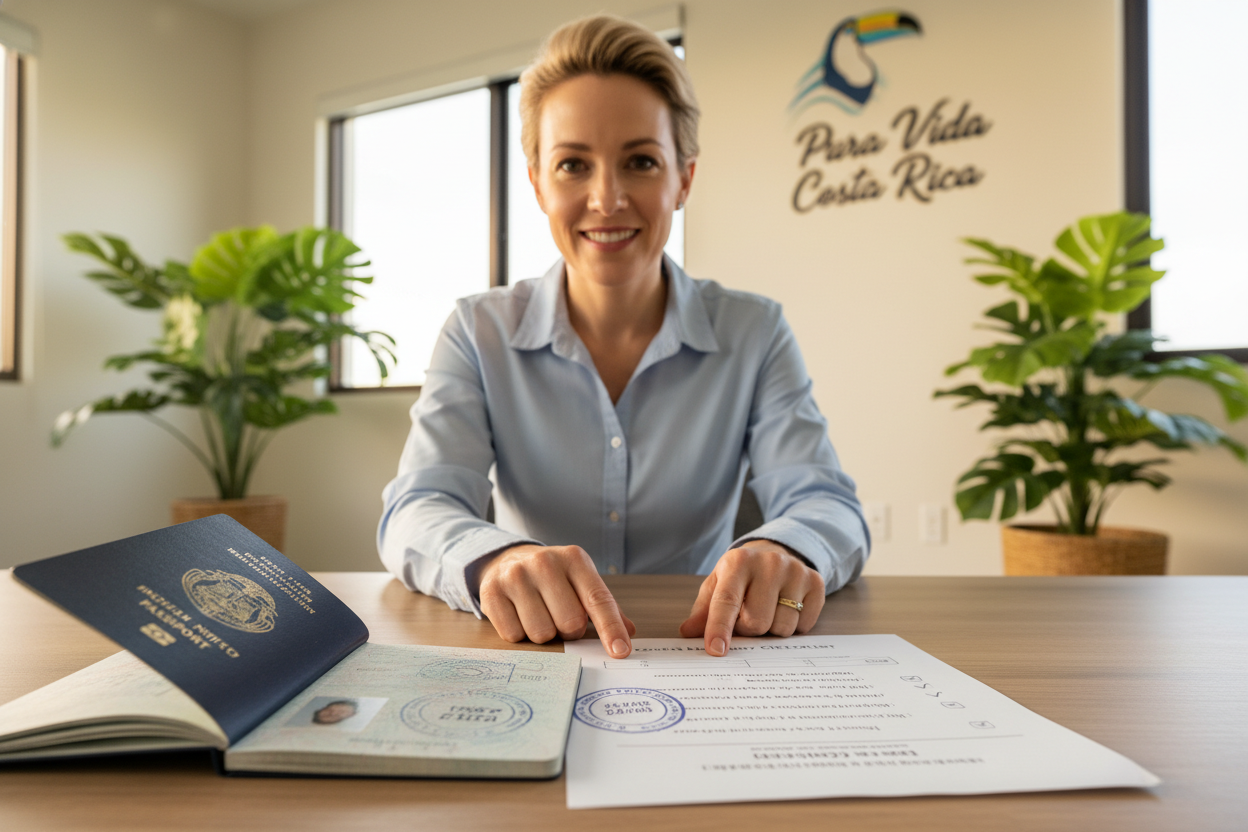
We guide individuals through establishing legal status in this beautiful nation. Over 70,000 Americans now call it home, with numbers growing each year.
Proper preparation is the key to success. Your foundational paperwork must be in perfect order before you begin the official process.
Different categories, like Pensionado or Inversionista, have specific standards for your identification papers. This includes special considerations for residency for spouses.
We provide clear, step-by-step guidance based on current regulations. Our approach is realistic—we build your application on verified procedures, not promises.
Let us be your trusted partner. We bridge the gap between complex rules and a successful outcome for your new life chapter.
Understanding Costa Rica Residency Categories (Categorías de Residencia)
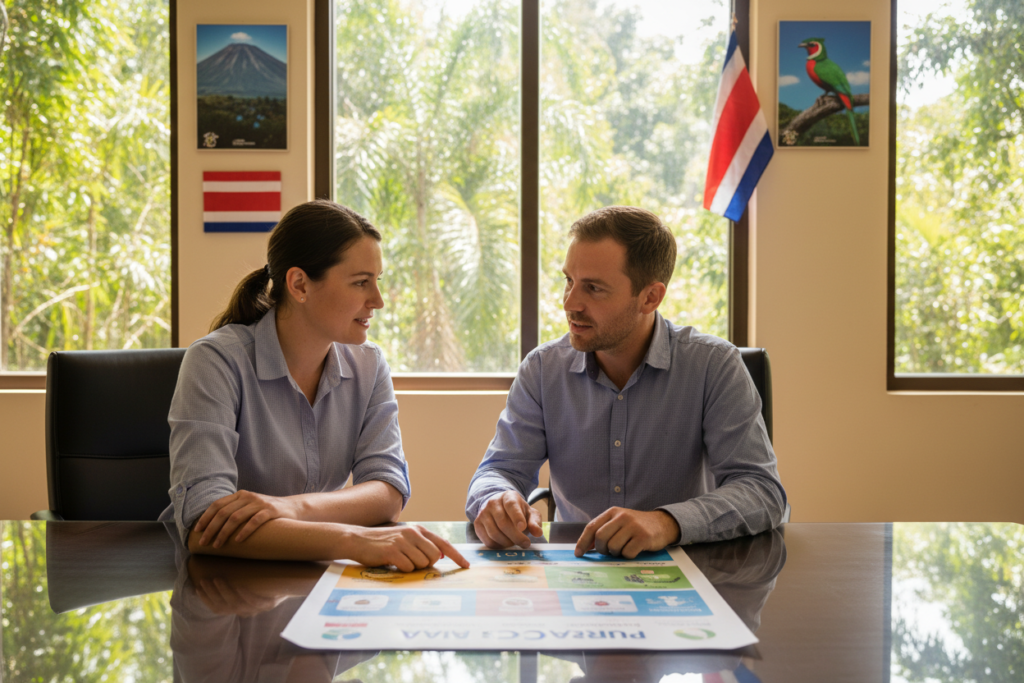
The first critical decision for a long-term future here involves understanding the distinct legal categories available. This nation offers several structured pathways, each with firm financial requirements.
Overview of Residency Options
Pensionado (Pensionado) is for retirees proving stable pension income. Rentista (Rentista) suits those with verified passive income. Inversionista (Inversionista) requires a significant capital investment in local assets.
Choosing the correct category from the start is essential. Each pathway serves a specific demographic and carries different obligations upon approval.
Digital Nomad vs. Traditional Residency Options
It is vital to clarify that the Digital Nomad visa is not a residency category. This visa allows temporary legal stay but provides no pathway to permanent status or citizenship.
We guide individuals considering this temporary option. For serious long-term plans, the Rentista or Inversionista programs are the relevant legal avenues to explore.
Costa Rica Residency Passport Copy Requirements
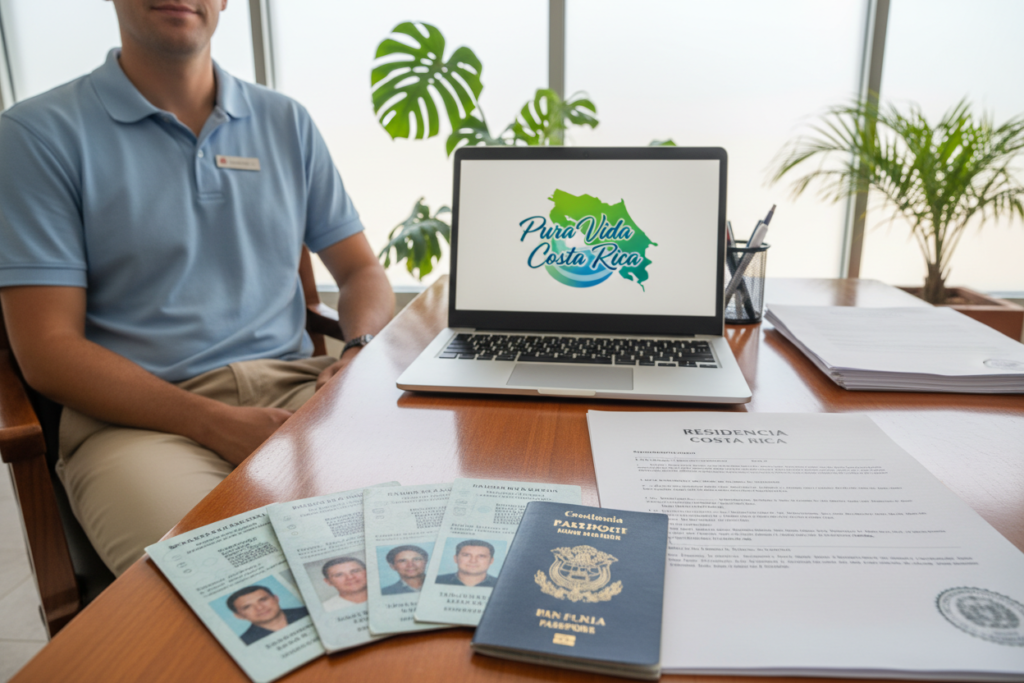
Navigating the documentation process begins with ensuring your travel document meets strict criteria. Every application requires a valid passport with at least six months of remaining validity. This is an absolute rule enforced at submission.
You’ll need to have this primary identification certified by a local notary public after you arrive. The notary confirms the copy matches your original. Your passport must also show a valid entry stamp, and you must apply within that authorized period.
Specific passport-sized photos with a white background are part of the documentation. Your birth certificate must be apostilled and show perfect name consistency with your passport for verification. Any discrepancy requires additional proof.
We emphasize maintaining your passport’s validity throughout the entire processing period. If it expires, you must update your file, which can cause significant delays. Careful preparation of this core document is your first proof of a serious application.
Step-by-Step Guidance for Your Application Process
We break down the multi-stage submission into manageable steps, starting from your home country. Proper preparation is your most powerful tool for a smooth journey.
This guide walks you through the complete residency process. We’ll clarify each phase from initial consular visits to final immigration office submission.
Provisional Visa and Consular Procedures
Your first official step may involve a visit to a local consulate. Some categories require obtaining provisional documentation before you travel.
We’ll help you determine if your chosen pathway needs this consular procedure. You’ll need to present specific paperwork and pay any required fees at this stage.
If your category allows direct application after arrival, you can skip this consular step. Always verify current rules on the official migracion.go.cr website.
Submission at Immigration and Follow-Up Steps
Once in the country, schedule your appointment with the Dirección General de Migración y Extranjería (DGME). Current wait times for appointments in San José are typically three to four weeks.
The submission process involves paying the application fee at Banco de Costa Rica. Then, present all your documents at the scheduled immigration appointment.
Officials will collect your biometric data—fingerprints and photographs. You’ll receive an expediente number to track your file’s status during the three to twelve month processing period.
During this wait, you have provisional approval to stay legally. If you must leave temporarily, you must obtain an exit permit from immigration authorities.
Critical Documents and Pre-Departure Preparations
Properly prepared identification and legal forms prevent costly delays and frustrating complications later. Your entire application rests on the paperwork you bring from home.
We provide a clear checklist. Obtaining these items after you arrive creates expensive problems and may force a return trip.
Documents to Apostille and Translate
Key records require apostille certification. This includes your birth certificate and any marriage or divorce papers.
Criminal background checks from every country you’ve lived in recently also need this seal. They are only valid for six months, so time your request carefully.
All non-Spanish paperwork must be translated locally. You’ll need to use an official translator within the country for acceptance.
Organizing Your Identification and Legal Forms
Name consistency across all your documentation is non-negotiable. Your passport name must match your birth certificate exactly.
Any discrepancy requires additional proof, like a marriage certificate. Authorities perform rigorous verification of seals and credentials.
Create a physical folder system before you travel. Make multiple copies and scan everything digitally for backup.
Verify every item is present and properly authenticated before you finalize your travel plans. This step is your best insurance for a smooth process.
Qualifying Thresholds for Pensionado (Pensionado), Rentista (Rentista), and Inversionista (Inversionista)
Meeting the monetary thresholds is the cornerstone of a successful application. Each legal category has specific financial requirements you must prove.
Income Requirements and Investment Criteria
The Pensionado option is for retirees. It requires proof of a permanent monthly income of at least US$1,000 from a pension, Social Security, or retirement fund. General investment income does not qualify.
The Rentista category suits younger individuals with passive income. You must prove stable monthly income of US$2,500 for two years. Alternatively, deposit US$60,000 in a local bank account.
The Inversionista pathway demands a minimum investment of US$150,000. This can be in real estate, an existing business, or approved projects. If using property, the title must be in your personal name.
Bank verification is critical for all categories. Authorities scrutinize six months of statements to confirm stable, consistent funds. Proper documentation—like pension letters or property appraisals—provides the necessary proof.
Avoiding Common Pitfalls and Mistakes
Many hopeful applicants encounter avoidable setbacks that can delay their dreams for months. We see these challenges arise from simple oversights and misunderstandings.
The most frequent error is beginning the application without every required paper in hand. This forces a frantic scramble to obtain documents from abroad mid-process.
Overlooked Documentation and Errors to Avoid
Expired criminal background checks are a major culprit. They are only valid for six months from issuance.
Missing apostille seals on vital records like birth certificates will halt progress. Name spelling must match perfectly across all your identification.
Income proof creates another hurdle. For the Pensionado category, only pension or Social Security income qualifies—not general investments.
The language barrier presents real challenges. Government forms and official communications are exclusively in Spanish.
Many are surprised by mandatory CAJA healthcare enrollment. It is required for all residency categories, except Digital Nomad visa holders.
Be wary of service providers making unrealistic promises. Claims of special connections or unusually fast approvals are red flags.
Working with experienced, reputable guidance is the most effective way to navigate this complex process successfully.
Timelines and Essential Pre-Arrival Steps
A successful application hinges on knowing both the pre-arrival steps and the waiting period. We provide realistic timeframes to help you plan effectively.
Current processing typically takes 8-12 months for Pensionado, 6-10 months for Rentista, and 4-8 months for Inversionista. These are estimates, not guarantees.
Preparing from Home with All Documents Ready
The most critical step begins before you travel. Your entire document package must be complete and authenticated.
Time your criminal background checks carefully, as they expire six months from issuance. All vital records require an apostille seal from your home country.
Managing Processing Delays and Expectations
After submission, you can stay legally with provisional approval. You must obtain an exit permit from immigration before any international travel.
Leaving without this permit results in automatic cancellation of your file. Government backlogs and verification requests can extend timelines.
This is a multi-year journey. Temporary status must be maintained for three years before qualifying for permanent residency.
Citizenship becomes possible after seven years, with additional language and civics requirements. For more on managing expectations, see our page on common questions.
Preparing for Your New Life in Costa Rica
Life after approval blends access to stunning landscapes with the responsibilities of maintaining your legal status. We help you navigate this exciting transition with clear eyes.
Embracing the Pura Vida Lifestyle
The famous “pura vida” philosophy is more than a slogan. It represents a cultural focus on gratitude, simplicity, and enjoying the present moment.
Your new status brings concrete advantages. You gain long-term stability, access to the national healthcare system, and the ability to manage local finances easily.
For retirees, the financial benefits are significant. The country generally taxes only income earned within its borders, leaving foreign pensions untouched.
Practical integration requires effort. Most categories restrict local employment, and learning basic Spanish greatly enriches daily life and community connections.
Final Thoughts on Starting Your Costa Rica Residency Journey
Your journey toward establishing a long-term life here culminates in the thoughtful steps you take today. This important life choice demands a truthful evaluation of your financial picture and long-term aims.
Success hinges on meticulous document preparation from your home nation. Selecting the correct legal category aligns your proven income with your personal objectives.
The process is a multi-year pathway. It moves from temporary to permanent status, requiring consistent attention to renewals and regulations.
We provide partnership, not empty promises. Our experienced guidance helps you navigate each phase with clarity, steering clear of common errors.
Ready to begin? Contact us for personalized support: WhatsApp +506 8706 3888 or email info@crie.cr.
FAQ
What are the main categories for establishing legal status in the country?
The primary pathways are Pensionado, Rentista, and Inversionista. The Pensionado category is for retirees with a guaranteed lifetime pension. Rentista is for individuals with a stable, passive monthly income. The Inversionista option requires a significant financial investment into the local economy, such as in real estate or a business.
Is a simple photocopy of my travel document sufficient for the application?
No, a standard photocopy is not adequate. You must provide a certified, notarized copy of the entire, valid passport. This includes every page, even blank ones. The notary public must stamp and sign each page to verify it’s a true replica of the original document.
Which personal records need an apostille and official translation?
Your birth certificate and, if applicable, marriage certificate absolutely require both an apostille from the issuing country and a translation into Spanish by an official translator accredited here. Police clearance certificates also follow this rule. We always advise starting this process early, as it can take weeks.
What are the current financial thresholds for the Rentista and Investor options?
For the Rentista visa, you must demonstrate a stable monthly income of at least ,500 from a source like investments or a trust. The Inversionista category requires a minimum investment of 0,000, which can be directed into approved projects, commercial ventures, or property. These amounts are set by immigration and are subject to change.
What is the most common mistake people make with their application paperwork?
The most frequent error is submitting documents that are either expired or not properly legalized. This includes passports with less than six months validity, police reports older than six months, or financial statements without recent stamps. Double-check every expiration date and ensure all foreign-issued papers have the correct apostille.
How long does the entire process typically take from start to finish?
Realistically, plan for a timeline of 6 to 12 months. The initial consular stage can take several weeks, and after submitting your file to the local immigration authority, processing often takes many months. We guide clients to prepare every single piece of documentation before arriving to prevent avoidable delays.
Can I open a local bank account during the application process?
Yes, and we strongly recommend it. Having an account with a financial institution here is crucial for several steps. You’ll need it to demonstrate the deposit of guaranteed funds for certain categories and to show proof of economic solvency. We help our clients navigate the specific documentation each bank requires.
Article by Glenn Tellier (Founder of CRIE and Grupo Gap)
Don't wait, contact us right now!
Call or WhatsApp Costa Rica +506 8373 2085 or +506 8706 3888
Call USA/Canada +1 305-906-6784