

Skilled technical professionals exploring a move abroad often face a unique puzzle. Their in-demand expertise opens doors, but traditional immigration pathways can seem misaligned. Over 70,000 U.S. citizens now live in nations known for stability and a high quality of life, attracted by modern infrastructure and affordable healthcare.
We created this guide to cut through the complexity. It provides a clear, step-by-step roadmap tailored specifically for skilled professionals. The key is meticulous preparation—getting every document ready from home before you arrive.
We offer realistic guidance, not guarantees. Final decisions always rest with the immigration authorities. You’ll need to navigate two interconnected systems: securing your legal status and obtaining proper work authorization.
This walkthrough covers eligibility, document preparation with apostilles and translations, application submission, and common pitfalls. Think of us as your experienced guide, translating complex rules into plain language. For personalized help, reach out via WhatsApp at +506 8706 3888 or email info@crie.cr.
Introduction to Costa Rica Residency for Technical Staff
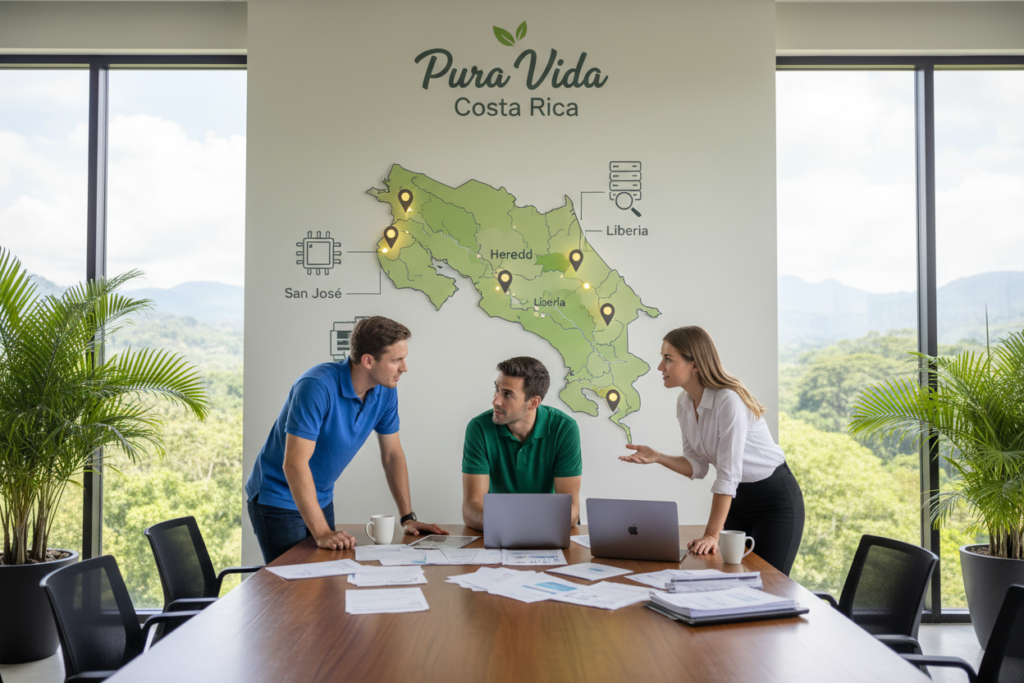
Professionals with specialized technical skills are increasingly looking to this stable democracy as a destination for both career and lifestyle. Engineers, IT experts, scientists, and research specialists represent a fast-growing segment seeking legal status here.
The nation’s system doesn’t feature a dedicated visa category for this professional group. Instead, individuals must qualify under general classifications like Pensionado or Rentista while often securing separate work authorization.
These are two distinct procedures with overlapping requirements. Your legal permission to live in the country and your right to employment here involve different applications and approvals.
Successful outcomes begin with preparation in your home nation long before arrival. Complete document gathering, apostille certification, and official Spanish translations form the essential foundation. This thorough approach applies equally to applications for dependent family members.
Local regulations prioritize hiring citizens, requiring employers to prove your specialized abilities aren’t readily available domestically. The entire procedure demands patience, with reviews typically taking several months to over a year.
The Dirección General de Migración (migracion.go.cr) manages all filings. We provide clear guidance on their current requirements—setting realistic expectations rather than promises.
We encourage every skilled professional to start this journey with complete, accurate documentation. Proper initial preparation significantly smooths the path forward.
Understanding Residency Categories (Pensionado, Rentista, Inversionista)

The country’s immigration system provides several routes based on financial means rather than profession. We’ll explain the three primary categories relevant for long-term status.
Explaining Pensionado (Pensionado) Requirements
The Pensionado category requires a guaranteed lifetime pension of at least US$1,000 per month. This income must come from government or private retirement sources.
This visa typically suits retirees rather than active working professionals.
Detailing Rentista (Rentista) and Investor (Inversionista) Thresholds
The Rentista category demands stable, unearned income of US$2,500 per month for 24 consecutive months. It cannot come from a salary.
The most common proof is a US$60,000 deposit in a long-term account. A bank agreement must commit to transferring US$2,500 monthly for two years.
For the Inversionista category, a minimum US$150,000 investment is required. Qualifying areas include real estate, tourism, or a local business.
A critical rule: any property investment must be in the applicant’s personal name, not a corporation.
Active technical staff without this passive income or capital may need to explore work permits. All financial thresholds are subject to change.
Always verify current requirements at the official immigration website before applying.
Who Qualifies for Costa Rica Residency for Technical Staff
Qualification pathways for skilled workers diverge sharply based on one critical factor: where your paycheck originates. You either plan to take a local job or you have sufficient passive income or remote work from abroad.
Eligibility Criteria for Technical Professionals
If a Costa Rican company wants to hire you, you’ll need both a temporary residence permit and a separate work permit. This is often processed under a “special category” visa.
The employer must prove your specialized skills are not readily available among local workers. This applies to technical specialists, academics, and professionals in certain international businesses.
If you won’t seek local employment—supported by investments or remote work for foreign clients—the Rentista category is likely your route. It requires proving stable external income.
Excluding Digital Nomads from Residency Options
We must clarify a common point of confusion. The Digital Nomad visa is not a form of legal residency. It’s a temporary authorization that does not count toward permanent status or citizenship.
For remote workers seeking an actual long-term pathway, the Rentista category is the closest match. You must demonstrate the required monthly income from unearned sources.
Carefully assess your situation. Local employment requires employer sponsorship. Independent income leads to a different application. The country’s laws prioritize its own citizens for jobs.
Step-by-Step Application Process Overview
Your journey to legal status officially begins with a digital handshake with the immigration authorities. We walk you through the complete sequence, from initial setup to final submission.
Creating Your Online Account with Costa Rican Immigration
The first critical step is creating your personal portal on the Dirección General de Migración website. You must have all your prepared documents ready before starting this.
This includes apostilled and translated paperwork. Rushing this foundational step is a common cause for delays.
Submission and Review of Applications at migracion.go.cr
Once your account is active, you will complete and upload the appropriate form. Accuracy here is non-negotiable.
After online acceptance, you’ll schedule an in-person biometrics appointment locally. You must also pay government fees and register with the public health system.
Set realistic expectations for time. The review process typically takes several months. We provide clear guidance, but final approval rests solely with the officials.
Preparing Your Documents Before Arrival
Before packing your bags, the most critical task is assembling and authenticating every required piece of paperwork. We cannot overstate this point. Successful applications begin at home, with complete documents prepared well before you arrive.
This preparation phase typically requires two to three months. Invest that time upfront to avoid the most common cause of delays.
Apostilles and Certified Translations Explained
An apostille is an official certification. It is issued by the Secretary of State in the U.S. state where your document originated. This stamp authenticates it for international use under the Hague Apostille Convention.
Every paper you submit must carry this stamp. After apostille certification, all documents require translation into Spanish.
You must use a certified translator recognized in Costa Rica. The translation must meet local legal standards.
Checklist of Required Documents
Your core personal documents include a valid passport and an official birth certificate. You also need an FBI background check. Each needs an apostille.
Proof of your qualifying status is next. For Pensionado, show pension award letters. Rentista applicants need notarized bank letters confirming funds.
Inversionista applicants must provide property deeds or business registration documents. For work permit seekers, your employer must supply a detailed job description and company proof.
Incomplete or improperly authenticated papers are the top cause of application delays. We strongly recommend creating a tracking spreadsheet for each document’s status.
Timelines and What to Expect During the Process
Patience becomes your most valuable asset when navigating the official processing phases. We believe in setting realistic expectations from the very start.
General Processing Timeframes and Milestones
The complete journey typically spans 6 to 18 months. Document preparation, including apostilles and translations, generally requires two to three months.
Once submitted, most residency applications take between 4 and 15 months for an initial decision. For those needing a work permit, this review can extend up to 8 months or longer.
Key milestones include application submission, document review, a biometrics appointment, and final notification. Your initial status is granted for two years.
After three consecutive years as a temporary resident, you become eligible to apply for permanent residency. This eliminates renewal requirements.
These are estimates. Individual cases may experience delays. Thorough preparation from the start is the best way to manage your time.
Common Mistakes to Avoid When Applying
After assisting numerous professionals, we’ve identified a clear pattern of oversights that complicate the immigration process. Learning from others’ errors can save you months of frustration.
Document Errors and Incomplete Submissions
The most frequent error in any Costa Rican residency application is submitting incomplete paperwork. Missing a single required document triggers automatic rejection. This restarts your entire processing timeline.
Many underestimate the apostille timeline for their documents. Begin this step at least three months before your planned submission. Using non-certified translators is another critical error.
Local immigration authorities require officially recognized, certified translations. Informal versions will be rejected outright, delaying your visa approval.
For Rentista applicants, confusion about “unearned income” is common. Salary or employment compensation does not qualify as proof. Only passive sources like investments meet the requirement.
Technical staff seeking work permits often provide insufficient employer documentation. Employers must prove specialized skills are unavailable locally for the specific position.
Some believe tourist visa “border runs” constitute a long-term strategy. This practice is discouraged by Costa Rican officials. Also, failing to register with the CCSS is a mandatory step in the process.
We emphasize double-checking every requirement at migracion.go.cr. Policies change, so verify current rules. Thoroughness and accuracy are your best tools for a smooth application.
Costa Rica Residency for Technical Staff: Detailed Guidance on Work Permits and Employment
We must clarify a critical point: holding a residency permit does not equate to having work authorization. These are two separate legal processes.
Clarifying the Role of Work Permits for Technical Staff
Only citizens or permanent residents can work without restrictions. All temporary residents need explicit permission.
For those needing local employment, a “special category” work permit is the primary route. This requires sponsorship from a Costa Rican company.
The employer bears a heavy burden of proof. They must demonstrate your unique skills are unavailable locally.
This justification must be specific and documented. Generic claims about technical expertise will not suffice.
The permit is tied to that specific job and employer. Changing positions requires restarting the entire application.
These permits are typically granted for one year and must be renewed annually. Processing can take eight months or more.
For remote workers with foreign clients, the Rentista category may be more suitable. It requires proving stable external income instead.
Key Considerations for U.S. Citizens Relocating to Costa Rica
Over 70,000 Americans have already established their lives in Costa Rica, drawn by its stability and quality of life. However, U.S. citizenship grants no special immigration privileges. You can visit for 90 days on a tourist visa, but this status does not allow work or count toward residency.
All applicants follow the same procedures and meet the same financial thresholds. One specific step for U.S. citizens is obtaining an FBI background check and state apostilles. We advise starting this early, as processing times vary.
Upon approval, you receive a DIMEX card. This is your official ID for healthcare, banking, and other services. You must also enroll in the public health system, known as CAJA. Many U.S. citizens add private insurance for more provider options.
Maintaining your U.S. citizenship is perfectly allowed. Your temporary status requires renewing your card every two years. After three years, you can apply for permanent residency. This process demands patience and thorough preparation, with no shortcuts.
Final Thoughts on Your Journey to Residency
Your path to establishing a long-term life abroad hinges on meticulous preparation and realistic expectations. For technical staff, securing legal residency in Costa Rica is a detailed process that takes months to over a year, but it is absolutely achievable.
Success starts at home with complete documents. Your route depends on your situation—either a local work permit or Rentista status. Always verify the latest requirements at migracion.go.cr, as we cannot guarantee outcomes.
The reward is building a life in a stable, welcoming country. After three years of temporary status, you can apply for permanent residency. For personalized guidance, contact us via WhatsApp at +506 8706 3888 or email info@crie.cr.
FAQ
What is the main residency category for a technical professional moving for a job?
The primary path is through a work permit sponsored by your local employer. This permit is tied to your specific job and company. After maintaining legal status for several years, you can then apply for permanent residency, which is separate from the initial work authorization.
Can I apply for residency as a digital nomad or remote worker?
No, the digital nomad visa is a separate, temporary permit designed for remote employees and entrepreneurs serving clients outside the country. It does not lead directly to permanent residency. For technical staff employed by a Costa Rican company, the work permit route is the correct procedure.
What are the most common document errors that delay applications?
The most frequent issues involve documents from abroad. Every foreign-issued document, like your birth certificate or police record, must have an apostille (or equivalent authentication) and a certified translation into Spanish by an official translator in Costa Rica. Incomplete or improperly prepared paperwork is the leading cause of delays.
How long does the entire process typically take from start to finish?
A> Timelines can vary, but you should generally anticipate a process lasting several months. Initial work permit approval, document legalization, and submission to immigration all take time. We always advise starting the document preparation well before your planned move to streamline your application.
Does getting a work permit mean I automatically become a resident?
No, these are two distinct processes. A work permit grants you legal permission to be employed in the country. Gaining formal residency status, which offers more permanent rights, is a subsequent application that typically requires you to have lived in Costa Rica legally under a permit like this for a required period, often three years.
What key financial steps should U.S. citizens take before relocating?
We strongly recommend consulting with a cross-border tax specialist to understand your reporting obligations. Additionally, plan your banking and proof of income strategy early. You’ll need to demonstrate financial stability, and setting up local banking for your salary deposits from your Costa Rican employer is a crucial practical step.
Article by Glenn Tellier (Founder of CRIE and Grupo Gap)
Don't wait, contact us right now!
Call or WhatsApp Costa Rica +506 8373 2085 or +506 8706 3888
Call USA/Canada +1 305-906-6784