
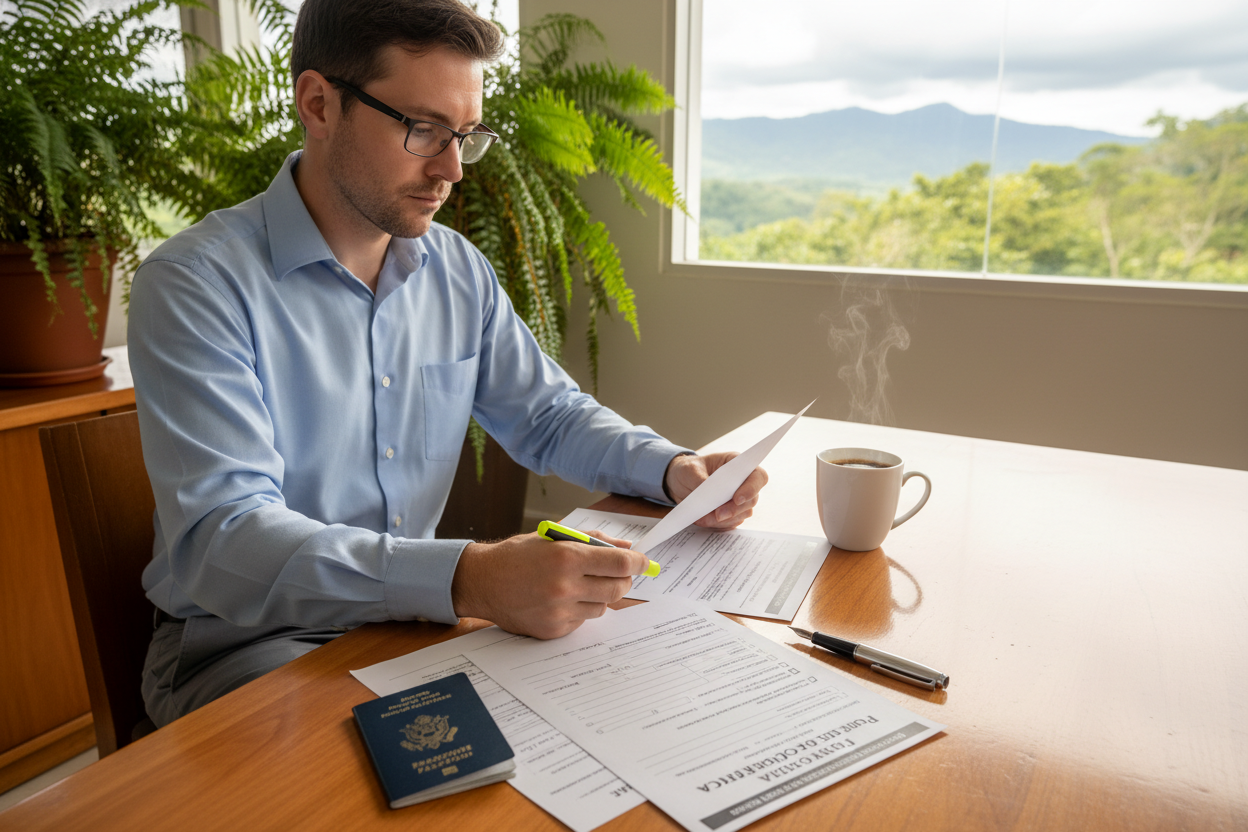
Navigating the immigration process to live in this beautiful country requires clear guidance. We provide a complete, transparent roadmap for your paperwork. Our step-by-step approach helps you understand exactly what is needed from the start.
This guide covers the three main application categories. These are Pensionado for retirees, Rentista for those with stable income, and Investor for significant capital commitment. Each has specific financial thresholds you must meet.
It’s important to know that Digital Nomad status is not a residency category. It does not lead to permanent status or citizenship. If you seek actual long-term residency, we can guide you to the appropriate option.
Starting your document preparation from your home country is critical. Papers often need to be apostilled and officially translated into Spanish. Beginning early prevents costly delays and frustration. For those applying with a partner, understanding the requirements for residency for spouses is also a key part of the process.
Exploring Residency Options in Costa Rica

We break down the three principal legal categories that grant long-term living rights based on your economic profile. Each pathway has clear financial thresholds and rules. Understanding which one fits your situation is the crucial first step.
Pensionado (Pensionado) Requirements
This category is for retirees with a stable pension. You must prove a lifetime income of at least US$1,000 per month from sources like Social Security. You cannot work as an employee but can own a local company.
Rentista (Rentista) Income Thresholds
The Rentista option requires proof of a guaranteed US$2,500 monthly income for two years. Alternatively, a single US$60,000 deposit in a national bank qualifies a whole family. This is a fixed-income path, not tied to employment.
Investor (Inversionista) Investment Criteria
This path demands a minimum US$150,000 investment in real estate or a business venture. A key rule: any property purchase must be in your personal name, not a corporate entity. Always verify the latest figures at migracion.go.cr.
Step-by-Step Guidance for Your Residency Application
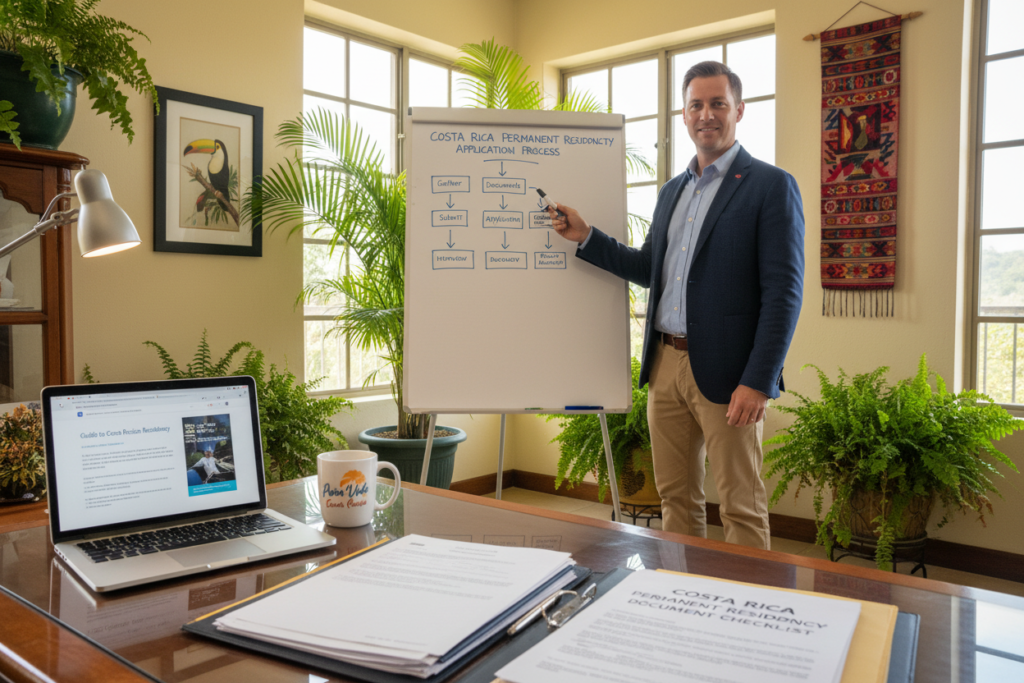
Your journey to obtaining legal status hinges on precise preparation and adherence to deadlines. We outline the key stages to help you move forward confidently.
Who Qualifies for Costa Rican Residency?
Eligibility is primarily financial. Applicants must meet minimum income, pension, or investment thresholds for their chosen category.
Beyond the numbers, you must prove this income is stable and verifiable. Authorities need assurance it will continue throughout your stay.
Critical Documents to Prepare Before Arrival
Begin collecting paperwork from your home country. Essential items include your apostilled birth certificate and federal criminal record.
If married, your marriage certificate also requires an apostille. Each foreign document must have an official Spanish translation.
You also need a police certificate of good conduct from your last place of residency. This is valid for only six months and is required for the applicant, spouse, and children aged 15 to 25.
Remember, your entire application must be submitted within the validity of your tourist entry stamp. Starting the process early from your home nation is non-negotiable.
Costa Rica Permanent Residency Document Checklist
The key to a smooth application lies in understanding two distinct phases of document preparation. We organize the essential paperwork into international documents and local requirements.
International Documentation: Apostilles and Official Translations
Start with your valid passport, apostilled birth certificate, and a police background check. This check is valid for six months and needed for applicants and family members aged 15 to 25.
If married, include your apostilled marriage certificate. Each foreign paper must have an apostille stamp. In the U.S., this means notarization followed by Secretary of State authentication.
All papers must be officially translated into Spanish by a certified translator. Casual versions are not accepted by immigration authorities.
Local Requirements: Photos, Fingerprints, and Consular Registration
Once in the country, you’ll handle several in-person steps. These include passport-size photos, fingerprint registration appointments, and consular registration forms.
You may also need a special power of attorney for legal representation. These tasks cannot be done remotely, so plan for an extended visit.
Always verify the latest list at migracion.go.cr before finalizing your paperwork. Policies can change.
Tips for Efficient Document Preparation
Proactive planning and verification are your best tools for navigating the required steps. We recommend a methodical approach to manage the paperwork.
Organizing Your Checklist and Timeline
Build a detailed checklist working backward from your planned arrival. Some papers, like police background checks, are only valid for six months.
Obtaining them too early means you might need a new one. Sequence matters: get slow items first, then apostilles and official translations.
This order prevents costly re-dos. The entire application process often takes 9 to 11 months for approval.
Verifying Requirements at migracion.go.cr
Always check the official immigration website for current rules. Requirements and thresholds can change without notice.
Building your list from this source ensures your proof and required documents are sufficient. Many applicants use a local lawyer for this complex process.
Professional guidance helps avoid errors that restart the long timeline.
Understanding the Application Process and Timelines
Once your dossier is filed, a clear understanding of what happens next helps manage expectations effectively. The pathway from submission to final decision involves several administrative stages.
Step-by-Step Processing from Submission to Approval
You submit your complete application to the DGME, the national immigration authority. This can be done in person or through a qualified legal representative.
The review typically takes 9 to 11 months, depending on complexity and backlog. Upon approval, you will receive your official DIMEX card.
This is your legal identity document in the country. You must also enroll in the CCSS public healthcare system and pay monthly dues.
Staying Legally in Costa Rica During the Review Period
A common question is whether you can remain in the country during processing. The answer is yes. You can stay legally without needing to make border runs.
Temporary status can convert to permanent after three years. This milestone removes income verification and expands work rights.
All categories require you to visit at least once per year to maintain status. Your DIMEX card must be renewed every two years with government fees.
Common Mistakes and How to Avoid Them
We frequently see well-qualified candidates face unnecessary hurdles because of preventable document errors. Learning what typically goes wrong can save you months of delay and frustration.
Document Errors and Missteps to Watch For
Timing is everything with official papers. A police background check or certificate is only valid for six months from its issue date.
If you obtain it too early, you’ll need a new one before submitting your application. Plan your timeline carefully to avoid repeating this step.
All foreign documents require proper notarization and an apostille. A critical detail often missed is that your signature should not appear in the notarization itself.
Only the certifying authority’s signature and seal belong there. Incorrect formatting leads to immediate rejection by immigration officials.
Never assume informal translations are sufficient. Every paper must have an official Spanish translation from a certified translator.
Submitting documents without this is a top reason applications are returned. Verify this requirement directly with your legal representative.
For the Investor category, your investment must serve as direct proof. A common error is having the property held in a corporate name.
The investment must be in your personal name to qualify. This structural issue can derail an entire application.
Finally, understand what does not lead to long-term status. Relying on border runs or a Digital Nomad visa will not grant you residency in Costa Rica.
If your goal is to stay permanently, you must pursue a formal category from the very beginning.
Starting Your Residency Process from Home
The foundation of a successful application is built long before you set foot in your new home. We cannot stress this enough—beginning your paperwork from your country of origin is the most critical step for a smooth immigration journey.
Preparing Your Documents in Advance
Essential papers must be gathered from your home nation. These include your valid passport, apostilled birth certificate, and federal criminal record.
If applicable, your marriage certificate also requires an apostille. Income verification letters should be obtained too, though U.S. Social Security pension confirmation can be done at the embassy later.
All foreign documents need official Spanish translation. Starting this process 3-4 months before arrival accommodates government processing times.
This timeline ensures your police certificate remains valid. It has a strict six-month window for submission.
Beginning from home allows you to navigate familiar systems. You avoid the complexity of sourcing papers remotely after relocating.
Compliance and Official Requirements for a Smooth Application
The work doesn’t end with approval—ongoing compliance with official rules is essential to protect your long-term status. Understanding these continuous obligations from the start prevents surprises later.
Ensuring All Foreign Documents Are Properly Apostilled
Every foreign paper you submit must have an apostille or be consularized. This step is non-negotiable for immigration authorities. Always verify the current standards at migracion.go.cr before submission.
Your financial proof must also be ongoing. Pensionado holders must verify US$12,000 annually. Rentista status requires proof of US$30,000 per year.
You must visit the country at least once per year. Your DIMEX card requires renewal every two years with government fees. Missing these can risk your standing.
While you cannot earn a local salary, you can own a business and receive dividends. Planning within these boundaries is key.
We recommend creating a personal compliance calendar immediately. Mark deadlines for income verification, card renewals, and your annual visit. Proactive management demonstrates your commitment to the process.
Final Tips to Secure Your Costa Rican Residency
The final step in your planning is to solidify your approach with a few core principles for success.
Meticulous preparation and timeline realism are non-negotiable. Begin gathering your papers early and understand the process takes many months.
Always verify the latest requirements at migracion.go.ccr. For many, professional guidance is wise. It reduces errors but does not guarantee approval.
Choose your category based on your long-term financial reality. This ensures your chosen pathway aligns with your life and income.
For a complete breakdown of required forms, see our detailed paperwork guide.
Ready to start? Contact us for a confidential review. Reach our team on WhatsApp at +506 8706 3888 or email info@crie.cr.
FAQ
What is the most common mistake people make with their residency paperwork?
The biggest misstep is submitting foreign-issued documents without the proper Apostille certification and official Spanish translation. Migración will not accept a standard notarized birth certificate or police background check from another country. We always advise clients to verify this requirement first, as getting documents re-authenticated from abroad causes significant delays.
How long does the entire application process typically take?
From submission to final approval, you should plan for a timeline of several months to over a year. The official review by immigration authorities can be lengthy. During this period, you must maintain your legal tourist status or have a valid visa. We help clients structure their stay to ensure they remain compliant throughout the entire review.
Can I start gathering my required documents before moving?
Absolutely, and we strongly recommend it. You can obtain your apostilled birth certificate, marriage license, and background check from your home country well in advance. This proactive step is one of the best ways to streamline your case later. Having these items ready prevents a last-minute scramble and can shave months off your preparation phase.
Is proof of income for the Rentista option verified every year?
Yes, the Rentista visa requires you to demonstrate a stable, guaranteed income for two years. This is typically proven with a letter from a bank or financial institution confirming a fixed monthly deposit. The authorities need to see this income is consistent and reliable. We guide our clients on the exact format and evidence needed to meet this ongoing financial requirement.
Why is consulting an immigration lawyer so important for this process?
A> Immigration rules and required documents can change. A licensed local attorney provides current, expert knowledge of Migración’s procedures and can navigate any complexities in your specific case. They act as your legal representative, ensuring every form and piece of evidence meets the latest official standards. This professional guidance is invaluable for a smooth application.
Article by Glenn Tellier (Founder of CRIE and Grupo Gap)
Don't wait, contact us right now!
Call or WhatsApp Costa Rica +506 8373 2085 or +506 8706 3888
Call USA/Canada +1 305-906-6784