
Navigating a new legal status in a foreign country begins with a clear map. For many, that map leads through an investment pathway. This involves a minimum real estate commitment of US$150,000 held in your personal name.
It’s crucial to understand this is a formal immigration category. It provides a direct route to permanent status and, eventually, citizenship. This differs significantly from temporary stay permits, like the Digital Nomad visa, which do not offer this progression.
We believe in setting realistic expectations from the start. The initial temporary status is valid for two years and is renewable. After maintaining it for three consecutive years, you become eligible for permanent residency.
The most critical step happens before you arrive. Gathering and authenticating your documents from your home country is non-negotiable. This guide will walk you through each requirement, translating complex procedures into a straightforward plan. Our team at CRIE is here to provide that expert, step-by-step guidance.
Navigating Costa Rica Residency Categories
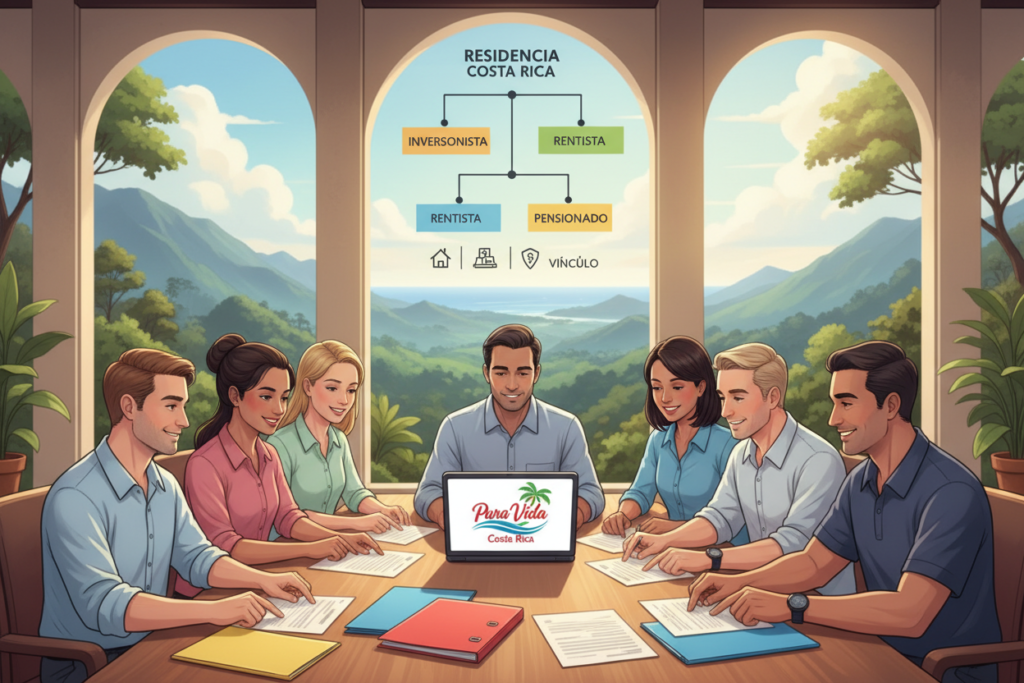
To build a future in Costa Rica, you must first select the appropriate residency category that matches your financial profile. The country offers three primary pathways for foreign nationals, each with distinct financial thresholds.
Investor (Inversionista) Eligibility and Thresholds
The Investor (Inversionista) category requires a minimum investment of US$150,000 in local real estate. This requirement was reduced from a higher amount in 2021. A critical rule is that the property must be held in your personal name.
Understanding Rentista and Pensionado (Pensionado) Options
The Rentista (Rentista) status is for those with stable overseas income. You must demonstrate US$2,500 per month for two years. It’s a solid choice if you do not wish to purchase property.
The Pensionado (Pensionado) option is designed for retirees. It requires a minimum pension of US$1,000 per month from a verified source. This process is often the most direct for qualified individuals.
It’s important to note that a Digital Nomad permit is not a residency category. It does not provide a path to permanent status or citizenship. For true long-term settlement, one of the three formal categories is necessary.
All these options grant temporary residency initially. After maintaining this status for three consecutive years, you become eligible for permanent residency. This is the required first step toward eventual citizenship, which the country permits alongside your original nationality.
Preparing Essential Documents from Your Home Country
The foundation of a successful residency application is built long before you board the plane. The most time-consuming steps must be completed from your place of origin. Starting early is non-negotiable.
Gathering Critical Documents: Passport, Birth Certificate, and Criminal Record
Every applicant needs four core records. You must have a valid passport, an original birth certificate, and a federal criminal background check. Include a marriage certificate if applying with a spouse.
These papers are only valid for six months from their issue date. Timing your collection is crucial. For U.S. citizens, the background check must be from the FBI, not a state agency.
Apostilles, Legal Translations, and Document Certification
An apostille is an international certification from your home country. It verifies a document’s authenticity for use abroad. If your nation is part of the Hague Convention, this step is done there.
All non-Spanish documents then need official translation within Costa Rica. Finally, after arrival, your passport’s entry stamp page requires local notary certification. For a complete breakdown of requirements, consult our detailed paperwork guide.
Step-by-Step Guide to the Residency Application Process
A successful application hinges on a clear, sequential plan and an understanding of official timelines. We break the process down into manageable steps to demystify the workflow and highlight common pitfalls.
Application Workflow and Timelines
The journey follows a defined path. It starts with gathering and apostilling documents from your home country.
You then enter this nation and get your passport stamped. All documents are translated locally before final submission.
A critical rule is your filing deadline. You must submit your complete residency application within the validity period of your entry stamp. This is typically 90 days for most nationalities.
Realistic planning is key. Gathering documents often takes 2-3 months. Official review after submission typically takes another 3-6 months. Plan for a total process time of 6 to 12 months.
Common Pitfalls and Mistakes to Avoid
The most frequent error involves property ownership for the Investor category. The asset must be held in your personal name, not through a local corporation.
Another major setback is using expired paperwork. Birth certificates and criminal records are only valid for six months from their issue date. Submitting older documents causes automatic rejection.
Do not overlook the fingerprinting step. After you file, all applicants aged 12 and up must register at the Ministry of Security. This triggers essential local and international background checks.
Remember, approval is not the final step. You must then register with the national social security system (CCSS) to receive your official resident ID card. Initial temporary status is granted for a two-year period.
Processing times and requirements can change. We recommend verifying current procedures directly with official sources for the most up-to-date guidance.
Meeting Investment Requirements for Inversionista Residency
The financial commitment for this category represents more than just a purchase price. It’s the primary qualification benchmark that must be met precisely.
Property Investment Minimum and Ownership Conditions
Current law sets the minimum at US$150,000 in local real estate. This threshold was established in 2021. The asset must be registered in your personal name at the National Registry.
You must prove this investment meets the value requirement. Official proof comes from a Municipal Property Certification. This document shows the declared fiscal value for tax purposes.
You also need certification that all property taxes are current. Any outstanding tax liabilities will cause rejection. The type of real estate—residential, commercial, or land—does not matter.
Beachfront properties in maritime zones generally do not qualify. These areas have special concession rules for foreigners. We recommend verifying any coastal purchase carefully before applying.
Costa Rica Investor Residency Document Checklist
A complete and organized document collection is your most powerful tool for a smooth residency journey. We break the requirements into universal, in-country, and category-specific groups.
Comprehensive List of Required Documents and Certifications
Every application needs core personal papers. These include a valid passport, an apostilled birth certificate, and a federal criminal record.
If applicable, include an apostilled marriage certificate. All must be officially translated into Spanish.
After arrival, you’ll need passport photos and must complete fingerprint registration. A Special Power of Attorney for your legal representative is also required.
Supporting Proof of Investment and Financial Stability
For the Investor (Inversionista) category, you must prove property ownership. Provide the title, a Municipal Property Certification showing a value of at least $150,000, and proof all taxes are paid.
The Rentista path requires a bank letter proving a $2,500 monthly income for two years. The Pensionado option needs a pension verification letter for at least $1,000 per month.
Remember, personal certificates are only valid for six months from their issue date. Plan your timeline carefully to avoid expiration.
We suggest creating a physical folder system to track each paper. Staying organized is the best way to prevent delays.
In-Country Procedures and Additional Verification
After submitting your paperwork, several mandatory in-person steps await within the country. These verifications are crucial and cannot be skipped.
Fingerprint Registration and Consular Procedures
You and any dependents aged 12 or older must visit the Ministry of Security. This fingerprint registration triggers a local criminal record check and an INTERPOL background search.
The process itself is quick, but results take weeks. You must also register with your home country’s consular office here.
If your nation lacks representation, obtain a letter from the local Ministry of Foreign Affairs.
CCSS Registration and Local Verification Steps
After approval, enrollment in the social security system (CCSS) is required. You will meet an inspector to determine your monthly fee.
Contributions are based on your income level. Maintaining active CCSS enrollment is mandatory for renewing your status.
Procedures can vary by regional office. We guide clients through these local nuances to ensure compliance.
Understanding Residency Renewal and Compliance
Securing your initial approval is a major milestone, but it’s not the finish line. Your legal status requires active maintenance and periodic renewal to remain valid.
Maintaining Minimum Physical Presence and Documentation
Initial temporary residency is valid for two years. Renewal hinges on three pillars: maintaining your qualifying property investment, proving at least six months of physical presence per year, and keeping social security payments current.
Immigration reviews entry records at each renewal. Falling short on physical presence puts your status at risk.
Ensuring Ongoing Compliance and Avoiding Revocation
After three consecutive years in good standing, you can apply for permanent residency. This changes the rules significantly.
The renewal cycle extends to five years. The strict physical presence requirement drops to just one visit annually.
The path to citizenship requires seven years of legal residency for most. A critical rule is that time spent outside the country is deducted from this total.
Failing to meet core conditions can lead to revocation. This applies to all applicants, including spouses and dependents. Consistent compliance is the best strategy.
Final Steps and Next Actions to Secure Your Residency
Taking the final step requires a clear understanding of both immediate tasks and long-term obligations. The pathway involves a property investment, leading from temporary to permanent status and eventually to citizenship.
Begin gathering your apostilled documents now, before you travel. This early preparation is the single most important action you can take.
Remember, this is an ongoing commitment. Maintaining your investment and physical presence is required to keep your legal status active.
This guide offers current information, but we make no guarantees. Always verify procedures at the official immigration website, migracion.go.cr.
Ready for expert guidance? Contact CRIE via WhatsApp at +506 8706 3888 or email info@crie.cr. Let’s start your journey to making this country your home.
FAQ
What are the main financial thresholds for qualifying under the Investor residency category?
To qualify, you must make a qualifying investment of at least 0,000. This is often fulfilled through real estate purchase. Alternatively, you can invest a minimum of 0,000 in other approved areas, like shares or projects. We always advise confirming the current requirements with an immigration lawyer, as these figures can change.
What is the most common mistake people make with their application documents?
A frequent and costly error is submitting documents without the proper apostille and official Spanish translation. Every foreign-issued paper, from your birth certificate to your background check, must have an apostille from the issuing country and be translated by a certified translator in this country. Missing this step will cause immediate rejection.
How long does the entire residency application process typically take?
A> You should plan for a process that spans several months, often between 6 to 12. This timeline includes gathering and certifying your paperwork, submitting the formal application to Immigration, and waiting for background verifications and final approval. Delays can happen, so patience and meticulous preparation are key.
How do I prove my property investment meets the financial requirement?
You’ll need to provide the registered deed (escritura) showing you as the owner, along with the official property valuation from the National Registry. This appraisal confirms the property’s market value. The combined documentation must clearly show the investment meets or exceeds the 0,000 minimum for the Investor category.
What are the ongoing requirements to maintain my residency status once approved?
You must maintain your qualifying investment, such as owning the property, for the duration of your status. You also need to spend at least one day per year physically in the country to keep your file active. Finally, you must renew your cédula (ID card) and residency document on schedule, which is typically every two years for temporary status.
Article by Glenn Tellier (Founder of CRIE and Grupo Gap)
Don't wait, contact us right now!
Call or WhatsApp Costa Rica +506 8373 2085 or +506 8706 3888
Call USA/Canada +1 305-906-6784