

Navigating the requirements for legal residence in a new country can feel complex. A central challenge is proving the legal origin of your capital. We are CRIE, and we specialize exclusively in guiding individuals through this precise process.
A recent legal update made this pathway more accessible. The minimum capital requirement was lowered to US $150,000. This capital must be tied to a real estate purchase or business venture held in your personal name.
This status is temporary, initially granted for two years and renewable. It serves as a stepping stone but comes with specific conditions, including restrictions on local employment. The key to a smooth application lies in meticulous preparation.
Starting your document gathering from home is crucial. This guide will walk you through the eligibility criteria, required paperwork, and common pitfalls. Our goal is to provide clear, step-by-step guidance to help you build a strong case.
Understanding Costa Rica Investor Residency (Residencia Temporal – Inversionista)
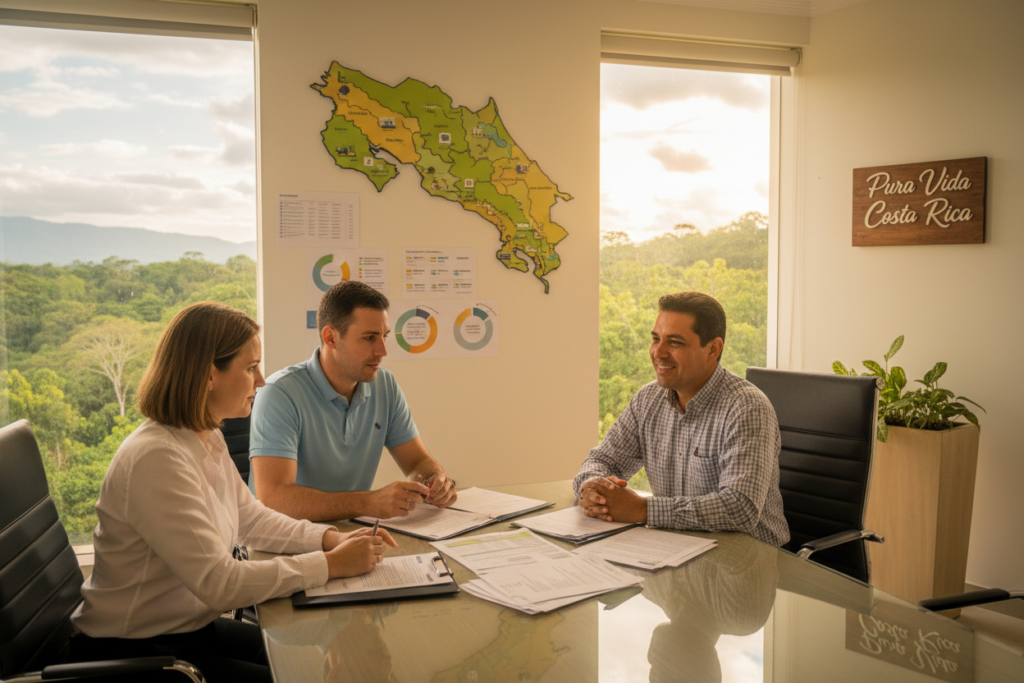
Gaining legal status in Costa Rica through investment involves a specific, government-regulated pathway. This program is formally known as Residencia Temporal – Inversionista. It is administered by the Dirección General de Migración y Extranjería (DGME).
Overview of the Investor Residency Pathway
This is a temporary residency category. It is directly tied to maintaining a qualifying investment in the country. Recent reforms under Law 9996, effective in 2021, modernized the requirements. The goal was to attract foreign capital while ensuring proper documentation.
Legal Context and Immigration Benefits
This status provides legal residence for renewable two-year periods. Holders can manage their business or investment. Benefits include duty-free import of household goods and potential tax exemptions. It is a stepping stone.
After three consecutive years, you may apply for permanent residency. Full citizenship possibilities open after seven years. We recommend verifying all details at the official portal, migracion.go.cr.
It’s important to understand what this status does not provide. It does not grant automatic work authorization as a local employee. It does not create automatic tax residency. It does not offer visa-free access to other nations.
Who Qualifies for Investor Residency

The program sets clear benchmarks for who can apply, focusing on the nature and ownership of your capital. Meeting these standards is the first step toward a successful application.
Eligibility Criteria for Inversionista Applicants
You must be a foreign national with a clean criminal record. Proof of the legal origin of your funds is mandatory. Basic health and documentation requirements set by immigration authorities must also be met.
Your immediate family can join you. A spouse and dependent children under 25 are eligible as dependents on the primary application.
Minimum Investment and Personal Ownership Requirements
The financial threshold is US $150,000. This represents a reduction from the previous $200,000 level. Acceptable investments include real estate, productive business projects, stocks, or forestry initiatives.
A critical rule involves ownership. The asset must be registered under your personal name in the National Registry. Using a corporate structure is not the standard path and complicates the process.
The $150,000 figure refers to the official registered value in Costa Rica. This is often the municipal appraisal for property, not merely the purchase price you paid.
Preparing Your Documentation for a Successful Application
The strength of your residency application is built entirely on the quality and completeness of your paperwork. We strongly recommend beginning this process from your home country. Direct access to issuing authorities makes gathering the necessary certified records much simpler.
Apostilles, Translations, and Certified Copies
Foreign-issued civil documents require authentication. This is done via an apostille stamp from the competent authority in the issuing country. It validates documents for use here under the Hague Convention.
Every paper not originally in Spanish needs an official translation. This must be done by a certified translator recognized by local authorities. These translated copies are a non-negotiable requirement.
Gathering Proof of Investment and Financial Stability
The standard personal documentation package includes your valid passport, apostilled birth certificate, and an apostilled police clearance. A marriage certificate is also needed if applying with a spouse.
You must also provide proof of your qualifying investment. For real estate, this includes municipal certificates and proof of registration. Bank statements showing the legal source and history of your funds are equally critical.
Presenting a complete, well-organized dossier is key. It helps immigration officials review your case efficiently and prevents unnecessary delays.
Step-by-Step Guide to the Application Process
The journey from document collection to final approval moves through several distinct phases. We guide clients through each one to ensure clarity and compliance.
Initial Document Preparation from Home
Start by gathering all personal records in your home country. Obtain apostilles and certified Spanish translations for each document. This foundational work is most efficient before you travel.
Organize proof of your investment and financial history into a complete package. Pay the required government deposit of US $250. This receipt must accompany your submission.
Submission and Consular Registration Procedures
File your completed forms with the Dirección General de Migración y Extranjería (DGME). You can submit in person or through an authorized legal representative. Include a formal letter of request in Spanish.
After filing, complete your consular registration. This step maintains official records of foreign residents in the country.
Processing typically takes 90 days to one year. You may remain in the country as a tourist during this wait, maintaining valid status. Always verify current procedures at the official portal, migracion.go.cr.
Timelines, Renewals, and Maintaining Residency
The clock starts ticking on your residency period the moment your official documents are issued. Understanding these timeframes is key to maintaining your legal standing without interruption.
Processing Times and Renewal Cycles
Your initial temporary status is valid for two years. This period begins when you receive your DIMEX card from immigration authorities.
This permit can be renewed every two years indefinitely. The conditions for renewal—maintaining your investment and a clean record—remain consistent over time.
A core requirement is physical presence. You must spend at least six months per year in the country to keep your residence valid.
After three consecutive years in this status, you become eligible for permanent residency. This changes the rules, removing the investment mandate.
Initial application review typically takes between 90 days and one year. The long-term path to citizenship requires at least seven years of legal residence, but that step comes later.
Common Pitfalls and Mistakes to Avoid
Even with the best intentions, many residency applications face delays or outright rejection due to a handful of predictable, yet critical, oversights. Awareness of these common errors is your first line of defense.
Failure to Meet Documentation Standards
Incomplete or improperly certified paperwork is the top cause for setbacks. Missing apostilles or uncertified translations will halt your process immediately.
Another frequent error involves property title. The investment must be in your personal name. Using a corporate structure creates a major complication that requires costly legal restructuring.
Financial proof must be clear and traceable. Vague bank statements or unexplained deposits raise red flags. Officials expect a documented trail from legitimate sources.
Overlooking the Minimum Stay Requirement
A crucial condition for maintaining your status is physical presence. You must spend at least six months per year in the country.
This rule is strictly enforced at renewal. Falling short, even in one year, can result in non-renewal. You would then need to restart the entire application process from scratch.
Related to this is maintaining active CCSS enrollment. Lapses in social security coverage suggest you are not genuinely residing here and can complicate renewal.
Thorough preparation and understanding these requirements are key to a smooth journey. We guide our clients through each detail to avoid these costly missteps.
Costa Rica Investor Residency Source of Funds
Demonstrating the legitimate origin of your capital is the single most critical component of a successful residency application. Authorities must confirm your money comes from legal sources to prevent financial crime. This makes thorough documentation non-negotiable.
Proving the Legality and Source of Your Investment
You must provide a clear paper trail showing where your funds originated. This could be from employment income, a property sale, business profits, or an inheritance. Each source requires specific supporting proof.
For salary income, provide employment contracts and certified bank statements showing regular deposits. For business earnings, submit corporate tax returns and profit statements. Sale proceeds need closing documents and transfer records.
All financial papers must be officially certified by the issuing institution. Foreign documents often need an apostille and Spanish translation. Meeting these technical standards is as vital as the information itself, much like the broader required paperwork for the move.
We recommend organizing your financial history well in advance. Work with an accountant to prepare certified summaries. A professional review can identify gaps before submission.
Exploring Other Residency Options: Pensionado, Rentista and More
Not everyone seeking to live in Costa Rica needs to make a large capital investment to qualify for residency. The country’s immigration system offers tailored pathways for retirees and individuals with stable passive income.
Understanding the Financial Thresholds for Pensionado and Rentista
The Pensionado program is for retirees. It requires proof of a guaranteed lifetime pension of at least US $1,000 per month.
The Rentista category suits those with stable non-employment income. You must prove a minimum of US $2,500 per month for two years, or deposit $60,000 locally.
Each financial threshold serves a different profile. Choosing the right program depends on your specific income and assets.
Why Digital Nomad Status is Not Accepted
It’s crucial to understand that Costa Rica’s Digital Nomad visa is not a residency category. This temporary stay authorization does not count toward permanent residency or citizenship timelines.
For those seeking a genuine path to long-term legal residence, the investor, Pensionado, or Rentista pathways are the appropriate choices. All three start as temporary status, renewable every two years.
After three consecutive years, you become eligible for permanent residency. The full journey to citizenship requires seven years of legal residence.
The Importance of Legal Guidance and Expert Support
The value of specialized knowledge becomes apparent when dealing with complex immigration procedures. Navigating these systems alone can lead to unnecessary delays.
Working with Immigration Professionals
Expert assistance helps you avoid common pitfalls. Professionals understand current documentation standards and financial verification processes.
This knowledge strengthens your submission significantly. It increases the chance of smooth processing by authorities.
We at CRIE focus exclusively on Costa Rican immigration matters. Our entire practice is dedicated to this specific legal area.
We provide thorough preparation and experienced representation. We cannot guarantee approval, as decisions rest with the DGME.
Our guidance is tailored to your unique financial profile and goals. Local expertise in bureaucracy and language is a practical advantage.
Contact us via WhatsApp at +506 8706 3888 or email info@crie.cr. We will provide an honest assessment of your situation and outline how we can support your application.
Final Thoughts on Your Costa Rican Residency Journey
Achieving legal residence marks the beginning of a new chapter. It offers not just a permit but a gateway to integration in a stable, welcoming country.
This pathway requires a clear qualifying investment and thorough documentation. Success hinges on your preparation and commitment to the process.
The journey demands patience, but the destination is worth the effort. We guide our clients to provide clarity and support from start to finish.
Contact us via WhatsApp at +506 8706 3888 or email info@crie.cr. We will provide an honest assessment of your situation.
FAQ
What is the most common mistake people make with their source of funds documentation?
The biggest error is providing insufficient proof of where the money originated. Bank statements showing a large deposit aren’t enough. You must trace the capital back to its legal source, like the sale of an asset, business income, or an inheritance, with corresponding documents like sales contracts or tax returns.
How long does the entire investor residency application process take?
From initial document preparation to receiving your *cédula* (ID card), plan for 6 to 9 months. The timeline depends on your home country’s document legalization process, consular appointment availability, and Immigration’s processing queue in Costa Rica. Starting early is key.
Can I use a mortgage or loan for the investment requirement?
No. The investment capital must come from your own personal funds. Financing the required amount through debt is not permitted under the program’s rules. The authorities need to see clear proof that the funds are yours outright and were obtained legally.
What happens if I sell my property after getting residency?
Selling the asset used for your application before renewing your temporary residency can jeopardize your status. You must maintain the qualifying investment throughout your temporary residency period. Before selling, consult with an immigration attorney to understand the implications for your renewal or path to permanent status.
Do I need to live in the country full-time to maintain this status?
You are not required to live in Costa Rica full-time, but you must visit at least once per year. However, to qualify for permanent residency after three years, you must demonstrate stronger ties to the country, which often includes more substantial physical presence.
Why is professional legal guidance so important for this process?
Immigration law here is complex and details matter. An experienced professional ensures your documents meet exacting local standards, helps you avoid costly errors that cause rejection, and navigates government procedures efficiently. They act as your essential guide, protecting your investment of time and money.
Article by Glenn Tellier (Founder of CRIE and Grupo Gap)
Don't wait, contact us right now!
Call or WhatsApp Costa Rica +506 8373 2085 or +506 8706 3888
Call USA/Canada +1 305-906-6784