
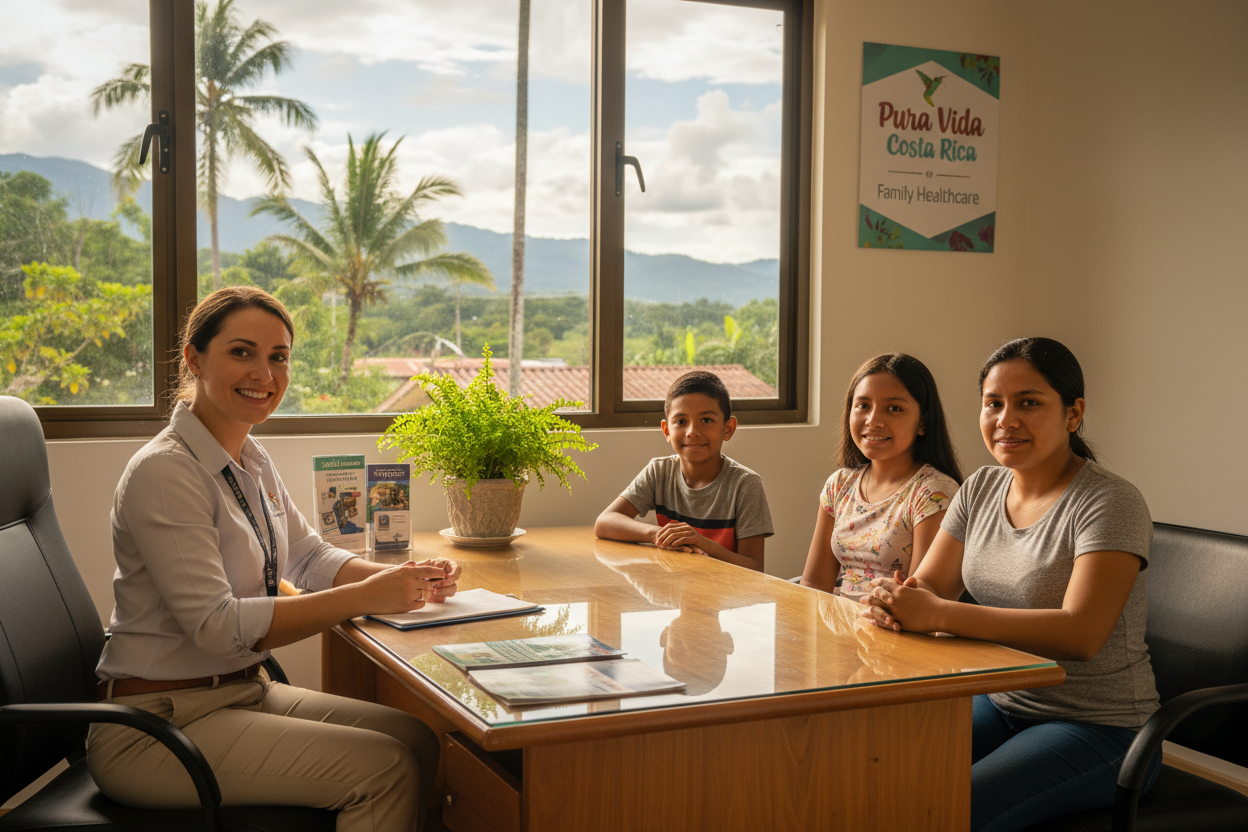
Starting your new life in this beautiful country involves more than just paperwork. A crucial, and often misunderstood, step is enrolling in the national social security system. This isn’t an optional benefit—it’s a legal requirement tied directly to your immigration status.
For families relocating together, this system provides a significant advantage. It extends comprehensive healthcare coverage to your spouse and children. In fact, children from birth to age 18 receive government coverage at no cost, a major consideration for household planning.
We believe in clear, realistic guidance. This article will walk you through the concrete requirements and timelines. We’ll explain the essential documents you must prepare—like apostilles and translations—before you even travel.
Our role is to provide accurate information and practical steps. We help you navigate the process with transparency, emphasizing that outcomes depend on meeting official requirements. Let’s begin with what you need to know.
Understanding Costa Rica Residency Categories (Residencia)
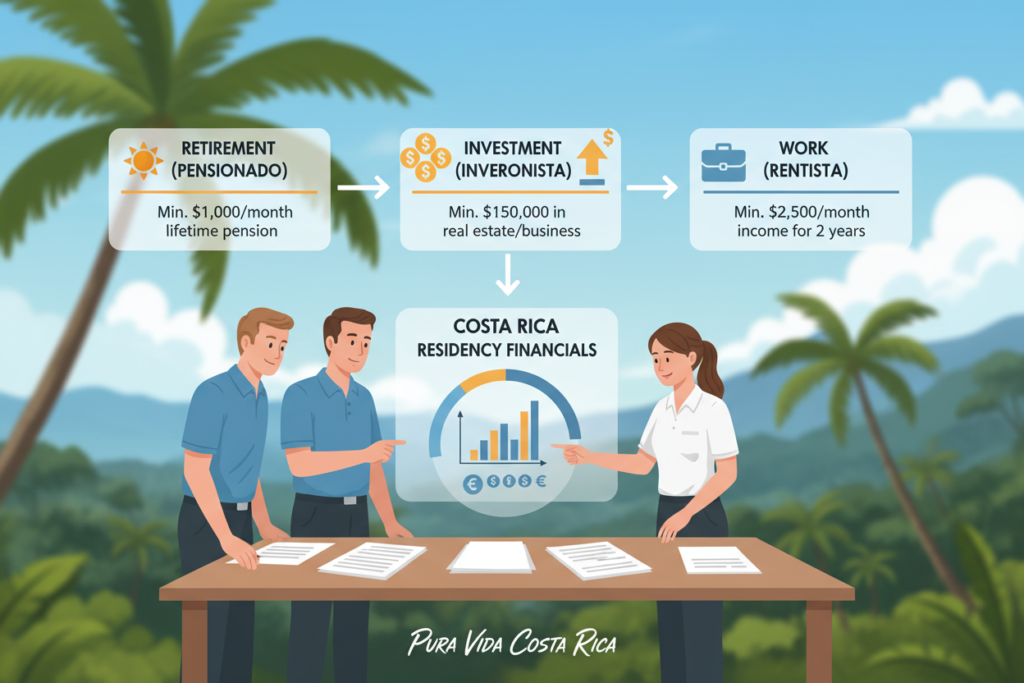
Your financial profile determines which of the country’s official residency categories you qualify for. We break down the three primary pathways: Pensionado (Pensionado), Rentista (Rentista), and Inversionista (Inversionista). Each has distinct financial requirements that shape your application.
Explaining Pensionado (Pensionado) Requirements and Thresholds
The Pensionado category is designed for retirees. It requires proof of a lifetime pension or retirement income of at least US$1,000 per month. This consistent foreign income often comes from Social Security or a private pension.
Overview of Rentista (Rentista) and Investor (Inversionista) Criteria
The Rentista category suits those with stable passive income. You must show guaranteed income of US$2,500 per month for two years. Alternatively, a US$60,000 deposit in a local bank is accepted.
The Inversionista pathway requires a minimum investment of US$150,000. This can be in real estate or approved projects. Crucially, any property must be held in your personal name, not a corporation.
Note: The Digital Nomad visa is not a residency category. It does not count toward permanent status. For remote workers seeking long-term residency, the Rentista category is typically the closest fit.
Who Qualifies for Residency in Costa Rica (Quien Califica?)
Qualifying for legal status involves more than just financial thresholds. It’s about matching your life situation to an official category and proving you meet all criteria.
Eligibility for Different Applicant Profiles
We see several common profiles. Retirees with pension income typically fit the Pensionado category. Individuals with steady passive income may qualify as Rentistas.
Investors putting capital into local projects or real estate can pursue the Inversionista route. Families relocating together can include a spouse and children on one application.
A clean criminal background and proper documentation are mandatory for all people. You must demonstrate financial stability throughout the process.
Gaining legal residency is the essential first step. For those considering citizenship, it requires many years of continuous status—seven for most, or five if married to a national.
Some people face challenges. Those without verifiable income or with document issues need to resolve them first. We provide honest guidance based on real-world example cases.
Step-by-Step Residency Application Process
A successful application hinges on meticulous preparation long before you submit any forms. The entire procedure unfolds in distinct phases, starting from your home country.
Initial Research and Preparation
Begin by identifying which official category matches your finances. Calculate if you meet the income or investment thresholds. Assess your family situation to see who you will include.
This research phase sets realistic expectations for timelines and costs. It is the foundation for everything that follows.
Sequential Steps from Application to DIMEX Card
Once in the country with all authenticated documents, you submit your complete file to immigration authorities. They will review your application over several months.
After approval, you complete additional registration steps. Only then will you receive your physical DIMEX card. This card confirms your legal residency status.
The process typically takes 3 to 12 months from submission. Verify current processing times at the official migration website. After three years of temporary status, you can apply for permanent residency.
Document Preparation Before Arrival (Documentación Previa)
Before you even book your flight, a critical phase of work must be completed at home. We cannot overstate the importance of perfecting your paperwork before you land. Proper preparation here prevents months of costly delays.
Essential Documents, Apostilles, and Translations
Every applicant needs core documents. These include a valid passport, birth certificate, and an FBI background check. Category-specific proofs are also mandatory.
Pensionado applicants must provide official letters verifying lifetime monthly pension income. Rentista applicants need bank statements showing guaranteed passive income. For Inversionista, you’ll need titles or certificates for your real estate investment.
All documents from the US require an apostille from your state or the Department of State. This authentication proves their legitimacy. After apostilling, every paper must be translated into Spanish by an authorized Costa Rican translator.
Budget $100 to $300 for apostille services. Translation costs range from $40 to $500. Build in 4 to 8 weeks for this entire authentication and translation process. If including a spouse or children, their certificates need the same treatment.
Managing Timelines and Setting Realistic Expectations
One of the most common questions we receive centers on how long the entire procedure will take. Setting accurate expectations is crucial for a smooth transition.
Understanding Processing Times and Delays
The official review period typically spans 3 to 12 months. This range depends on your application category and current volume at Costa Rican immigration offices.
Remember, this timeline starts after submission. The preliminary phase of gathering and authenticating documents often adds 1 to 3 months. Your total timeline from decision to holding your DIMEX card can extend to 6-15 months.
Most people begin with temporary status. This requires renewal every two years. You must prove you still meet the financial requirements during each renewal cycle.
After maintaining temporary status for three consecutive years, you become eligible to apply for permanent residency. This application adds several more months but provides long-term stability.
Delays frequently stem from incomplete paperwork, policy updates, or peak application seasons. We always advise verifying the most current processing times directly at the official migration website, migracion.go.cr.
Common Mistakes to Avoid in the Residency Process
Many people face avoidable delays simply from not knowing common errors. We observe the same pitfalls repeatedly. Learning from others’ experiences can streamline your journey.
Frequent Pitfalls in Document Submission
Incomplete paperwork is the top cause of holdups. Missing one form or an expired police check halts your residency application entirely. Costa Rica’s authorities require specific formats.
All papers need proper apostilles and translation by an authorized Costa Rican translator. Unofficial services lead to rejection. Also, overstaying your tourist entry while waiting creates serious issues.
Advice on Staying Organized from Home
Create a detailed checklist for your specific category. Track expiration dates closely. Some documents, like background checks, are valid only six months.
Budget for the full process, including apostille and professional translation costs. Rely on current official sources, not outdated forum advice. The immigration website provides accurate updates.
Understanding Caja and Its Role in Costa Rican Social Security
The legal requirement to join the public healthcare and pension system is a pivotal step for approved applicants. Known locally as “Caja,” the Caja Costarricense de Seguro Social (CCSS) is this nation’s universal social security framework.
Established in 1941, it provides comprehensive medical care and pension benefits to the entire population. Immigration Law 8764 makes registration mandatory to complete your migratory status.
Details on SEM and IVM Contributions
Your monthly payment is split into two parts. The SEM portion covers sickness and maternity healthcare services.
The IVM portion handles disability, old age, and death benefits. This includes accumulating credits toward a future pension.
A major policy shift occurred in March 2022. Before this, foreign residents only paid the SEM fee for basic health coverage.
Now, the IVM contribution is also mandatory. This increased monthly costs but added long-term pension eligibility.
The system functions as a complete social safety net. It is fundamentally different from standard private health insurance.
Navigating these requirements benefits from expert legal guidance. We provide clear explanations of how contributions are calculated based on your declared income.
Caja for Dependents in Costa Rica Residency
For families moving to this Central American nation, the social security system offers a powerful family benefit. The structure provides immense value for households relocating together.
Coverage for Spouses and Children
The system operates on a “global coverage” principle. Your single monthly contribution, based on your declared income, extends to all approved family members listed on your residency file.
This includes your legally married partner and children under 18 years old. In some cases, coverage can continue for university students up to age 25.
A standout policy is that all minors from birth to age 18 receive government healthcare at zero cost. This applies to everyone in the country.
Registration differs between the primary applicant and their family. While you register at a main office, your spouse and children sign up at the local EBAIS clinic serving your community.
This approach creates major savings. Instead of separate private health insurance premiums for each person, one affordable fee covers your entire household’s medical needs.
Starting From Home: Organize Your Paperwork and Prepare In Advance
Proactive preparation from abroad is the cornerstone of avoiding costly immigration delays. The entire process truly begins at your current address. Arriving with a complete, authenticated document package ready for submission is the single most important success factor.
Practical Tips for Gathering Documents Before Arrival
First, create a checklist specific to your application category. List every required paper for Pensionado, Rentista, or Inversionista. Include documents for any dependents to ensure nothing is overlooked.
Start this work at least three to four months before your planned arrival. This accounts for requesting official records, receiving them by mail, and obtaining apostilles. Timely preparation prevents last-minute stress.
Critically track all expiration dates. Background checks are typically valid for only six months. Time your requests so everything remains current throughout the application review period.
Maintain both physical and digital organization. Keep original apostilled documents in a secure travel folder. Also, scan high-quality copies for cloud backup. This protects against loss or damage.
Verify each document’s specifics before submission. Confirm pension letters show all required data. Ensure bank statements cover the correct periods. Using a professional team streamlines this complex task.
Our clients often find expert guidance invaluable for navigating these precise requirements. For a clear example of the steps and potential cost, contact our team. We’re here to help: WhatsApp +506 8706 3888 or info@crie.cr.
Residency as a Stepping Stone to Future Citizenship
The path to becoming a citizen of this nation is built upon a foundation of verified legal residency. You cannot apply for naturalization without first establishing and maintaining your immigration status for a required period.
Clarifying Why Residency Steps Come First
Most foreign nationals need seven consecutive years of legal status. This reduces to five if married to a Costa Rican citizen. Maintaining this status means renewing temporary residency and meeting all financial conditions.
Beyond just time, citizenship requires Spanish proficiency and a history exam. You must also prove ongoing financial stability.
In reality, most American residents choose permanent residency. It offers nearly all living benefits without the long wait or extra tests.
Citizenship adds voting rights and a local passport. Dual citizenship is permitted. Focus first on securing your legal residency status successfully.
Final Steps and What to Expect After Residency Approval
Receiving your official approval marks a significant milestone, yet several practical steps remain to fully activate your new status. You must complete enrollment in the social security system and register your address with authorities. Then, you’ll receive your physical DIMEX card.
This card serves as your official ID for banking and all transactions. Temporary status requires renewal every two years. Monthly contributions are automatically withdrawn from your local bank account based on your declared income.
These payments build future pension eligibility—a valuable long-term benefit. Budget for ongoing costs like renewal fees every year. Staying connected with the local expat community helps you adapt and stay informed.
Our team supports clients throughout this entire journey. For questions on the residency process or benefits, contact us. Reach our team via WhatsApp +506 8706 3888 or email info@crie.cr. Always verify official details at migracion.go.cr.
FAQ
What is the main difference between the Pensionado and Rentista residency categories?
The key difference is your income source. The Pensionado category is for individuals with a lifetime pension, like from Social Security or a company retirement plan. The Rentista category is for those with stable foreign income or savings, requiring you to demonstrate a guaranteed monthly income for two years, often through a bank deposit. Both paths lead to legal status but have different financial thresholds.
Can my spouse and children get coverage under the Costa Rican social security system with my residency?
Yes, they can. Once you are a formal resident and begin making your monthly contributions to the Caja Costarricense de Seguro Social (CCSS), your legal dependents—including your spouse and minor children—are eligible for full healthcare coverage under your plan. This is a significant benefit of the system.
How long does the entire residency process typically take from start to finish?
You should plan for a lengthy process. From initial document gathering in your home country to holding your physical DIMEX card, it commonly takes between 8 to 12 months, and sometimes longer. Government processing times in San José can vary, so building in buffer time is a crucial part of setting realistic expectations.
What are the most common mistakes people make with their document preparation?
The most frequent errors involve not getting documents properly apostilled or authenticated by the Costa Rican consulate in their home country and failing to provide official Spanish translations. Every foreign-issued document, from birth certificates to proof of income, must follow these specific legalization steps to be accepted by immigration authorities.
What exactly are the SEM and IVM contributions I have to pay to the Caja?
These are your monthly fees for social security. The IVM (Invalidez, Vejez y Muerte) is your pension/retirement contribution. The SEM (Seguro de Enfermedad y Maternidad) is your sickness and maternity healthcare contribution. Together, they provide your family’s access to the public healthcare system, doctors, and medications.
Should I start the citizenship process right after getting residency?
No, residency is the mandatory first step. You must maintain your legal resident status for several years—typically living in the country for most of the year—before you are even eligible to apply for citizenship. We advise focusing on properly establishing and maintaining your resident status first, as that foundation is critical.
What happens after my residency application is approved?
After approval, you’ll receive notification to complete your registration. This final step includes getting your photo taken for your DIMEX card, which is your official physical ID, and registering for the Caja to start your health insurance contributions. You’ll then need to renew your card periodically and maintain your status.
Article by Glenn Tellier (Founder of CRIE and Grupo Gap)
Don't wait, contact us right now!
Call or WhatsApp Costa Rica +506 8373 2085 or +506 8706 3888
Call USA/Canada +1 305-906-6784