
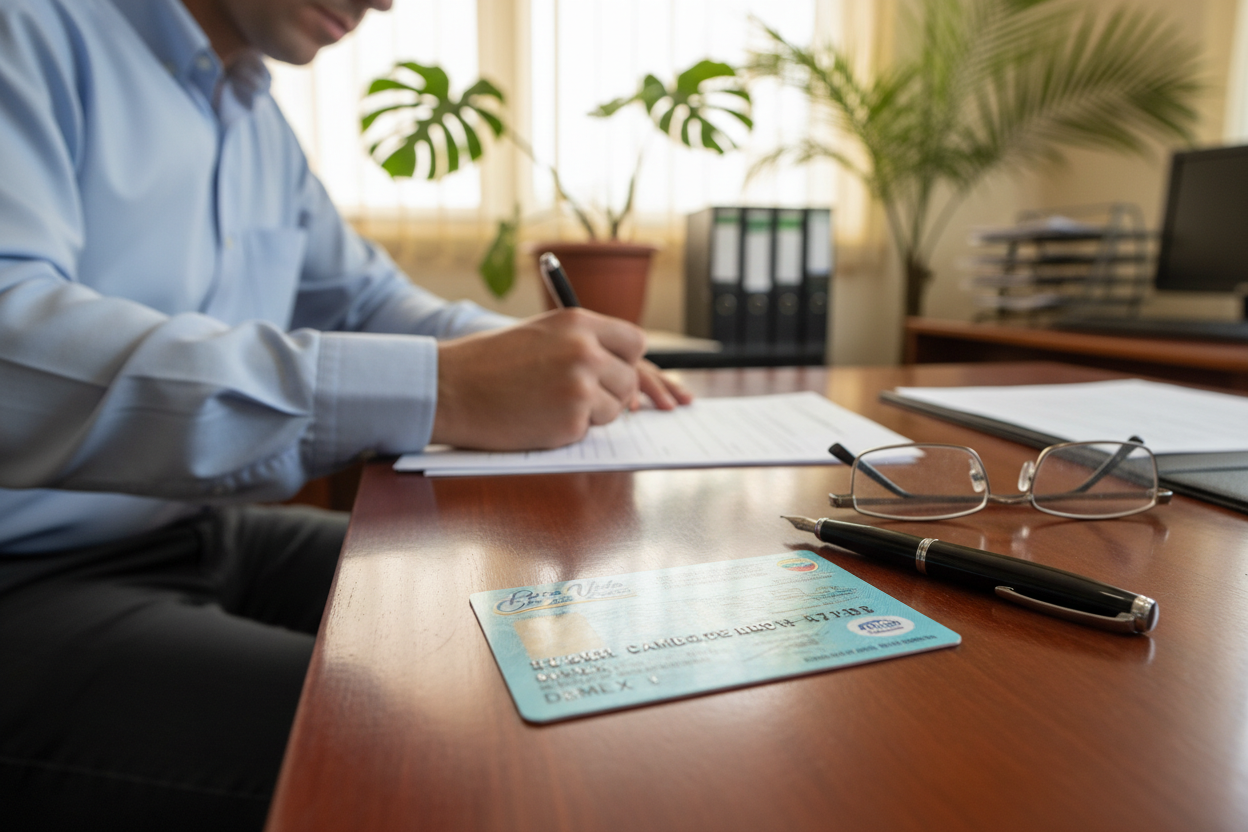
Navigating the administrative side of living abroad involves understanding key documents. For legal residents here, the primary identification is the DIMEX card. It is crucial to distinguish this from a tourist visa stamp or a local citizen’s cédula.
Many foreign nationals initially confuse updating their physical location with renewing the card itself. We’ll clarify these distinct requirements from the start. Managing your status requires careful attention to detail within the local immigration system.
This guide walks you through the entire ecosystem of maintaining your legal standing. We emphasize starting document preparation, including apostilles and translations, from your home country. This proactive approach significantly reduces complications later.
Whether you are a Pensionado, Rentista, or Inversionista, specific rules apply. Our focus is on providing clear, actionable information to help you maintain compliance. This isn’t legal advice, but a practical roadmap from experienced guides.
For personalized guidance on your situation, our team is ready to assist. You can reach us for a transparent consultation about your next steps.
Understanding the DIMEX System in Costa Rica
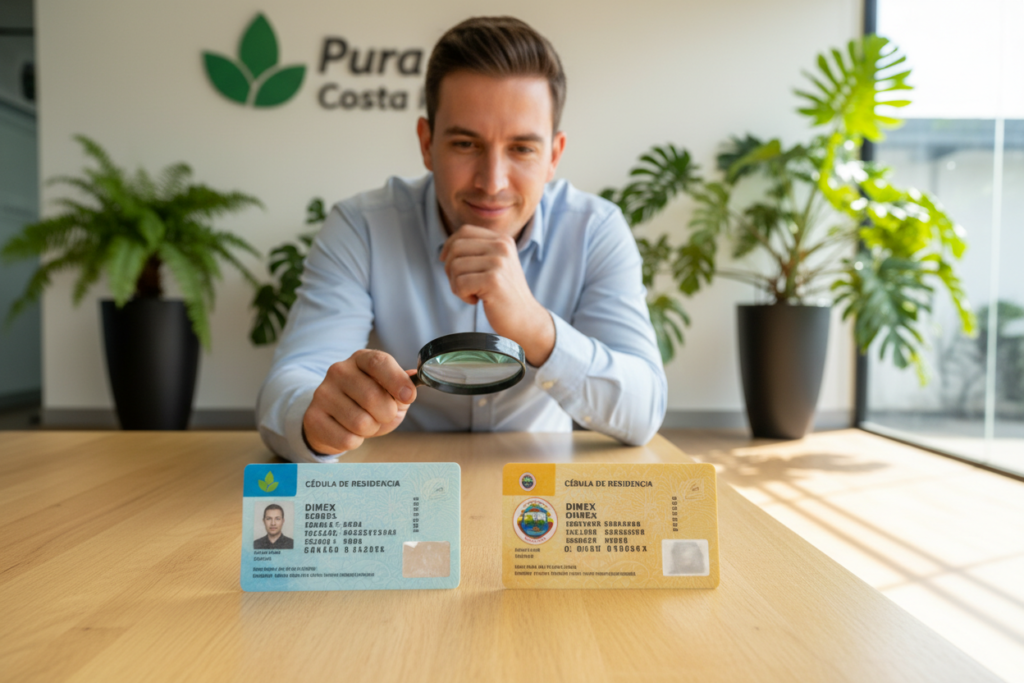
Three primary documents dictate a foreigner’s legal standing, and confusing them creates substantial bureaucratic challenges.
Differences Between DIMEX, Cédula, and Visa
Your DIMEX is the official residency card for foreign nationals with approved status. This physical card serves as your primary identification within the country.
A Cédula belongs exclusively to Costa Rican citizens. It represents national citizenship, not temporary or permanent residency status for foreigners.
The tourist stamp in your passport grants only visitor permission. It does not provide access to resident benefits like the public healthcare system.
The Role of CRIE in Residency and Immigration
We specialize exclusively in guiding clients through this complex landscape. Our team helps you understand which residency category fits your situation.
Proper preparation begins in your home country with document authentication. For detailed guidance on maintaining status, learn about the visa renewal process through our resources.
Eligibility and Residency Categories (Pensionado, Rentista, Inversionista)
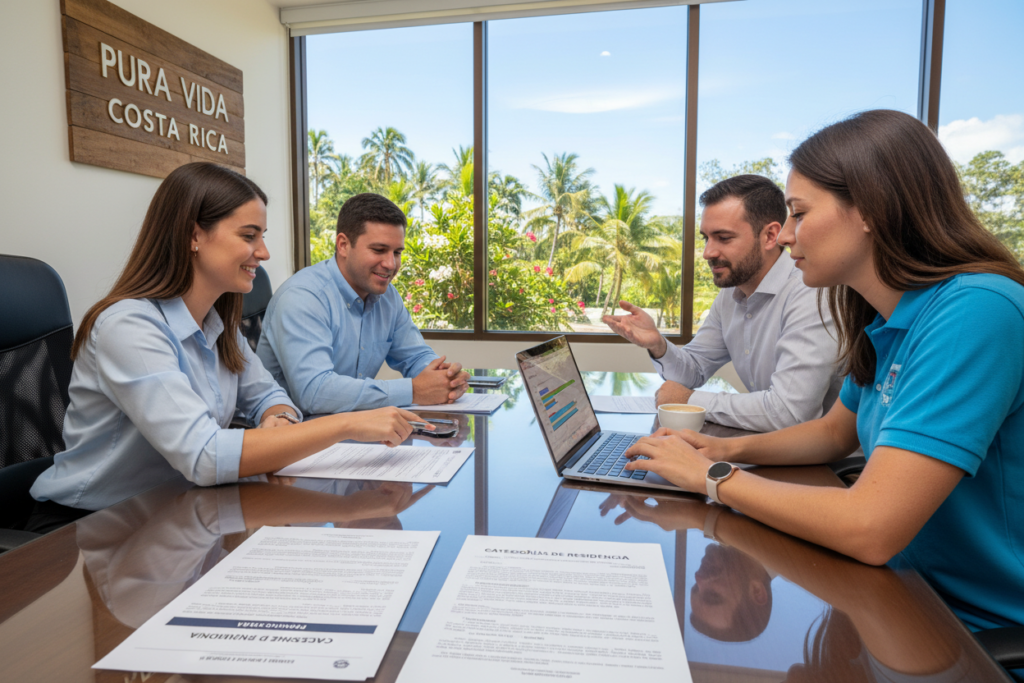
Understanding the specific thresholds for each residency type prevents costly mistakes and application delays. Your long-term legal standing depends on selecting the correct pathway from the start.
Who Qualifies for Each Residency Category
The Pensionado category is designed for retirees. You must prove a lifetime pension exceeding $1,000 monthly. This income requires official verification and apostilled documents.
Rentista status suits those with stable, guaranteed income. You need to show $2,500 per month for at least two years. Sources can include annuities, trust distributions, or investment returns.
The Inversionista, or Investor, category demands a minimum $150,000 investment. A critical rule catches many off-guard. If using real estate, the property title must be in your personal name, not held through a corporation.
There is also a Vínculo category for spouses of citizens or legal residents. Its requirements focus on proving the legitimacy of the marital relationship.
Thresholds: US$1,000+ for Pensionado, US$2,500 for Rentista, and US$150,000 for Inversionista
Meeting these financial benchmarks is just the starting point. Each application has specific documentation requirements. You’ll need authenticated proof of income or investment, plus background checks and health certificates.
We must address a common misconception. The Digital Nomad visa is not a residency category. It offers no path to permanent status or citizenship in Costa Rica.
We help assess which pathway aligns with your true financial position. Choosing the right category from the beginning streamlines your entire application process.
Step-by-Step Guidance for Document Preparation
The foundation of a successful residency application lies in meticulous document preparation. We cannot overstate this—your paperwork forms the core of your case. Begin this work while still in your home country to avoid costly delays later.
Preparing Apostilles and Translations
Most public documents require an apostille for international use. This certification validates their origin for immigration purposes. U.S. citizens obtain these through Secretary of State offices.
Canadian nationals follow a different, multi-step authentication process. Their papers need stamps from Global Affairs Canada and the local consulate. All foreign documents must then be officially translated within Costa Rica.
Only translators approved by the Ministry of Foreign Affairs can perform this work. Budget time and funds for this non-negotiable step.
Collecting and Organizing Required Documents Before Arrival
Your checklist typically includes a birth certificate, police check, and proof of income. Each piece of paper must have its apostille attached. Financial proof varies by your residency category.
Pensionados need an official award letter. Rentistas require a bank letter verifying guaranteed income. Make multiple certified copies of every document before submission.
Create a master folder with originals, translations, and copies. This organized portfolio will be vital for years to come. If you are unsure about a specific requirement, verify details on the official government portal.
Costa Rica DIMEX Address Change
A common question we receive concerns the procedure for informing immigration about a new residence. Many assume a separate, formal step is required.
In reality, updating your location is typically part of your standard residency card renewal. This integrated approach streamlines administrative tasks.
Clarifying the Address Change Process within the DIMEX System
When you attend your scheduled renewal appointment, officials will ask for your current contact details. You provide this information on the standard forms.
Your residential address, local phone number, and email are collected and updated in the system at that time. This is the primary moment for such corrections.
Your physical location matters for practical reasons. Your new residency card will be sent for pickup at the postal branch nearest your registered home.
This address is also crucial for enrolling in the local public healthcare clinic. Be prepared to describe your home using local landmark-based formats.
If you move between renewal cycles, contacting immigration directly is the official step. Enforcement can vary, so many wait for their next scheduled appointment.
We cannot guarantee how quickly updates are processed outside the standard cycle. For definitive rules, always verify current requirements at the official migration website.
If your situation is unclear, reach out to our team for personalized guidance. Contact us via WhatsApp or email to discuss your specific circumstances.
Navigating Appointments at BCR, Correos de Costa Rica, and DGME
Securing a slot to update your residency documents means understanding the specific procedures for Banco de Costa Rica, Correos de Costa Rica, and DGME. Each venue has its own booking system and service characteristics.
How to Book Your Appointment Effectively
For Banco de Costa Rica branches, call 800-BCRCITA or use their online portal. Have your card number and preferred date ready. Slots typically open 1-2 weeks ahead.
Correos de Costa Rica uses its website for scheduling. Select your service and a participating post office location. Many find their service accommodating.
DGME immigration offices require a call to 1311. This only works from a Kolbi mobile phone within the country. Residents aged 65 and older can often visit DGME offices directly without a prior booking.
What to Expect on Appointment Day
Arrive at least ten minutes early. At BCR branches, a dedicated office handles residency renewals separately from banking.
The official will verify your paperwork, collect fees, and take your photo and fingerprints. The entire process usually takes 30 to 60 minutes.
Here is a critical reality check. All communication occurs in Spanish. You must bring a competent translator if you are not fluent.
Payment is accepted in cash or with BCR cards only. You will leave with a receipt and a future pickup date for your new card.
Common Pitfalls and Mistakes to Avoid
Based on our extensive experience, we observe a predictable set of missteps that complicate what should be a straightforward administrative task. Forewarned is forearmed.
Missing or Incomplete Documentation
Arriving with incomplete paperwork is the top error. Missing just one document voids your appointment. You must then reschedule, risking an expired status.
Pay close attention to fee payment receipts. The name must match your passport exactly. Even a minor spelling difference causes rejection.
Communication Barriers and Translation Concerns
Using phone apps or unqualified friends for translation is a major risk. Immigration uses precise technical terminology. Miscommunication here creates serious complications.
We cannot overstate the need for a qualified professional translator. This is not an area for informal help. Invest in proper assistance to ensure clarity.
Also, verify your contact details during the process. Provide a reliable email address for digital notifications. Keep your appointment receipt safe for card pickup later.
Timelines, Thresholds, and Key Considerations
Managing your legal status effectively hinges on a clear grasp of realistic timeframes and key procedural thresholds. We must emphasize that these schedules are set by authorities and can vary.
Understanding Processing Times and Renewal Intervals
Your first residency card is typically valid for one or two years. Renewals for this temporary status are required annually before you can apply for permanent residency.
Renewal processing itself takes about one month from your appointment. You will receive a digital version of your card via email within days. This version is legally valid while you wait for the physical card.
You must still pick up the plastic card at the post office. Initial residency approval is a much longer process, often taking between six and twelve months.
Critical Points: Starting from Home with Documents Ready
The single most important step is beginning document preparation early, ideally from your home country. Authentication timelines differ greatly depending on your nationality.
This upfront work is non-negotiable for a smooth application. Once approved, your unique DIMEX identification number remains yours for life across all renewals.
We cannot guarantee processing times. Always verify the latest information directly through the official immigration website to plan your next steps.
Wrapping Up: Your Next Steps for a Successful Address Change
With the essential information now in hand, the focus shifts to practical implementation. Your immediate action depends on your current status.
If you are planning your application, start gathering documents from your home country now. For existing residents, check your card’s expiration date and schedule a renewal appointment if needed.
Remember, updating your location is typically part of that renewal service. Have your current local details written clearly beforehand.
For personalized guidance, our team specializes in this nation’s immigration processes. We provide clear, step-by-step service based on your individual situation.
Reach out via WhatsApp at +506 8706 3888 or email info@crie.cr. Always verify the latest rules at the official migracion.go.cr website.
With thorough preparation and realistic expectations, managing your residency here is entirely manageable.
FAQ
What is a DIMEX card, and why do I need one?
The DIMEX card is your official identification document as a legal resident in Costa Rica. It functions like a national ID, proving your status and allowing you to conduct essential tasks like opening a bank account, signing contracts, and accessing services. It’s different from a cédula (for citizens) or a tourist visa.
How do I know which residency category—Pensionado, Rentista, or Inversionista—I qualify for?
Your category depends on your income source. Pensionado is for those with a lifetime pension of at least US
FAQ
What is a DIMEX card, and why do I need one?
The DIMEX card is your official identification document as a legal resident in Costa Rica. It functions like a national ID, proving your status and allowing you to conduct essential tasks like opening a bank account, signing contracts, and accessing services. It’s different from a cédula (for citizens) or a tourist visa.
How do I know which residency category—Pensionado, Rentista, or Inversionista—I qualify for?
Your category depends on your income source. Pensionado is for those with a lifetime pension of at least US$1,000 monthly. Rentista requires a guaranteed income of US$2,500 per month for two years. Inversionista is for individuals investing a minimum of US$150,000 in approved local projects or property.
What documents do I absolutely need to start my application or renewal?
You must begin with apostilled and officially translated documents from your home country, such as birth certificates and proof of income or investment. You’ll also need a local criminal record check, proof of address in Costa Rica, and payment receipts for government fees. Getting these ready before you arrive saves significant time.
What does changing my address on my DIMEX card actually involve?
It’s a formal process with immigration authorities. You must submit proof of your new physical address, like a utility bill or rental agreement, to the Dirección General de Migración y Extranjería (DGME). This update is crucial, as an outdated address can cause problems with official communications and renewals.
Where do I go for appointments, and how do I book them?
Key appointments are at Banco de Costa Rica (BCR) branches for fee payments and at Correos de Costa Rica (the national post office) for biometrics and document submission. Booking is typically done online through the official DGME portal. We recommend scheduling as early as possible, as slots can fill up quickly.
What are the most common mistakes people make during this process?
The top errors are submitting incomplete or non-apostilled documents and underestimating translation requirements. Language barriers at government offices can also lead to misunderstandings. Having a complete, organized file and, if needed, a local guide or translator can prevent these costly delays.
How long does the entire DIMEX process take, from start to finish?
Prepare for a timeline of several months. Initial residency applications can take 6 to 9 months. Renewals are often quicker but still require planning. Your card is typically valid for one to two years before renewal, depending on your residency category. Starting with all documents in hand is the single best way to avoid extended waits.
What should my immediate next steps be to ensure a smooth address change or renewal?
First, gather and authenticate all required documents from abroad. Next, confirm your current legal address in Costa Rica. Then, check the DGME website for the latest appointment schedules and fee structures. Proactive, organized preparation is your most reliable path to success.
,000 monthly. Rentista requires a guaranteed income of US,500 per month for two years. Inversionista is for individuals investing a minimum of US0,000 in approved local projects or property.
What documents do I absolutely need to start my application or renewal?
You must begin with apostilled and officially translated documents from your home country, such as birth certificates and proof of income or investment. You’ll also need a local criminal record check, proof of address in Costa Rica, and payment receipts for government fees. Getting these ready before you arrive saves significant time.
What does changing my address on my DIMEX card actually involve?
It’s a formal process with immigration authorities. You must submit proof of your new physical address, like a utility bill or rental agreement, to the Dirección General de Migración y Extranjería (DGME). This update is crucial, as an outdated address can cause problems with official communications and renewals.
Where do I go for appointments, and how do I book them?
Key appointments are at Banco de Costa Rica (BCR) branches for fee payments and at Correos de Costa Rica (the national post office) for biometrics and document submission. Booking is typically done online through the official DGME portal. We recommend scheduling as early as possible, as slots can fill up quickly.
What are the most common mistakes people make during this process?
The top errors are submitting incomplete or non-apostilled documents and underestimating translation requirements. Language barriers at government offices can also lead to misunderstandings. Having a complete, organized file and, if needed, a local guide or translator can prevent these costly delays.
How long does the entire DIMEX process take, from start to finish?
Prepare for a timeline of several months. Initial residency applications can take 6 to 9 months. Renewals are often quicker but still require planning. Your card is typically valid for one to two years before renewal, depending on your residency category. Starting with all documents in hand is the single best way to avoid extended waits.
What should my immediate next steps be to ensure a smooth address change or renewal?
First, gather and authenticate all required documents from abroad. Next, confirm your current legal address in Costa Rica. Then, check the DGME website for the latest appointment schedules and fee structures. Proactive, organized preparation is your most reliable path to success.
Article by Glenn Tellier (Founder of CRIE and Grupo Gap)
Don't wait, contact us right now!
Call or WhatsApp Costa Rica +506 8373 2085 or +506 8706 3888
Call USA/Canada +1 305-906-6784