
Many Americans planning a move ask us a common question. They want to know if signing up with the Caja Costarricense de Seguro Social (CCSS) is truly necessary. The answer is clear and backed by law. Under Immigration Law 8764, this registration is mandatory to finalize your status.
Over 70,000 U.S. citizens now live here. They are drawn by political stability, affordable living, and warm weather. Access to the nation’s public healthcare system is a major draw for many people.
This guide focuses on legal pathways to living here permanently. We will detail the Pensionado, Rentista, and Inversionista options. It does not cover tourist visas or the Digital Nomad program, which does not lead to residency or citizenship.
We emphasize getting your documents ready from home. This includes apostilles and certified Spanish translations. The process has specific financial thresholds and can take many months. We’ll break it all down in this article. For more details, review our frequently asked questions.
Think of us as your expert guide. We provide clear, step-by-step information without hype. We’ll direct you to official sources for verification. Let’s navigate this journey together.
Understanding Costa Rica Residency Options (Pensionado, Rentista, Inversionista)

Foreign nationals and expats seeking long-term status typically pursue one of three official residency options. Each category has distinct financial thresholds and documentation needs. Your choice depends on your personal circumstances and income sources.
Pensionado (Pensionado): Requirements and Income Thresholds
This pathway is designed for retirees with a guaranteed lifetime pension. You must show stable regular income of at least US$1,000 from sources like Social Security or a private annuity.
Rentista and Investor (Inversionista): Guidelines and Minimum Investments
The Rentista category suits individuals with reliable passive income. It requires proof of US$2,500 per month for two years. Alternatively, you can deposit US$60,000 into a Costa Rican bank account.
The Inversionista (Investor) option demands a minimum US$150,000 investment in approved sectors like real estate. Crucially, any property must be held in your personal name, not through a corporation.
Note that the Digital Nomad visa is not a residency category. It does not count toward permanent status. For remote workers, the Rentista pathway is the closest appropriate option.
All three temporary categories lead to eligibility for permanent residency after three years. This removes ongoing income verification and offers more flexibility.
Essential Documentation, Apostilles, and Translation Requirements
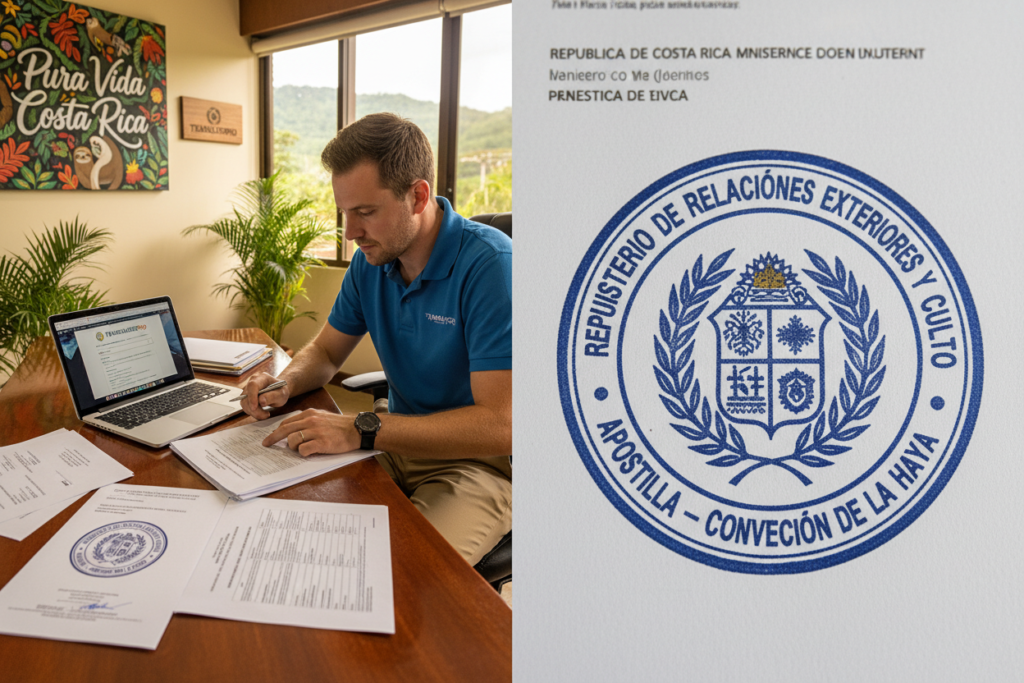
A successful residency application hinges on meticulous document preparation from your home country. We cannot overstate this step. Getting your paperwork in order before you arrive prevents months of delays.
Preparing Your Documents from Home
You will need several core documents. These include a valid passport, your official birth certificate, and an FBI background check. If applying with a spouse, include a certified marriage certificate.
Each document must be an original or a government-issued certified copy. Do not bring simple photocopies. Starting this gathering process early is crucial.
The Importance of Apostilles and Certified Spanish Translations
Every U.S. document requires an apostille. This authentication comes from the Secretary of State’s office in the state where the document originated. It proves the document’s legitimacy to immigration officials.
The apostille process can take several weeks. Plan for this. After apostilling, you need certified Spanish translations.
Only translations by a translator certified in Costa Rica are accepted. Online services or bilingual friends will not suffice. This entire documentation phase often takes two to three months.
Always verify the latest requirements at the official immigration website, migracion.go.cr. A small check now saves huge headaches later.
Step-by-Step Guide to the Residency Application Process
The journey from applicant to resident officially begins with an online submission through the government’s portal. We’ll walk you through each phase, from digital filing to receiving your physical identification card.
Creating Your Account and Submitting Your Application on migracion.go.cr
Your first concrete step is creating an account at migracion.go.cr. This is the official platform for all immigration filings. You will complete the digital form for your chosen category here.
Upload scanned copies of your apostilled and translated documents directly through this portal. You can also pay the initial government fees electronically. Consider this your primary communication channel with the authorities.
Understanding Timelines, Biometric Appointments, and Application Tracking
After submission, officials will review your application. If accepted, you’ll schedule a mandatory biometric appointment. This in-person step happens at one of the immigration offices in Costa Rica.
The entire process, from filing to approval, often takes six to fifteen months. Use your online account to track the status. Promptly respond to any requests for more information.
Final approval leads to your DIMEX card. This is your official residency identification. You will pick it up at a designated immigration office to complete this step.
Is Caja Required for Costa Rica Residency? Unpacking the Role of Caja
A key legal requirement for living here permanently is enrollment in the national social security system. Under Immigration Law 8764, registering with the Caja Costarricense de Seguro Social (CCSS) is mandatory to finalize your status.
Registering with the Caja Costarricense de Seguro Social (CCSS)
Your contributions fund two vital components. SEM provides basic health coverage for medical care. IVM covers pension benefits for disability and retirement.
Since March 2022, new residents must pay both portions. This builds your eligibility for a future monthly pension.
Benefits of Public Healthcare and Pension Contributions
You gain access to a comprehensive public healthcare system. It operates through local EBAIS clinics, regional centers, and national hospitals.
Coverage includes doctor visits, diagnostic tests, surgeries, and medications. Dental and mental health services are also included.
Your monthly payments provide global coverage for your spouse and children. Separate government policy covers all minors aged 0 to 18 for free.
Contributions are calculated as a percentage of your declared income. Some individuals choose supplemental private insurance for faster access.
This step is not optional. It is a legal requirement that provides essential health services and long-term financial security.
Avoiding Common Mistakes and Ensuring a Smooth Application Process
Navigating the path to legal status involves steering clear of frequent, costly errors. We see many people encounter the same pitfalls. This slows down their entire journey.
Identifying Pitfalls and Document Errors
The top error is submitting incomplete paperwork. This includes missing apostilles or using unofficial translations. Expired background checks also cause major delays.
Another common way people get stuck is misunderstanding financial rules. Each residency category has strict income or investment minimums. Confusion here can lead to rejection.
Some assume frequent border runs are a long-term strategy. This is not a legal path for living in Costa Rica. It risks fines and complicates future applications.
Tips for Planning Ahead and Staying Organized
Start gathering documents at least three months before you apply. The apostille and translation process takes weeks. Give yourself plenty of time.
Create a detailed checklist for every required item. Track each document’s status from request to upload. Keep digital and physical copies in labeled folders.
Check your online immigration account regularly. Promptly reply if the office requests more information. Staying organized is the best way to ensure your application moves forward smoothly.
Next Steps and Final Guidance for Your Residency Journey
Completing your residency journey involves understanding the ongoing requirements after approval. We’ve outlined the key steps: choosing your category, preparing documents from home, and submitting via migracion.go.cr. Starting early with apostilles and translations is crucial for a smooth process.
Once approved, you’ll receive your DIMEX card. This identifies you as a legal resident. You must also complete your registration with the public healthcare system. Temporary cards are valid for two years and require renewal.
After three continuous years, you can apply for permanent status. This removes renewal needs and grants more rights. Thousands of expats have successfully navigated this path.
For personalized guidance, contact us. Reach CRIE at crie.cr, WhatsApp +506 8706 3888, or info@crie.cr. Always verify details on the official immigration portal.
FAQ
What are the main residency categories for moving to Costa Rica?
The primary paths are Pensionado, Rentista, and Inversionista. Pensionado is for retirees with a guaranteed lifetime pension. Rentista is for those with stable passive income. Inversionista requires a significant financial investment in the country, like real estate.
Do I need to register with the Caja Costarricense de Seguro Social (CCSS) to get residency?
Registration with the Caja, the public social security system, is a mandatory final step for most residency approvals. You must complete this to receive your physical DIMEX card and finalize your legal status as a resident.
What documents typically need apostilles and translations for my application?
A> Key documents like birth certificates, marriage certificates, and police clearance reports from your home country require an apostille. They must also be translated into Spanish by a certified translator recognized in Costa Rica for the application to be valid.
How does the public healthcare system work for residents once registered?
After registering with the Caja and paying your monthly contributions, you gain access to the CCSS network. This includes clinics, hospitals, and medications for a low copay. Many expats use this as a base and supplement it with private medical insurance for faster service.
What is a common mistake people make during the residency application process?
A frequent error is submitting documents without the proper apostille or certified Spanish translation. This causes immediate rejection and delays. Another pitfall is underestimating timelines—the process can take many months, so planning ahead is crucial.
Can I start the application process online from my home country?
Yes, you can begin by creating an account on the Dirección General de Migración y Extranjería website (migracion.go.cr). You’ll upload initial forms and documents there. However, you will eventually need to be in Costa Rica for biometric appointments and final submissions.
What happens after my residency application is approved?
Upon approval, you’ll receive instructions to register with the Caja Costarricense de Seguro Social, pay your first contributions, and then schedule an appointment to pick up your physical DIMEX ID card. This card is your proof of legal residency status.
Article by Glenn Tellier (Founder of CRIE and Grupo Gap)
Don't wait, contact us right now!
Call or WhatsApp Costa Rica +506 8373 2085 or +506 8706 3888
Call USA/Canada +1 305-906-6784