

Many Americans are drawn to this beautiful country for retirement, remote work, or a fresh family start. Navigating the legal path to live here requires clear guidance and proper planning from the very beginning.
At CRIE, we specialize in Costa Rican immigration. We’ve seen how preparing your documents correctly before arrival makes the entire process smoother and faster.
This guide provides step-by-step support. We’ll explain the main residency categories—Pensionado, Rentista, and Inversionista—and clarify what Digital Nomad status really means.
You’ll learn specific financial requirements, which papers need apostilles and official translations, and realistic timelines of 3 to 12 months. We’ll also highlight common mistakes to avoid.
Our approach is candid and practical. We offer no guarantees, just honest guidance to help you organize your residency application from home with confidence.
Understanding Costa Rica Residency Options
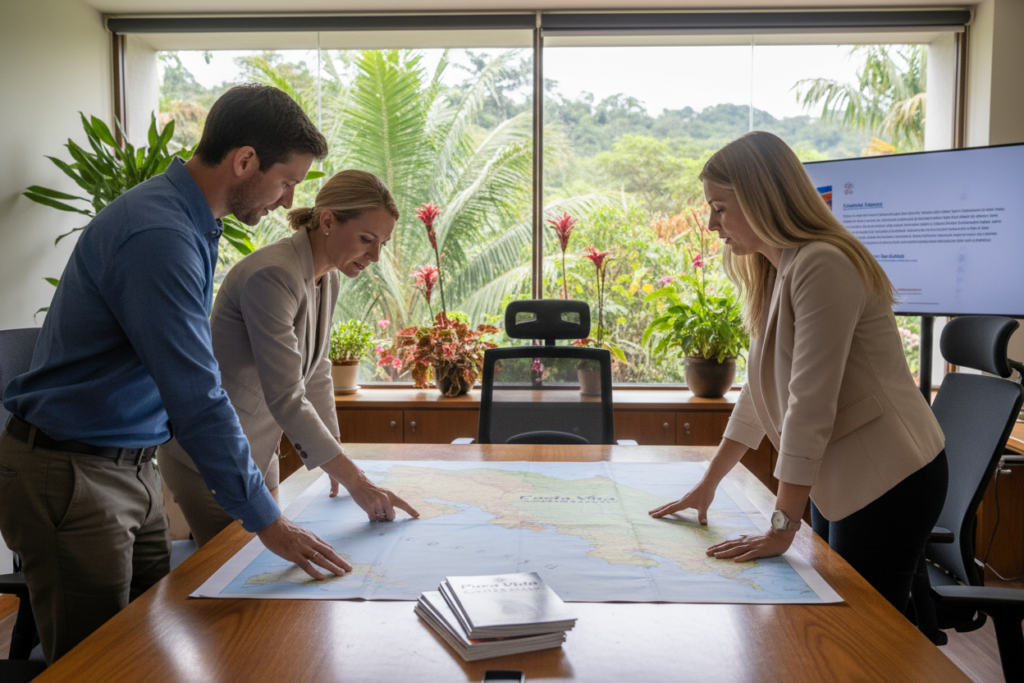
Selecting the right residency pathway is your first major decision when planning a move to Costa Rica. The choice you make sets the foundation for your entire application process and long-term goals.
Overview of Residency Categories (Residencia)
Costa Rica offers several residency categories. Each one is designed for different circumstances and financial situations. The three primary pathways that lead to permanent status are Pensionado (Pensionado), Rentista (Rentista), and Inversionista (Inversionista).
Comparing Pensionado, Rentista, and Inversionista
Pensionado status requires proof of a lifetime pension of at least US$1,000 per month. It’s the go-to option for retirees with steady income.
Rentista residency demands guaranteed monthly income of US$2,500 for a two-year period. This suits those with investment or rental revenue.
Inversionista status needs a minimum investment of US$150,000 in real estate, business, or approved projects. A critical rule often overlooked: the property must be in your personal name, not held through a corporation.
The Digital Nomad visa is a separate program for remote workers. It does not count as formal residency or toward citizenship. Most expats start with temporary residency, renewed every two years. After maintaining this status for three years, you become eligible for permanent residency.
Who Qualifies for Costa Rican Residency (Residencia)
Eligibility for Costa Rican residency is not subjective. It’s based on concrete proof of income or investment. Authorities verify all documentation, so your financial numbers must be real and provable.
Pensionado Qualifications: US$1,000+/month Pension
The Pensionado category requires a guaranteed lifetime pension of at least $1,000 per month. Acceptable sources include Social Security, government pensions, or private retirement plans. One-time distributions do not qualify.
Rentista and Investor Criteria Explained
Rentista residency demands proof of $2,500 in monthly income for two years. This can come from investments, rentals, or annuities. Alternatively, a $60,000 deposit in a local bank meets the requirement.
The Inversionista pathway needs a minimum $150,000 investment in real estate or a business. A strict rule: the asset must be in your personal name, not a corporation.
It’s crucial to understand the Digital Nomad visa is not a residency category. It’s a temporary work permit and does not count toward permanent status.
Requirements for Costa Rican Residency Applications
Financial thresholds are just the beginning—properly apostilled and translated documents form the backbone of any residency application. The requirements are concrete and must be met before submission.
For all categories, you’ll need core documents. This includes a valid passport, birth certificate, and an FBI criminal background check. You also need marriage certificates if applicable, completed forms, and photos.
Specific Criteria for Investors (Inversionista)
The Inversionista category demands a minimum $150,000 investment in real estate or a business. This investment must be in your personal name, not a corporation’s. Authorities require documented proof like property deeds or business registration.
Documentation Essentials and Financial Thresholds
Every U.S. document needs an apostille from the Department of State. This authentication is recognized under the Hague Convention. After that, official translators authorized by Costa Rica’s Ministry of Foreign Affairs must translate them.
We advise starting this process from home. Preparing documents before arrival avoids visa clock pressure and shipping delays.
Financial proof varies. Pensionados need official statements showing $1,000 monthly for life. Rentistas need proof of $2,500 monthly for two years. Inversionistas need purchase documents or business valuations.
Costa Rican immigration officers verify amounts are real and current. Ensure your documentation clearly meets or exceeds the stated thresholds.
Preparing Your Documents Before Arrival
The most critical phase of your residency journey happens long before you set foot in Costa Rica—it’s the meticulous preparation of your paperwork. Starting this process from home is essential. It avoids the pressure of visa clocks and costly shipping delays.
Apostilles, Translations, and Legal Authentications
An apostille is a certification under the Hague Convention. It verifies the origin of public documents like birth certificates and FBI checks. You obtain it from the U.S. Department of State or your Secretary of State.
After apostille, every document needs translation into Spanish. Only an official translator authorized by Costa Rica’s Ministry of Foreign Affairs can do this. We recommend working with a Costa Rican attorney to coordinate this step. Using an unauthorized translator means starting over.
Checklist of Required Documents
Your core checklist includes a valid passport, apostilled birth certificate, and an FBI background check. You also need apostilled marriage certificates if applicable and official proof of income.
Passport photos and completed application forms are also required. If you’re unsure about any requirements, verify directly at migracion.go.cr. This official site provides the most current information.
Begin gathering these documents 3-4 months before your move. This timeline accounts for authentication and translation. Proper preparation from home sets your application up for success.
Step-by-Step Guidance to Apply for Residency
We break down the residency application into five key stages, from initial research to official submission. Following this clear sequence helps you manage each detail with confidence.
Initial Research and Eligibility Assessment
Start by honestly evaluating your finances. Determine which residency category—Pensionado, Rentista, or Inversionista—matches your income or investment capacity.
Verify you can provide the required documentation and maintain the financial thresholds. This foundational step prevents future delays.
Submission Process with Costa Rican Authorities
After gathering and translating documents, complete the official forms. Costa Rican immigration authorities (DGME) have specific requirements for photos and document organization.
Your attorney files the complete package with DGME, pays the fees, and receives confirmation. This gives you legal proof your application is in process.
We strongly recommend working with an immigration specialist. They understand current practices and can navigate procedural variations, smoothing your path considerably.
Timelines and What to Expect During the Process
The clock on your residency journey starts ticking the moment your application is submitted, beginning a multi-stage review. Setting realistic expectations for this process is key to planning your move to Costa Rica.
Average Processing Times and Milestones
The entire residency process typically takes 3 to 12 months. This time depends on your application category, current office volume, and your documentation’s completeness.
You’ll receive proof of submission early on. The main review and approval decision often takes 4 to 8 months. After approval, final steps for your DIMEX card add 1 to 3 more months to the timeline.
We must be clear: no one can guarantee a specific approval date. Processing time varies case by case.
Your first residency period is temporary and requires renewal every two years. After three total years, you can apply for permanent status. Budget between $1,500 and $4,000 for all fees, cards, deposits, and professional help.
Mistakes to Avoid During Your Immigration Process
We often see the same mistakes derail well-intentioned residency plans, most stemming from paperwork oversights. These errors are preventable with careful preparation and verification.
Common Pitfalls in Document Preparation
Using an expired FBI background check is a frequent error. This document must be dated within six months of your application submission.
All U.S. papers need both an apostille and an official translation. The translation must be done by a translator authorized by Costa Rica’s Ministry of Foreign Affairs.
For the Inversionista category, a major pitfall is holding property in a corporation. Costa Rican immigration requires the asset to be in your personal name.
Never assume a tourist visa allows you to live here during the process. Misuse can lead to deportation and a re-entry ban.
Provide clear, consistent financial proof. Any discrepancy between statements and deposits will cause delays.
Consulting a local immigration attorney is wise. Civil cases here can take over five years to resolve if issues arise.
Finally, keep complete copies of every document, receipt, and form. You will need them for renewals and future steps.
Key Tips for Starting Your Residency Application from Home
Beginning your document preparation while still in the United States offers significant logistical advantages. You have full access to U.S. government services and can fix issues without international shipping delays.
We recommend starting this process 3 to 4 months before your planned move. This timeline accounts for obtaining certified records, getting apostilles, and coordinating official translations.
Organizing Your Documents and Translations
Create a dedicated system for your paperwork. Keep every original, apostille, and translation together in a physical folder. Also, scan everything into organized digital files as a secure backup.
This organization is the best way to prevent last-minute panic. Send your apostilled documents to your Costa Rican attorney for translation before you arrive. This makes your package submission-ready.
Remember to bring detailed medical records and a supply of prescription medications. This covers your transition while establishing local healthcare. For more specific guidance, visit our frequently asked questions page.
Thorough preparation from your home country is the single best investment for your residency success in Costa Rica. It removes pressure and sets a clear path forward.
Navigating the Paperwork with CRIE Support
Navigating the residency process alone can feel overwhelming, but you don’t have to manage it without expert support. At CRIE, we specialize exclusively in Costa Rica residency and immigration services. This focused expertise means we stay current on every requirement change and procedural nuance.
How CRIE Can Assist You and Contact Information
We guide you through the entire process. Our services include initial assessment, document checklist preparation, and coordination with authorized translators. We handle application submission and provide follow-up with immigration authorities.
Our approach is candid and realistic. We provide honest feedback on your qualifications and document readiness. This professional guidance helps prevent costly mistakes and delays.
You can reach us directly via WhatsApp at +506 8706 3888 or email at info@crie.cr. We respond to inquiries from early research to active applications. For official requirements, we always recommend cross-referencing with migracion.go.cr.
Working with a reputable immigration attorney who specializes in expatriate cases is highly recommended. The process can be complex, and having dedicated support makes a substantial difference.
Immigration-law-in-costa-rica: Steps to Stay Compliant
Your legal responsibilities in Costa Rica begin the moment your residency is approved, not when it expires. Staying compliant with local law is an ongoing duty. Your temporary status requires renewal every two years, where you must prove you still meet the financial requirements of your category.
Understand what your residency allows. Most categories do not grant automatic work rights. If you wish to be employed, you need a separate work permit from immigration authorities. Also, investors must treat Costa Rica as a primary residence, spending significant time here each year.
Financial responsibility is key. The government can prevent your departure for unpaid bills. Your status can be revoked for fraud, not meeting income rules, or long absences without notice.
After three years of temporary residency, you can apply for permanent Costa Rican residency. This removes the two-year renewal cycle. Mark deadlines on your calendar, keep document copies, and consult your attorney before any major change to stay compliant smoothly.
Understanding the Benefits of Becoming a Costa Rican Resident
Achieving legal residency in Costa Rica provides tangible advantages that extend well beyond the simple right to stay. Your status unlocks healthcare access, financial services, and legal stability that tourist visas cannot offer.
The most significant benefit is access to the universal healthcare system, known as the Caja. As a legal resident, you contribute a percentage of your declared income, typically 7-11%. In return, you receive comprehensive coverage with no exclusions for pre-existing conditions.
Residency allows you to open a local bank account easily. This is essential for managing bills and local finances. Pensionado status offers specific perks, like import tax exemptions on household goods and one vehicle, which can mean major savings.
You gain legal protections and access to government services. Costa Rica recognizes dual citizenship, though most expats maintain residency due to time and language requirements. The ultimate benefit is peace of mind. You have documented proof of your legal right to live here. For personalized guidance on these advantages, connect with our team at CRIE.
Preparing for Your New Life in Costa Rica
Moving to Costa Rica involves more than just legal paperwork—it’s about embracing a new culture and way of life. Your success hinges on adapting to the local pace and customs.
Settling In and Adapting to the Local Culture
The famous “pura vida” lifestyle reflects a genuine cultural shift. It values relationships and a slower pace over pure efficiency.
Language is your most practical tool. We recommend learning basic Spanish before arrival. This shows respect and helps with daily tasks.
If moving with family, consider your children’s needs. International schools are available, but local integration requires Spanish fluency.
Always carry copies of your passport and residency documents. Local authorities may request them for verification.
Connect with both expat and Costa Rican communities. Finding your place means participating in local events and markets.
Approach this transition with patience and curiosity. Doing things the Costa Rican way helps you become part of the community.
Managing Renewal and Ongoing Residency Maintenance
Your journey to secure residency in Costa Rica doesn’t end with initial approval—ongoing maintenance is essential. Temporary status requires renewal every two years to keep your legal standing active.
Key Renewal Requirements and Deadlines
Mark your renewal date at least three months in advance. This gives you time to gather updated financial proof and schedule appointments.
You must demonstrate you still meet your category’s requirements. Pensionados need pension statements, Rentistas require income proof, and Inversionistas must show their investment remains valid.
Renewal fees are around $150 every two years. This is much lower than initial application costs. You should also budget for any professional assistance.
Keep your DIMEX card current and carry it with your passport. Authorities may request proof of your legal status at any time.
After three total years of temporary residency, you can apply for permanent status. This eliminates the two-year renewal cycle. Maintain a complete file of all your renewal documents for this future step.
Moving Toward Costa Rican Citizenship
The path to Costa Rican citizenship is a marathon, not a sprint, built upon a foundation of sustained legal residency. You cannot apply directly for citizenship without first completing the required years of legal status in the country.
Residency Steps Before Pursuing Citizenship
Your citizenship eligibility clock starts when you receive your initial residency approval. For U.S. citizens, the standard timeline is seven years of continuous legal residency.
This reduces to five years if married to a Costa Rican citizen or if you have Costa Rican children. Maintaining your status without interruptions is essential for this time to count.
Citizenship Requirements and Language Proficiency
Costa Rican citizenship requirements go beyond the time threshold. You must pass a Spanish language proficiency test, both written and oral.
Applicants must also demonstrate knowledge of local history and values. Proof of financial stability and a clean criminal record throughout your residency period are mandatory.
An important family consideration: all children born in Costa Rica receive citizenship at birth. The good news is that dual citizenship is allowed, so you can keep your U.S. passport.
Realistically, most Americans maintain permanent residency. The seven-year requirement and language test are substantial, but the citizenship option exists for long-term goals.
Working with an Immigration Specialist or Attorney
The complexity of Costa Rican immigration procedures makes expert legal guidance not just helpful but often essential. A dedicated attorney understands the specific rules and how officers interpret them.
Importance of Professional Guidance
This professional support is a practical investment. It prevents costly errors in your residency application. An immigration specialist navigates changing requirements and multiple agencies.
Your U.S. attorney cannot represent you here without local Costa Rican counsel. You need a lawyer licensed in Costa Rica. Verify their experience with residency cases specifically.
Look for an attorney fluent in English if needed. Always request a written estimate of their fees and services. Most Costa Rican lawyers are also notaries, which helps with document authentication.
The Costa Rican Bar Association sets minimum legal fees. Actual costs can be higher based on your case’s complexity. Professional guidance is valuable because local civil cases often take over five years.
Having an attorney manage follow-ups and delays keeps your application moving. Establish clear communication about timelines and expectations from the start.
Your Next Steps for a Successful Residency Journey
Immediate and organized planning from home sets the stage for your residency application’s success. Your journey in Costa Rica begins with the steps you take now in the United States.
First, assess which residency category fits your finances. Start gathering documents like your FBI check and income proof 3-4 months before your move. Make sure you understand the timeline of 3 to 12 months and a budget of $1,500 to $4,000.
Do not rely on advice from others. Verify everything at the official migracion.go.cr website. Working with an immigration specialist smooths the entire process.
If you are the right person for this change, contact us. Reach CRIE via WhatsApp at +506 8706 3888 or email info@crie.cr. We will help you start your preparation properly from home.
FAQ
What is the difference between temporary and permanent residency in Costa Rica?
Temporary residency is your initial status, granted under categories like Pensionado or Inversionista, and is valid for specific periods before renewal. Permanent residency is typically applied for after holding temporary status for several years and offers more stability with fewer renewal requirements. The path you take depends on your long-term goals and qualifications.
Can my entire family apply for residency together under one application?
A>Yes, the main applicant under categories like Rentista or Investor can include dependent spouses and children in a single application. Each family member requires specific documents, like birth certificates and marriage licenses, but the financial proof from the primary applicant often supports the entire family unit, streamlining the process.
How long does the residency application process typically take?
Processing times can vary significantly based on the government’s caseload and the completeness of your file. Currently, expect the process from submission to approval to take several months. Using a specialist helps ensure your application is complete, which can prevent delays and keep the timeline on track.
Do I need to hire an immigration attorney to apply?
While not legally mandatory, professional guidance is highly recommended. The process involves complex government paperwork, strict financial requirements, and legal nuances in Spanish. An experienced attorney or firm like CRIE manages the details, communicates with authorities on your behalf, and dramatically increases your chances of a smooth, successful application.
What are the most common reasons for a residency application to be denied or delayed?
The most frequent issues include incomplete documentation, financial proof that doesn’t meet the minimum thresholds, or documents lacking proper apostilles and official translations. Even small errors can cause major setbacks. We help clients avoid these pitfalls through meticulous preparation and review before submission.
Once I have residency, what are the rules for leaving and re-entering Costa Rica?
As a temporary resident, you must not leave the country for more than six consecutive months or your status could be revoked. You also need to ensure your residency card (cédula) and passport are valid for re-entry. Planning travel around these rules is a key part of maintaining your good standing with immigration officials.
Can I work in Costa Rica with a Pensionado or Rentista residency status?
No, the Pensionado and Rentista categories are designed for retirees or individuals with passive income, and they do not grant the right to work for a local salary. If you wish to work, you would need to explore a different residency category or have your potential employer sponsor a work permit, which is a separate process.
What are the first steps I should take from my home country before moving?
Start by gathering your core documents—birth certificates, marriage licenses, and proof of income or investment. Then, begin the process of obtaining apostilles and official Spanish translations. Concurrently, consult with a professional to assess your best residency pathway. This upfront work in your home country saves considerable time and stress later.
Article by Glenn Tellier (Founder of CRIE and Grupo Gap)
Don't wait, contact us right now!
Call or WhatsApp Costa Rica +506 8373 2085 or +506 8706 3888
Call USA/Canada +1 305-906-6784