
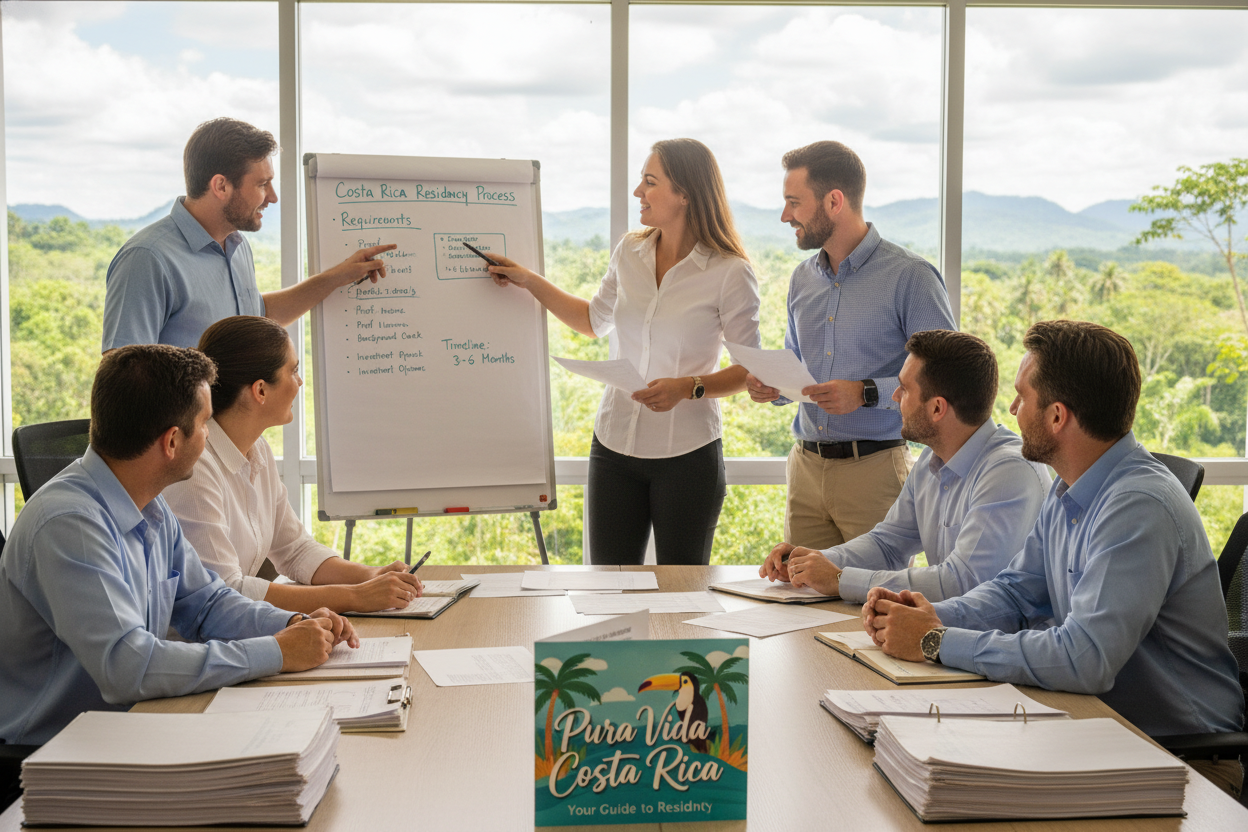
Many professionals ask us how to legally establish residency in Costa Rica. This comprehensive guide walks you through the realistic path from start to finish.
We provide step-by-step guidance on the main categories: Pensionado, Rentista, and Inversionista. Each has specific income or investment requirements, like a $1,000+ monthly pension or a $150,000 minimum investment.
You’ll learn which documents need apostilles and official translations before you arrive. Starting the process from your home country with properly prepared paperwork is crucial for success.
We’ll be candid about timelines, typically 3 to 12 months, and common bureaucratic delays. We also explain why a Digital Nomad visa does not count toward permanent residency or citizenship.
Our focus is transparent, practical guidance—no pricing promises, just a solid foundation you can verify. Let’s begin your journey to moving to Costa Rica.
Understanding Costa Rica Residency Paths
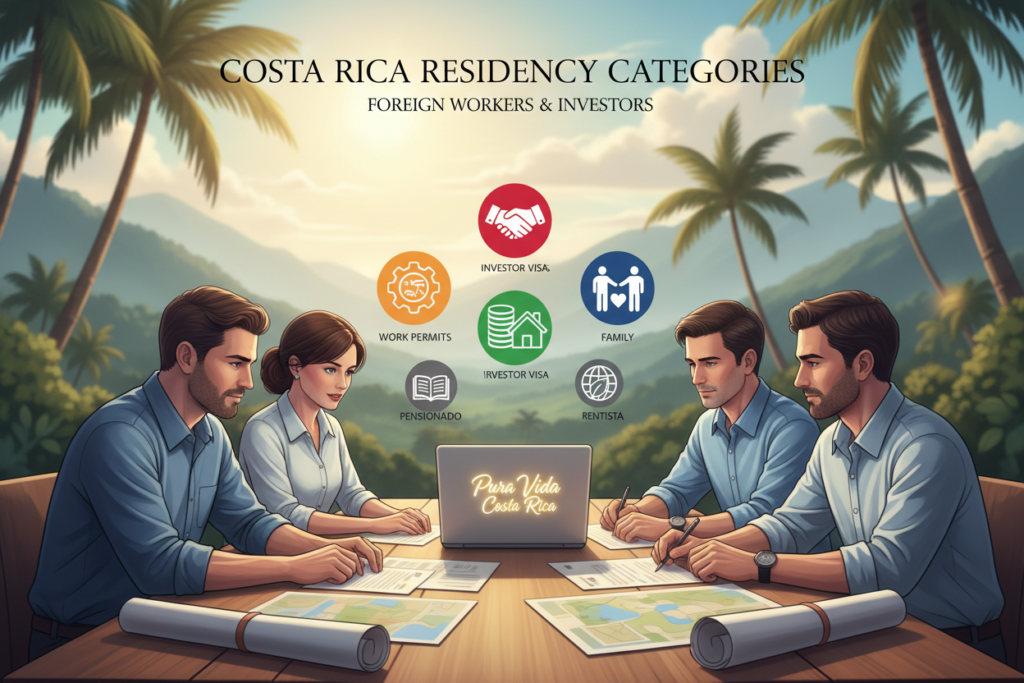
Navigating the residency options in Costa Rica begins with understanding the distinct categories available to applicants. We clarify the three main pathways, each designed for different financial situations.
Overview of Residency Categories (Pensionado, Rentista, Inversionista)
The Pensionado (Pensionado) category requires a verifiable pension of at least US$1,000 per month. This can come from Social Security or private retirement accounts.
Rentista (Rentista) residency demands stable passive income of US$2,500 monthly for two years. Applicants often prove this by depositing $60,000 in a local bank.
The Inversionista (Inversionista) path needs a minimum investment of $150,000 in the economy. This includes real estate, which must be in your personal name.
Temporary Versus Permanent Residency Options
Temporary residency is the starting point for most. It’s granted for two years and requires renewal. You must maintain financial requirements during this period.
After three consecutive years, you can apply for permanent status. This offers greater stability and full work authorization. It eliminates renewal needs.
Choosing the right category from the start prevents costly mistakes. For detailed steps, review the Costa Rica visa process.
Who Qualifies for Costa Rica Residency?
Eligibility for Costa Rica residency is not one-size-fits-all. It’s defined by distinct categories with clear financial benchmarks. Your path depends on your income sources and employment situation.
Eligibility Criteria for Foreign Workers
Retirees with a guaranteed pension of at least $1,000 monthly qualify for Pensionado status. This category does not permit local employment within the country.
Foreign workers with stable passive income of $2,500 per month for two years can apply for Rentista residency. This suits remote employees and freelancers. You cannot work for Costa Rican companies under this permit.
The Inversionista category requires a minimum $150,000 investment in the local economy. This unique pathway allows you to work in connection with your investment project.
Seeking employment with a local company presents higher barriers. You typically need permanent residency first. Employers must prove no qualified Costa Rican can fill the role.
A Digital Nomad visa allows remote work for foreign clients. It requires $3,000 monthly income. This status does not count toward residency or citizenship requirements.
We always recommend establishing your residency foundation first. Addressing work permissions comes afterward for a successful move.
Preparing Essential Documents for Your Application
Before you even book a flight, your focus must shift to assembling and authenticating a precise set of personal records. We guide you through this critical phase to prevent costly delays.
Proper document preparation is the bedrock of a successful residency application. Errors here are the most common reason for rejection.
Required Documents List and Authenticity
Your core checklist includes a valid passport with six months’ validity, an original birth certificate, and an FBI criminal background check for U.S. citizens. You also need proof of income, recent bank statements, and passport photos.
If applicable, include a marriage certificate. Every piece of proof must be original or a certified copy. Authenticity is non-negotiable for Costa Rica’s immigration process.
Apostilles and Translations (Traducciones Oficiales) Explained
Every foreign document requires two steps. First, obtain an apostille from your home country’s authority, like the U.S. Department of State. This authentication costs $100 to $300.
Second, get an official Spanish translation by a translator authorized in Costa Rica. These *traducciones oficiales* cost $40 to $500. Skipping either step means automatic rejection.
The major mistake is arriving with apostilled but untranslated documents. This error can add months to your timeline as you ship corrections from home.
We strongly advise completing this paperwork while still in the United States. Coordinating FBI checks and State Department apostilles from abroad is exponentially more difficult.
Always verify the latest specifications at migracion.go.cr before finalizing your documents. Starting with accurate information prevents expensive do-overs.
Step-by-Step Pre-Arrival Checklist
The most critical phase of your residency application occurs before you ever set foot in the country. A systematic approach from home prevents costly delays and restarts.
Organize Your Paperwork from Home
Begin by contacting the Costa Rican embassy. Confirm current requirements for your specific category. This initial step clarifies if you need an entry visa.
Create a master checklist of every required document. Treat this as a project with a 4-6 month timeline. Government processing and mail delays are real factors.
Sequence matters. Obtain your FBI background check early—it can take months. Then secure the apostille and official translation. A single document can consume a quarter of your timeline.
Tips on Verifying and Authenticating Documents
Build verification into your process. Confirm each document is the correct type and recently issued before paying for authentication. This saves time and money.
We suggest organizing both physical and digital copies. Create a folder system with originals, apostilles, and translations together. Secure scanned backups in cloud storage.
Consider professional guidance to navigate this complex process. While not required, it prevents expensive mistakes. Your final review should happen 2-4 weeks before departure.
Arriving with incomplete paperwork resets your clock to zero. This is especially true for spouses needing coordinated documentation. Proper preparation is your key to a smooth move.
Timeline and Processing Milestones
Understanding the milestones from submission to your DIMEX card helps manage anticipation. We provide honest timeframes for this administrative journey.
Application Processing Timeframes
The entire process typically takes 3 to 12 months. Your timeline starts when you submit a complete application to immigration authorities.
You will receive an expediente number for tracking. Applications with perfect documentation may finish in 3-6 months. Incomplete files can extend beyond 8 months.
Key steps include initial review, approval notification, a biometrics appointment, and final card issuance. We cannot guarantee specific processing times.
Managing Renewals and Updates
Temporary residency is valid for two years. You must initiate renewal 3-4 months before expiration. Letting it lapse creates serious complications.
The renewal requires proving you still meet financial rules. You will submit updated documents and pay fees.
After three consecutive years of temporary status, you can apply for permanent residency. This eliminates future renewals and expands work rights. Always check migracion.go.cr for current estimates.
Common Pitfalls and Mistakes to Avoid
We consistently see the same critical errors causing delays and rejections in residency applications. Most are entirely preventable with proper preparation and attention to detail. The bureaucratic process leaves little room for error.
Avoid Incomplete or Incorrect Documentation
Submitting documents without proper apostilles or unauthorized translations is the top mistake. This causes automatic rejection. You must then restart the entire application, adding months to your timeline.
Another major error is letting your tourist visa expire while your residency permit processes. Overstaying violates immigration law and complicates your case. Always maintain legal status.
Insufficient income proof also sinks many applications. Vague bank statements or pension letters that don’t clearly meet the $1,000 or $2,500 minimums lead to denials. Provide crystal-clear documentation.
For Inversionista applicants, investing under a corporate name instead of your personal name is a critical flaw. Costa Rica’s rules require the investment be in your name. Fixing this later is costly.
Do not assume a Digital Nomad visa counts as residency. It does not. This status does not lead to permanent residency or citizenship. Starting over wastes years.
Finally, budget for the full cost. Many forget apostille fees, official translations, attorney costs, and the DIMEX card. The total often ranges from $1,500 to $4,000. Plan accordingly to avoid financial stress.
The Importance of Starting from Home with CRIE Support
The strategic advantage of beginning your residency journey from your home country cannot be overstated. This is where specialized guidance provides the most value, turning a complex process into a manageable plan.
Contact CRIE (crie.cr) for Personalized Guidance
CRIE focuses exclusively on Costa Rica residency and immigration. We don’t handle other services. Our expertise is in navigating the legal pathway to establish you in the country.
Starting your application from home is exponentially easier. You have direct access to authorities for background checks, apostilles, and bank documents. Trying to coordinate this from Costa Rica leads to shipping delays and visa expiration stress.
We provide transparent, personalized guidance. We assess your specific situation—income, family status, and goals—to identify the best residency category for you. We always direct clients to verify details at the official source, migracion.go.cr.
Contact CRIE for a clear assessment of your options. Reach us via WhatsApp at +506 8706 3888 or email info@crie.cr. Let’s build your foundation for legal residency.
Navigating Immigration Requirements for Foreign Workers
The pathway to legally working in Costa Rica is governed by protective policies that employers must navigate. The legal framework prioritizes local employment, creating specific hurdles for foreign professionals.
Understanding the Legal Framework
Costa Rican law requires employers to justify hiring a foreign worker. They must prove no qualified local citizen or resident can fill the role. This is a substantive requirement enforced by the Ministry of Labor.
A work permit is tied to a specific job and employer. Changing positions requires a new application. Employers typically seek candidates with specialized skills and advanced degrees.
Your residency status determines your work rights. Pensionado and Rentista holders cannot be employees of local companies but can own a business. Inversionista residents can work connected to their investment.
Permanent residents have full work rights without a separate permit. We always advise securing residency first. This approach aligns with the legal framework and sets realistic expectations for employment.
Understanding Thresholds: Costa Rica residency for foreign worker Eligibility and Financial Requirements
Your financial profile is the single most important factor determining your eligibility for legal residency. The monetary requirements for each category are fixed and verified rigorously.
Income Requirements for Pensionado and Rentista Categories
The Pensionado path requires proof of a lifetime pension of at least US$1,000 per month. This income must come from a government or private retirement source.
Verification involves official award letters and consistent bank statements. Vague proof or fluctuating deposits leads to problems.
For Rentista status, you need guaranteed monthly income of US$2,500 for two years. A common method is depositing $60,000 into a local bank.
The funds are then disbursed monthly to demonstrate stability. The income must be passive and not tied to local employment.
The Inversionista category demands a minimum investment of $150,000. This can be in real estate, a business, or other approved sectors.
A critical rule: if purchasing property, the title must be in your personal name. Using a corporate entity will cause rejection.
All applicants should consider potential tax obligations. Consulting a professional familiar with both tax systems is wise.
Digital Nomad: Closest Residency Option for Remote Workers
A common misconception among remote workers is that the Digital Nomad visa offers a route to permanent residency. We clarify this important distinction upfront.
This temporary visa allows you to legally live and work remotely in Costa Rica. You must prove a monthly income of $3,000 for individuals or $4,000 for families.
Your income must come from foreign employers or clients. You also need private health insurance for your entire stay.
The visa is valid for 12 months and can be renewed once. This gives you a maximum of 24 months in the country.
Why Digital Nomad Status Does Not Count as Residency
Time spent on this visa does not count toward permanent residency or citizenship. Your residency clock remains at zero.
For remote workers seeking a true long-term path, the Rentista category is the closest option. It requires a $2,500 monthly income for two years.
Rentista grants temporary residency that counts toward permanent status after three years. We recommend evaluating your timeline carefully.
Choose the Digital Nomad visa for a short-term test. Choose Rentista residency if you are committed to making Costa Rica your home.
Steps to Secure Your DIMEX Card and Local Integration
Receiving your residency approval is a major victory, but the process isn’t complete until you secure your official identification and integrate locally.
Obtaining Your Official DIMEX Card
After approval, you’ll attend a biometrics appointment. Authorities will capture your fingerprints and photo.
Your DIMEX card typically arrives within 2-4 weeks. This official resident ID costs between $98 and $123.
This card serves as your primary identification for all official purposes in Costa Rica.
Setting Up a Local Bank Account and Social Security
Opening a Costa Rican bank account requires your DIMEX card, passport, and proof of address. The process demands patience and may involve multiple appointments.
All temporary residents—except Digital Nomad visa holders—must register with the Caja Costarricense de Seguro Social. This is the national social security and healthcare system.
Registration happens at your local EBAIS clinic. You’ll need your DIMEX, passport, and income declaration.
Monthly contributions are typically 7-11% of your declared income. Benefits include full access to the public healthcare network.
Many residents supplement this coverage with private insurance for faster service. You should also consult a tax professional about potential obligations on worldwide income.
Final integration means tracking renewal deadlines and maintaining continuous Caja payments. This ensures your status remains fully compliant.
Final Tips for a Smooth Residency Journey
Your path to establishing a life in Costa Rica hinges on a few final, critical practices. We distill our experience into these essential reminders for a successful application.
Begin your documentation from home. This avoids the top cause of delay. Choose your residency category based on your actual, verifiable finances—not aspirations.
Budget realistically for the entire process, including apostilles and translations. Allow 12-18 months from start to finish for this guide to be useful.
After approval, track renewal deadlines and maintain your Caja contributions. Understand your tax obligations in both Costa Rica and your home country.
For personalized guidance on moving to Costa Rica, contact CRIE. Reach us via WhatsApp at +506 8706 3888 or email info@crie.cr.
FAQ
What are the main residency categories available to foreign workers in Costa Rica?
The primary paths are Pensionado, Rentista, and Inversionista. The Pensionado category is for those with a guaranteed lifetime pension. Rentista is for individuals with stable, passive income. The Inversionista category requires a significant financial investment in the country, such as in real estate or a business. Each has specific financial thresholds and requirements.
What documents are absolutely essential to start my residency application?
You’ll need a valid passport, a birth certificate, and a police clearance certificate from your home country—all apostilled and translated by an official translator in Costa Rica. For employment-based applications, a formal job contract from a Costa Rican employer and proof of your professional qualifications are mandatory. Getting these documents authenticated before you arrive is critical.
How long does the residency application process typically take?
Processing times can vary widely, but you should generally expect a wait of several months to over a year for a decision from immigration authorities. The timeline depends on the category, the completeness of your file, and government processing backlogs. We always advise clients to plan for a longer timeframe to avoid unnecessary stress.
What is the most common mistake applicants make?
The biggest pitfall is submitting incomplete or incorrectly authenticated documents. Using documents without an apostille or an official Spanish translation (traducción oficial) will cause immediate rejection. Another frequent error is misunderstanding the financial requirements, such as proving the exact monthly income for a Rentista visa. Attention to detail is non-negotiable.
Does the Digital Nomad Visa lead to permanent residency?
No, it does not. The Digital Nomad Visa is a special one-year permit for remote workers and entrepreneurs. It offers great benefits like tax exemptions on imported equipment. However, it is a temporary status and does not count toward the years required for permanent residency. It’s a fantastic option for testing life here, but it’s a separate track from formal residency.
What is a DIMEX card, and why is it important?
The DIMEX card is your official physical identification document as a resident in Costa Rica. Once your application is approved, you’ll receive this card. It is essential for nearly every aspect of daily life—opening a local bank account, signing up for the national healthcare system (CCSS), and formalizing employment. It is your proof of legal status.
Can I apply for residency after entering Costa Rica on a tourist visa?
Yes, this is a common approach. Most people enter as tourists and then begin their application process from within the country. However, you must initiate the process before your 90-day tourist stamp expires. It’s crucial to work with your legal advisor to ensure you file the necessary paperwork to maintain “in process” status and avoid falling out of legal standing.
What ongoing obligations do I have after becoming a resident?
As a temporary resident, you must renew your status periodically, which involves proving you still meet the original financial or investment conditions. You are also required to pay into the Costa Rican social security system (Caja) if you are employed locally. Furthermore, you must notify immigration of any change of address. Failing to meet these obligations can jeopardize your status.
Article by Glenn Tellier (Founder of CRIE and Grupo Gap)
Don't wait, contact us right now!
Call or WhatsApp Costa Rica +506 8373 2085 or +506 8706 3888
Call USA/Canada +1 305-906-6784