

We understand you’re exploring a significant life change. If you are married to a Costa Rican citizen, a specific immigration pathway exists for you. This route, known as Residencia por Vínculo, is distinct from other common categories.
It provides a legitimate way to gain legal status. This status allows you to live and work in the country without the 90-day exit requirement of a tourist. The process leads from temporary to permanent residency.
A key appeal is that it doesn’t demand a monthly income or a large investment. This sets it apart from options like the Pensionado or Rentista visas. It’s designed for couples building a life together here.
We believe in setting realistic expectations from the start. This journey requires meticulous preparation. All your documents must be ready before you arrive—think apostilles and translations.
Processing typically takes 6 to 12 months. Delays can happen, and documents expire. Our role is to offer transparent, step-by-step guidance to help you navigate.
This information is practical preparation advice, not legal counsel. For personalized help, you can contact CRIE. We are here to assist you in starting this process correctly.
Understanding Residency Through Marriage in Costa Rica

For spouses of Costa Rican nationals, a specific and advantageous residency route exists. Costa Rica offers five main pathways for legal long-term stay. These include Pensionado (for retirees), Rentista (for fixed income), Inversionista (for investors), work authorization, and family-based categories.
Overview of Residency Options and CRIE (crie.cr) Guidelines
The Pensionado category requires proof of a permanent pension of at least US$1,000 monthly. The Rentista route demands US$2,500 in monthly income for two years. For the Inversionista visa, a minimum US$150,000 investment in property held in your personal name is mandatory.
We must clarify a common point of confusion. The Digital Nomad visa is not a residency pathway. It does not count toward permanent status or citizenship.
Why Choose Marriage-Based Residency?
Marriage to a Costa Rican citizen provides direct access to temporary residency. This route, called Residencia por Vínculo, has no financial thresholds. Your relationship is the qualifying factor.
It grants immediate work authorization upon approval. You start with a one-year temporary status. This renews annually before leading to permanent residency after three years.
Costa Rica’s stability, healthcare system (CAJA), and environment add to its appeal. Proper preparation of documents from your home country is key to a smooth process.
Step-by-Step Application Process for Marriage Residency
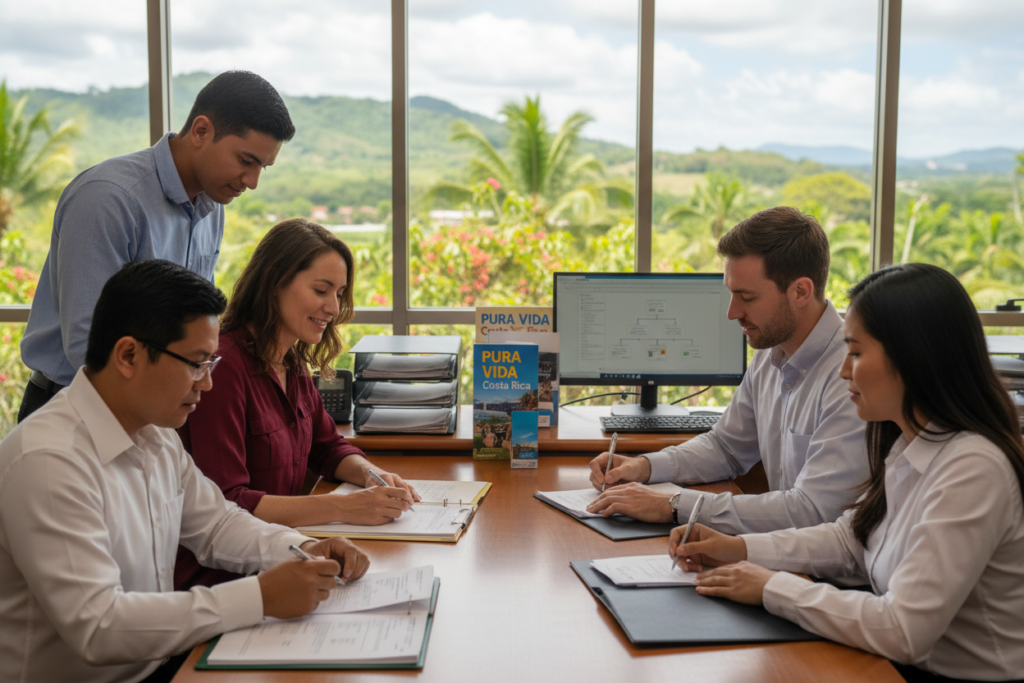
Navigating the marriage residency application requires a clear roadmap from start to finish. We break the procedure into distinct phases to help you prepare thoroughly. This transparency reduces anxiety about the unknown.
Who Qualifies and Initial Requirements
You must be legally married to a Costa Rican citizen. Your union must be registered with Costa Rica’s Civil Registry (Registro Civil). If you married abroad, registration here is your first official step.
The process begins in your home country. Gather your birth certificate and a criminal background check. These documents need apostilles and certified Spanish translations before you travel.
Timeline and Process Milestones
Most applications process within 6 to 12 months. Delays can occur, so patience is essential. A critical detail is that documents are typically valid for only six months for immigration purposes.
After submitting your package to immigration, you’ll receive a “Hoja de trámite”. This processing sheet allows you to stay legally in Costa Rica. A key milestone is the couples interview, where officials verify your relationship is genuine.
Common mistakes include letting documents expire or failing to maintain legal status during processing. After approval, final steps involve CAJA enrollment and obtaining your DIMEX card. For official verification, always reference migracion.go.cr.
Documents and Legal Requirements
Unlike other residency categories, the marriage-based route shifts the focus from financial proof to personal documentation. We must emphasize that improper paperwork is the top cause for delays.
Essential Documents: Birth Certificate, FBI Background Check, and Marriage Certificate
Your birth certificate serves as foundational proof of identity. It must be an official copy from your country of origin. US citizens obtain certified copies from their birth state.
A criminal background check proves no disqualifying history. US applicants require an FBI background check with fingerprinting. Your marriage certificate must be registered with Costa Rica’s Civil Registry if married abroad.
Document Authentication: Apostilles and Translations
Each document needs an apostille for authentication. This is a standardized certificate under the Hague Convention of 1961. Without it, authorities won’t accept your paperwork.
All non-Spanish documents require certified translation. Use translators authorized in Costa Rica for exact translations. Remember, these documents are valid for only six months.
Financial and Personal Thresholds – Pensionado, Rentista, Inversionista
This pathway has no financial thresholds. Unlike the Pensionado visa requiring a US$1,000+ monthly pension, marriage residency demands no income proof.
It also differs from the Rentista or Inversionista categories. Your qualifying relationship is sufficient, making document preparation your sole focus.
Optimizing Your Application with costa-rica-residency-by-marriage-simplified-guide
A successful residency application hinges on precise timing and thorough preparation. We provide strategies to streamline your process and avoid common delays.
Time your document gathering carefully. All papers must remain valid within a six-month window when you submit. For U.S. citizens, using the FBI’s electronic fingerprint service can slash wait times from weeks to hours.
Prepare meticulously for your couples interview. Organize photos, communication records, and shared bills to demonstrate your genuine relationship. This evidence is crucial for immigration officials.
Never miss a scheduled appointment. The system operates on strict timelines. After approval, enroll in CAJA immediately to maintain your legal status.
Plan for annual renewals during your temporary residency. Set calendar reminders two months before expiration. This proactive approach prevents status jeopardy.
This guidance is based on documented experiences, not legal advice. For personalized assistance with your application, contact CRIE at info@crie.cr.
Securing Your Future in Costa Rica – Final Steps and Next Actions
Receiving your initial residency approval marks the start of your official life in this country. Your first three years require annual renewals to maintain temporary status.
You must enroll in CAJA for healthcare and prove your marriage remains valid each year. This continuous legal presence is essential for progress.
After three consecutive years, you can apply for permanent residency. This status eliminates renewals and grants most rights of a Costa Rican citizen.
If you seek citizenship, that path opens after two years of marriage and legal residency. The country allows dual citizenship.
Your rights include legal work authorization, property ownership, and full healthcare access. These make the obligations worthwhile.
Remember, laws can change. Always verify current rules at migracion.go.cr. This is practical guidance, not a guarantee.
For personalized help, contact CRIE. We offer personalized assistance for spouses via WhatsApp +506 8706 3888 or info@crie.cr.
FAQ
Who is eligible to apply for residency through marriage in Costa Rica?
You are eligible if you are legally married to a Costa Rican citizen and can prove a genuine, ongoing relationship. The Costa Rican spouse must be a citizen by birth or naturalization. Both partners must provide clean criminal background checks and valid identity documents to begin the process.
What are the most important documents we need to gather?
The core documents are your apostilled birth certificate, an FBI background check (or equivalent from your home country), and your official marriage certificate. All foreign documents must be translated into Spanish by a certified translator in Costa Rica. The Dirección General de Migración y Extranjería requires these for every application.
How long does the entire residency process take?
The timeline can vary, but you should plan for several months. After submitting your complete application package to immigration, the review and approval process takes time. We always advise clients to start early, as document authentication from abroad can add weeks or months to your preparation phase.
Do we need to prove financial stability for marriage-based residency?
While marriage residency itself doesn’t have a strict income minimum, demonstrating financial stability strengthens your application. The immigration office may look for proof that you can support yourselves. Many couples use the spouse’s local income or choose to formally meet the requirements for a Pensionado or Rentista visa for added security.
What is the "three-year rule" for permanent residency?
After holding temporary residency through marriage for three years, you become eligible to apply for permanent resident status. This is a crucial milestone, as permanent residency removes annual renewal requirements and provides more long-term stability for your life in the country.
Can we apply if we were married outside of Costa Rica?
Yes, absolutely. Marriages legally performed in other countries are recognized. Your foreign marriage certificate must be apostilled (or legalized) and translated into Spanish. You will then register it with the Costa Rican Civil Registry to make it official for the immigration process.
What happens after our application is approved?
Upon approval, you will receive a cédula de residencia (residency ID card). This grants you the right to live, work, and access services in Costa Rica. You must maintain your status by ensuring your passport remains valid and complying with any conditions of your temporary residency until you qualify for permanent status.
Article by Glenn Tellier (Founder of CRIE and Grupo Gap)
Don't wait, contact us right now!
Call or WhatsApp Costa Rica +506 8373 2085 or +506 8706 3888
Call USA/Canada +1 305-906-6784