
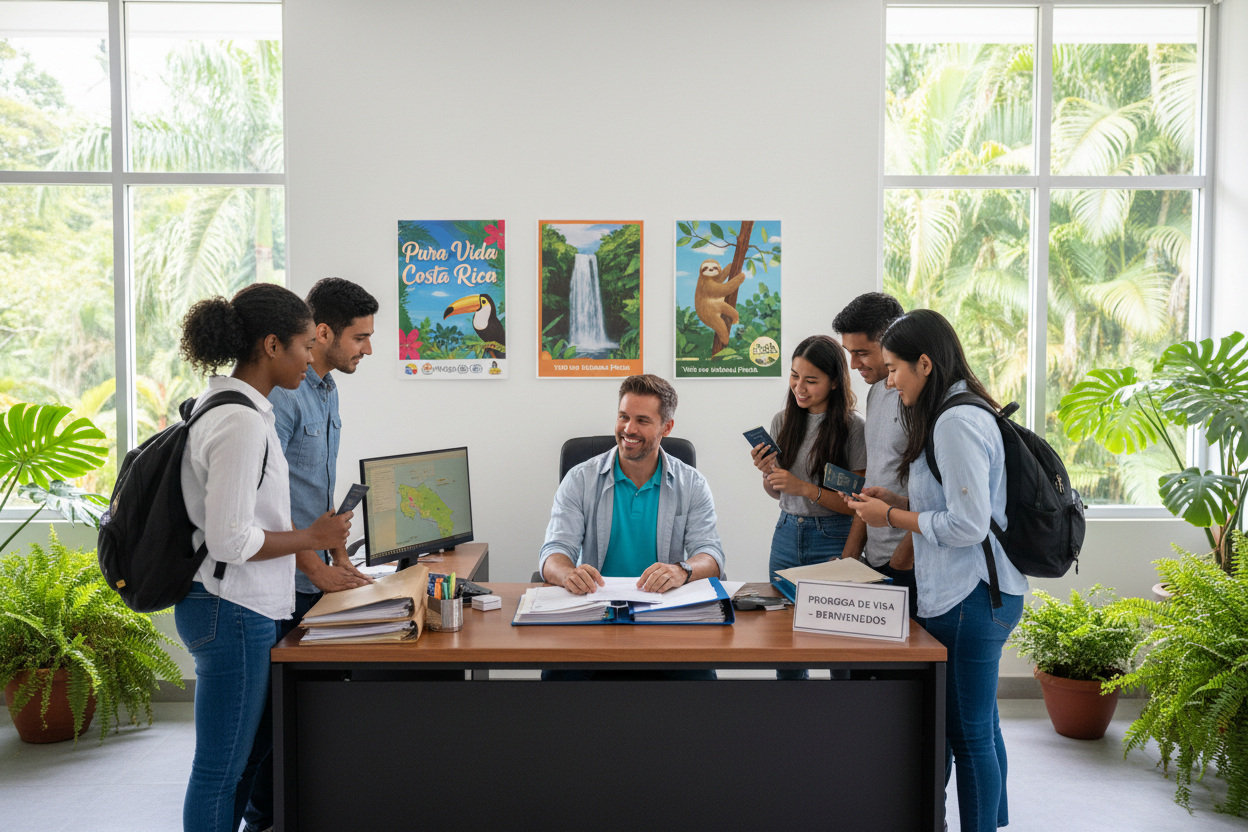
Many travelers from the US and Canada believe extending their tourist visa in Costa Rica is a simple process. The reality is different. Immigration authorities rarely grant these extensions to visitors from Group 1 nationalities.
We at CRIE specialize in Costa Rica residency and immigration solutions. This guide focuses on legal, long-term pathways rather than temporary fixes. If you wish to stay beyond the standard tourist period, formal residency is the proper route.
Options like the Pensionado, Rentista, or Inversionista programs offer a stable legal status. It’s crucial to start your application from your home country with all documents prepared. For more on this transition, see our detailed guide.
We provide professional guidance, not promises. This article answers key questions about qualifications, requirements, and timelines. Our goal is to give you clear, realistic information for your journey.
Overview of Costa Rica’s Visa and Entry System
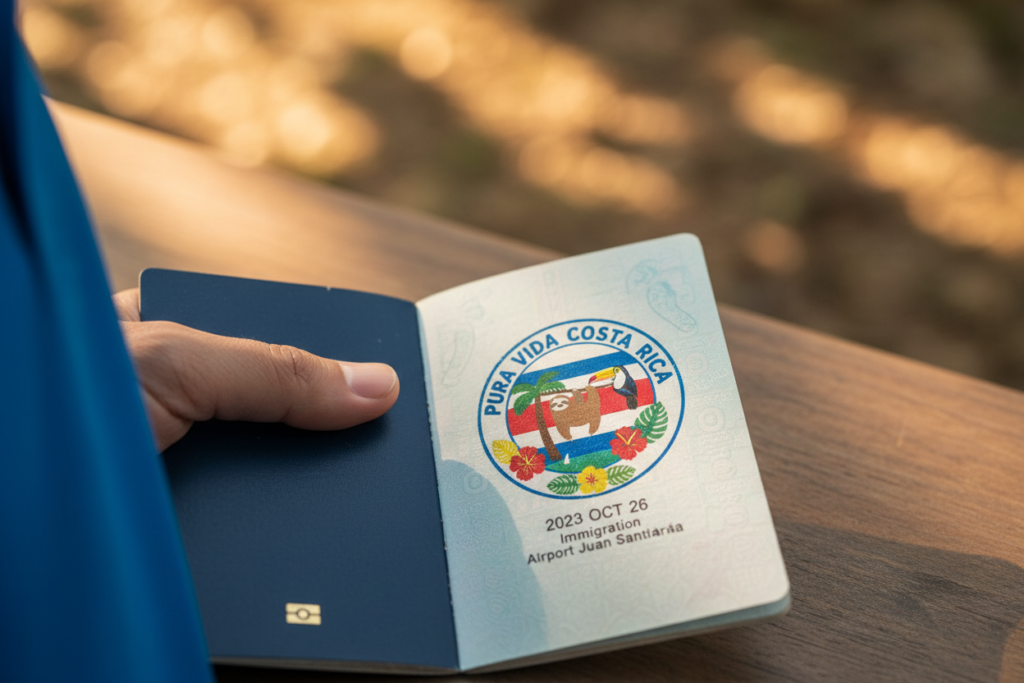
Unlike many destinations, Costa Rica does not require a pre-approved visa for short-term visitors from North America. Your legal permission to enter Costa Rica is granted directly by an immigration officer upon arrival.
Tourist Visa Granting Process for US Travelers
You will receive an entry stamp in your passport. This stamp serves as your tourist authorization. While the maximum stay can be up to 180 days, the officer has full discretion.
They may grant fewer days based on your documentation and travel plans. The number written on this stamp is your official permission to stay in the country.
Basic Entry Requirements and Documentation
All travelers must meet specific requirements. You need a valid passport with adequate remaining validity. Proof of onward or return travel is mandatory.
Officials may also ask for evidence of sufficient funds. The guideline is approximately $100 per month of your intended stay. Having details for your first night’s accommodation is wise.
We advise photographing your passport stamp immediately. This system is designed for temporary visits. For longer-term living, formal Costa Rican residency is the proper path.
Understanding Eligibility for Costa Rican Immigration (CRIE)
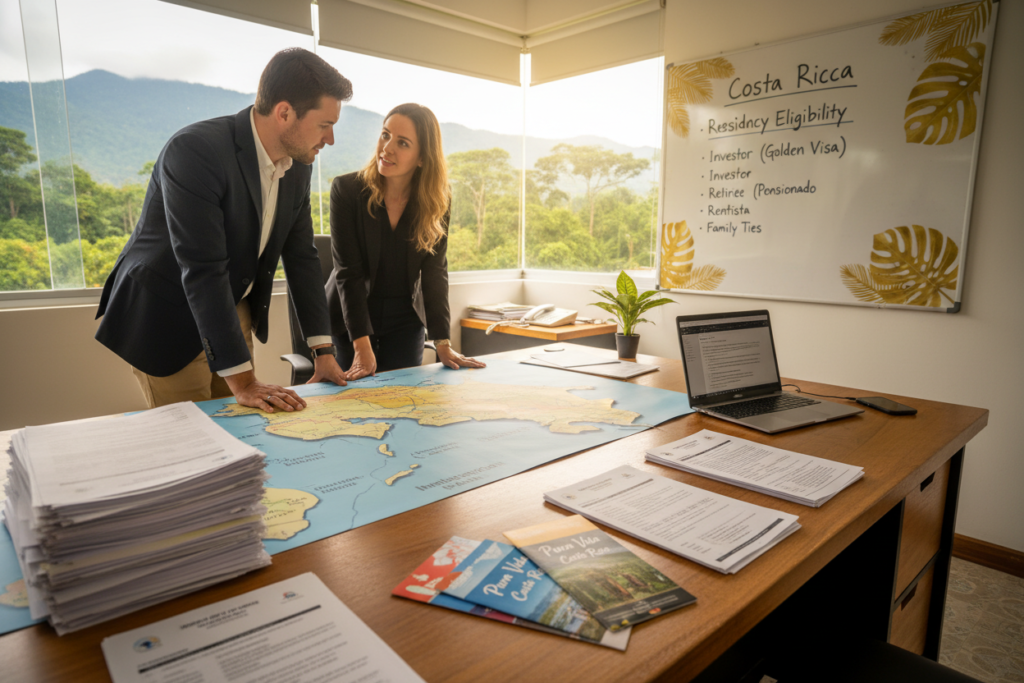
CRIE provides expert guidance on Costa Rica’s legal residency options, not temporary tourist solutions. We focus exclusively on formal pathways through the Dirección General de Migración y Extranjería (DGME). Our role is to help you navigate this complex system with clear, realistic information.
Introduction to Residency Options and CRIE Details
Costa Rica offers several legal residency categories based on your situation. The main options include Pensionado for retirees with stable pension income, Rentista for those with guaranteed monthly funds, and Inversionista for qualifying investors. Family-based residency (Vínculo Familiar) is also available.
It’s important to understand that Digital Nomad status is not a residency category. It does not lead to permanent residency or citizenship. For long-term stays, a formal application is necessary.
The residency process typically takes 6 to 12 months for approval. There are no guarantees, and each case is evaluated individually. We do not provide pricing quotes in this guide—requirements and fees can vary.
Always verify current rules at the official government website, migracion.go.cr. One advantage: once your application is submitted, you can legally stay in Costa Rica beyond your tourist stamp duration. You are free to leave and return during this time.
Step-by-Step Guide: How to Successfully Obtain a costa-rica-tourist-visa-extension
To legally extend your time in Costa Rica, the definitive solution is to initiate a residency application from your home country. We walk you through the proper process since traditional extensions are rarely granted.
Preparing Your Documentation Before Arrival
First, determine which residency category fits your situation. Options include Pensionado for retirees, Rentista for guaranteed income, or Inversionista for investors.
Next, gather all required documents while still in your home country. This includes birth certificates, police background checks, and income verification. These documents must be recent, typically issued within six months.
Then, obtain apostilles for each document through your Secretary of State. Have them officially translated to Spanish by a certified translator. This preparation saves significant time later.
Timeline and Application Submission Process
Submit your complete application package to Costa Rican immigration. You can do this through an attorney or a specialized service. Incomplete applications cause major delays.
The processing time typically takes 6 to 12 months. During this period, you are legally permitted to remain in the country beyond your original tourist stamp.
Once approved, you’ll receive your residency cédula (identification card). You must then comply with ongoing requirements, like maintaining your income source.
Always verify current procedures at the official government site, migracion.go.cr, if you are unsure about any requirement.
Who Qualifies for Residency: Pensionado, Rentista, and Inversionista Options
Qualifying for formal residency in Costa Rica hinges on meeting precise income or investment thresholds set by immigration authorities. We clarify the three main pathways.
Pensionado (Pensionado) Requirements and Income Thresholds
The Pensionado category is for retirees with a guaranteed lifetime pension of at least $1,000 per month. This income must be verifiable through official documents.
There is no minimum age requirement. You can live in Costa Rica full-time but cannot work for local employers on this status.
Rentista and Inversionista (Inversionista) Criteria
The Rentista option requires proof of $2,500 in monthly income for two years. This can come from investments or rentals.
You can own a Costa Rican business but not be locally employed. The Inversionista category demands a minimum investment of $150,000.
A critical rule applies—qualifying property must be in your personal name, not a corporation. Neither status permits local employment without a separate work permit.
Preparing Documents Before Arrival: Apostilles and Translations
Properly preparing your documents from your home country is the most critical step in securing legal residency in Costa Rica. A complete and correctly certified file prevents major delays.
Essential Documents Checklist
Every applicant needs core documents. These include your certified birth certificate and a valid passport. You also need a police background check from your country of residence.
If applicable, include marriage or divorce certificates. Each official paper from your home nation requires an apostille. This special certification must be obtained from your Secretary of State before you travel.
All documents must then be translated to Spanish by a certified translator. Costa Rican immigration authorities will reject simple translations. Timing is also crucial—most papers must be issued within the past six months.
Category-specific information, like pension letters or investment proofs, is also needed. We advise starting this process early. Always verify the latest requirements at the official migracion.go.cr website.
Navigating Immigration Procedures: Timelines and Recommendations
Setting realistic expectations for your residency application timeline in Costa Rica prevents frustration. The immigration process involves distinct phases.
Application Processing Time Expectations
We set realistic expectations for the complete timeline. From gathering documents to receiving your cédula typically takes 9 to 15 months.
Document preparation often requires 1 to 3 months. Apostille and translation processing adds another 1 to 2 months. Submission and initial review take 1 to 2 months.
Final processing and approval usually require 6 to 12 months. This processing period is an estimate. Actual duration varies with immigration workload and your specific category.
Once filed, you can legally stay in Costa Rica beyond your original entry stamp. This applies even if your initial 90-day stay has ended. You do not need to do border runs for extra days.
You are also free to leave and return during these months. These timelines come with no guarantees. Administrative delays and policy changes can occur.
We strongly recommend starting early—ideally 12 to 18 months before your planned move. Always verify current processing times at migracion.go.cr.
Key Mistakes to Avoid During the Visa Extension Process
Navigating Costa Rica’s immigration landscape requires avoiding several critical missteps that can derail your long-term plans. Common errors lead to fines, application delays, or even denial of entry.
Common Pitfalls and Overstay Concerns
The biggest error is waiting until your entry stamp is about to expire. Starting the residency process late creates stress and risks overstaying your legal days.
Relying on border runs is no longer a reliable strategy. Immigration officers may grant fewer days upon re-entry or deny entry if they suspect abuse of tourist status. New rules can require a 90-day wait outside the country.
Overstaying your authorized stay carries consequences. Fines are approximately $100 per month of overstay, with potential increases. The larger risk is future immigration complications.
Documentation mistakes cause major delays. These include missing apostilles from your home country or using non-certified Spanish translations. Letting documents expire before submission is another frequent error.
Remember, Digital Nomad status does not count as formal residency. It provides no pathway to permanent status or citizenship. For a long-term stay, you must qualify for a proper residency category.
Always verify current procedures at the official immigration website. Rules change, and professional guidance is key to navigating this complex process successfully.
Comparing Tourist Visa Extension Options with Digital Nomad Status
For remote workers considering Costa Rica, understanding the distinction between temporary authorization and true residency is crucial. The Digital Nomad visa under Law 10008 offers one solution.
This program requires $3,000 monthly income for individuals or $4,000 for families. You must have valid health insurance and work only for foreign clients.
Why Digital Nomad Does Not Count as Residency
The authorization allows a stay of up to one year, renewable for another. However, it provides no pathway to permanent residency or citizenship.
Time spent under this status does not count toward long-term immigration goals. You cannot work locally or access benefits like the public healthcare system.
The closest actual residency option is typically Rentista. This requires proof of $2,500 monthly income for two years.
If you qualify for the Digital Nomad visa, you often meet Rentista requirements. Choosing formal residency starts your clock toward potential citizenship.
We recommend consulting with our team if you envision a long-term future in the country. Proper planning ensures your stay aligns with your ultimate goals.
Wrapping Up Your Costa Rican Immigration Journey
The path to calling Costa Rica home legally is built on formal residency, not short-term fixes. Traditional extensions are rarely granted to visitors from the US and Canada.
The proper route involves applying for a status like Pensionado, Rentista, or Inversionista. Each has specific income or investment requirements you must meet.
Success starts with preparing documents in your home country. Get apostilles and certified translations before you travel.
Processing typically takes many months. There are no guarantees in any immigration process.
Always verify the latest rules at the official government website, migracion.go.cr. We provide clear guidance and support.
Ready to begin? Contact us with your questions. Reach CRIE via WhatsApp at +506 8706 3888 or email info@crie.cr for professional information.
FAQ
How long can I stay in Costa Rica as a tourist?
Upon entry, immigration officials typically grant a stay of up to 90 days. However, for many nationalities, including U.S. citizens, they have the discretion to grant the full 180-day period. The exact duration is stamped in your passport upon arrival, so check it immediately.
What happens if I overstay my permitted time?
Overstaying your visa in Costa Rica results in daily fines that must be paid upon exit. These fines accumulate and can become a significant expense. More importantly, an overstay can complicate future applications for residency or other visas with the immigration department.
Can I extend my tourist stay beyond the initial stamp?
Yes, you can apply for an extension through the Dirección General de Migración y Extranjería. This process must be initiated before your current permitted stay expires. It involves submitting an application, paying fees, and providing proof of financial means for your extended time in the country.
What is the difference between a visa extension and applying for residency?
An extension simply prolongs your temporary tourist status. Applying for residency, such as the Pensionado, Rentista, or Inversionista categories, is a formal process to obtain permanent legal status. It requires meeting specific income or investment thresholds, submitting apostilled documents, and a much longer approval timeline.
Does the Digital Nomad Visa count as residency?
No, the Digital Nomad Visa is a special, renewable temporary status. It does not lead to permanent residency or citizenship. It’s designed for remote workers to live and work legally in Costa Rica for one or two years, but it operates under different rules than the traditional residency programs.
What are the most common mistakes people make during this process?
The biggest pitfalls are waiting until the last minute to apply for an extension, not having financial proof ready, and misunderstanding the difference between a border run and a formal extension. We also see issues with document preparation—failing to get required apostilles or official translations can derail an entire residency application.
How long does it take to get a residency application approved?
Prepare for a lengthy process. Current government processing times for residency applications can range from 6 to 12 months, or sometimes longer. This timeline starts after you have submitted a complete application with all properly authenticated documents. Patience and precise paperwork are crucial.
Article by Glenn Tellier (Founder of CRIE and Grupo Gap)
Don't wait, contact us right now!
Call or WhatsApp Costa Rica +506 8373 2085 or +506 8706 3888
Call USA/Canada +1 305-906-6784