

Costa Rica has become an increasingly attractive destination for Americans seeking residency. We’re providing this guide to offer clear, practical information. Our goal is to help you understand the landscape honestly—no hype, just the reality.
US citizens have several main pathways. These include Pensionado, Rentista, and Inversionista categories. Each one has specific financial thresholds and documentation needs. It’s vital to start preparing from home.
Understanding the requirements before you arrive is key to a smooth process. This involves gathering documents like apostilles and background checks. For more context on the moving process, see our guide for immigrating to Costa Rica.
We’ll walk you through each option and what it takes. Our approach is candid and transparent. We aim to be your trusted guide in this beautiful Central American country.
Understanding Costa Rica’s Immigration Landscape
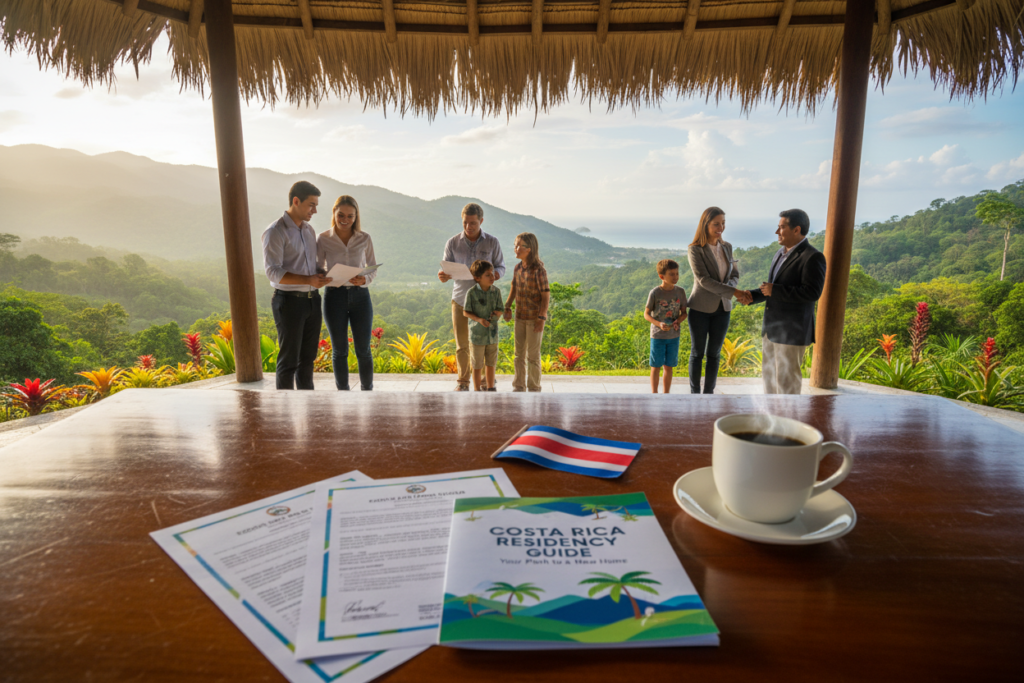
Before embracing the “pura vida” lifestyle, securing the right legal status is a fundamental priority. For US citizens, this means choosing from three primary residency pathways.
Overview of Residency Options
The system is built around Pensionado (for retirees), Rentista (for those with guaranteed income), and Inversionista (for investors). Each offers a direct route to permanent status.
It’s crucial to understand one key distinction. The popular Digital Nomad visa is a temporary work permit—it is not a residency option and does not lead to citizenship.
Selecting the right path depends on your finances and long-term goals. A clear overview is essential for navigating Costa Rica’s residency and visa successfully.
Benefits of Living the Pura Vida Lifestyle
This famous phrase reflects a real cultural emphasis on balance and wellness. It’s a major draw for expats seeking a different pace.
Your cost of living can be 30-50% lower than in major US cities. Many couples live comfortably on $2,000 to $3,000 per month.
You can experience this lifestyle in diverse areas. Choices range from urban San José to the beach towns of Tamarindo and the Caribbean culture of Puerto Viejo.
Eligibility Criteria for US Citizens
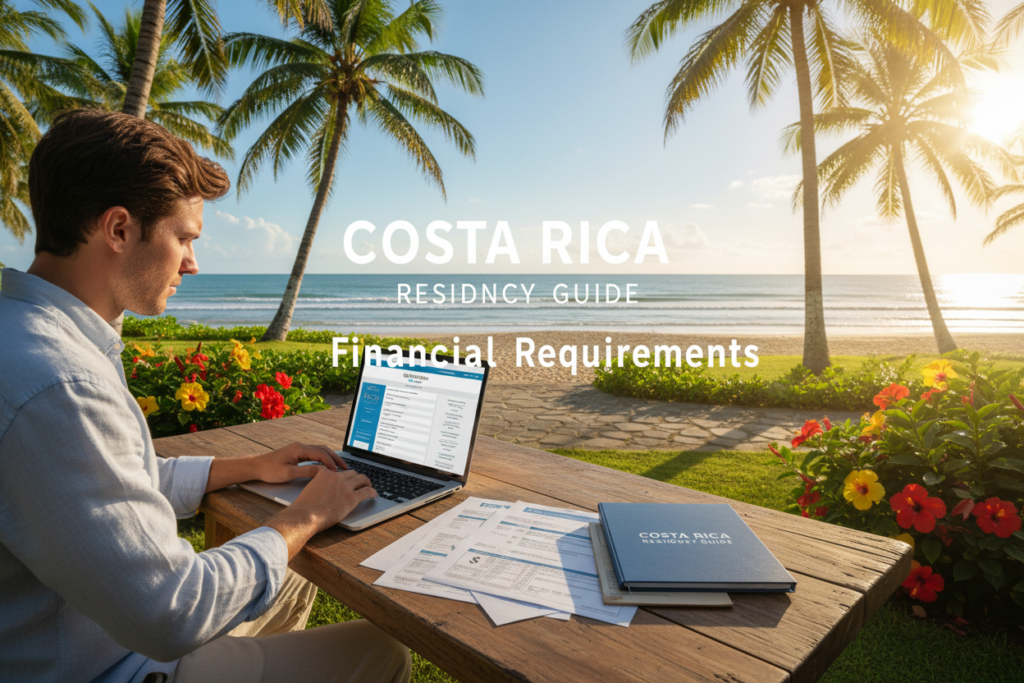
Your path to residency in Costa Rica hinges on proving specific income or investment levels to immigration authorities. As a citizen of the United States, you hold a key advantage. You are in Visa Group 1, allowing a tourist stay of up to 180 days without a visa.
This gives you ample time to explore the country and prepare your application strategy.
Who Qualifies for Costa Rica Residency
Qualification centers squarely on financial solvency. You must demonstrate reliable, verifiable resources. Costa Rican law sets clear minimum thresholds for its primary pathways.
These are the Pensionado, Rentista, and Inversionista categories. Meeting these financial requirements is the fundamental first step.
Financial Solvency and Income Requirements
The numbers are specific and non-negotiable. All figures are in US dollars and require official proof. For the Pensionado visa, you need a lifetime pension of at least $1,000 per month.
The Rentista option demands proof of a guaranteed $2,500 monthly income for two years. Alternatively, a $60,000 deposit in a local bank satisfies this requirement.
For the Inversionista pathway, a minimum investment of $150,000 is mandatory. This investment must be in your personal name, in approved assets like real estate or a business.
Immigration officials take this financial vetting seriously. Having your documentation organized and authenticated before applying is essential.
Diving into Residency Pathways
Navigating the details of Costa Rica’s residency pathways reveals important differences in income, investment, and tax implications. Each option serves a distinct financial profile and long-term goal.
It’s crucial to understand the specific benefits and obligations tied to your chosen category.
Pensionado (Pensionado)
The Pensionado visa is for retirees. You must prove a guaranteed lifetime pension of at least $1,000 US dollars per month.
This pathway offers valuable tax benefits. You get exemptions on import duties for household goods and one personal vehicle.
Rentista (Rentista) and Its Conditions
The Rentista category suits those with stable income but no pension. You need a guaranteed $2,500 monthly income for two years.
Alternatively, a $60,000 deposit in a local bank works. Holders cannot be employees but can own and operate a business.
Inversionista (Investor) Essentials
The Inversionista visa requires a minimum investment of $150,000. This must be in your personal name, in real estate or a business.
It comes with an obligation to reside in Costa Rica for at least six months each year. This shows a commitment to living in the country.
All three pathways grant temporary residency, renewed every two years. After three consecutive years, you can apply for permanent status.
We want to be transparent: processing through Costa Rica’s immigration system typically takes 3 to 12 months. Meticulous documentation is key.
Why CRIE is Your Trusted Guide in Costa Rica
At CRIE, our entire practice is dedicated to guiding clients through the specific complexities of obtaining legal residency in Costa Rica. We specialize exclusively in immigration and residency services. This focused expertise is your advantage.
We built our reputation on transparency and realistic guidance. Our experience allows us to translate technical legal requirements into plain-language, actionable steps. We won’t promise guaranteed approvals or specific timelines.
Working with us means partnering through each phase. We assist with document preparation, authentication, certified translations, and submission to the DGME. Our support includes consistent follow-up throughout the processing period.
We emphasize preparation before you arrive. Having apostilled documents and organized financial proof ready is crucial. This upfront work saves months of potential delay.
We are candid about our role. Immigration decisions rest solely with Costa Rican authorities. We ensure your application is perfectly prepared and submitted according to all current regulations.
Our contact channels are straightforward for gathering initial information. Reach us via WhatsApp at +506 8706 3888, email at info@crie.cr, or visit www.crie.cr. Let’s discuss your situation and which pathway aligns with your goals.
the-essential-guide-to-costa-ricas-immigration-requirements
Memorizing a few key numbers can quickly clarify which Costa Rica residency pathway fits your situation. The essential immigration requirements come down to specific financial thresholds. These are non-negotiable and must be documented with official proof.
Key Thresholds to Remember
For the Pensionado visa, you need a permanent pension of at least $1,000 US dollars per month. This must come from a verifiable institutional or government source.
The Rentista status requires guaranteed income of $2,500 dollars monthly for two years. Alternatively, a $60,000 deposit in a local bank satisfies this requirement.
The Inversionista pathway demands a minimum investment of $150,000 dollars. Critically, this investment must be in your personal name, not through a corporation.
We must stress a crucial distinction. The Digital Nomad visa requires $3,000 monthly income. However, it is not a residency status and does not lead to permanent residency.
If your goal is permanent status, you must pursue Pensionado, Rentista, or Inversionista. These thresholds are set by law and verified by officials. Your documentation must clearly prove you meet them.
Step-by-Step Documentation Preparation
The success of your residency application in Costa Rica largely depends on meticulous document preparation. This is where most applications face delays. We recommend starting this process at least three to six months before you plan to submit.
Gathering Necessary Documents
You will need a core set of official papers. This includes a valid passport with at least six months remaining. You also need a certified birth certificate and an FBI criminal background check.
If applicable, include your marriage certificate. Finally, gather your financial proof of income or investment. All these documents must be original or certified copies.
Apostilles and Translations Explained
Costa Rican immigration requires an apostille for all US-issued documents. This is an authentication from the US Department of State or your state’s Secretary of State. It verifies the document for international use.
After apostille, every paper needs an official Spanish translation. This must be done by a translator authorized in Costa Rica. Translations from the US are generally not accepted by authorities.
Plan for this two-step process to take several weeks. Having your apostilled documents ready before you travel is crucial. We can help coordinate the translation step locally.
Timelines and Processing Expectations
Setting realistic expectations for processing times is a critical part of planning your move to Costa Rica. The immigration process involves distinct phases, each with its own timeline.
Application Processing Times
We cannot promise specific dates. Processing for a residency visa typically takes 3 to 12 months. This depends on the application type and the DGME’s current workload.
The clock starts when your complete, apostilled file is submitted. If documents are missing, it will be returned. Your official DIMEX card is issued only after final approval.
Managing Renewal Deadlines
Temporary residency must be renewed every two years. This requires updated financial proof and a fee. It’s a recurring part of maintaining your legal status.
After three consecutive years, you can apply for permanent residency. This status offers more stability and eliminates the two-year renewal cycle.
If citizenship is a goal, you need seven years of legal residency. Check migracion.go.cr for the most current timelines and requirements.
Common Pitfalls and How to Avoid Them
Many residency applications face unnecessary delays due to a handful of predictable and avoidable errors. These mistakes typically involve document preparation and maintaining legal status while your case processes.
Frequent Documentation Mistakes
A common error is confusing a notarization with an apostille. State-level notarization is insufficient. You need the official apostille from the US Department of State or your Secretary of State.
Another frequent issue is using translations from the United States. Costa Rican immigration only accepts work from translators authorized locally. Using an unauthorized service will cause a rejection.
Timing is also crucial for your FBI background check. It is typically valid for only six months. If you start the process too early, it may expire before submission.
Staying Compliant During the Process
A critical rule is to never overstay your tourist visa. You have a maximum of 180 days. If processing takes longer, you must plan a border exit to reset your status.
For Inversionista applicants, the investment must be in your personal name. Using a local corporation is a common but costly mistake. Financial proof must also be crystal clear and meet the exact requirements.
Fixing errors after submission is difficult. We recommend professional guidance to avoid these pitfalls from the start. For more clarity on these points, review our answers to common questions.
Pre-Arrival Essentials: Get Started from Home
The most effective way to streamline your Costa Rica residency application is to begin your document preparation while still in the United States. Waiting until you arrive creates delays and higher costs. We guide you to start this crucial work from home.
Checklist of Required Papers
Your pre-arrival checklist is specific. First, ensure your passport has at least six months of validity. Next, obtain a certified copy of your birth certificate.
You also need an FBI criminal background check. This report is typically valid for six months. If you are married, include a certified marriage certificate.
Financial proof varies by your chosen category. Gather pension letters, bank statements, or investment deeds. All these papers require official authentication.
The apostille process must be completed in the US. Submit documents to your state’s Secretary of State or the US Department of State. Plan several weeks for this step.
However, wait to translate documents until you are in Costa Rica. Only translations by locally authorized professionals are accepted. Keep multiple copies of all apostilled originals in a secure place.
Understanding the Digital Nomad Option
Understanding the Digital Nomad option requires clarity on what it is—and what it is not. This temporary work permit is popular among remote professionals. However, it is not a pathway to legal residency in Costa Rica.
How It Differs from Residency Visas
The Digital Nomad visa allows you to live and work remotely in Costa Rica for up to 12 months. You can extend it for another 12 months. To qualify, you must prove a monthly income of $3,000 from foreign sources.
For families, the requirement is $4,000 per month. You also need valid health insurance. Crucially, you cannot work for any Costa Rican employer.
This visa does not grant residency status. The time spent under it does not count toward permanent residency or citizenship. If your goal is to settle long-term, this is a dead end.
For remote workers seeking a permanent future, the Rentista residency is the closest option. It requires a guaranteed $2,500 monthly income for two years. This leads to temporary residency that counts toward permanent status.
We recommend the Digital Nomad visa only for a temporary stay. Choose a true residency pathway if Costa Rica is to be your home.
Planning Your Financial Strategy for Residency
A sound financial plan for Costa Rica residency balances immigration requirements with practical considerations like taxes and asset protection. You need a sustainable strategy for demonstrating ongoing financial qualification.
For Pensionado applicants, planning is straightforward. Your permanent pension must be verifiable. Rentista applicants face more complexity.
You can prove the $2,500 monthly income or deposit $60,000 in a Costa Rican bank. Understand that tying up these dollars has an opportunity cost.
Inversionista applicants must structure their $150,000 investment carefully. It must be in your personal name, not a corporation. This creates a tension with typical asset protection advice.
Tax implications exist for all categories. Costa Rica has a 13% value-added tax. Mandatory Caja healthcare contributions are 7-11% of declared income.
Opening a local bank account simplifies managing these costs. We strongly recommend consulting professionals on both US and Costa Rican tax obligations before you proceed.
Entry Requirements for Costa Rica
The rules for visiting Costa Rica as a tourist are separate and distinct from the path to establishing legal residency. We need to clarify this fundamental difference first.
Tourist Visa vs. Residency Applications
US citizens are in Visa Group 1. This allows entry without a visa for stays of up to 180 days. You must have a valid passport with at least six months of validity remaining.
You also need proof of onward travel within that 180-day period. Immigration officers have discretion on the exact length of stay granted—it’s not automatic.
Critically, being in the country as a tourist does NOT mean you have residency. It does not allow you to work. Those days do not count toward permanent residency requirements.
If you plan to apply for residency, you can start while on tourist status. Just be mindful of your 180-day limit to avoid overstaying.
Tips on Choosing the Right Residency Path
There is no universal “best” residency option for Costa Rica—the right fit depends entirely on your individual circumstances. Choosing wisely requires an honest look at your finances and your vision for daily life.
Evaluating Your Financial Situation
Your financial profile points to the logical pathway. A stable pension of $1,000+ monthly makes Pensionado the clear choice. If you have guaranteed income or can deposit $60,000, Rentista is your option.
For those with $150,000 in capital, Inversionista is possible. The key is choosing a plan you can sustain for three years. This is the period before you can apply for permanent status.
Aligning Residency with Lifestyle Goals
Consider how you want to spend your days. Pensionado restricts local employment, while Rentista and Inversionista offer more business flexibility. Your lifestyle in Costa Rica should match these rules.
Remember, the Digital Nomad visa does not lead to residency. If long-term living is your goal, select Pensionado, Rentista, or Inversionista from the start. We help clients match their real-world situation to the right immigration experience.
Coordinating with Immigration Experts and Legal Advisors
The decision to hire an immigration expert is not about surrendering control. It’s about leveraging specialized knowledge to navigate a complex system. The process in Costa Rica involves precise document authentication and strict translation rules.
Minor errors here cause major delays. Professional services review your paperwork before submission. We ensure apostilles are correct and financial proof meets the exact requirements.
Our role is process management and guidance, not a guarantee. Final approval rests solely with the DGME, the immigration authority. We provide continuity, tracking your application’s status for the 3-12 month wait.
This keeps you informed instead of wondering. We are transparent about our scope—we provide immigration and residency services. For related legal or tax matters, we connect you with trusted specialists.
Contact us via WhatsApp at +506 8706 3888 or email info@crie.cr. Let’s discuss your situation and how we can help coordinate your application.
Preparing for an Organized Application Submission
Submitting a perfectly organized application package is the last critical step you control before the lengthy processing period begins. This final review focuses on verification and prevents frustrating delays.
We recommend a systematic approach to ensure nothing is missed.
Setting Up Appointments with CRIE
Schedule a consultation with our team well before your intended filing date. We can review your complete document package to identify any gaps.
This pre-submission check ensures everything meets current DGME requirements. Contact us via WhatsApp at +506 8706 3888 or email info@crie.cr for this service.
Double-Checking All Documentation
Create a final checklist. Verify every apostilled document has its official Spanish translation from an authorized local professional.
Confirm your financial proof clearly meets the minimum income or investment requirements. For Inversionista applicants, ensure property is in your personal name.
Also, check your passport has at least six months of validity remaining. Organized documents and clear information streamline the immigration process.
A Final Word on Starting Your Costa Rican Journey
Your dream of living in Costa Rica can become a reality through diligent preparation and professional guidance. This journey toward residency requires realistic expectations and thorough document organization.
The established pathways offer a clear framework for immigration. Success hinges on understanding the process and timelines involved.
Our role at CRIE is to provide expert services and support. We help navigate the system, but we cannot control government processing.
For the latest information, verify requirements at migracion.go.cr. This ensures you have current data.
Contact us via WhatsApp at +506 8706 3888, email info@crie.cr, or visit www.crie.cr. Let’s discuss your specific situation.
With careful planning, you can embrace the pura vida lifestyle and enjoy a rewarding experience in this remarkable country.
FAQ
What are the basic entry requirements for visiting Costa Rica?
To enter the country as a tourist, you need a valid passport with at least one day of validity remaining beyond your planned exit date. United States citizens and many other nationals do not need a pre-arranged visa for stays up to 180 days. Immigration officials may ask for proof of onward travel and proof of financial means for your trip.
What is the difference between a tourist visa and applying for residency?
A tourist visa, or entry stamp, allows a short-term stay, typically up to 180 days, for vacation or exploration. It does not grant the right to work or access to public healthcare. Applying for residency is a formal, documented process that grants long-term legal status, requires meeting specific financial or investment thresholds, and leads to a cédula (national ID card).
What financial proof do I need for a Rentista residency application?
For the Rentista visa, you must demonstrate a stable income of at least ,500 per month for two years, guaranteed by a bank. This is often shown through a letter from your financial institution confirming a deposit or investment that yields this monthly amount. It’s a key requirement to prove you can support yourself without working locally.
How long does the residency application process typically take?
Processing times can vary, but you should generally expect the initial application review by immigration authorities to take several months. After approval, you’ll receive instructions to complete your registration and obtain your DIMEX card. We help clients manage these timelines and renewal deadlines to avoid lapses in status.
Why is working with a legal advisor like CRIE recommended?
Costa Rica’s immigration system has detailed requirements. Common pitfalls include incorrect document apostilles, insufficient financial proof, or missing translations. Our experts ensure your application is complete, compliant, and organized from the start, saving you time and preventing costly delays or rejections. We act as your guide through the entire journey.
Article by Glenn Tellier (Founder of CRIE and Grupo Gap)
Don't wait, contact us right now!
Call or WhatsApp Costa Rica +506 8373 2085 or +506 8706 3888
Call USA/Canada +1 305-906-6784